




Introduction to Understanding Owner’s Equity in Accounting
Owner’s equity represents the owner’s claim on the assets of a business after all liabilities have been deducted. It is a fundamental component of the accounting equation: Assets = Liabilities + Owner’s Equity. Understanding owners equity in accounting is essential for business owners, investors, and accountants because it reflects the financial health and value of the company from the owner’s perspective.
In this comprehensive guide, we will delve deep into the practical aspects of managing owners equity accounts effectively. This article aims to equip you with knowledge and strategies to maintain accurate equity records, interpret changes in equity, and optimize the benefits that come from proper equity management.
What Is Owners Equity? Defining and Understanding Concepts
Owner’s equity, also known as shareholders’ equity for corporations or proprietorship equity for sole proprietorships, represents the residual interest in the assets of a business after deducting liabilities. It is the owner’s residual claim or interest in the business assets.
Key Components of Owner’s Equity
- Paid-in Capital: The amount of capital that shareholders or owners have invested in the business.
- Retained Earnings: The accumulated profits that have not been distributed to owners in the form of dividends but retained for reinvestment.
- Additional Paid-In Capital: Amount paid by investors above the par value of shares issued.
- Owner’s Draw or Distributions: Withdrawals made by the owner(s) for personal use, reducing owner’s equity.
- Accumulated Other Comprehensive Income: Gains and losses not realized in profit and loss (e.g., foreign currency translation adjustments).
Understanding each component helps in identifying what drives the changes in owner’s equity and how these factors influence the value of the business.
Importance of Managing Owners Equity Accounts
Effective management of owners equity accounts benefits businesses in multiple ways:
- Financial Transparency: Accurate records reflect the true financial status of the company.
- Investor Confidence: Clear equity statements reassure investors about the company’s solvency and profitability.
- Compliance and Reporting: Proper equity management ensures compliance with accounting standards and legal requirements.
- Better Decision Making: Owners can make informed decisions regarding reinvestment, dividend distribution, and fundraising.
Without managing the owners equity accounts effectively, businesses risk inaccurate financial statements, misallocation of funds, and misunderstandings about the company’s worth.
Types of Owners Equity Accounts Explained
Various types of owners equity accounts exist depending on the business structure and accounting practices:
Capital Stock
This account reflects the equity invested by shareholders in corporations. It includes common stock and preferred stock, recorded at par value.
Additional Paid-In Capital
This represents the excess amount paid by investors over the par value of the stock, often arising from initial public offerings or private placements.
Retained Earnings
Profits retained within the company rather than distributed as dividends. It is a key indicator of a company’s ability to generate sustainable profits.
Owner’s Draw/Withdrawals
For sole proprietorships and partnerships, owner’s withdrawals reduce equity. It is important to track these carefully to understand cash flow implications.
Treasury Stock
Shares that the company has bought back from the market, reducing the amount of outstanding stock and owner’s equity.
Accumulated Other Comprehensive Income
Includes unrealized gains and losses that are excluded from net income but affect equity.
How to Record Owner’s Equity Transactions
Properly recording owner’s equity transactions is vital for maintaining accurate financial records. Below are typical transactions affecting owner’s equity and how they should be documented:
Owner’s Investment
When an owner invests cash or assets into the business, the accounting entry typically debits the asset account and credits the owner’s equity account.
Net Income or Loss
Net income increases owner’s equity, while net losses decrease it. These figures are closed out to the retained earnings account at the end of each accounting period.
Owner’s Draw or Distributions
Owner withdrawals reduce the owner’s equity account and cash or other assets accordingly.
Dividends Paid
For corporations, dividends reduce retained earnings and cash.
Revaluation of Assets
Occasionally, asset revaluations affect equity but do not impact profit or loss directly.
Journal Entry Examples
| Transaction | Debit | Credit |
|---|---|---|
| Owner invests cash into business | Cash | Owner’s Capital |
| Net income for the period | Income Summary | Retained Earnings |
| Owner withdraws cash | Owner’s Draw | Cash |
| Dividends declared and paid | Retained Earnings | Cash |
Best Practices for Managing Owners Equity Accounts Effectively
Maintaining owners equity accounts properly requires ongoing attention and strict adherence to accounting protocols. Implementing these best practices will ensure your equity accounts are accurate and useful for decision-making.
Maintain Detailed Records of Transactions
Every transaction affecting owner’s equity should be meticulously recorded with supporting documentation, such as receipts, contracts, and bank statements.
Use Accounting Software
Utilize robust accounting software that can track equity changes in real-time, generate equity statements, and provide automated reconciliation features.
Regularly Reconcile Equity Accounts
Ensure regular reconciliation between general ledger equity accounts and subsidiary records to catch discrepancies early.
Understand Tax Implications
Owner’s equity transactions often have tax consequences. Coordinate with tax professionals to understand the impact of distributions, dividends, and equity investments.
Separate Personal and Business Finances
Business owners should maintain clear separation between personal finances and business equity to avoid legal and financial complications.
Prepare and Review Equity Statements Periodically
Review owner’s equity statements during monthly or quarterly financial reviews to monitor changes and inform strategic planning.
Common Challenges in Managing Owner’s Equity and How to Overcome Them
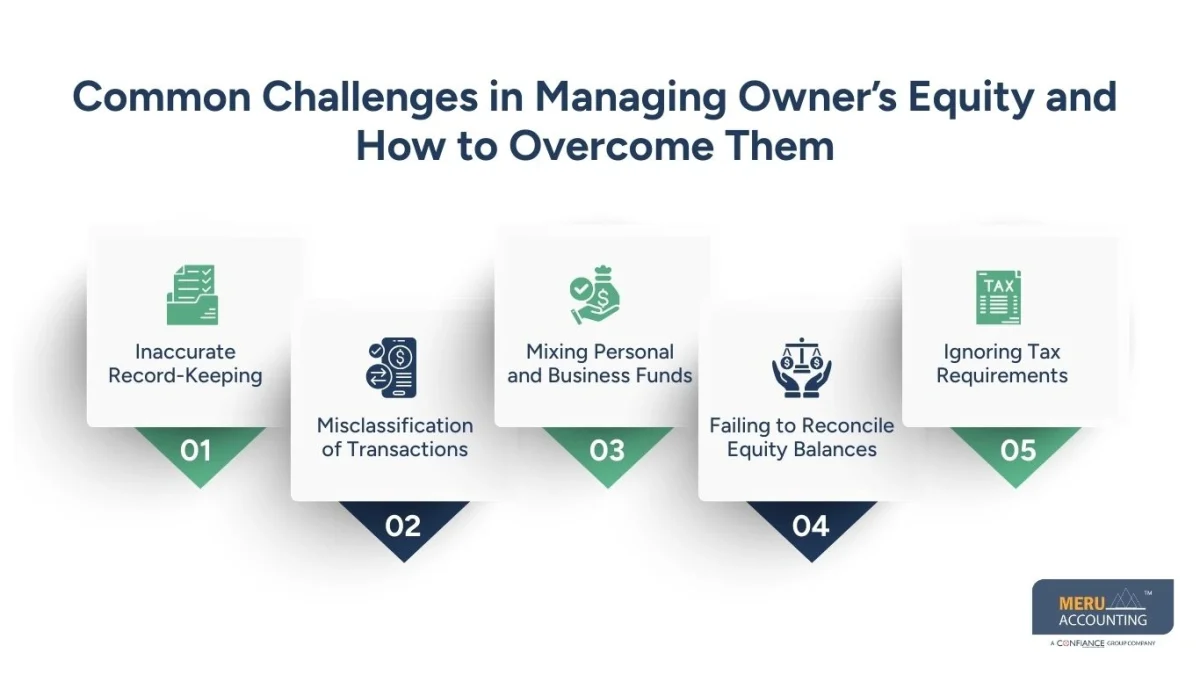
Managing owners equity accounts can be complex due to the interplay of investments, withdrawals, profits, losses, and regulatory requirements. Here are some common challenges:
- Inaccurate Record-Keeping: Leads to misstated equity and financial reports.
- Misclassification of Transactions: Confusing owner’s draws with expenses or misposting investments.
- Mixing Personal and Business Funds: Especially problematic in sole proprietorships and partnerships.
- Failing to Reconcile Equity Balances: Increasing risk of errors and fraud.
- Ignoring Tax Requirements: Resulting in penalties or missed deductions.
To overcome these, businesses should implement strong internal controls, regular account reviews, employee training, and consultation with professional accountants.
Advanced Techniques for Optimizing Owner’s Equity Management
Beyond the basics, advanced strategies can help maximize the benefits derived from equity management:
Equity-Based Incentive Plans
Using stock options, restricted stock, or other equity-based compensation can align employees’ interests with owners and improve retention and performance.
Strategic Dividend Planning
Balancing reinvestment and dividend payouts to optimize tax efficiency and company growth.
Equity Financing vs. Debt Financing
Evaluating the impact of raising capital through equity issuance versus borrowing to maintain an optimal capital structure and preserve ownership control.
Regular Equity Valuation
Conducting periodic valuations to keep equity accounts aligned with fair market value, especially important for startups and private companies.
Equity Section Transparency
Providing detailed disclosures in financial statements to improve stakeholder trust and meet regulatory standards.
Using Financial Statements to Monitor Owner’s Equity
Owner’s equity is prominently reported in the balance sheet and reflected through changes in the statement of owner’s equity or changes in shareholders’ equity statement.
Balance Sheet
The balance sheet displays the ending balance of owner’s equity at the reporting date, showing all components including capital stock, retained earnings, and treasury stock.
Statement of Owner’s Equity
This statement reconciles the beginning equity balance with the ending balance, detailing additions and deductions during the period:
- Beginning equity balance
- Owner contributions
- Net income or loss
- Owner withdrawals or dividends
- Other adjustments
Interpreting Equity Changes
Understanding the fluctuations in owner’s equity helps stakeholders gauge company performance and sustainability. Increases generally imply positive profitability or equity injections, while decreases may indicate losses or withdrawals exceeding profits.
Impact of Taxation on Owners Equity Accounts
Taxes affect owner’s equity both directly and indirectly. Understanding these impacts is essential for accurate equity management and tax planning.
Distributions and Taxation
Withdrawals or dividends may be taxable to the owner depending on entity type and tax laws. Owners should track distributions separately for tax reporting purposes.
Retained Earnings and Deferred Taxes
Retained earnings accumulate profits net of tax. Some unrealized gains recorded in equity may have deferred tax implications.
Capital Contributions and Basis Calculation
Owner contributions increase the owner’s basis in the business, affecting gain or loss calculations upon sale or withdrawal.
Tax Reporting Requirements
Businesses should comply with tax filing requirements, including reporting equity changes and distributions on relevant tax forms.
An Example from Meru Accounting
Meru Accounting is a professional accounting service specializing in small to medium-sized enterprises, offering expertise in equity management, financial reporting, and tax compliance. Leveraging technology and experienced accountants, Meru Accounting empowers clients to streamline their owners equity accounts, ensuring accurate and timely financial information that supports informed decision-making. Their tailored solutions encompass bookkeeping, equity transaction recording, reconciliation, and consultation on complex equity and tax matters, making them a trusted partner for business owners.
Conclusion: Mastering Owner’s Equity Management
Understanding owners equity in accounting is critical to the overall financial management of any business. Properly managed equity accounts provide clarity about ownership value, enhance financial statement accuracy, and help maintain compliance with regulatory mandates. By mastering the fundamentals discussed in this guide, including comprehensive transaction recording, reconciliation practices, tax implications, and advanced equity strategies, business owners and accountants can drive better financial outcomes and strategic growth.
Whether you are a startup entrepreneur or managing a mature company, investing the time and effort into mastering owner’s equity management will pay dividends in greater confidence, financial clarity, and business success.
FAQs
What is owner’s equity in accounting?
Owner’s equity represents the owner’s claims on the assets of a business after all liabilities are deducted.
Why is it important to manage owners equity accounts effectively?
Effective management ensures accurate financial reporting, aids in decision-making, and helps maintain clear ownership records.
How do contributions and withdrawals affect owners equity?
Contributions increase owners equity, while withdrawals (or draws) decrease it.
What are common components of owners equity accounts?
Common components include capital contributions, retained earnings, additional paid-in capital, and drawings.
How often should owner’s equity accounts be reviewed and updated?
Owners equity accounts should be reviewed and updated regularly, typically during each accounting period or financial statement preparation.


