




Effective manufacturing accounting is essential for maintaining financial stability and operational efficiency in modern factories. It covers tracking production costs, managing inventory, handling payroll, and ensuring accurate financial records for informed decision-making.
Implementing accounting software for manufacturing helps factories streamline these processes, reduce errors, and improve overall financial control.
By maintaining clear and organized financial records, manufacturers can quickly identify areas where costs can be reduced and resources can be better utilized. This level of financial insight not only supports day-to-day operations but also guides strategic planning and long-term growth.
What You Will Learn From This Blog
- How manufacturing accounting helps factories track expenses, manage inventory, and maintain profitability.
- Why are accurate financial records essential for making informed decisions in manufacturing operations?
- How accounting software for manufacturing simplifies reporting, cost tracking, and inventory management.
- How integrating manufacturing accounting with ERP systems can improve overall operational efficiency.
- Which financial metrics are useful for measuring production performance and identifying areas to reduce waste?
What Is Manufacturing Accounting And Why It Matters
Manufacturing accounting is the process of systematically recording, analyzing, and reporting all financial transactions related to manufacturing operations. It covers every aspect of production, including labor costs, raw materials, overheads, and finished goods.
By keeping accurate financial records, factories gain a clear understanding of where their money is going and how resources are being utilized.
One of the main purposes of manufacturing accounting is tracking production costs. By calculating the exact cost of producing each product, factories can set accurate pricing and improve profit margins. This also helps management identify areas where costs can be reduced without affecting quality.
Monitoring inventory levels is another critical aspect. Manufacturing accounting ensures that both raw materials and finished goods are properly accounted for. This reduces losses from wastage or mismanagement and helps maintain the right balance of stock to meet production demands.
Beyond cost tracking and inventory management, manufacturing accounting plays a key role in supporting business decisions. Accurate financial records provide insights for expansion planning, procurement strategies, and workforce management. It also ensures compliance with tax laws and industry regulations, helping factories avoid penalties.
Ultimately, well-managed manufacturing accounting enhances profitability by identifying cost-saving opportunities and providing a solid foundation for long-term growth.
Key Components Of Manufacturing Accounting
Cost Accounting
This involves analyzing the cost of materials, labor, and overhead to determine the total cost of production. Accurate cost tracking helps identify areas where expenses can be reduced.
Inventory Accounting
Tracking raw materials, work-in-progress, and finished goods ensures inventory accuracy and reduces excess stock. Maintaining the right inventory levels prevents production delays and waste.
Payroll Management
Manufacturing accounting includes managing wages, overtime, and benefits for factory employees. Timely and precise payroll ensures smooth workforce management and employee satisfaction.
Budgeting and Forecasting
Preparing budgets and forecasting helps plan expenses, production levels, and cash flow. This supports better planning for future financial and operational needs.
Accounts Payable and Receivable
Managing payments to suppliers and receiving payments from customers ensures smooth cash flow. Strong management of receivables and payables builds reliable vendor and client relationships.
Financial Reporting
Regular reports such as balance sheets, income statements, and cash flow statements provide a clear picture of the company’s financial health. Quick access to reports allows management to make informed decisions promptly.
How Accounting Software For Manufacturing Streamlines Finance And Inventory In Modern Factories
Automated Data Entry
Accounting software for manufacturing reduces manual entry, minimizing errors and saving time. Automation allows staff to focus on more strategic financial tasks.
Real-Time Inventory Tracking
Inventory levels are updated instantly with accounting software for manufacturing, helping managers track materials and products accurately. This prevents overstocking or shortages and ensures production runs smoothly.
Simplified Cost Calculations
Manufacturing accounting tools can calculate production costs quickly, including labor, materials, and overheads. This helps management set accurate pricing and improve profit margins.
Integrated Payroll and Expenses
Managing employee payments and factory expenses becomes easier with accounting software for manufacturing, ensuring accurate tracking of expenses and better manufacturing accounting.
Customizable Financial Reports
Reports can be tailored to monitor specific metrics, supporting better business decisions. Customization allows management to focus on the data most relevant to operations.
User-Friendly Interface
Modern software is easy to navigate, allowing employees to manage accounting tasks without extensive training. A simple interface reduces onboarding time and errors.
Budgeting and Forecasting Tools
Software often includes features to create budgets and forecast expenses, helping factories plan for future growth and production needs. Accurate forecasts also help prevent overspending and optimize resource allocation.
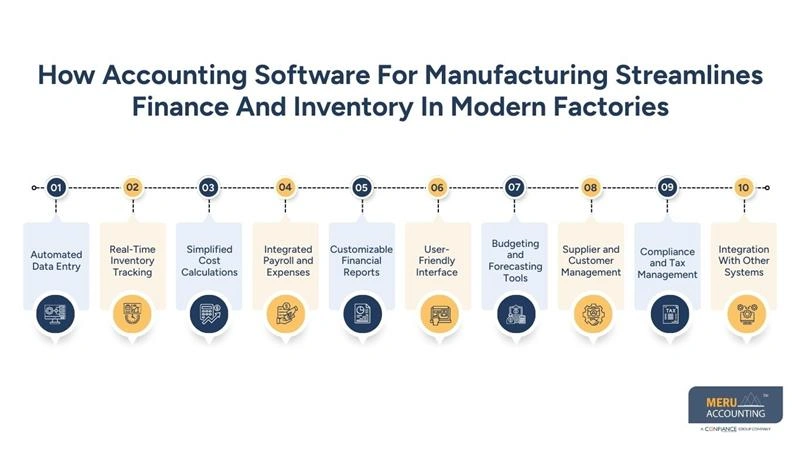
Supplier and Customer Management
Accounting software helps track payments to suppliers and receipts from customers, ensuring smooth financial operations and strong business relationships. Timely tracking improves cash flow and strengthens trust with partners.
Compliance and Tax Management
Many systems include tools for tax tracking and regulatory compliance, reducing the risk of penalties and ensuring accurate reporting. Automated alerts help businesses stay up-to-date with changing regulations.
Integration With Other Systems
Accounting software can be connected with ERP and inventory systems, allowing all departments to access consistent and up-to-date financial information. Unified data supports faster decision-making and better coordination across teams.
Benefits Of Implementing Manufacturing Accounting Systems
Improved Accuracy
Automated systems reduce human errors in financial calculations and reporting. Reliable data ensures managers can make decisions with confidence.
Time Savings
Routine tasks like payroll, invoicing, and expense tracking are faster with accounting software for manufacturing, allowing staff to focus on higher-value activities instead of manual record-keeping.
Cost Control
Manufacturers can identify and reduce unnecessary expenses through detailed cost tracking. Monitoring costs closely helps increase overall profitability.
Better Inventory Management
Accurate records prevent overstocking or shortages, saving money and reducing delays. Proper inventory management also supports smooth production schedules.
Enhanced Decision-Making
Clear financial data helps management make informed decisions about production and expansion. Access to timely reports allows for proactive problem-solving.
Compliance Assurance
Systems maintain records in line with tax laws and regulations, reducing legal risks. Proper documentation also simplifies audits and regulatory reporting.
Integrating Manufacturing Accounting With ERP Systems
Unified Data Management
Integrating accounting with ERP systems ensures all financial and operational data is in one place. Centralized data improves accuracy and reduces miscommunication across departments.
Streamlined Operations
ERP integration allows manufacturing and finance teams to work together efficiently. Coordinated workflows save time and support smooth day-to-day operations.
Improved Reporting
Data from multiple departments can be combined to create comprehensive financial reports. Detailed insights help management make informed strategic decisions.
Enhanced Resource Planning
ERP integration supports better scheduling of production, inventory, and workforce. Optimized planning ensures resources are used effectively and downtime is minimized.
Reduced Manual Work
Automated data flow reduces repetitive work and improves accuracy. Employees can focus on analysis and improving operational performance instead of routine tasks.
Scalability
As factories grow, integrated systems can handle larger volumes of financial and production data without disruption. Expansion becomes easier to manage with reliable systems in place.
Tracking Production Efficiency Through Financial Metrics
Cost Per Unit
Measuring the cost of producing each unit helps in pricing and controlling expenses. Accurate calculations highlight opportunities to reduce costs and improve margins.
Overhead Ratio
Monitoring overhead expenses relative to production helps identify cost-saving opportunities. Controlling overhead ensures more efficient operations and better profitability.
Inventory Turnover
This metric tracks how quickly inventory is used and replenished, reducing waste. Faster turnover indicates effective inventory management and production planning.
Labor Productivity
Analyzing the cost of labor versus output ensures efficient workforce management. High productivity indicates that employees and processes are operating efficiently.
Gross Profit Margin
Calculating profit margins helps assess product profitability and guide pricing strategies. Monitoring margins ensures that production remains financially sustainable.
Return on Assets (ROA)
ROA measures how effectively assets are being used to generate profits in manufacturing operations. Optimizing asset usage increases overall return on investments.
Why Choose Meru Accounting For Manufacturing Accounting
Expertise in Manufacturing Accounting
Meru Accounting has extensive experience helping factories implement robust financial management systems tailored to manufacturing. Their expertise ensures accurate tracking of costs, inventory, and payroll.
Custom Solutions for Factories
Our team assesses each factory’s needs and recommends systems, including accounting software for manufacturing, that best fit the operations. Solutions are designed to improve efficiency and address unique challenges.
Cost Analysis and Reporting
We provide detailed cost analysis and financial reports, helping management reduce expenses and maximize profitability. Insights from these reports support better decision-making and resource allocation.
ERP Integration Support
Meru Accounting ensures smooth integration of accounting systems with existing ERP solutions, reducing operational friction. This helps teams access consistent financial data across all departments.
Ongoing Support
We offer continuous support for accounting, reporting, and compliance, so your finance team can focus on core manufacturing activities. Prompt assistance helps maintain uninterrupted operations.
Trustworthy and Reliable
With years of experience in manufacturing accounting, Meru Accounting is a trusted partner for modern factories looking to strengthen financial control. Factories can rely on accurate data and actionable insights.
Key Takeaways
- Manufacturing accounting is essential for tracking production costs, inventory, and payroll.
- Using accounting software for manufacturing improves accuracy and efficiency in financial management.
- Integrating accounting systems with ERP solutions enhances reporting and resource planning.
- Financial metrics help factories monitor production efficiency and profitability.
- Partnering with experts like Meru Accounting ensures reliable, tailored solutions for modern factories.
FAQs
Manufacturing accounting tracks financial activities in a factory, including costs, labor, and inventory, ensuring accurate reporting.
Accounting manages costs, monitors profits, and supports informed financial decisions for smooth operations.
Accounting software automates inventory, payroll, and cost tracking, reducing errors and saving time.
Manufacturing accounting identifies unnecessary expenses and optimizes resources to lower production costs.
Integration with ERP and inventory systems combines financial and operational data for better planning.


