



Manufacturing accounting services play a crucial role in maintaining accurate financial records and preventing unexpected losses. Many manufacturers face challenges such as delayed reporting, incorrect cost tracking, or overlooked financial risks.
By using predictive analytics, companies can identify potential problems early and make informed decisions. This approach allows businesses to analyze historical data and forecast financial challenges before they arise, improving accuracy, efficiency, and overall profitability in accounting operations.
Predictive analytics helps manufacturers track trends in production costs, labor, and material usage, giving better control over budgets. Integrating these tools with manufacturing outsourcing ensures outsourced operations are accurately reflected in financial records.
What You Will Learn From This Blog
- Learn how predictive analytics can improve financial decision-making in manufacturing accounting services.
- Understand practical ways to identify and reduce financial risks early.
- See how manufacturing outsourcing affects accounting accuracy and how predictive analytics can support it.
- Explore how predictive models can help forecast budgets and cash flow.
- Learn actionable steps to make predictive analytics work effectively in manufacturing accounting services.
Understanding Manufacturing Accounting Services And Their Challenges
Manufacturing accounting services focus on tracking financial activities specifically for manufacturers, including production costs, inventory management, and payroll. Accurate and timely reporting helps businesses make informed decisions, ensuring smooth operations and better control over finances. These services are essential for maintaining transparency, managing budgets, and monitoring overall financial health in manufacturing operations.
Manufacturers often face challenges such as delayed invoicing, fluctuating material costs, and complex labor expenses, which can lead to financial mismanagement. Inaccurate accounting can result in cash flow problems, budget overruns, and missed business opportunities.
Regular and accurate financial reporting allows managers to respond quickly to cost changes and operational risks, reducing the chances of unexpected losses.
Technology plays a vital role in addressing these challenges. Tools like predictive analytics improve accounting accuracy by analyzing historical data and forecasting potential financial issues.
Manual bookkeeping is prone to errors, but integrating predictive models reduces human mistakes and provides data-backed insights, helping manufacturers maintain reliable and efficient manufacturing accounting services.
The Role of Predictive Analytics In Manufacturing Accounting Services
Understanding Predictive Analytics
Predictive analytics uses historical data and statistical models to forecast future outcomes. It helps businesses anticipate challenges and plan accordingly.
Application in Manufacturing Accounting Services
Accounting teams can predict cost overruns, revenue changes, and inventory shortages before they occur. Early predictions help ensure smoother operations and fewer financial surprises.
Identifying Patterns and Trends
Analyzing financial trends over time allows companies to make informed decisions and reduce unexpected losses. Recognizing patterns also helps in prioritizing critical areas for improvement.
Supporting Strategic Decisions
By predicting financial outcomes, businesses can allocate resources more efficiently. This leads to better budgeting and smarter investment decisions.
Improving Accuracy of Reports
Predictive models enhance the reliability of reports and reduce the chances of errors. Accurate reports build confidence among stakeholders and management teams.
Reducing Unexpected Costs
Early identification of potential risks helps in taking corrective measures to avoid financial losses. It also minimizes disruptions in daily operations and production planning.
How Predictive Analytics Helps Identify Financial Risks Early
Spotting Budget Overruns
Analytics can detect trends showing where production costs may exceed budgets. Early identification allows managers to adjust spending before problems arise.
Monitoring Supplier Performance
Tracking supplier data helps companies anticipate delivery delays or cost fluctuations, which strengthens manufacturing accounting services. Timely insights prevent disruptions in production schedules.
Predicting Cash Flow Issues
Historical payment and sales data help forecast potential cash shortages. Proactive planning ensures that operations continue without financial interruptions.
Detecting Inefficient Processes
Analytics highlights areas where operational inefficiencies lead to unnecessary spending. Addressing these inefficiencies improves cost management and overall productivity.
Evaluating Profit Margins
Predictive models help assess which products or projects may underperform financially. Adjusting strategies based on these insights protects profitability.
Forecasting Labor Costs
Labor cost trends can be projected to avoid surprises in payroll expenses. Accurate forecasting ensures sufficient staffing without overspending.
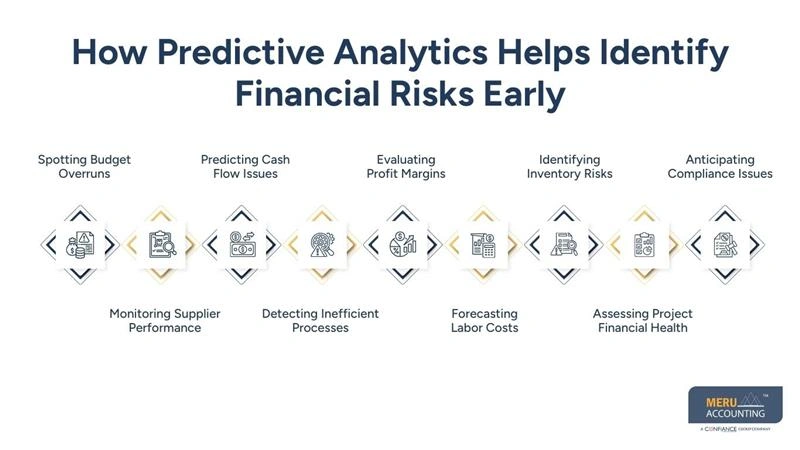
Identifying Inventory Risks
Predictive analytics monitors stock levels and usage patterns to prevent shortages or overstocking. This helps maintain a balanced supply chain.
Assessing Project Financial Health
Financial performance of ongoing projects can be reviewed in advance. Early warnings allow managers to reallocate resources or adjust project plans.
Anticipating Compliance Issues
Analyzing historical transactions in manufacturing accounting services can reveal patterns that may lead to regulatory or tax compliance risks, reducing penalties and audit issues.
Benefits of Implementing Predictive Analytics in Manufacturing Accounting Services
Improved Decision-Making: Analytics provides data-driven insights that help managers make better financial choices.
Enhanced Risk Management: Potential financial risks are identified early, reducing the chance of major losses.
Cost Savings: By predicting issues before they occur, companies can prevent unnecessary expenditures.
Better Resource Allocation: Resources like labor and materials can be assigned more efficiently based on predicted needs.
Increased Accuracy: Reports generated with predictive analytics are more reliable than manual calculations.
Stronger Financial Planning: Businesses can plan budgets and forecasts with greater confidence.
The Impact of Manufacturing Outsourcing on Accounting Accuracy
Role of Manufacturing Outsourcing: Outsourcing certain production tasks can reduce costs but may complicate accounting tracking.
Challenges in Outsourced Manufacturing Accounting: Tracking expenses, vendor payments, and project costs becomes complex without proper systems.
Analytics Supporting Outsourcing: Predictive analytics ensures outsourced operations are accurately reflected in financial reports.
Improving Vendor Management: Analytics can forecast supplier issues, ensuring timely payments and better contract management.
Maintaining Consistent Cost Tracking: Predictive models help monitor outsourced production costs to prevent overspending.
Enhancing Reporting Transparency: Integrating analytics with outsourcing strategies ensures managers have clear, accurate financial data.
Predictive Models for Cash Flow and Budget Forecasting
Short-Term Cash Flow Predictions
Predictive models can anticipate cash shortages or surpluses over weeks or months. This allows businesses to adjust spending and maintain smooth operations.
Long-Term Financial Planning
Forecasting helps companies prepare for seasonal demand or future expansion costs. Planning ahead reduces the risk of unexpected financial strain.
Scenario Analysis
Different financial scenarios can be simulated to determine potential risks and outcomes. This helps managers evaluate the impact of various decisions before implementing them.
Budget Optimization
Models highlight areas where expenses can be reduced without affecting operations. Savings can then be redirected to higher-priority activities.
Identifying Critical Trends
Analytics shows early signals of financial stress, allowing proactive measures. Managers can respond quickly to prevent major disruptions.
Revenue Forecasting
Predictive tools help estimate revenue from product lines and contracts more accurately. Reliable forecasts support better investment and production planning.
Integrating Predictive Analytics with Manufacturing Outsourcing Strategies
Data Consolidation
Combine internal accounting data with vendor information for complete visibility, which improves manufacturing accounting services accuracy. Consolidation ensures that no financial details are overlooked.
Monitoring Performance Metrics
Track outsourced operations against financial KPIs to identify gaps early. Consistent monitoring helps maintain operational efficiency.
Forecasting Outsourcing Costs
Predictive analytics estimates manufacturing outsourcing costs over time, helping budget accordingly and plan contracts effectively.
Risk Assessment
Evaluate potential risks associated with outsourcing and plan mitigations. This prevents financial surprises and protects profit margins.
Optimizing Contract Terms
Predictive insights help renegotiate contracts based on expected performance and cost trends. Better terms lead to improved cost control and collaboration.
Streamlining Communication
Analytics highlights areas needing attention and improves coordination with manufacturing outsourcing partners, ensuring timely communication and accountability.
Best Practices for Leveraging Predictive Analytics in Manufacturing Accounting Services
Use Accurate Historical Data
The quality of predictive analytics in manufacturing accounting services depends on accurate historical data, improving the precision of all forecasts.
Regularly Update Models
Frequent updates ensure predictions reflect current market and operational conditions. Staying current allows timely responses to emerging risks.
Collaborate Across Departments
Accounting, production, and management teams should work together for accurate insights. Collaboration enhances overall decision-making and reduces errors.
Monitor Key Performance Indicators
Track KPIs like cost per unit, labor efficiency, and supplier reliability. KPIs help managers identify problem areas before they escalate.
Invest in Training
Train accounting teams to interpret predictive analytics results correctly. Skilled staff can use insights to improve financial planning and risk management.
Start Small, Scale Gradually
Implement analytics on critical areas first before applying it across all accounting functions. Gradual adoption reduces implementation risks and allows learning from initial results.
How Meru Accounting Supports Manufacturers
Expertise in Manufacturing Accounting Services
Professional accounting services help manufacturers manage costs, reporting, and compliance accurately. Our experienced accountants can identify financial inefficiencies and suggest improvements.
Predictive Analytics Integration
Implementing predictive models allows businesses to identify risks early and make informed decisions. Analytics also supports more accurate forecasting and budgeting.
Support With Manufacturing Outsourcing
Accounting services ensure outsourced operations are properly tracked in financial records. This helps maintain transparency and prevents cost mismanagement.
Cash Flow and Budget Forecasting
Accurate projections support smoother operations and timely financial planning. Forecasting also allows businesses to anticipate shortages or surpluses effectively.
Customized Accounting Solutions
Accounting solutions can be tailored to fit specific manufacturing processes and operational needs. Customized approaches improve accuracy and efficiency in financial management.
Financial Reporting and Analysis
Regular financial reports provide insights into business performance and profitability. Analysis helps identify trends, cost drivers, and areas for improvement.
Risk Management and Compliance
Accounting services help ensure compliance with regulations and reduce financial risks. Timely audits and monitoring prevent costly errors and penalties.
Key Takeaways
- Predictive analytics improves the accuracy and efficiency of manufacturing accounting services.
- Financial risks can be detected early, reducing unexpected costs and losses.
- Integrating analytics with manufacturing outsourcing ensures accurate reporting and better resource management.
- Predictive models assist in cash flow, budgeting, and revenue forecasting.
- Partnering with experts like Meru Accounting ensures smooth implementation and consistent results.
FAQs
Predictive analytics analyzes historical financial data to forecast risks and improve accounting accuracy.
Potential cost overruns, cash flow problems, and budget gaps are detected early with predictive insights.
Accurate tracking of outsourced operations helps maintain precise financial records and reporting.
Future cash inflows and outflows are estimated, helping prevent unexpected cash shortages.
Enhanced risk management, accurate budgeting, and timely financial reporting improve overall business decisions.


