




Running a manufacturing business means handling many moving parts every day. From buying raw materials to managing labor costs and tracking finished goods, the financial side of manufacturing can become complex very quickly.
Many manufacturing companies struggle to keep their books updated, especially when they do not have a dedicated in-house accounting team.
That is where outsourcing manufacturing bookkeeping becomes a practical option. Outsourced bookkeeping helps manufacturers maintain accurate financial records, manage costs, and stay compliant without the burden of hiring and managing an internal accounting staff.
In this blog, we will explain how manufacturing bookkeeping works without an in-house team and how it can benefit your business.
What You Will Learn From This Blog
In this blog, you will learn:
- What manufacturing bookkeeping is and why it matters
- Common bookkeeping challenges in manufacturing
- Why outsourcing manufacturing bookkeeping is a good idea
- How outsourced bookkeeping works for manufacturing companies
- Key bookkeeping tasks covered in manufacturing
- Best practices for bookkeeping for manufacturing company
- How to transition from in-house bookkeeping to outsourced services
- Why Meru Accounting is a reliable choice for manufacturing bookkeeping
What is Manufacturing Bookkeeping?
Manufacturing bookkeeping is the process of keeping financial records specifically for manufacturing businesses. Unlike service-based businesses, manufacturing companies deal with complex costs such as raw materials, labor, production overhead, inventory, and production waste. These factors make bookkeeping for manufacturing company more detailed and demanding.
A manufacturing business needs bookkeeping that captures:
- Raw material purchases
- Work-in-progress tracking
- Finished goods inventory
- Labor and payroll
- Overhead expenses
- Cost of goods sold (COGS)
- Sales and customer invoices
Without accurate manufacturing bookkeeping, a company may face inaccurate profit margins, inventory shrinkage, and missed financial insights.
Why Manufacturing Companies Need Specialized Bookkeeping
Manufacturing bookkeeping is not the same as regular bookkeeping. Manufacturers face unique challenges, such as:
1. Complex Inventory Tracking
Manufacturing businesses hold raw materials, work-in-progress, and finished goods. This requires detailed inventory records to avoid overstocking or stockouts.
2. Cost Tracking
Manufacturers must track direct costs like labor and materials, plus indirect costs such as utilities, equipment maintenance, and factory rent.
3. Job Costing
Manufacturing accounting and bookkeeping need to track the cost per product or batch. Without accurate costing, pricing becomes inaccurate.
4. Compliance Requirements
Manufacturers must follow tax rules, GST/ VAT compliance, and financial reporting standards. Any error can lead to penalties.
Because of these complexities, bookkeeping for manufacturing company requires a specialized approach to ensure correct costing and inventory tracking.
Common Bookkeeping Challenges in Manufacturing
Even if a manufacturing company has bookkeeping software, it may still face several issues:
1. Manual Data Entry Errors
Manual entry can cause mistakes in inventory, payroll, or supplier bills.
2. Inventory Mismatch
Inventory may show one value in books but differ in actual stock due to theft, wastage, or miscounting.
3. Incorrect Cost Allocation
Incorrect allocation of overhead costs can lead to wrong product pricing and profit margins.
4. Delayed Financial Reports
Without timely bookkeeping, managers don’t get accurate monthly financial reports.
5. Poor Cash Flow Visibility
Manufacturing companies need cash for raw materials and production. Poor bookkeeping can hide cash flow issues.
These challenges make bookkeeping for manufacturing company difficult without a dedicated team or outsourced support.
Why Outsource Manufacturing Bookkeeping?
Outsourcing manufacturing bookkeeping is becoming popular because it helps companies focus on production and growth. Here are some strong reasons:
1. Cost Savings
Hiring a full-time in-house accounting team is expensive. Outsourced bookkeeping is more affordable and flexible.
2. Access to Skilled Professionals
Outsourced teams have experienced bookkeeping professionals who understand manufacturing accounting needs.
3. Better Accuracy
Outsourced bookkeeping firms use advanced tools and follow strict processes to ensure accurate records.
4. Timely Reporting
Outsourced bookkeeping teams provide timely financial reports, helping management make better decisions.
5. Reduced Compliance Risk
A professional bookkeeping team ensures accurate tax filing, compliance, and audit readiness.
6. Improved Cash Flow
With accurate bookkeeping, manufacturing companies can manage cash flow and plan for future production needs.
How Outsourced Bookkeeping Works for Manufacturing
Outsourced manufacturing accounting and bookkeeping usually follows a simple process:
Step 1: Initial Setup
The bookkeeping team sets up your accounting system, chart of accounts, and inventory tracking.
Step 2: Data Collection
Your team shares invoices, receipts, payroll data, and inventory records.
Step 3: Recording Transactions
The bookkeeping team records all transactions, including raw material purchases, payroll, overhead, and sales.
Step 4: Reconciliation
Bank accounts, supplier accounts, and inventory records are reconciled to ensure accuracy.
Step 5: Reporting
Monthly financial reports, such as P&L, balance sheet, and cash flow statements, are prepared.
Step 6: Ongoing Support
The bookkeeping team provides ongoing support, including monthly updates, budgeting, and tax preparation.
This process makes manufacturing bookkeeping easy, even without an in-house team.
Key Bookkeeping Tasks Covered in Manufacturing
Outsourced bookkeeping for manufacturing company typically includes:
1. Inventory Management
Tracking raw materials, work in progress, and finished goods to avoid stock errors. This helps you identify slow-moving items and reduce excess inventory costs.
2. Cost of Goods Sold (COGS)
Calculating cost per product and batch to determine accurate profit margins. This also helps you price products correctly and avoid selling at a loss.
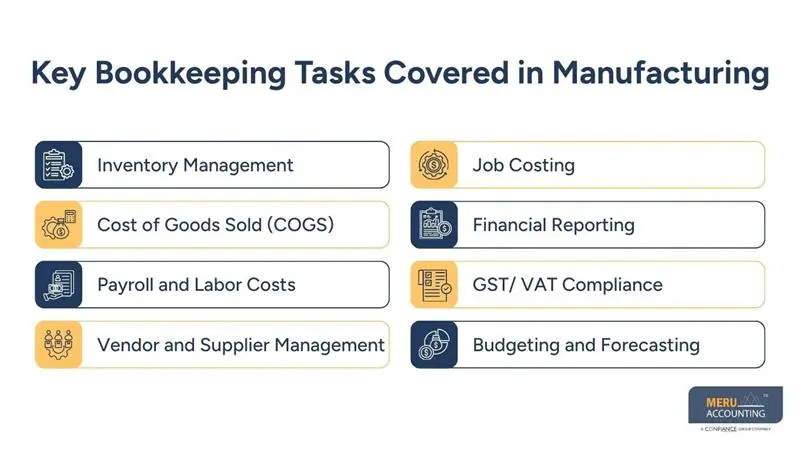
3. Payroll and Labor Costs
Recording labor costs and managing payroll entries for accurate payroll reporting. It also ensures labor costs are properly assigned to each production job.
4. Vendor and Supplier Management
Tracking purchases, bills, and payment schedules to avoid late fees and disputes. It also helps maintain strong relationships with suppliers and secure better terms.
5. Job Costing
Tracking costs for each manufacturing job or order to know the real project expenses. This allows you to analyze profitability per job and improve cost control.
6. Financial Reporting
Generating monthly financial statements and KPI reports for business analysis. These reports help management make better decisions and plan for future growth.
7. GST/ VAT Compliance
Preparing accurate tax records and filing returns on time to stay compliant. It also reduces the risk of penalties and ensures smooth audits.
8. Budgeting and Forecasting
Helping management plan production budgets and cash flow forecasts for stability. This makes it easier to plan purchases, manage expenses, and track future needs.
All these tasks are crucial for manufacturing bookkeeping and help businesses stay financially stable.
Best Practices for Bookkeeping for Manufacturing Company
To keep bookkeeping for manufacturing company accurate and useful, follow these best practices:
1. Use Proper Inventory Accounting
Always track inventory in detail and use FIFO or weighted average methods for valuation. This ensures inventory is valued correctly and avoids costing errors in reports.
2. Track Direct and Indirect Costs Separately
Separate labor, materials, and overhead to understand product costs clearly. This helps you see where money is being spent and improve cost control.
3. Reconcile Accounts Monthly
Reconcile bank accounts, supplier accounts, and inventory records every month. Monthly reconciliation helps detect errors early and keeps records up to date.
4. Maintain Clear Documentation
Keep receipts, invoices, and payroll records organized for easy retrieval and review. Good documentation also supports audits and helps solve disputes quickly.
5. Regularly Review Financial Reports
Review monthly financial reports to identify issues and plan improvements. This allows you to spot trends, reduce waste, and improve profitability.
6. Use Manufacturing-Specific Software
Use software that supports job costing, inventory tracking, and production reporting. The right software reduces manual work and improves accuracy across departments.
7. Keep Inventory Counts Accurate
Perform regular physical inventory counts to avoid mismatches and missing stock. Accurate counts help prevent production delays and reduce stock shortages.
By following these practices, bookkeeping for manufacturing company becomes accurate and helpful for decision-making.
How to Transition from In-House to Outsourced Manufacturing Bookkeeping
Switching from an in-house bookkeeping team to outsourcing is easy if done correctly. Here is a simple step-by-step plan:
Review Current Bookkeeping
Analyze current accounting systems, inventory records, and financial reports for accuracy. This helps identify gaps, errors, and areas that need improvement before switching.
Choose an Outsourced Bookkeeping Partner
Select a firm with manufacturing bookkeeping experience and a strong track record. Check their reviews, expertise, and how they handle manufacturing-specific bookkeeping needs.
Share Access and Documents
Provide access to accounting software, bank accounts, supplier records, and inventory data securely. Ensure all documents are organized so the outsourced team can start work quickly.
Set Clear Expectations
Define reporting schedules, communication methods, and KPIs for ongoing work. Clear expectations help avoid misunderstandings and keep the process smooth.
Start with a Trial Period
Begin with a trial month to ensure the outsourced team meets expectations and quality standards. This trial helps you evaluate their accuracy, speed, and overall reliability.
Review and Adjust
Review the reports and adjust the process as needed based on results. Make changes to improve efficiency and ensure the bookkeeping process matches your needs.
Ongoing Support
Ensure the outsourced team provides ongoing support and updates for continuous improvement. Regular communication helps you stay updated and resolve any issues quickly.
This smooth transition ensures your manufacturing accounting and bookkeeping remain accurate without interruption.
Why Choose Meru Accounting for Manufacturing Bookkeeping?
Meru Accounting is a trusted partner for bookkeeping for manufacturing company without an in-house team. We provide complete bookkeeping solutions tailored to manufacturing businesses. Here’s why Meru Accounting stands out:
Our team understands the specific needs of manufacturing bookkeeping and helps businesses stay organized.
Affordable and Flexible Services
Manufacturing companies can choose only the services they need without hiring a full-time team. This reduces overhead costs and keeps bookkeeping expenses predictable.
Accurate Inventory Tracking
Accurate tracking of raw materials, work-in-progress, and finished goods is ensured. This helps prevent stock mismatches and supports correct costing.
Timely Financial Reports
Monthly reports are provided to help improve business decisions and planning. These reports also highlight trends, costs, and profit margins clearly.
Compliance and Tax Support
GST/VAT compliance is managed along with tax filing and audit preparation. This reduces the risk of penalties and keeps records audit-ready.
Dedicated Support
Ongoing support is available to address bookkeeping questions and concerns. This ensures quick resolution of issues and smooth financial management.
Reliable Partner for Manufacturing Bookkeeping
Accurate manufacturing accounting and bookkeeping can be achieved without the cost of an in-house team. Outsourced bookkeeping services can help maintain clean records and support growth.
Key Takeaways
- Manufacturing bookkeeping is essential for tracking costs, inventory, and profits.
- Manufacturing businesses face unique bookkeeping challenges like inventory mismatch and cost allocation.
- Outsourcing manufacturing bookkeeping reduces cost and improves accuracy.
- Outsourced bookkeeping covers inventory tracking, job costing, payroll, and reporting.
- Meru Accounting provides specialized bookkeeping services for manufacturing companies without an in-house team.
FAQs
Manufacturing bookkeeping is recording all financial transactions for a manufacturing business, including materials, labor, and inventory.
Because they have inventory, production costs, and job costing, which are different from those of normal businesses.
Yes, you can outsource manufacturing accounting and bookkeeping to a professional firm like Meru Accounting.
Inventory tracking, payroll, job costing, supplier bills, and monthly financial reports.
It saves money, reduces errors, and gives you accurate financial reports on time.


