




Accurate financial records are essential for manufacturing businesses to run smoothly and profitably. Manufacturing bookkeeping helps track costs, manage inventory, and ensure compliance with financial regulations.
By applying lean manufacturing principles, companies can reduce errors, improve efficiency, and maintain clearer financial records. Lean methods focus on eliminating waste, streamlining processes, and ensuring that every step in production adds value.
When combined with careful bookkeeping, these practices allow manufacturers to gain a complete and accurate picture of their financial health. This clarity supports better decision-making, cost control, and long-term operational success.
What You Will Learn From This Blog
- Why accurate manufacturing bookkeeping is essential for operational success.
- How lean principles impact cost tracking and financial reporting.
- Common challenges faced in bookkeeping for manufacturing company.
- How implementing lean methods improves financial accuracy.
- Technology solutions that simplify lean manufacturing bookkeeping.
- The benefits of outsourcing bookkeeping to experienced professionals like Meru Accounting.
Introduction To Manufacturing Bookkeeping And Lean Principles
Understanding Manufacturing Bookkeeping
Manufacturing bookkeeping involves recording and managing all financial transactions specific to production. This includes tracking raw materials, labor costs, overhead, and finished goods. Proper bookkeeping helps managers make informed decisions about pricing, production schedules, and cost reduction strategies.
What Are Lean Manufacturing Principles?
Lean manufacturing principles focus on reducing waste, improving process efficiency, and maximizing value for customers. These principles guide production workflows and have direct implications on accounting and financial tracking.
Link Between Lean Practices And Bookkeeping
By applying lean practices, manufacturers can streamline operations, reduce unnecessary expenses, and improve the accuracy of bookkeeping for manufacturing company. Lean processes eliminate errors caused by redundant tasks or mismanaged inventory.
Financial Visibility Through Lean
Lean principles encourage clear documentation of materials, labor, and overhead costs. This creates transparency in manufacturing bookkeeping, allowing managers to identify cost-saving opportunities and prevent financial discrepancies.
Strategic Decision Making
Accurate manufacturing accounting and bookkeeping supported by lean principles enables strategic planning. Businesses can predict cash flow requirements, manage budgets efficiently, and plan for growth with confidence.
Why Accurate Bookkeeping Matters In Manufacturing
Cost Management
Accurate manufacturing bookkeeping ensures precise tracking of material, labor, and overhead costs. It prevents overspending and helps maintain optimal inventory levels.
Compliance And Reporting
Manufacturing companies must comply with tax regulations and financial reporting standards. Proper bookkeeping for manufacturing company ensures timely and accurate filings, reducing the risk of penalties.
Inventory Accuracy
Lean manufacturing focuses on just-in-time production, which requires real-time inventory monitoring. Accurate bookkeeping services for manufacturers support inventory reconciliation and reduce errors in stock valuation.
Performance Tracking
Financial records help track production efficiency, waste reduction, and operational performance. Well-maintained industrial bookkeeping data allows managers to measure results effectively.
Financial Forecasting
Reliable bookkeeping for a manufacturing firm forms the basis for budgeting and forecasting. Companies can predict expenses, revenues, and cash flow requirements more accurately.
Cost Analysis And Decision Making
Detailed manufacturing bookkeeping allows managers to analyze product costs and make informed pricing decisions. This helps improve profitability and operational efficiency.
Risk Management
Accurate records help identify financial risks early. Industrial accounting services ensure businesses can prevent losses and maintain steady operations.
Key Lean Manufacturing Principles And Their Accounting Implications
Elimination Of Waste
Lean manufacturing aims to reduce excess materials and production steps. This principle directly affects manufacturing accounting and bookkeeping by simplifying cost tracking and reducing discrepancies.
Continuous Improvement
Regular process improvements reduce errors and inefficiencies. For bookkeeping for manufacturing company, continuous improvement ensures updated accounting methods and fewer mistakes in financial records.
Just-In-Time Production
Producing only what is needed minimizes inventory costs. Accurate manufacturing bookkeeping is necessary to track material usage and ensure financial records match actual production.
Standardized Work Processes
Consistency in production simplifies accounting tasks. Standardized operations make bookkeeping and accounting for a manufacturing firm easier and more accurate, reducing human errors.
Visual Management
Lean practices use visual tools like kanban boards to track workflows. Integrating these visuals into manufacturing accounting and bookkeeping helps reconcile production data with financial records quickly.
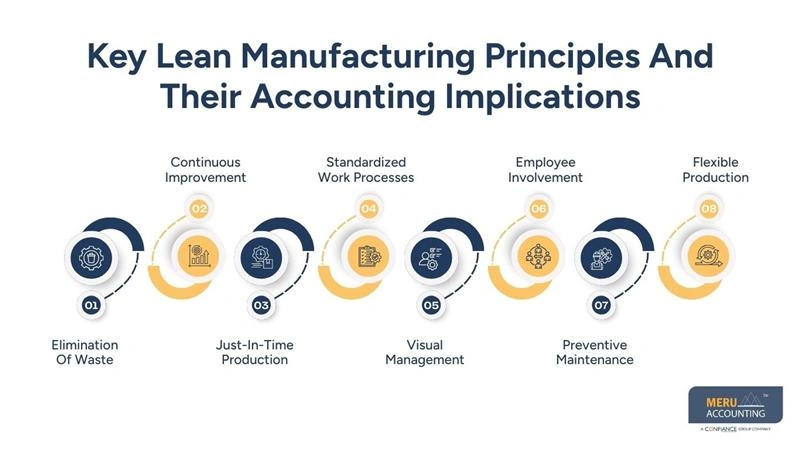
Employee Involvement
Lean manufacturing encourages workers to take responsibility for efficiency. In manufacturing company accounting, staff involvement ensures the timely and accurate recording of production costs.
Preventive Maintenance
Regular equipment checks reduce downtime and unexpected costs. Bookkeeping services for manufacturers reflect lower repair expenses and better allocation of resources.
Flexible Production
Adapting production quickly to demand prevents overproduction. Accurate bookkeeping for manufacturing company helps track these adjustments in cost and inventory effectively.
Common Challenges In Bookkeeping For Manufacturing Companies
Complex Inventory Systems
Manufacturers often have multiple products and raw materials. Maintaining accurate manufacturing bookkeeping can be challenging without proper tracking systems.
Cost Allocation Issues
Allocating labor and overhead to different products may lead to inaccuracies. A manufacturing company’s accounting must carefully assign costs to avoid financial misrepresentation.
Frequent Process Changes
Manufacturing processes often change to meet demand. These changes require regular updates in industrial bookkeeping to ensure accurate reporting.
Human Error
Manual bookkeeping is prone to mistakes, affecting financial statements. Businesses must implement error-checking measures for bookkeeping and accounting for manufacturing firms.
Data Integration Problems
Integrating production data with financial records can be difficult. Accurate manufacturing bookkeeping requires systems that consolidate multiple sources of information.
Regulatory Compliance Challenges
Manufacturers must follow various tax and reporting regulations. Maintaining bookkeeping and accounting for manufacturing firms that meet compliance standards can be complex and time-consuming.
How Lean Practices Improve Manufacturing Bookkeeping Accuracy
Streamlined Workflows
Lean principles reduce redundant steps in production. This simplifies manufacturing bookkeeping by minimizing the number of transactions that need recording.
Better Cost Control
Tracking only necessary materials and labor ensures precise accounting. Lean practices improve bookkeeping for manufacturing company by reducing unnecessary expenses.
Real-Time Tracking
Lean systems monitor production continuously. Real-time data integration enhances manufacturing accounting and bookkeeping accuracy by reflecting current costs and inventory.
Simplified Reporting
Standardized processes lead to consistent documentation. This consistency improves bookkeeping and accounting for manufacturing firms, making reports clearer and more reliable.
Enhanced Accountability
Lean practices assign responsibilities clearly. Staff responsible for specific tasks ensure that manufacturing or industrial bookkeeping is accurate and up to date.
Improved Error Detection
Regular checks in lean processes help identify mistakes early. Bookkeeping for manufacturing company becomes more reliable with fewer corrections needed later.
Efficient Resource Allocation
Lean practices help allocate materials and labor effectively. Accurate manufacturing bookkeeping reflects correct usage, reducing waste and cost overruns.
Technology Solutions For Lean Manufacturing Bookkeeping
Accounting Software Integration
Using software that connects production data with financial records streamlines manufacturing accounting and bookkeeping. Solutions like Odoo, QuickBooks, or Xero reduce manual entry errors.
Cloud-Based Systems
Cloud platforms allow real-time updates and remote access. Bookkeeping for manufacturing company becomes easier and more accurate with centralized data.
Inventory Management Tools
Software that tracks inventory movement supports lean production. Accurate manufacturing bookkeeping relies on these tools to reconcile stock with financial records.
Automated Cost Allocation
Automation helps assign labor and overhead costs accurately. For manufacturing company accounting, this reduces errors and saves time.
Reporting And Analytics
Technology can generate precise financial reports quickly. Lean principles combined with software ensure industrial bookkeeping data is ready for analysis and decision-making.
Integration With Production Systems
Linking accounting software directly to production systems improves data accuracy. Bookkeeping for manufacturing company reflects real-time material usage, labor, and production costs.
How Meru Accounting Supports Lean Manufacturing Bookkeeping
Expert Financial Oversight
Meru Accounting provides skilled professionals who manage manufacturing bookkeeping accurately. Their experience ensures compliance and precise reporting.
Customized Solutions
We tailor bookkeeping for manufacturing company services to fit your production processes. Custom workflows match your lean operations for optimal results.
Technology-Driven Processes
Meru Accounting integrates software solutions with your lean manufacturing processes. This ensures manufacturing bookkeeping is accurate and efficient.
Cost Optimization
By analyzing production costs and financial data, we help reduce waste and improve bookkeeping and accounting for manufacturing firms.
Staff Training And Guidance
We provide training to your team on lean accounting practices. Bookkeeping for manufacturing company becomes more accurate with informed staff handling day-to-day records.
Strategic Financial Insights
Meru Accounting offers analysis and advice based on your bookkeeping data. This helps manufacturers make smarter decisions and optimize industrial bookkeeping for long-term success.
Key Takeaways
- Accurate manufacturing bookkeeping is essential for cost control and compliance.
- Lean principles improve financial accuracy by reducing waste and errors.
- Bookkeeping for manufacturing company is simplified through standardized and automated processes.
- Technology solutions enhance the precision of manufacturing bookkeeping.
- Partnering with experts like Meru Accounting ensures reliable, accurate, and timely financial management.
FAQs
Manufacturing bookkeeping tracks all production costs and financial transactions while following lean principles.
Reducing waste, standardizing processes, and real-time monitoring make financial tracking more precise.
Accurate records ensure correct cost allocation, prevent errors, and support better decision-making.
Challenges include inventory tracking errors, misallocated costs, and outdated production records.
Accounting software and automation simplify cost tracking, inventory management, and financial reporting.


