




Manufacturing cost accounting is an essential tool for businesses that want to control production expenses and maintain profitability. By carefully tracking costs, analyzing production processes, and applying the right manufacturing costing methods, companies can identify waste, improve efficiency, and optimize their operations.
In this blog, we explore how manufacturing cost accounting plays a critical role in reducing production costs while maintaining quality and consistency.
By understanding the true cost of production, businesses can make informed decisions on pricing, resource allocation, and process improvements. Effective production cost accounting not only reduces expenses but also strengthens overall financial planning and long-term profitability.
What You Will Learn From This Blog
- How manufacturing cost accounting helps businesses control production expenses.
- The key components that make up manufacturing costs.
- Different manufacturing costing methods that improve efficiency.
- How real-time data enhances cost accuracy and decision-making.
- How Meru Accounting can assist manufacturing businesses with cost management.
This blog provides a clear understanding of cost accounting principles specifically tailored for manufacturing businesses.
What Is Manufacturing Cost Accounting?
Manufacturing cost accounting is the systematic process of recording, analyzing, and managing all costs involved in producing goods. It gives businesses a clear understanding of how much it truly costs to manufacture each product, helping them monitor efficiency and make informed financial decisions.
By tracking both direct costs, such as raw materials and labor, and indirect costs, including utilities, overhead, and equipment depreciation, companies can gain a complete picture of production expenses and identify opportunities for cost reduction.
The main purpose of manufacturing cost accounting is to control unnecessary spending, improve budgeting, and increase profit margins. It allows management to allocate resources effectively, set competitive pricing, and make smart investments in equipment, labor, or technology.
Accurate cost accounting also supports better decision-making by providing reliable data on where money is being spent and which areas of production may be causing inefficiencies.
Manufacturing cost accounting works hand-in-hand with various manufacturing costing methods, such as job order costing or process costing, to allocate costs accurately across products or production batches.
This combined approach ensures businesses understand the true cost of production, identify hidden expenses, and implement strategies that improve overall operational efficiency while maintaining product quality and profitability.
What Are The Manufacturing Cost Components
Direct Material Costs
This includes all raw materials used to produce goods. Proper accounting ensures materials are not wasted or mismanaged.
Direct Labor Costs
Costs of workers directly involved in production. Keeping track of these costs helps in identifying overstaffing or underutilization.
Manufacturing Overhead
Indirect costs include factory rent, electricity, maintenance, and equipment depreciation. These costs are often overlooked but impact the total production expense.
Variable Costs
Costs that change depending on the production volume, such as raw material consumption and labor hours.
Fixed Costs
Expenses that remain constant regardless of production levels, including salaries, insurance, and lease payments.
Understanding Cost Behavior
Analyzing these components allows businesses to find cost-saving opportunities and make accurate forecasts.
Manufacturing Cost Accounting And Expense Reduction
Monitoring Cost Variances
By comparing estimated costs with actual expenses, businesses can identify deviations and take corrective actions.
Identifying Waste
Production cost accounting helps detect inefficiencies in material usage, labor, or processes, reducing unnecessary spending.
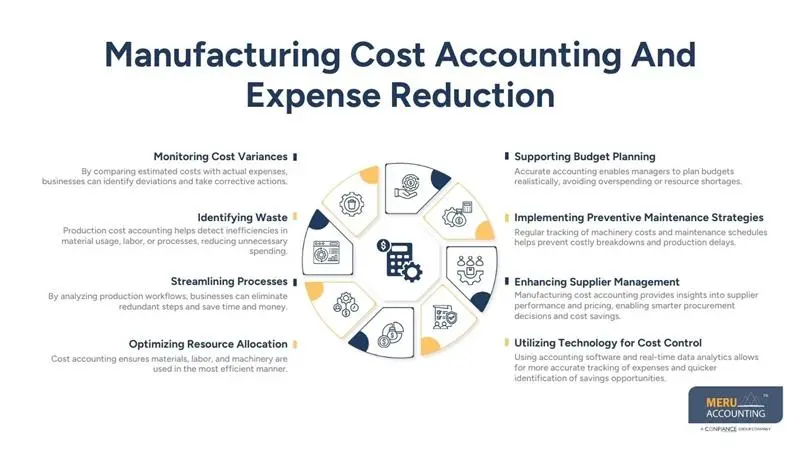
Streamlining Processes
By analyzing production workflows, businesses can eliminate redundant steps and save time and money.
Optimizing Resource Allocation
Cost accounting ensures materials, labor, and machinery are used in the most efficient manner.
Supporting Budget Planning
Accurate accounting enables managers to plan budgets realistically, avoiding overspending or resource shortages.
Implementing Preventive Maintenance Strategies
Regular tracking of machinery costs and maintenance schedules helps prevent costly breakdowns and production delays.
Enhancing Supplier Management
Manufacturing cost accounting provides insights into supplier performance and pricing, enabling smarter procurement decisions and cost savings.
Utilizing Technology for Cost Control
Using accounting software and real-time data analytics allows for more accurate tracking of expenses and quicker identification of savings opportunities.
Key Manufacturing Costing Methods For Efficiency
Job Order Costing
Costs are assigned to individual jobs or batches, making it easy to track expenses for customized production.
Process Costing
Used for continuous production lines, costs are averaged over all units, providing insight into mass-produced goods’ expenses.
Activity-Based Costing
Costs are allocated based on activities that generate expenses, giving a clear understanding of what drives production costs.
Standard Costing
Standard costs are pre-determined for materials, labor, and overhead, making it easier to monitor variances and control expenses.
Comparison Of Costing Methods
Using the right manufacturing costing methods ensures accurate cost allocation and highlights areas for savings.
The Impact Of Accurate Manufacturing Cost Accounting On Profit Margins
Correct Product Pricing
Knowing the exact production cost helps set competitive yet profitable prices.
Identifying Profitable Products
Cost accounting shows which products have higher margins and which may be costing too much to produce.
Reducing Unnecessary Expenses
By tracking and analyzing costs, businesses can cut expenses without compromising quality.
Improving Decision-Making
Accurate data helps management make strategic decisions regarding production, procurement, and investment.
Enhancing Cash Flow
Controlled production expenses lead to better cash management, ensuring funds are available for other operations.
How Manufacturing Cost Accounting Helps Identify Hidden Production Costs
Detecting Overhead Inefficiencies
Hidden costs, such as unused machinery or excessive utilities, can be uncovered through detailed accounting.
Monitoring Labor Utilization
Time spent on unproductive tasks increases production costs; accounting helps spot and correct this.
Managing Material Loss
Scrap, rework, and wastage contribute to hidden costs that accounting identifies and reduces.
Tracking Maintenance Expenses
Frequent breakdowns and unplanned repairs increase production expenses; cost accounting helps plan preventive maintenance.
Improving Supplier Negotiations
By knowing the exact cost of materials, businesses can negotiate better rates with suppliers.
Implementing Job Order And Process Costing Techniques
Job Order Costing Implementation
Set up cost tracking for each job, including materials, labor, and overhead, to get a precise cost per job.
Benefits Of Job Order Costing
Helps monitor profitability for custom orders and identify high-cost jobs that may need process improvements.
Process Costing Implementation
Allocate costs across large batches for industries with continuous production, ensuring accurate unit cost calculation.
Benefits Of Process Costing
Provides a clear picture of mass production costs, helping managers optimize production efficiency.
Combining Costing Techniques
Some manufacturers use both methods for different product lines, ensuring flexibility and cost accuracy.
How Real-Time Data Improves Manufacturing Cost Accounting Accuracy
Instant Cost Tracking
Real-time data allows businesses to monitor expenses as they occur, reducing errors and delays in reporting.
Quick Identification Of Issues
Any unexpected increase in material or labor costs can be addressed immediately.
Improved Forecasting
Real-time data helps predict future costs more accurately, aiding in better budgeting.
Streamlined Reporting
Automated accounting systems reduce manual effort and improve the speed and accuracy of financial reports.
Enhanced Decision-Making
Up-to-date information allows managers to make timely decisions, improving operational efficiency.
How Meru Accounting Supports Manufacturing Businesses
Managing production costs effectively is critical for manufacturing businesses to stay competitive and profitable.
Meru Accounting offers specialized services designed to help manufacturers implement accurate cost tracking, optimize expenses, and gain actionable insights into their operations. With our expertise, businesses can streamline their financial processes and make informed decisions that drive growth.
Expert Cost Analysis
Meru Accounting helps businesses implement accurate manufacturing cost accounting, ensuring all production costs are tracked.
Guidance On Costing Methods
We advise on the best manufacturing costing methods for your business, whether it’s job order, process, or activity-based costing.
Real-Time Reporting Solutions
Our accounting systems provide real-time data, helping manufacturers make timely decisions and reduce waste.
Expense Optimization
We identify areas where businesses can save on labor, materials, and overhead costs.
Strategic Insights
Meru Accounting provides clear insights into cost trends, helping businesses plan for growth and maximize profit margins.
Real-Life Example
In the retail business, managerial accounting helps store managers track inventory levels, monitor sales trends, and optimize pricing strategies. By analyzing cost and revenue data, retailers can make informed decisions on stock replenishment, promotional offers, and product placement. This ensures better profitability and efficient daily operations.
Key Takeaways
- Manufacturing cost accounting is essential for understanding and controlling production expenses.
- Different manufacturing costing methods provide tools to allocate costs accurately.
- Tracking all cost components, including hidden expenses, ensures efficient production.
- Real-time data and accurate reporting improve decision-making and profitability.
- Meru Accounting offers comprehensive support to implement these practices effectively.
FAQs
Manufacturing cost accounting tracks all production expenses and identifies areas of inefficiency. This helps businesses lower costs and increase profit margins.
Job order, process, and activity-based costing provide effective cost control. The choice of method depends on the type of production being managed.
Production cost accounting analyzes labor, materials, and overhead to reveal hidden expenses. Identifying these costs allows businesses to reduce waste and improve efficiency.
Real-time data provides immediate insights into production costs and potential issues. This ensures timely decision-making and better expense control.
Accurate cost accounting calculates the true cost of each product. Businesses can set competitive prices while maintaining healthy profit margins.


