



Manufacturing cost accounting is no longer limited to tracking labor, materials, and overhead. Today, manufacturers are also tracking how energy use, waste, emissions, and resource consumption affect their costs. Sustainability metrics are now being added to manufacturing cost accounting because they show real financial impact, not just environmental results.
As regulations grow stricter and customers demand more responsible production, manufacturing cost accounting is adapting to reflect these changes in a clear and measurable way.
What You Will Learn From This Blog
- Introduction to why sustainability metrics are becoming important in manufacturing cost accounting.
- Explanation of key sustainability metrics such as energy use, water consumption, waste, emissions, and material efficiency.
- How sustainability metrics are integrated into manufacturing cost accounting and affect product costing and profitability.
- The role of outsourced manufacturing accounting in tracking supplier practices and sustainability data.
- Benefits of including sustainability metrics, such as cost control, reduced expenses, better decision-making, and compliance.
What Are Sustainability Metrics In Manufacturing?
Energy Consumption
Measures electricity, gas, and other fuel use across production processes. Monitoring energy helps reduce costs and improves overall production efficiency.
Water Usage
Tracks water consumption to identify areas for cost savings. Lowering water use also supports environmental compliance and regulatory reporting.
Material Efficiency
Shows how effectively raw materials are converted into finished products. Higher efficiency reduces waste and increases profitability for manufacturing operations.
Waste Management
Monitors scrap, defective units, and disposal costs. Proper waste tracking can uncover cost-saving opportunities in production workflows.
Emission Levels
Quantifies carbon and other emissions that can have regulatory and financial impact. Reducing emissions improves sustainability ratings and may lower compliance penalties.
The Evolution Of Manufacturing Cost Accounting In A Sustainability-Driven Era
Traditional Focus On Direct Costs
Manufacturing cost accounting used to mainly focus on labor, materials, and overhead. Indirect costs, like energy and waste, were often overlooked in calculations.
Growing Regulatory Requirements
New environmental regulations have made sustainability tracking an important part of cost calculations. Companies must now maintain accurate records for government audits and inspections.
Consumer Expectations
Rising consumer expectations for responsible products are influencing outsourced manufacturing accounting, helping businesses integrate sustainability into cost decisions. Transparent sustainability practices can increase brand loyalty and sales over time.
Supplier Accountability
Suppliers’ sustainability practices are now factored into overall product costs. Choosing responsible suppliers helps improve both cost accuracy and corporate reputation.
Long-Term Planning
Sustainability metrics allow manufacturers to anticipate future cost trends more accurately. Predicting resource needs helps businesses avoid unexpected operational expenses later.
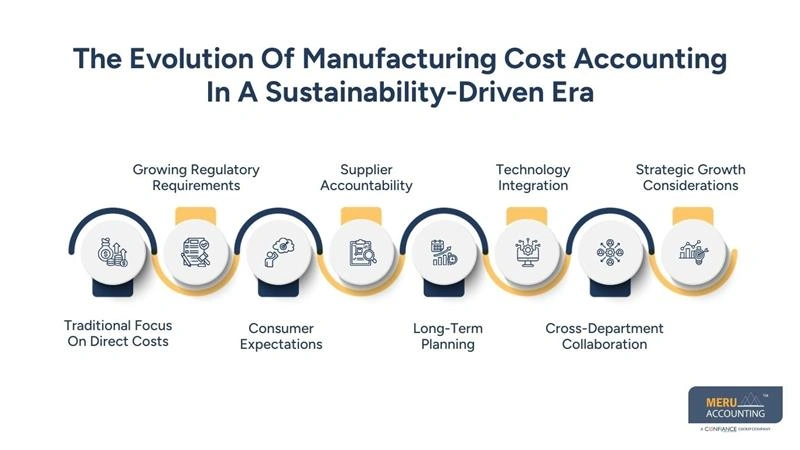
Technology Integration
Advanced technologies are transforming manufacturing cost accounting by improving the tracking of energy, waste, and emissions. Automated systems help reduce errors and save time in cost calculations.
Cross-Department Collaboration
Sustainability requires coordination between production, finance, and procurement teams. Collaboration ensures all departments contribute to accurate cost accounting data.
Strategic Growth Considerations
Sustainability data helps identify opportunities for cost-efficient expansion. Manufacturers can plan investments with both financial and environmental impact in mind.
Why Sustainability Metrics Are Becoming Part Of Manufacturing Cost Accounting
Rising Resource Costs
Rising energy and water costs are critical factors in outsourced manufacturing accounting, ensuring accurate product costing and pricing. Ignoring these costs can significantly distort product pricing and profit margins.
Compliance Obligations
Fines and penalties make sustainability costs a real financial factor in manufacturing cost accounting. Accurate reporting reduces risks of costly violations and legal complications.
Profitability Insights
Tracking sustainability metrics helps manufacturers understand hidden costs and improve margins. Identifying inefficiencies allows better allocation of resources and cost reduction strategies.
Operational Efficiency
Identifying energy and material inefficiencies leads to more accurate costing. Efficiency improvements often result in faster production and lower operational waste.
Strategic Decision Making
Data from sustainability metrics supports pricing, budgeting, and investment decisions. It provides managers with actionable insights for cost-effective production planning.
Key Sustainability Metrics Impacting Manufacturing Cost Accounting
Energy Cost Per Unit
Shows how much energy is consumed for each product, affecting overall cost. This metric enables manufacturers to benchmark energy efficiency across production lines.
Waste Disposal Costs
Tracks expenses for landfill, recycling, or treatment of production waste. Proper tracking ensures that disposal costs are allocated correctly to products.
Carbon Footprint Costs
Assigns financial impact to greenhouse gas emissions. It helps businesses evaluate environmental impact alongside production expenses.
Water Usage Costs
Helps calculate the cost of water used per batch or product. Reducing water-related costs can also improve environmental compliance and sustainability.
Material Yield
Measures how much raw material ends up as sellable output. Improving yield directly increases efficiency and reduces unnecessary production expenses.
Packaging And Supply Chain Costs
Evaluates costs related to sustainable packaging and transportation practices. Optimizing packaging reduces waste and lowers overall product-related expenses.
How Sustainability Metrics Affect Product Costing And Profitability
More Accurate Product Costs
Integrating sustainability metrics improves outsourced manufacturing accounting accuracy, helping companies determine true production costs. Accurate cost calculation ensures pricing decisions reflect real production expenses.
Margin Optimization
Hidden costs from energy or waste are identified and managed. Better margin tracking supports profitability and long-term business sustainability.
Better Pricing Decisions
Manufacturers can adjust product pricing based on real production costs. Pricing aligned with true costs ensures competitive yet profitable products.
Reduced Rework And Waste
Tracking inefficiencies helps lower the cost of defective products. This reduces production delays and improves overall operational effectiveness.
Improved Financial Planning
Sustainability data provides better insights into profit forecasts. Forecasting becomes more reliable when cost drivers are clearly understood.
Resource Allocation Efficiency
Sustainability metrics guide where resources should be invested or conserved. Optimal allocation lowers waste and improves overall manufacturing profitability.
The Role Of Sustainability In Outsourced Manufacturing Accounting
Supplier Reporting
Outsourced manufacturing accounting includes data from suppliers to calculate true costs. Tracking supplier performance ensures accurate and consistent cost allocation across vendors.
Cost Comparisons
Tracking sustainability metrics across vendors allows for better pricing decisions. It also supports negotiation and evaluation of more cost-efficient suppliers.
Compliance Risk Reduction
Suppliers’ environmental compliance can now be monitored financially. This reduces potential penalties and protects companies from regulatory fines.
Contract Management
Data on resource usage helps adjust contract terms and agreements. Transparent metrics allow fair pricing and better vendor relationship management.
Brand Reputation
Responsible sourcing tracked in outsourced accounting protects the company’s image and finances. Sustainability data can be used to promote corporate social responsibility initiatives.
Benefits Of Integrating Sustainability Metrics Into Manufacturing Cost Accounting
Stronger Cost Control
Manufacturers gain a clearer picture of total production costs. Monitoring sustainability metrics helps identify where spending can be reduced.
Reduced Operating Expenses
Energy and material efficiency initiatives lower ongoing costs. Savings from sustainable practices can be reinvested into other operations.
Informed Decision Making
Managers have accurate cost data for pricing, planning, and investment. Data-driven decisions reduce financial risk and improve operational efficiency.
Simplified Reporting
Compliance and sustainability reports can be generated directly from accounting systems. Reports are ready for audits, internal reviews, and management assessments.
Future Cost Stability
Sustainable practices help avoid unexpected financial impacts from resource shortages or regulation changes. Planning with these metrics ensures long-term production and financial stability.
How Meru Accounting Helps Manufacturers Integrate Sustainability Into Cost Accounting
Industry Expertise
Meru Accounting has extensive experience in manufacturing cost accounting. We understand both traditional and sustainability-driven cost management needs.
Integrating Sustainability Metrics
We help manufacturers include energy, waste, and material usage costs in their accounting systems. This ensures financial statements reflect true production costs accurately.
Outsourced Accounting Support
Our outsourced manufacturing accounting services ensure accurate tracking across vendors and production sites. We help maintain consistency in cost reporting across all manufacturing operations.
Custom Reports
We provide reports that clearly show the financial impact of sustainability metrics. Reports are tailored to highlight key cost drivers and efficiency opportunities.
Ongoing Review
Regular accounting reviews ensure sustainability costs are properly reflected in financial statements. Continuous monitoring allows manufacturers to make adjustments as operations change.
Key Takeaways
- Sustainability metrics are now a crucial part of manufacturing cost accounting.
- Integrating these metrics helps manufacturers reduce hidden costs and improve efficiency.
- Outsourced manufacturing accounting can track supplier practices to support cost accuracy.
- Compliance and regulation have real financial implications that must be reflected in cost accounting.
- Using sustainability data allows better pricing, planning, and long-term financial stability.
FAQs
Sustainability metrics measure energy, waste, water, and emissions costs in production. These metrics help manufacturers understand the financial impact of environmental practices.
They show hidden costs and improve accuracy in product costing and planning. Tracking these metrics ensures expenses are reflected correctly in financial reports.
Including sustainability ensures supplier costs, environmental impact, and compliance are tracked. It helps outsourced accounting maintain consistent and reliable cost data.
Energy usage, waste disposal, emissions, water, and material efficiency affect pricing. Proper tracking of these metrics allows for more precise profit calculation.
Sustainability tracking reduces costs, improves margins, and supports financial planning. It also provides insights for better long-term production decisions.


