


Non profit tax preparation is an important responsibility for charitable organizations, foundations, and community groups. Even though nonprofits often receive tax-exempt status, they still need to report financial activities to the tax authorities.
Proper reporting helps organizations maintain transparency, protect their exemption status, and ensure that funds are used according to their mission.
This guide explains the main concepts behind non profit tax preparation, the documents required, the tax forms involved, and the steps organizations usually follow to prepare and file their returns correctly.
It also explains the role of accounting and why accurate financial records are essential for organizations performing nonprofit tax preparation.
What You Will Learn From This Blog
- The basics of nonprofit taxes and what organizations need to report each year.
- Why keeping organized financial records is important for accurate tax filing.
- The common tax forms used by nonprofit organizations for reporting.
- A step-by-step guide to completing nonprofit tax preparation.
- How proper recordkeeping supports accurate tax reporting and compliance.
- The role of accounting and bookkeeping in nonprofit tax preparation.
- The benefits of professional support in handling nonprofit tax preparation.
- Key compliance and reporting requirements for nonprofit organizations.
What Is Non Profit Tax Preparation?
Non profit tax preparation refers to the process of organizing financial data, reviewing transactions, and preparing required tax forms for nonprofit organizations. It ensures that the organization remains compliant with tax laws and maintains transparency with stakeholders.
Financial Reporting For Nonprofits
Nonprofits must report income, donations, and expenses to demonstrate how funds are used. Proper reporting also helps build trust with donors and funding agencies.
Reviewing Income Sources
Income may include grants, donations, membership fees, or event revenue. Accurate tracking of all income ensures nothing is overlooked during tax filing.
Recording Organizational Expenses
Expenses such as program costs, salaries, and operational spending must be documented properly. Keeping detailed records helps prevent errors and supports audits if needed.
Preparing Required Tax Forms
Organizations complete specific forms as part of nonprofit tax preparation. Choosing the correct forms and filling them accurately is crucial for compliance.
Submitting Reports To Authorities
The final step is submitting reports to the appropriate tax authority within the required deadline. Timely submission helps avoid penalties and maintains the organization’s good standing.
Why Non Profit Tax Preparation Is Important For Organizations
Maintaining Tax-Exempt Status
Regular filings help confirm that the organization continues to meet tax-exempt requirements. Staying compliant ensures the nonprofit can continue operating without legal or financial interruptions.
Improving Financial Transparency
Clear reporting shows donors and stakeholders how funds are used. Transparent financial practices help attract new supporters and maintain credibility.
Supporting Organizational Accountability
Tax reporting allows boards and regulators to review financial activities. It also helps leaders make informed decisions based on accurate financial data.
Preventing Compliance Issues
Accurate filings reduce the risk of penalties or reporting delays. Proper preparation ensures the organization meets all legal obligations on time.
Building Donor Confidence
Proper non profit tax preparation strengthens trust among supporters and contributors. Demonstrating financial responsibility encourages ongoing donations and long-term support.
Key Differences Between Non Profit And For-Profit Tax Filing
Key Difference | Nonprofit Organizations | For-Profit Businesses |
Purpose Of The Organization | Operate for social or charitable goals. This shapes how income, expenses, and reporting requirements are treated. | Operate to generate profits, focusing on financial gain for owners or shareholders. |
Treatment Of Revenue | Revenue comes mainly from donations, grants, and fundraising activities. | Revenue comes primarily from sales of products or services. |
Use Of Surplus Funds | Any surplus must be used to support the organization’s mission. | Surplus profits may be distributed to owners or shareholders. |
Public Disclosure Requirements | Many filings are publicly available, ensuring transparency and accountability to donors, members, and the public. | Limited public disclosure is required; primarily for regulatory compliance or investors. |
Reporting Structure | Reporting formats include detailed information about programs, grants, and fundraising activities. | Reporting focuses on financial performance and profit/loss statements. |
Essential Documents Required For Non Profit Tax Preparation
Financial Statements
Income statements and balance sheets provide an overview of financial performance. These statements help organizations analyze their overall financial health and make informed decisions.
Donation Records
Donation receipts and contribution logs help verify funds received, which is a crucial step in non profit tax preparation. Keeping detailed donation records also ensures accurate reporting to donors and tax authorities.
Expense Documentation
Invoices, receipts, and operational bills support expense reporting. Proper documentation prevents discrepancies and simplifies audits if required.
Payroll Records
Employee salary details and tax deductions must be recorded accurately. Maintaining these records helps ensure compliance with employment and tax regulations.
Grant Agreements
Grant documentation helps show how specific funds are used. It also provides evidence of compliance with grantor requirements and reporting obligations.
Understanding IRS Requirements For Nonprofit Tax Preparation
Annual Filing Obligations
Many nonprofits must submit annual information returns. These filings provide the IRS with details about the organization’s finances and operations.
Compliance With Filing Deadlines
Timely filing ensures the organization avoids penalties and supports proper non profit tax preparation. Meeting deadlines also helps maintain tax-exempt status and good standing with regulators.
Public Disclosure Rules
Some nonprofit financial information must be accessible to the public. This transparency helps build trust with donors, members, and the community.
Record Retention Requirements
Organizations must keep financial records for several years. Proper record retention ensures supporting documents are available for audits or reviews.
Monitoring Financial Activities
Accurate financial tracking supports effective nonprofit tax preparation. Consistent monitoring also helps identify discrepancies or errors early.
Common Tax Forms Used In Non Profit Tax Preparation
Form 990
Form 990 provides an overview of the organization’s finances and activities. It helps the IRS and the public understand how the nonprofit operates and manages its resources.
Form 990-EZ
Smaller nonprofits may qualify to file the shorter Form 990-EZ. This form reduces the reporting burden while still providing key financial information.
Form 990-N
Very small organizations may file a simple electronic notice. It is an easy way to meet annual reporting requirements for low-revenue nonprofits.
Form 990-PF
Private foundations use this form to report financial activities. It also provides transparency for grants awarded and funds received.
Form 1023
Organizations use this form when applying for tax-exempt recognition. Approval of Form 1023 is necessary before the nonprofit can operate as a tax-exempt entity.
Form 990-T
Nonprofits may use Form 990-T to report unrelated business income, an important step in comprehensive non profit tax preparation. This ensures that income not related to the mission is taxed properly.
Step-By-Step Process Of Non Profit Tax Preparation
Step 1: Collect Financial Information
Gather bank statements, financial records, and accounting reports. This step ensures that all necessary data is available for accurate reporting and reduces the chance of missing information.
Step 2: Review Income And Donations
Confirm that all income sources are recorded correctly. Carefully reviewing donations, grants, and other revenue ensures transparency and proper acknowledgment of contributors.
Step 3: Organize Expense Records
Check that all expenses are supported with documentation. Proper organization of expenses helps in preparing accurate reports and supports compliance during audits.
Step 4: Complete Tax Forms
Prepare the required forms according to the organization’s size and type. Double-checking each form helps prevent errors that could result in penalties or delays.
Step 5: Submit And Review The Filing
Submit the completed filing and maintain copies for records to finalize non profit tax preparation. Reviewing the submission ensures accuracy and provides documentation in case of future inquiries or audits.
How Proper Recordkeeping Supports Non Profit Tax Preparation
Tracking Financial Transactions
Accurate tracking helps ensure all income and expenses are recorded. It also allows organizations to identify discrepancies early and maintain financial accuracy.
Maintaining Donation Records
Clear records support transparency and donor reporting. Proper documentation also strengthens trust and accountability with supporters.
Monitoring Program Costs
Organizations can review how funds are used across programs. Tracking program expenses helps evaluate efficiency and effectiveness in achieving the nonprofit’s mission.
Preparing Financial Reports
Organized data helps generate reports needed for filing. Accurate reports also support strategic planning and decision-making.
Supporting Audits And Reviews
Good recordkeeping simplifies audits and compliance checks. It ensures the organization can respond quickly to inquiries from regulators or donors.
Role Of Accounting And Bookkeeping In Nonprofit Tax Preparation
Recording Daily Transactions
Bookkeeping ensures financial transactions are recorded consistently. Daily updates help prevent errors and maintain accurate financial data.
Preparing Financial Statements
Accountants create reports that summarize financial performance. These statements provide insights into the organization’s financial health and support tax filings.
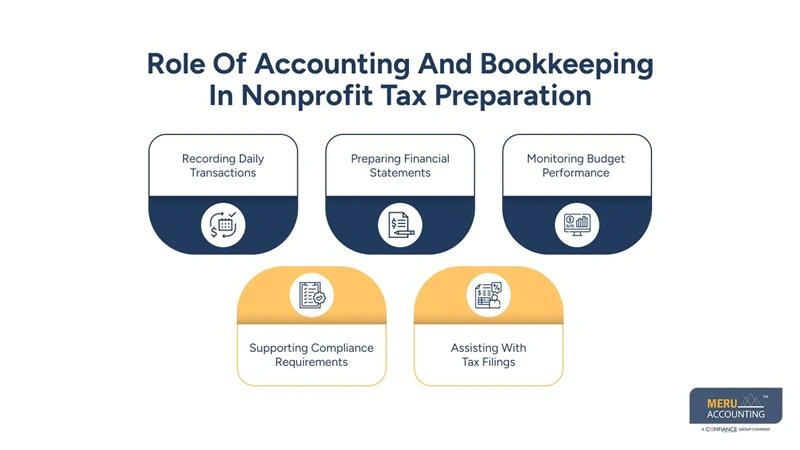
Monitoring Budget Performance
Budget tracking helps organizations manage resources responsibly. It also allows nonprofits to adjust spending and plan for future needs.
Supporting Compliance Requirements
Accountants ensure reporting meets regulatory standards. This helps maintain the organization’s tax-exempt status and avoid penalties.
Assisting With Tax Filings
Professional accountants often assist with nonprofit tax preparation. They provide guidance to ensure forms are completed correctly and submitted on time.
Benefits Of Professional Support For Non Profit Tax Preparation
Knowledge Of Nonprofit Regulations
Professionals understand tax rules related to nonprofit organizations. Their expertise helps prevent mistakes and ensures compliance with all requirements.
Accurate Financial Reporting
Expert support helps reduce reporting mistakes. Accurate reports strengthen transparency and trust with donors, boards, and regulators.
Time Savings For Staff
Professional services allow nonprofit teams to focus on their mission. Staff can dedicate more time to programs rather than managing complex filings.
Improved Documentation Practices
Experts help maintain organized financial records. Proper documentation makes future reporting and audits much easier.
Better Compliance Management
Professional guidance helps organizations manage filing requirements effectively. It reduces the risks of late submissions or regulatory issues.
How Meru Accounting Supports Non Profit Tax Preparation
Experienced Accounting Professionals
Meru Accounting has professionals who understand nonprofit financial systems and reporting standards. Their expertise ensures that all financial processes are accurate and compliant with regulations.
Organized Financial Record Support
Our team helps organizations maintain clear and accurate financial records. Properly organized records simplify reporting and make audits and reviews much easier.
Assistance With Tax Forms
We support organizations in preparing and reviewing the required filings. This ensures that forms are completed correctly, reducing the risk of errors or penalties.
Compliance Monitoring
Meru Accounting helps nonprofits stay updated with filing deadlines and reporting rules. Regular monitoring helps organizations avoid missed deadlines and maintain tax-exempt status.
Reliable Financial Reporting
Our services help organizations maintain accurate financial data for smooth non profit tax preparation. Consistent reporting also builds confidence among donors, board members, and regulators.
Key Takeaways
- Nonprofit organizations must still report financial activities even if they are tax-exempt.
- Non profit tax preparation helps maintain compliance and transparency.
- Proper recordkeeping simplifies the tax preparation process.
- Accounting and bookkeeping play an important role in financial reporting.
- Professional assistance can help organizations handle complex reporting tasks.
FAQs
Non profit tax preparation is the process of organizing financial records and filing required tax forms for nonprofit organizations to stay compliant with the IRS.
Yes, most nonprofits must file annual returns like Form 990, 990-EZ, or 990-N, even if they do not pay income tax.
Key documents include donation records, financial statements, expense receipts, payroll records, and grant agreements.
Nonprofits should keep financial and tax records for at least 3–7 years to comply with IRS rules and support audits.
Yes, accountants can make the process easier, ensure forms are filed correctly, and help nonprofits stay compliant with IRS regulations.


