Managing properties, especially across borders, is no simple task. The challenges of maintaining, renting, and optimizing properties internationally require more than just physical oversight. This is where offshore property management comes into play. It is an essential strategy for property owners who want to ensure their investments perform well, even from a distance. Beyond handling tenants and maintenance, successful offshore property management hinges on precise financial tracking and accountability.
A critical part of this process is property accounting. Without accurate accounting, property owners risk mismanagement, lost revenue, and compliance issues. So, understanding what is property accounting and why it matters is key to running profitable offshore properties.
In this blog, we will explore the concept of offshore property management, delve into property accounting, highlight its key components, and explain why it is indispensable.
What You Will Learn From This Blog
By reading this blog, you will gain insights into:
- What offshore property management entails and how it works.
- A clear understanding of what is property accounting and its importance.
- Key components of property accounting in offshore property management.
- Why accurate property accounting is crucial for compliance and financial performance.
- How outsourcing property management services can simplify your accounting and management tasks.
With this knowledge, you can make informed decisions to improve your property investments and ensure smooth operations.
What Is Offshore Property Management and How Does It Work?
Offshore property management refers to the professional oversight of real estate assets located in countries different from where the property owner resides. This includes managing rental properties, commercial buildings, or vacation homes from a distance.
At its core, offshore property management involves three main pillars:
- Tenant Management – Ensuring tenants are screened, rent is collected, and occupancy rates remain high.
- Maintenance and Operations – Coordinating property repairs, preventive maintenance, and managing service providers remotely.
- Financial Oversight – Tracking income, managing expenses, handling taxes, and preparing reports for the property owner.
While these tasks may seem straightforward, offshore property management comes with unique challenges:
- Time zone differences – Coordinating maintenance or emergencies across different time zones can delay responses.
- Legal compliance – Each country has its property laws, tax regulations, and reporting requirements.
- Currency management – Fluctuating exchange rates can impact rental income and expenses.
- Remote supervision – Property owners cannot always physically inspect the property, so they rely on managers and accounting systems to provide accurate insights.
Here is where property accounting becomes invaluable. Proper accounting ensures that all financial transactions are documented, providing transparency, accuracy, and compliance.
What Is Property Accounting? A Clear Explanation
Understanding what is property accounting is crucial for anyone involved in offshore property management. At its essence, property accounting is the systematic recording, analyzing, and reporting of financial transactions related to a property. This includes rental income, expenses, taxes, loan payments, and capital expenditures.
Property accounting is more than bookkeeping. It provides actionable insights that help property owners make strategic decisions. For offshore properties, it ensures that:
- Rent collection is timely and accurate.
- Expenses are monitored and categorized correctly.
- Tax obligations are met in both local and foreign jurisdictions.
- Investment performance is measurable and transparent.
Essentially, property accounting transforms raw financial data into meaningful reports that guide better decisions. Without it, property owners operate blindly, increasing the risk of mismanagement and financial losses.
Key Components of Property Accounting in Offshore Property Management
To effectively implement offshore property management, understanding the key components of property accounting is essential. Here are the most critical aspects:
1. Income Tracking
Income tracking involves recording every source of revenue from a property. This includes:
- Rent payments from tenants
- Service charges or maintenance fees
- Parking or storage rentals
- Any other property-related income
Accurate income tracking ensures that property owners are aware of total earnings and can detect any missing or delayed payments.
2. Expense Management
Expenses are inevitable in property management. Proper expense tracking involves:
- Utility bills
- Maintenance and repair costs
- Insurance premiums
- Property taxes
- Management fees
By monitoring expenses, property owners can control costs, reduce waste, and improve profitability.
3. Tax Compliance
Offshore properties often fall under complex tax regulations in both the host country and the owner’s home country. Property accounting ensures:
- Timely filing of tax returns
- Accurate calculation of tax liabilities
- Compliance with local property laws
Neglecting tax obligations can result in penalties or legal complications, making accounting a critical function.
4. Financial Reporting
Financial reports provide a snapshot of property performance. Typical reports include:
- Profit and loss statements
- Balance sheets
- Cash flow statements
- Budget variance reports
These reports enable property owners and managers to make data-driven decisions, whether it’s about raising rents, investing in improvements, or selling assets.
5. Bank Reconciliation
Reconciling bank statements with recorded transactions ensures accuracy and detects discrepancies. Regular reconciliation prevents fraud, missed payments, and accounting errors.
6. Capital Expenditure Tracking
Capital expenditures, such as major renovations or new equipment, affect long-term financial planning. Tracking these separately allows property owners to assess ROI and make informed investment decisions.
Why Property Accounting Is Crucial in Offshore Property Management
Understanding what is property accounting is just the start. Implementing it effectively can have significant benefits in offshore property management:
1. Transparency and Accountability
Proper property accounting creates transparency between property owners, managers, and investors. It ensures every financial decision is backed by accurate data, building trust among stakeholders.
2. Optimized Cash Flow
Accurate accounting allows property owners to track income and expenses, helping them maintain positive cash flow. This ensures there is always sufficient capital to cover operational costs, taxes, and unexpected repairs.
3. Risk Management
Accounting provides early warnings for potential financial risks, such as overdue rent, overspending on maintenance, or tax compliance issues. Timely intervention can prevent losses.
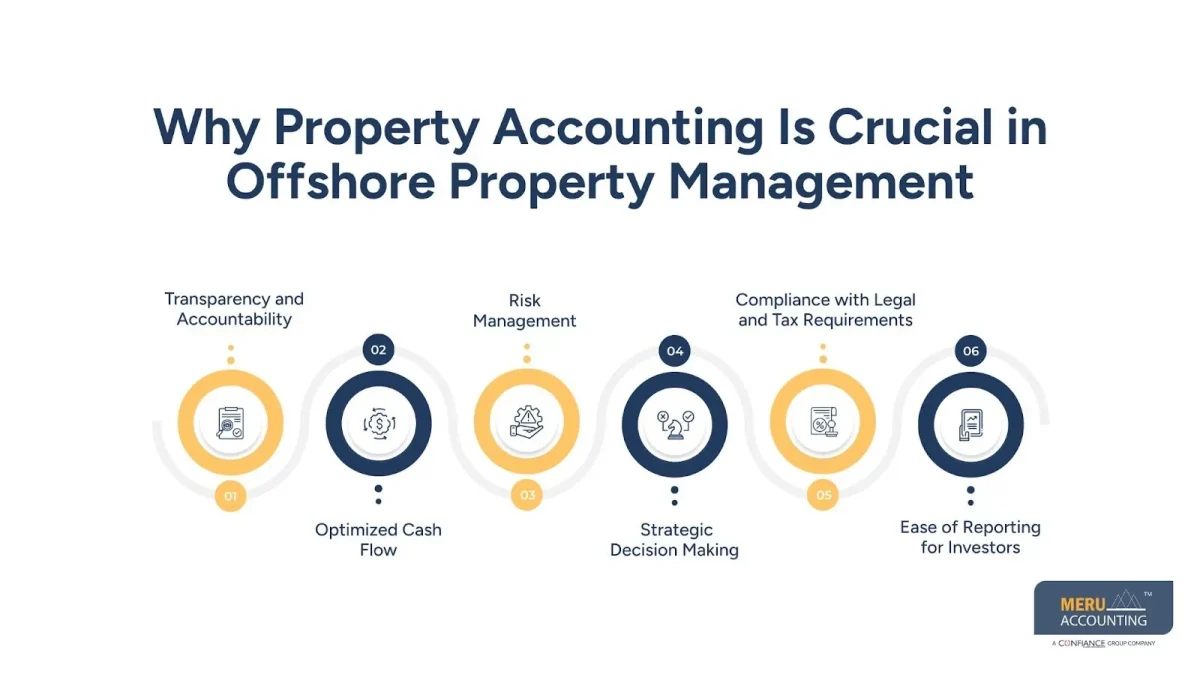
4. Strategic Decision Making
With accurate property accounting, owners can evaluate property performance, compare profitability across locations, and make informed investment decisions.
5. Compliance with Legal and Tax Requirements
Offshore properties must comply with foreign laws and taxation rules. Accounting ensures all obligations are met, avoiding fines and legal complications.
6. Ease of Reporting for Investors
For property owners with multiple investors or stakeholders, property accounting simplifies reporting and demonstrates professionalism. It provides confidence that the property is managed efficiently.
Meru Accounting’s Offshore Property Management Services
Managing offshore properties while maintaining accurate accounting can be challenging. That’s why Meru Accounting offers specialized offshore property management services designed to simplify the process.
Our services include:
- Comprehensive Property Accounting – We handle everything from rent collection to expense tracking, ensuring financial transparency.
- Tax Compliance – Our team navigates complex tax laws in multiple jurisdictions, filing returns on time and minimizing liabilities.
- Tenant Management Support – From lease agreements to payment reminders, we help streamline tenant interactions.
- Maintenance Coordination – We ensure property repairs and preventive maintenance are scheduled and documented.
- Detailed Financial Reporting – Monthly and annual reports give you a clear picture of your property’s performance, enabling better strategic decisions.
By outsourcing to Meru Accounting, property owners can enjoy the benefits of offshore property management without the stress of day-to-day accounting challenges. We ensure your investments remain profitable, compliant, and well-managed.
Key Takeaways
- Offshore property management is the professional management of properties located in foreign countries, requiring expertise in tenants, maintenance, and financial oversight.
- Property accounting is the systematic recording and reporting of all financial transactions related to a property, essential for informed decision-making.
- Key components of property accounting include income tracking, expense management, tax compliance, financial reporting, bank reconciliation, and capital expenditure tracking.
- Accurate property accounting improves transparency, cash flow, risk management, strategic decision-making, and legal compliance.
- Outsourcing offshore property management to professionals like Meru Accounting simplifies operations, ensures accurate accounting, and maximizes property performance.
FAQs
Property accounting is the recording, analyzing, and reporting of all financial transactions related to a property. It ensures accurate income tracking, expense management, tax compliance, and financial reporting for offshore properties.
Property accounting ensures transparency, reduces financial risks, optimizes cash flow, and helps comply with tax laws in different countries. It also provides data for strategic investment decisions.
While possible, managing offshore property accounting yourself is challenging due to time zones, legal complexities, currency fluctuations, and reporting requirements. Outsourcing ensures accuracy and compliance.
Meru Accounting provides comprehensive property accounting, tax compliance, tenant management support, maintenance coordination, and detailed financial reporting, making offshore property management stress-free.
You can expect profit and loss statements, balance sheets, cash flow reports, budget variance reports, and capital expenditure summaries that provide insight into property performance.


