




Introduction to Outsourced Virtual Accounting
In the rapidly evolving landscape of business finance, outsourced virtual accounting has emerged as a transformative solution for companies seeking efficiency, accuracy, and cost-effectiveness. The traditional model of in-house accounting is increasingly being supplemented or replaced by online accountancy services that leverage digital platforms and skilled professionals operating remotely. This paradigm shift offers enterprises unparalleled flexibility, scalability, and access to specialized expertise without the constraints of geography or office resources.
Outsourced virtual accounting encompasses a broad range of services including bookkeeping, payroll processing, tax preparation, financial reporting, compliance management, and advisory functions. These services are delivered through cloud-based software and real-time data sharing, allowing businesses to maintain up-to-date financial insights essential for strategic decision-making. As more businesses recognize these advantages, the adoption of online accountancy services continues to rise globally.
The Growing Demand for Online Accountancy Services
The increasing demand for online accountancy services is driven by several factors. Businesses—from startups to large enterprises—are searching for more strategic approaches to handling their financial operations. These digital accounting solutions enable companies to:
- Reduce overhead and operational costs by eliminating the need for full-time, on-site accounting staff.
- Gain access to specialized accounting expertise without geographical constraints.
- Improve accuracy and compliance through automated processes and real-time financial data monitoring.
- Free up internal resources to focus on core business activities and growth strategies.
- Scale accounting services flexibly according to business needs and workloads.
The versatility of online accountancy services provides a compelling proposition for businesses looking to optimize financial management while staying agile in a competitive market.
Benefits of Choosing Outsourced Virtual Accounting
Cost Efficiency and Savings
Outsourcing virtual accounting drastically cuts costs associated with hiring, training, and maintaining an in-house accounting department. Businesses avoid expenditures related to office space, software licenses, equipment, employee benefits, and ongoing education. Instead, they pay for tailored services based on actual needs and scale usage accordingly.
Access to Expert Accountants and Advanced Technology
Online accountancy service providers typically employ highly qualified accountants who specialize in various financial domains. These experts are supported by cutting-edge accounting software and secure cloud platforms that streamline processes, ensure compliance with regulatory standards, and enhance reporting capabilities.
Enhanced Data Security and Compliance
Leading outsourced virtual accounting firms prioritize data security by employing robust encryption methods and secure cloud infrastructures. This mitigates the risks associated with data breaches or unauthorized access. Additionally, these services stay updated with ever-changing tax laws and financial regulations, ensuring clients remain compliant and avoid penalties.
Improved Accuracy and Timeliness
Automation tools integrated within virtual accounting services minimize human errors. Real-time data synchronization allows businesses to access up-to-date financial information to make informed decisions quickly. This promptness is critical for cash flow management, budgeting, and forecasting.
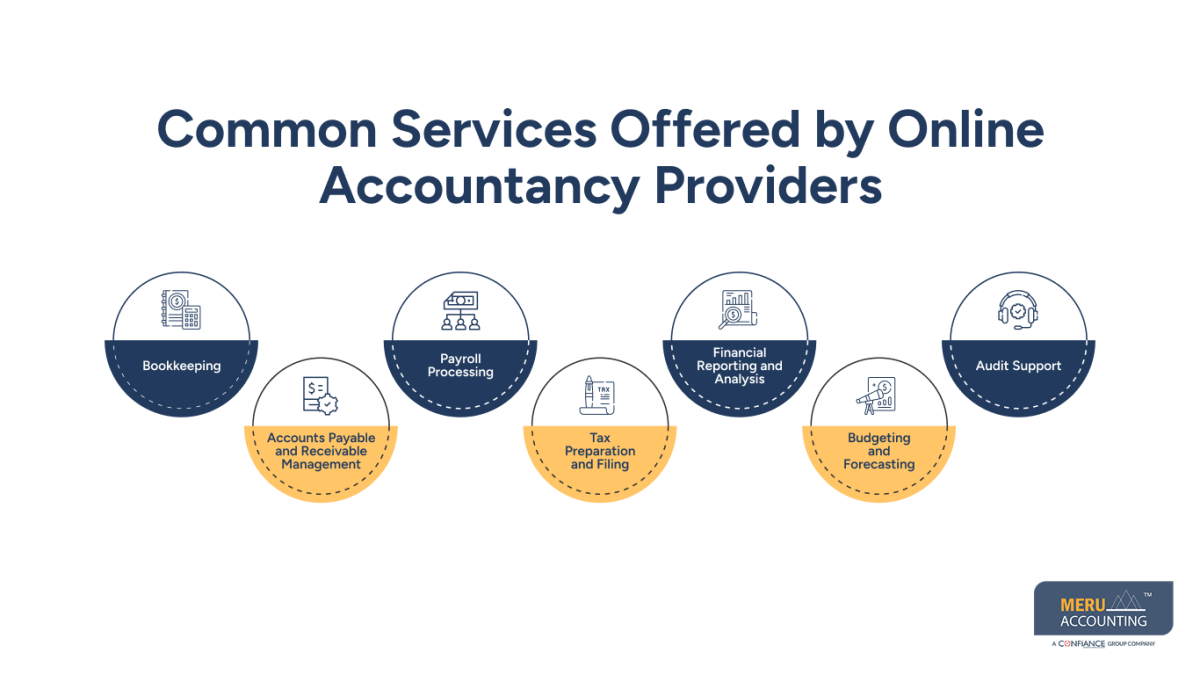
Common Services Offered by Online Accountancy Providers
Outsourced virtual accounting companies deliver a diverse suite of financial services tailored to meet the unique requirements of businesses across various industries. Common offerings include:
- Bookkeeping: Maintaining accurate records of financial transactions.
- Accounts Payable and Receivable Management: Handling vendor payments and customer invoicing.
- Payroll Processing: Calculating wages, managing deductions, and ensuring timely salary payments.
- Tax Preparation and Filing: Preparing tax returns, identifying tax-saving opportunities, and ensuring regulatory compliance.
- Financial Reporting and Analysis: Producing balance sheets, profit and loss statements, and cash flow reports for strategic insights.
- Budgeting and Forecasting: Assisting with financial planning to support growth and operational efficiency.
- Audit Support: Preparing documents and records to facilitate internal and external audits.
How Outsourced Virtual Accounting Works: The Process Explained
The process of engaging outsourced virtual accounting services typically involves several strategic steps to ensure seamless integration and optimal results:
- Needs Assessment: The service provider collaborates with the business to understand accounting requirements, volume, industry-specific considerations, and financial goals.
- Technology Integration: Cloud-based accounting platforms are established, allowing secure data sharing and real-time collaboration between client and accountant.
- Data Migration: Historical financial data is securely transferred to the new system for continuity and comprehensive record-keeping.
- Service Execution: Day-to-day accounting tasks, reporting, and compliance activities are managed remotely by qualified professionals.
- Review and Communication: Regular meetings and reporting sessions ensure transparent communication, allowing clients to stay informed and make data-driven decisions.
- Continuous Improvement: Providers adapt services and implement technology upgrades to enhance efficiency and meet evolving business needs.
Why Businesses Are Shifting Toward Outsourced Virtual Accounting
Several macro and microeconomic trends explain why businesses increasingly prefer outsourced virtual accounting:
- Digital Transformation: Modern enterprises prioritize digital tools and cloud computing to streamline operations, including financial management.
- Globalization: Remote accounting services break down geographical barriers, enabling businesses to tap into international expertise and resources.
- Workforce Flexibility: Companies seek agile staffing solutions to adjust to fluctuating workloads and market conditions.
- Cost Pressures: Growing competitive pressures compel organizations to optimize expenses, and outsourced accounting provides undeniable cost benefits.
The following table summarizes key reasons businesses choose outsourced virtual accounting:
| Reason | Description |
|---|---|
| Cost Reduction | Lower operational and labor costs compared to maintaining an in-house team. |
| Access to Expertise | Engagement with certified accountants and financial specialists. |
| Technological Adoption | Utilization of cloud accounting platforms and automation tools. |
| Improved Efficiency | Streamlined processes and faster financial reporting cycles. |
| Risk Mitigation | Compliance with regulations and enhanced data security measures. |
Challenges and Considerations When Choosing a Virtual Accounting Provider
While outsourced virtual accounting offers numerous benefits, businesses should carefully evaluate providers to ensure alignment with their objectives and operational culture. Key considerations include:
- Data Security and Confidentiality: Confirm robust encryption standards, secure access controls, and compliance with data privacy regulations such as GDPR or HIPAA where applicable.
- Service Customization: Assess whether providers offer scalable and customizable solutions that adapt to the company’s growth and changing financial needs.
- Communication and Responsiveness: Evaluate the provider’s communication protocols, availability, and support responsiveness.
- Technology Compatibility: Ensure that the accounting software integrates seamlessly with existing systems and that staff members receive adequate training.
- Reputation and Credentials: Verify certifications (e.g., CPA, ACCA), client testimonials, and industry experience.
Case Studies: Success Stories in Outsourced Virtual Accounting
Several businesses across industries have realized significant advantages by shifting to outsourced virtual accounting services. For example:
- Tech Startup: Reduced initial overhead by 40% by avoiding the cost of a full-time accounting staff, gaining access to specialized financial insight crucial for investor reporting and compliance.
- Retail Chain: Improved inventory accounting accuracy and streamlined payroll management, reducing payroll errors by over 30%.
- Professional Services Firm: Leveraged virtual accounting to generate real-time project profitability reports, aiding in client billing and resource allocation efficiency.
These case studies illustrate the tangible benefits and flexibility that outsourced virtual accounting services bring to businesses of all sizes.
Future Trends in Outsourced Virtual Accounting
The future of outsourced virtual accounting is poised for continued innovation driven by technology and evolving business needs. Key trends to watch include:
- Artificial Intelligence and Machine Learning: AI will increasingly automate complex tasks, such as financial forecasting, fraud detection, and intelligent bookkeeping.
- Blockchain Technology: Enhanced transparency, security, and immutability in transaction tracking and auditing processes.
- Integration with Business Intelligence: Deeper integration between accounting data and strategic analytics platforms to deliver actionable business insights.
- Greater Focus on Sustainability Reporting: Virtual accountants will support ESG (Environmental, Social, and Governance) compliance and reporting as these factors gain prominence.
Businesses leveraging these innovations will gain competitive advantages through sharper financial insights and more nimble operations.
About Meru Accounting
Meru Accounting is a leading provider of outsourced virtual accounting services, dedicated to helping businesses streamline their financial processes with advanced technology and professional expertise. Offering customized solutions including bookkeeping, tax compliance, payroll, and financial advisory, Meru Accounting combines personalized client service with state-of-the-art cloud-based platforms. Their team of certified accountants ensures accuracy, compliance, and strategic financial insights, empowering clients to focus on growth while maintaining robust financial health.
FAQs
What are the main benefits of outsourced virtual accounting for businesses?
Outsourced virtual accounting offers cost savings, access to expert accountants, enhanced data security, and the flexibility to scale services according to business needs.
How does outsourced virtual accounting improve business efficiency?
By automating routine accounting tasks and providing real-time financial reports, outsourced virtual accounting enables faster decision-making and reduces administrative workload.
Are outsourced virtual accounting services secure for handling sensitive financial data?
Yes, reputable online accountancy services use advanced encryption and secure cloud platforms to protect client data against unauthorized access.
Can small businesses benefit from outsourced virtual accounting?
Absolutely. Small businesses can access professional accounting expertise without the overhead of hiring full-time staff, helping them manage finances more effectively.
How do outsourced virtual accounting services integrate with existing business software?
Many outsourced virtual accounting providers offer seamless integration with popular accounting and ERP software, ensuring smooth data synchronization and workflow continuity.


