



Tax season can be overwhelming for businesses of all sizes, creating stress and bottlenecks in operations. Handling numerous client files, processing returns accurately, and meeting tight deadlines can put immense pressure on internal teams, often leading to errors or missed deadlines. This is where outsource tax accounting comes into play, offering expert support and timely execution.
By delegating tax-related tasks to specialized providers, companies can efficiently manage peak workloads without compromising accuracy or client satisfaction, ensuring smooth operations throughout the season.
What You Will Learn From This Blog
- How outsource tax accounting can reduce stress during peak tax season.
- The role of tax preparation outsourcing in improving operational efficiency.
- Key benefits and cost advantages of outsourcing tax accounting services.
- How outsourcing helps internal teams focus on strategic priorities.
- Tips to choose a reliable tax preparation outsourcing provider.
What Is Outsource Tax Accounting?
Outsource tax accounting refers to the practice of delegating tax preparation, filing, and reporting tasks to external professionals or specialized firms. These experts handle all tax-related processes, ensuring that your business stays compliant with regulations while maintaining accuracy in every filing.
By relying on experienced professionals, companies can reduce the burden on their internal accounting teams, especially during peak tax season when workloads tend to spike.
The process is straightforward. Businesses provide their financial data to the outsourcing provider, who then manages calculations, prepares returns, and handles all reporting requirements.
Outsourced services typically cover a wide range of tasks, including individual and corporate tax filing, tax planning, audit support, and bookkeeping for tax purposes. This ensures that all aspects of tax management are handled efficiently and professionally.
One major advantage of tax preparation outsourcing is the difference it makes compared to in-house accounting. Outsourcing eliminates the need to hire additional seasonal staff, train them, or invest in specialized software for peak periods.
Companies of all sizes—from small and medium enterprises (SMEs) to large corporations—can benefit from these services, ensuring that tax compliance is maintained without overloading internal teams.
Why Businesses Opt For Tax Preparation Outsourcing
Meet Seasonal Demands
During tax season, the volume of returns spikes. By choosing to outsource tax accounting, businesses ensure deadlines are met without overburdening staff. This allows companies to maintain consistent productivity even during the busiest months.
Access Skilled Professionals
Tax preparation outsourcing gives businesses access to trained accountants with expertise in local and international tax regulations. These professionals bring experience that internal teams may not have, improving overall efficiency.
Reduce Errors
Outsourcing reduces mistakes, as professional providers use advanced systems and checks to maintain accuracy. This helps prevent costly penalties and avoids time-consuming corrections.
Flexible Support
Businesses can scale outsourcing services up or down depending on workload, offering cost-effective solutions for peak periods. This flexibility ensures resources match demand without unnecessary expenses.
Stay Compliant
Outsourced accountants stay updated on tax laws and compliance requirements, minimizing risks for businesses. Staying compliant also protects the company’s reputation and builds trust with clients.
Benefits of Outsource Tax Accounting in Managing Peak Workload
Efficient Task Management
External accountants who provide outsource tax accounting handle routine tasks like data entry, calculations, and filings, freeing internal teams for more complex work. This ensures internal staff can focus on strategic activities rather than repetitive tax tasks.
Time-Saving
By choosing to outsource tax accounting, delegating tax work saves time, allowing businesses to focus on client interactions and other operational needs. Faster turnaround also helps meet tight tax deadlines with ease.
Improved Accuracy
Professional outsourcing reduces errors and ensures timely filing, decreasing the risk of audits or penalties. Accuracy also strengthens trust with clients and stakeholders.
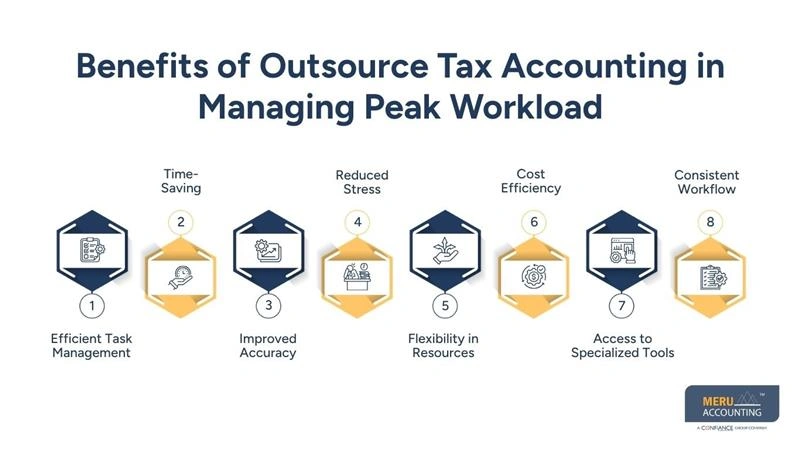
Reduced Stress
By managing peak workloads, outsourcing lowers pressure on in-house staff during the busiest months. This leads to better employee morale and a more balanced work environment.
Flexibility in Resources
Businesses don’t need to hire temporary staff for a short-term surge; outsourcing provides instant access to experienced personnel. This adaptability makes it easy to adjust for varying workloads.
Cost Efficiency
Outsource tax accounting reduces expenses related to hiring, training, and overtime. Companies can pay for only the services they need during peak season.
Access to Specialized Tools
Outsource providers often use advanced accounting software and systems. This improves efficiency, reduces manual errors, and streamlines reporting.
Consistent Workflow
Outsourced accountants follow structured processes to handle tasks systematically. This ensures tax filings are consistent, well-organized, and submitted on time.
How Tax Preparation Outsourcing Streamlines Operations
Simplifies Processes
Outsourced accountants follow structured processes, which reduce redundancies and streamline filing procedures. This makes tax management more efficient and less prone to mistakes.
Organized Documentation
All client records and tax documents are managed systematically, reducing the chances of missing important information. Organized files also make audits and reviews faster and easier.
Quick Turnaround
Peak-season deadlines are met more efficiently with experienced external teams handling the workload. This ensures businesses can submit returns on time without last-minute stress.
Standardized Workflows
Outsourcing ensures uniform practices for all tax filings, improving consistency across clients and departments. Standardization also helps maintain quality and accuracy across multiple projects.
Integrates With Existing Systems
Many outsourcing providers can work with your existing accounting software, enabling smooth coordination and reporting. Integration helps avoid duplication of work and keeps financial data synchronized.
Cost Advantages of Outsource Tax Accounting
Lower Operational Costs
Outsourcing removes the need for additional staff hiring, office space, and software investments for short-term peak season needs. This allows businesses to allocate resources to other important areas.
Pay-As-You-Go
Most outsourcing providers offer flexible pricing models based on workload, saving money compared to permanent hires. Companies only pay for services they actually use, making it more economical.
Reduced Training Expenses
No need to train internal employees on tax law updates or complex filing procedures, as outsourced teams are already skilled. This saves both time and money while ensuring expertise.
Avoid Overtime Costs
Internal staff do not need to work extra hours, reducing overtime and burnout expenses. Employees can maintain work-life balance while deadlines are met efficiently.
Better Budget Planning
Fixed outsourcing fees make it easier to forecast and manage costs during peak season. Predictable expenses also help businesses avoid financial surprises.
Impact of Outsource Tax Accounting on Small and Medium Enterprises (SMEs)
Access to Expertise
SMEs that outsource tax accounting gain access to tax professionals without the burden of recruiting full-time staff. This allows small teams to benefit from experience and knowledge they might not have in-house.
Competitive Advantage
Timely and accurate filings allow SMEs to focus on business growth and client satisfaction. Meeting deadlines consistently also helps build a trustworthy reputation in the market.
Reduced Errors
Small businesses often struggle with compliance; outsourcing ensures fewer mistakes and smooth audits. Fewer errors mean lower risk of penalties and financial setbacks.
Scalability
SMEs can scale services during peak periods without committing to long-term employment contracts. This flexibility helps businesses handle workload surges efficiently.
How Outsourcing Frees Internal Teams for Strategic Work
Focus on Core Activities
When you outsource tax accounting, internal teams can concentrate on business growth, client relationships, and strategic planning instead of tax filing. This allows companies to allocate resources toward initiatives that drive long-term success.
Minimize Distractions
Reducing time spent on repetitive tasks helps staff maintain productivity and morale. Employees can focus on higher-value work without interruptions from routine tax duties.
Encourage Skill Development
Staff can develop skills in analytics, planning, and advisory roles rather than routine tax tasks. This also enhances their professional growth and contribution to the business.
Enhance Decision-Making
With outsourcing handling tax complexities, management can make informed strategic decisions faster. Leaders have more time to analyze data and identify opportunities for improvement.
Boost Employee Satisfaction
Reduced stress and better workload management contribute to happier, more engaged teams. A well-supported team is also more likely to stay motivated and productive throughout peak periods.
Checklist for Selecting a Reliable Tax Preparation Outsourcing Provider
Verify Expertise
Ensure the provider has certified accountants and a proven record in handling outsource tax accounting services. Experienced professionals help reduce errors and ensure compliance with regulations.
Check References
Ask for client references and reviews to assess reliability and service quality. Feedback from other businesses provides insight into their performance and professionalism.
Understand Service Scope
Clarify which tasks are included: filings, planning, audit support, bookkeeping, etc. Knowing the full scope prevents misunderstandings and ensures your needs are fully met.
Evaluate Technology
The provider should use secure software and systems that integrate with your processes. Advanced tools improve efficiency and keep your data safe.
Assess Communication
Ensure clear and timely communication to avoid delays or misunderstandings during peak season. Open channels also make it easier to address any questions or issues quickly.
Pricing Transparency
Understand the fee structure to prevent hidden costs or unexpected charges. Transparent pricing allows better budget planning and avoids surprises during busy periods.
Why Choose Meru Accounting for Tax Preparation Services
Experienced Professionals
Meru Accounting has a team of certified tax accountants with years of experience in handling complex filings. Our expertise ensures compliance with local and international tax regulations.
Customized Solutions
We offer flexible packages tailored to your business size, industry, and seasonal workload. This personalized approach ensures you only pay for the services you truly need.
Accurate and Timely Filing
Our processes ensure deadlines are met with high accuracy, reducing audit risks. Timely filing also helps maintain a strong reputation with clients and regulatory authorities.
Support Across Platforms
We work with multiple accounting systems, including QuickBooks, Xero, and Odoo, to simplify integration. This compatibility allows smooth data flow and reduces manual errors.
Focus on Your Business
By handling tax tasks, we free your internal teams to focus on core operations and strategic initiatives. This enables your business to grow without the distraction of tax complexities.
Key Takeaways
- Outsource tax accounting helps businesses manage peak workloads efficiently.
- Tax preparation outsourcing provides access to skilled professionals and reduces errors.
- Outsourcing saves time, reduces stress, and allows internal teams to focus on strategic work.
- Cost advantages include lower operational expenses, no overtime, and predictable fees.
- SMEs benefit from scalability, compliance, and enhanced focus on growth.
- Selecting a reliable provider is key: check expertise, references, service scope, technology, and pricing.
- Meru Accounting offers trusted outsourcing services tailored to meet your peak-season demands.
FAQs
Outsource tax accounting means hiring experts to handle tax tasks, helping businesses manage high workloads efficiently during busy tax periods.
Professional outsourcing teams use accurate methods and checks, lowering mistakes and ensuring timely filings.
Yes, it frees your internal team from routine tasks, letting them focus on important work while taxes are handled by specialists.
Absolutely. It avoids hiring temporary staff, reduces overtime, and provides flexible services that match your peak season needs.
Look for certified accountants, good client reviews, clear pricing, defined service scope, and secure technology integration.


