
Managing real estate finances has become more complex than ever. Businesses today are not only dealing with rent collection and maintenance but also handling rules, reports, tenant contact, and finance tracking. As portfolios grow, so does the pressure on internal teams to keep everything clear and error free. This is where outsourced property management starts to make a real difference. This is simple to see in daily work. It helps teams stay calm and in control. It feels easy to manage. It saves time each day.
In recent years, many companies have turned their attention toward offshored property accounting in Philippines as a practical and scalable solution. In this context, it refers to businesses operating in the Philippines choosing to outsource their property accounting functions to external service providers, often located offshore. This approach allows them to access global expertise while keeping costs low. Businesses across the country are now combining external management support with offshore accounting solutions to simplify operations and improve financial clarity. This combination also helps businesses create more stable financial systems and avoid sudden issues in their processes. This makes work smooth and easy to track. It also helps teams plan in a better way. It keeps work clear and neat. It makes tasks easy to handle.
This shift is not just a trend. It reflects a deeper change in how businesses approach efficiency, cost control, and long term growth. It also shows how companies in the Philippines are becoming more open to global work and flexible business models. In many cases, this shift is also driven by rising competition and the need to work faster than before. This change is clear in many firms. It is easy to notice over time. It feels natural for growth. It helps firms stay strong.
What You Will Learn From This Blog
In this blog, you will explore:
- What offshored property accounting in Philippines actually means
- Why businesses are adopting outsourced property management
- The major benefits of combining outsourcing with offshore accounting
- Real world examples of businesses using these services
- How offshore accounting solutions can support long term growth
By the end, you will have a clear understanding of why outsourced property management is becoming a preferred strategy. You will also see how it fits into modern business practices in the Philippines. This knowledge can help business owners make better choices when reviewing outsourcing options. This will help you plan with ease. It also makes ideas clear and simple. It keeps things easy to read. It helps you act fast.
Understanding Offshored Property Accounting in Philippines
To understand the growing demand, it helps to first define what offshored property accounting in Philippines involves.
At its core, it refers to businesses in the Philippines delegating property related financial tasks to external accounting teams, often based in other countries. These tasks often include:
- Rent tracking and reconciliation
- Expense management
- Financial reporting
- Lease accounting
- Accounts payable and receivable
- Budgeting and forecasting
When businesses combine this with outsourced property management, they are handing over both operational and financial responsibilities to experts who work with clear processes. This allows internal teams to step away from repeat work and focus on decisions. It also reduces dependency on in house resources. In addition, it creates a more clear workflow where roles are well defined and carried out. This keeps work neat and easy. It also saves time each day. It makes work smooth. It keeps tasks simple.
The reason this model stands out is because it gives Philippine businesses access to a broader global talent pool. Instead of relying only on local hiring, companies can work with skilled staff from different regions. This expands capabilities while keeping operations efficient. It also helps businesses adopt new tools and systems more quickly through skilled external teams. This is good for long term use. It also builds strong work flow. It keeps work on track. It helps teams do more.
Another aspect that makes it appealing is flexibility in operations. By working with offshore teams, businesses can extend their work hours and ensure that tasks are done faster. This is especially useful for companies managing multiple properties or dealing with high transaction volumes. It also improves turnaround time for reports and finance updates. This helps teams stay on track. It also keeps work on time. It makes work fast. It keeps flow smooth.
Why Businesses Are Turning to Outsourced Property Management
There are several reasons why companies are embracing outsourced property management today.
First, managing property finances internally can become overwhelming. As the number of properties increases, so does the volume of transactions. Businesses often struggle with delays, errors, and rules risks. By choosing outsourced property management, companies can offload these responsibilities to experts who handle them daily. This leads to smoother workflows, better order, and fewer delays. It also allows business owners to reduce stress and focus on key tasks. This makes daily work easy. It also helps teams stay calm. It keeps work under control. It makes tasks simple.
Second, offshored property accounting in Philippines allows businesses to access skilled global talent without the need to hire and train large in house teams. Recruitment, training, and retention can be expensive and time consuming. With outsourced property management, businesses avoid these challenges while still benefiting from skilled experts. It also helps them stay competitive in a fast changing market. This advantage becomes even more important for businesses that are growing fast. This saves time and cost. It also helps in fast growth. It keeps teams lean. It helps firms grow fast.
Third, scalability is a major factor. When a business grows, its accounting needs grow as well. Outsourced property management allows companies to scale their operations without making large investments in infrastructure. Offshore partnerships make it easier to adjust resources based on demand. This ensures that businesses are not overstaffed or understaffed at any stage. This gives more control. It also helps in better use of staff. It keeps work balanced. It helps plan ahead.
Fourth, accuracy and compliance are critical in real estate. Errors in financial records can lead to serious issues. By relying on outsourced property management, businesses ensure that their records are handled by experts who understand rules. This reduces stress during audits and improves report reliability. It also builds trust among stakeholders and investors. This makes work safe and clear. It also builds long term trust. It keeps data right. It helps avoid risk.
Finally, cost efficiency plays a major role. One of the biggest reasons businesses choose offshored property accounting in Philippines is the ability to reduce operational expenses while maintaining service quality. This makes it a practical option for both growing and established companies. Over time, these savings can strongly impact overall profit. This helps firms grow with ease. It also keeps costs in check. It saves more each year. It helps long term gain.
Key Benefits of Offshored Property Accounting in Philippines
The rise of offshored property accounting in Philippines is driven by several key benefits that directly impact business performance.
Cost Savings
One of the most noticeable advantages is reduced costs. Hiring in house teams involves salaries, benefits, and infrastructure costs. Offshore support helps businesses manage expenses more effectively while maintaining quality. These savings can be reinvested into core business areas. It also gives businesses more financial flexibility for future plans. This keeps cash flow in check. It also helps long term plans. It saves more funds. It keeps spend low.
Access to Skilled Professionals
Businesses gain access to a wider pool of skilled professionals who specialize in property accounting systems. This improves the overall quality of work delivered and ensures consistent financial management. It also allows businesses to benefit from best practices used by global experts. This builds strong systems. It also helps work run well. It keeps tasks right. It helps teams grow.
Improved Efficiency
Efficiency improves when tasks are handled by specialists. Outsourced property management ensures that processes are streamlined and handled consistently. This results in faster turnaround times and better coordination. It also reduces delays caused by internal workload issues. This saves time each day. It also keeps work smooth. It helps teams move fast. It keeps flow clean.
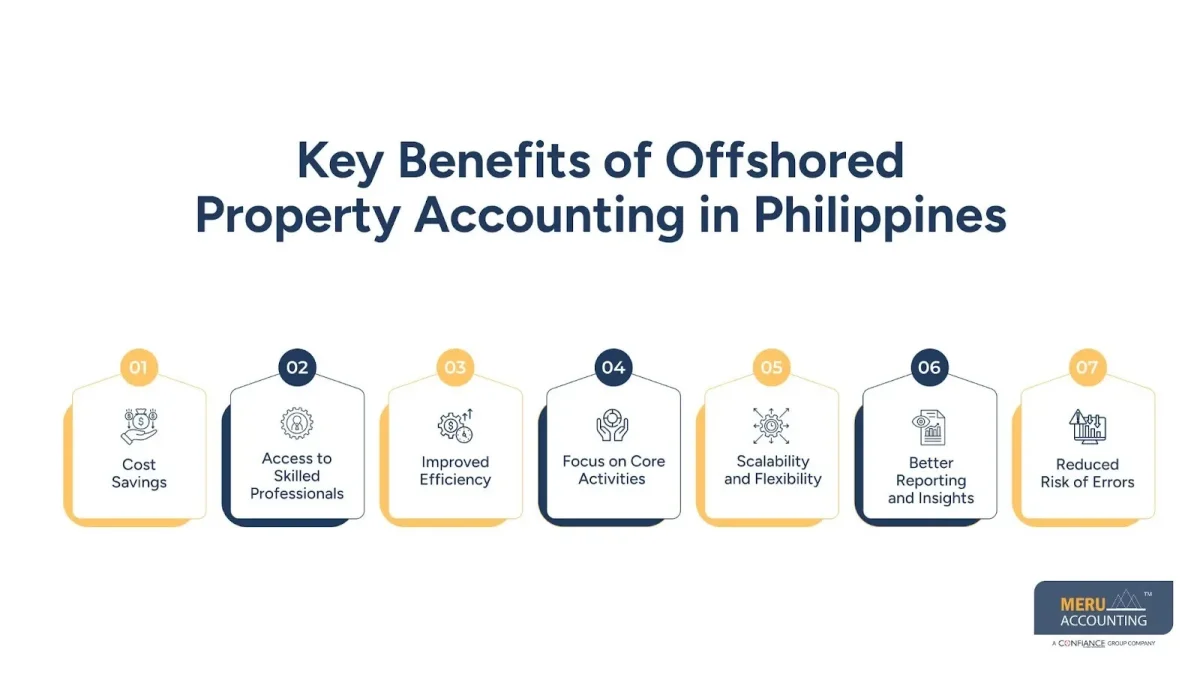
Focus on Core Activities
When businesses adopt outsourced property management, they can focus on growth and strategy instead of daily accounting tasks. Internal teams can spend more time on expansion and client management. This leads to better use of internal resources and improved output. This helps teams grow fast. It also builds strong plans. It keeps focus clear. It helps reach goals.
Scalability and Flexibility
As businesses expand, their accounting needs change. Outsourced property management offers flexibility to adjust services based on requirements. This adaptability supports long term growth. It also ensures that businesses can quickly respond to market changes. This keeps firms ready. It also helps them adapt fast. It keeps plans open. It helps adjust fast.
Better Reporting and Insights
Accurate financial reporting is essential for decision making. Structured reports provide clear visibility into financial performance, helping businesses plan well. It also helps in spotting trends and areas that need improvement. This keeps data clear. It also helps in quick review. It shows key facts. It helps smart moves.
Reduced Risk of Errors
Errors in accounting can be costly. By using outsourced property management, businesses reduce the chances of mistakes. Standardized processes ensure better accuracy and consistency. This also helps in maintaining reliable financial records over time. This builds trust in data. It also keeps records safe. It avoids loss. It keeps work right.
Case Studies: Outsourced Property Management for Businesses in Philippines
Case Study 1: Growing Real Estate Firm
A mid sized real estate company in the Philippines was struggling to manage its expanding portfolio. Their internal team could not keep up with increasing transactions. By adopting outsourced property management, they were able to streamline operations. They also partnered with offshore accounting experts, which reduced costs and improved reporting accuracy. This also helped them maintain better financial control and improved their ability to handle future growth.
Case Study 2: Property Investment Group
An investment firm managing multiple properties faced challenges in tracking expenses and preparing reports. They switched to outsourced property management and adopted offshored property accounting in Philippines. This helped them gain real time insights and improve financial planning. It also made their decision making process faster and more data driven.
Case Study 3: International Property Owner Operating in Philippines
A global property owner with operations in the Philippines wanted to reduce operational costs while maintaining quality. By choosing outsourced property management, they outsourced their financial tasks. With offshored property accounting in Philippines, they achieved better efficiency and cost control. Their internal teams were able to focus more on strategic and expansion related activities.
These examples show how businesses in the Philippines are using outsourcing and offshore support to transform their operations. They also highlight how different types of companies can benefit from similar approaches.
Meru Accounting’s Outsourced Property Management Services for Philippines
If you are looking to improve efficiency and reduce costs, Meru Accounting offers reliable outsourced property management solutions tailored for businesses. With a strong focus on accuracy and compliance, their team supports offshored property accounting in Philippines for companies seeking dependable offshore partners.
Meru Accounting provides a wide range of services, including:
- Financial reporting and analysis
- Rent and lease accounting
- Expense tracking and reconciliation
- Accounts payable and receivable
- Budgeting and forecasting
Their approach is designed to simplify operations while maintaining transparency. They also ensure consistent communication so businesses always stay informed about their financial position. Regular updates and clear reporting help businesses stay in control of their finances.
Whether you manage a small portfolio or a large real estate business, their solutions are flexible and scalable. Their experience helps businesses stay organized, improve efficiency, and support steady growth. This makes them a reliable partner for long term success.
Key Takeaways
- Outsourced property management helps businesses reduce workload and improve efficiency
- Offshored property accounting in Philippines refers to Philippine businesses outsourcing accounting tasks to offshore teams
- Combining both strategies leads to better financial control and scalability
- Businesses can focus on growth while experts handle accounting tasks
- Offshore support enables access to global expertise and flexible operations
FAQs
Outsourced property management is the process of delegating property related tasks, including financial management, to external professionals. It also helps businesses improve efficiency and reduce internal workload.
It refers to businesses in the Philippines outsourcing their property accounting functions to offshore service providers.
It allows experts to handle tasks, reducing errors and improving turnaround times. It also ensures smoother workflows and better coordination.
Yes, it is suitable for businesses of all sizes because it offers flexible and scalable solutions. It also helps smaller businesses access expert support at lower costs.
Yes, it ensures that financial records are handled according to regulations with support from experienced professionals. This reduces risks and improves accuracy.


