




Introduction to Owner’s Equity
Understanding owner’s equity is fundamental to grasping the broader concepts of accounting and financial analysis. Owner’s equity represents the residual interest in the assets of an entity after deducting liabilities. Simply put, it is what remains for the owner(s) once all debts and obligations have been paid off. This foundational concept plays a pivotal role in financial statements, particularly the balance sheet.
In this comprehensive article, we will explore proven methods to thoroughly understand the Owner’s equity Definition in Accounting, often referred to as equity in accounting. We will cover its components, how it is calculated, its significance in business, and practical ways to analyze it for decision-making. Whether you are a student, business owner, or accounting professional, this guide will enhance your competency in interpreting and managing owner’s equity effectively.
What is Owner’s Equity? Definition and Explanation
Owner’s equity Definition in Accounting, also known as shareholders’ equity in corporations, represents the ownership interest held by the entity’s owners in the net assets of the business. It is a crucial component of the accounting equation:
Assets = Liabilities + Owner’s Equity
This equation illustrates that equity is the difference between what the business owns (assets) and what it owes (liabilities).
Owner’s equity encompasses various elements depending on the type of business entity, including:
- Capital invested by owners or shareholders
- Retained earnings (profits reinvested in the business)
- Additional paid-in capital
- Other comprehensive income or losses
Understanding these components helps stakeholders evaluate the financial health and stability of a company.
Components of Owner’s equity Definition in Accounting
To fully understand owner’s equity, it is important to recognize its various components. These components differ based on the business structure but generally include the following elements:
1. Paid-in Capital
Paid-in capital refers to the funds that owners or shareholders invest directly in the company in exchange for ownership shares. This amount includes the par value of the stock and any excess paid over par value.
2. Retained Earnings
Retained earnings are profits that a company decides to reinvest in its operations rather than distributing as dividends. Over time, retained earnings accumulate and contribute significantly to owner’s equity.
3. Treasury Stock
Treasury stock represents a company’s own shares that it has repurchased from shareholders. Treasury stock reduces the total owner’s equity because these shares are considered issued but not outstanding.
4. Other Comprehensive Income
Other comprehensive income includes unrealized gains and losses that are not included in net income but affect equity, such as foreign currency translation adjustments and changes in the market value of certain investments.
- Capital Stock (common and preferred stock)
- Additional Paid-in Capital
- Retained Earnings
- Accumulated Other Comprehensive Income
- Less: Treasury Stock (contra equity account)
How to Calculate Owner’s Equity
Calculating owner’s equity accurately is essential for financial reporting and decision-making. Several approaches and formulas can be applied depending on available data and the business structure.
1. Basic Formula
The simplest and most common method to calculate equity is using the accounting equation:
| Assets | – | Liabilities | = | Owner’s Equity |
|---|---|---|---|---|
| $500,000 | – | $300,000 | = | $200,000 |
In this example, if a company has $500,000 in assets and $300,000 in liabilities, owner’s equity equals $200,000.
2. Extended Formula for Corporations
Owner’s equity in a corporation is calculated by summing various equity accounts:
Owner’s Equity = Capital Stock + Additional Paid-in Capital + Retained Earnings + Other Comprehensive Income – Treasury Stock
3. Adjusted Equity
Businesses may adjust Owner’s equity Definition in Accounting for dividends paid or additional investments. The equity balance is updated regularly to reflect these transactions.
The Importance of Understanding Owner’s Equity
Owner’s equity provides critical insights into the financial condition and long-term viability of a business. Here are some reasons why a solid understanding of equity in accounting is indispensable:
- Financial Stability Assessment: A healthy equity position indicates that a company is solvent and capable of covering its liabilities.
- Investor Confidence: Investors analyze equity to gauge a company’s net worth and growth potential.
- Decision Making: Managers use equity metrics to determine dividend policies, capital structure, and reinvestment strategies.
- Creditworthiness Evaluation: Creditors may review equity to assess risk before extending credit or loans.
- Tax Implications: Understanding equity helps in tax planning, especially when dealing with dividends and shareholder distributions.
Ultimately, owner’s equity communicates the net value of a business and is a vital component of both internal management and external reporting.
Proven Ways to Deepen Your Understanding of Owner’s Equity
Mastering the concept of Owner’s equity Definition in Accounting requires more than just memorizing definitions—it involves practical application and analytical skills development. Here are proven strategies to enhance your understanding:
1. Study Real Financial Statements
Reviewing the balance sheets of various businesses allows hands-on experience in identifying equity components and their interplay with assets and liabilities.
2. Use Accounting Software Simulations
Modern accounting software often includes trial balance and equity reports. Simulating transactions helps visualize how equity changes over time.
3. Practice Equity Calculations
Regularly working through problems involving owner’s equity calculations enables strong conceptual retention and practical skills.
4. Analyze Equity Trends
Examining historical equity data in financial statements can reveal growth patterns, financial strength, or potential concerns.
5. Integrate with Other Financial Metrics
Combine equity analysis with ratios such as debt-to-equity, return on equity, and book value per share for comprehensive evaluations.
6. Attend Workshops and Courses
Formal education sessions or online courses focused on equity and financial accounting provide structured learning environments.
Common Misconceptions About Equity in Accounting
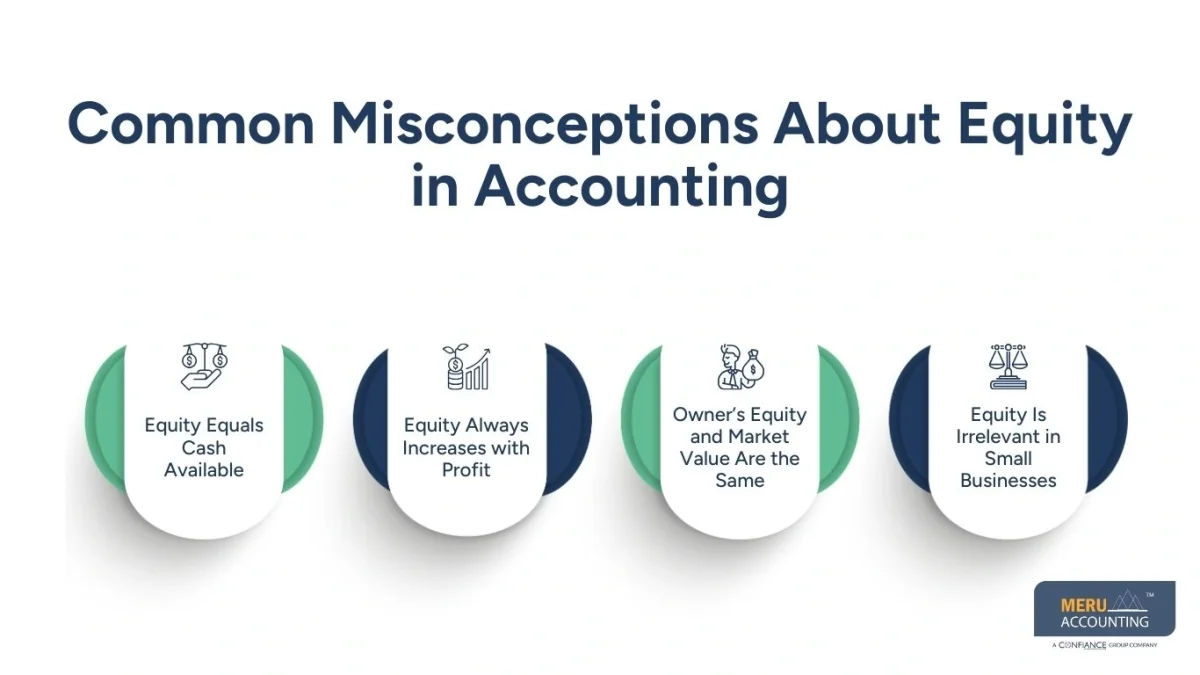
It is essential to recognize and dispel common misconceptions that can cloud the understanding of Owner’s equity Definition in Accounting.
Misconception 1: Equity Equals Cash Available
Equity represents net ownership value and doesn’t necessarily mean liquid cash available. It can include non-liquid assets such as inventory and equipment.
Misconception 2: Equity Always Increases with Profit
While profits increase retained earnings and thus equity, distributions such as dividends or withdrawals can reduce it.
Misconception 3: Owner’s Equity and Market Value Are the Same
Owner’s equity on the balance sheet is based on historical cost accounting, not the current market value of assets or the company.
Misconception 4: Equity Is Irrelevant in Small Businesses
Regardless of size, understanding equity is crucial for monitoring business growth, liabilities, and owner investments.
Owner’s Equity in Different Types of Business Structures
The form and presentation of owner’s equity vary depending on whether the business is a sole proprietorship, partnership, or corporation.
Sole Proprietorship
In a sole proprietorship, owner’s equity reflects the owner’s investment plus any retained earnings from business operations minus withdrawals made by the owner.
Partnership
Partnership equity is divided between partners based on their capital contributions and profit-sharing agreements. Each partner has an equity account that records their ownership interest.
Corporation
Corporate equity is more complex, combining capital stock, additional paid-in capital, retained earnings, and other components. Stockholders’ equity represents the total shareholder interest.
| Business Type | Owner’s Equity Components | Equity Presentation |
|---|---|---|
| Sole Proprietorship | Owner’s Capital, Withdrawals, Retained Earnings | Single equity account (Owner’s Capital) |
| Partnership | Partner Capital Accounts, Withdrawals, Retained Earnings | Separate equity accounts for each partner |
| Corporation | Common Stock, Preferred Stock, Additional Paid-In Capital, Retained Earnings, Treasury Stock | Consolidated shareholders’ equity section |
Practical Applications of Owner’s Equity Analysis
Owner’s equity is more than an accounting term; it has direct implications for business operations, strategy, and financial planning.
1. Evaluating Financial Health
Equity levels indicate solvency and financial stability. Declining equity may signal financial distress or excessive withdrawals.
2. Supporting Loan Applications
Banks and lenders assess equity to determine a company’s creditworthiness and collateral value before approving loans.
3. Dividend Decision-Making
Management reviews retained earnings within equity to decide feasible dividend distributions without jeopardizing liquidity.
4. Investment Analysis
Investors analyze shareholder equity to calculate return on equity (ROE), a crucial profitability measure.
5. Business Valuation
Equity forms the basis for book value calculations, instrumental in mergers, acquisitions, and financial reporting.
- Monitoring equity trends helps in forecasting future financing needs.
- Comparing equity ratios with industry benchmarks guides strategic planning.
Meru Accounting: Expertise in Financial Management
Meru Accounting is a reputable firm specializing in comprehensive accounting and financial services. With expertise spanning bookkeeping, tax planning, financial reporting, and consultancy, Meru Accounting helps businesses enhance their financial clarity and efficiency. Their professional approach ensures clients have accurate equity calculations and meaningful financial insights to drive informed business decisions. Through personalized support, Meru Accounting continues to empower enterprises in managing their owner’s equity and achieving sustainable growth.
Conclusion
Owner’s equity is a fundamental concept in accounting that represents the net worth of a business from the owner’s perspective after liabilities are settled. Understanding equity in accounting requires familiarity with its definition, components, calculation methods, and practical applications across different business structures. By leveraging proven methods such as studying financial statements, using accounting software, and analyzing equity trends, students and professionals can deepen their financial acumen.
Proper interpretation of owner’s equity enables business owners, investors, and creditors to make informed decisions that promote the financial health and growth of a company. Whether you are managing a small sole proprietorship or analyzing complex corporate shareholder equity, mastering this essential accounting principle is vital for effective financial management.
FAQs
What is owner’s equity in accounting?
Owner’s equity represents the residual interest in the assets of a business after deducting liabilities, reflecting the owner’s stake in the company.
Why is understanding owner’s equity important in accounting?
Understanding owner’s equity is crucial because it helps determine the financial health of a business and the owner’s claim after all debts have been settled.
How can I calculate owner’s equity?
Owner’s equity can be calculated using the formula: Owner’s Equity = Assets – Liabilities.
What are common components of owner’s equity?
Common components include contributed capital, retained earnings, and additional paid-in capital.
How does owner’s equity differ from liabilities?
Owner’s equity represents the owner’s claims on assets, while liabilities represent obligations to creditors that the business must repay.


