




Property development can be exciting, but it is also risky and full of financial challenges. Every step—from buying land to finishing builds and renting or selling—needs clear control of cash. Without proper tracking of costs, cash flow, and profit, even strong projects can fail. This is why real estate accounting is so important.
It is not just about books. It is about seeing every cost, tracking income, and keeping each project on a safe financial path. For property developers, good accounting helps make smart choices, keep costs low, and build trust with banks and investors.
In short, strong real estate accounting is the base for success in property development. It helps manage risk, plan growth, and turn plans into profit. This blog will show why real estate accounting matters, how accounting for real estate developers works, and how it can make the difference between a project that thrives and one that struggles.
What You Will Learn From This Blog
In this blog, you will learn:
- What real estate accounting means in simple terms
- Why real estate accounting matters for property growth
- How accounting for real estate developers works
- How real estate accounting helps manage build costs
- Common issues developers face with real estate accounting
- Best ways to improve real estate accounting
- Key points to apply to your own projects
What Is Real Estate Accounting?
Real estate accounting is the process of tracking, sorting, and reporting all money tied to land, builds, and property sales or rent. It is a detailed, structured approach to managing money in property projects.
It is not the same as normal business books. Property work runs on long timelines and high spend. A single project may last years. Costs come in waves. Income may come late. Materials, labor, permits, and other costs pile up in stages. Without proper accounting, these costs can get lost, misclassified, or overlooked.
It covers:
- Land purchase costs: price of land, legal fees, registration, and surveys
- Build and labor costs: raw materials, contractors, labor wages, machinery rent
- Loan and interest tracking: construction loans, bridge loans, interest rates, and repayment schedules
- Cash flow planning: timing of money in and out to keep the project running
- Cost split by project: ensuring each project’s costs are separate from other projects
- Sales or rent income: logging revenue correctly as it comes
- Tax and legal reports: ensuring compliance with local laws and tax rules
For developers, it shows the health of each project at every stage. It gives an early warning system for overspend and delays. It also helps plan for profit, reinvestment, and scaling.
The Role of Real Estate Accounting in Property Development Success
Property development is not just about big ideas. It is about keeping control. Real estate accounting helps developers stay in charge. Without it, even skilled developers can lose track of costs, cash flow, or profits.
Clear View of Project Money
From the start, developers need to know how much a project costs and where the money goes. Accounting tracks every cost, every invoice, payment, and loan draw.
It helps compare planned costs with real costs. If spending grows too fast, you see it early. This stops surprises at key stages, like finishing the roof or interiors. Accurate accounting lets you act fast to fix overspend.
Strong Cash Flow Control
Property builds need cash before they make cash. Materials must be bought, labor paid, and permits handled. Late payments or poor planning can slow work or stop it completely.
Accounting helps plan cash so money is ready when bills come. By watching money in and out, developers avoid delays and keep work moving. It also helps plan for unexpected costs that can pop up anytime.
Smarter Decisions, Lower Risk
Should you pause a stage? Sell early? Add more units?
These choices need facts. Accounting gives clear numbers to guide every move. With proper reports, developers can weigh options, see risks, and pick the best path. Guesswork can lead to overspend, delays, or lost profits.
Build Trust With Lenders and Investors
Banks and investors want clear, accurate books. They want proof of spending, costs, and income.
Strong accounting builds trust. Lenders see that projects are under control. Investors feel safe knowing their money is tracked and used well. This trust can lead to better loans, faster approvals, and more funding for future projects.
Accounting for Real Estate Developers
Accounting for real estate developers is not just simple book work. It must match the fast pace and risks of property builds.
Project-Based Records
Each project needs its own books. Costs must stay linked to the right site. This stops one project’s overspend from hiding in another’s budget.
Accounting for real estate developers uses project ledgers to keep data clean. This shows each project’s financial story clearly and helps management check performance of each build on its own.
Cost Split and Tracking
Land, labor, tools, permits, and fees—all costs matter.
Accounting tracks each cost so nothing gets lost or mixed up. This helps developers see which areas spend too much and plan better next time. It also helps in talks with contractors and suppliers.
Cost Capital Use
Some costs add value to the build. Others do not.
Accounting for real estate developers helps decide which costs should be added to the property’s value and which should be treated as expenses. This is key for taxes and correct project value. Costs added to assets also appear in reports and investor statements, making things clear and transparent.
Income Timing Rules
Sales may happen before a build is done. Rent may start in parts.
Accounting makes sure income is logged at the right time. This shows true profit, helps track cash flow, and keeps projects following rules. Logging income too early or too late can create false profit numbers or cash gaps.
Loan and Interest Tracking
Most builds use loans. Rates may change, and terms can shift.
Accounting for real estate developers keeps track of loan use, interest, and pay schedules. Developers can see interest costs in real time, adjust payments, and avoid penalties. This also builds trust with lenders.
Managing Development Costs Through Accurate Real Estate Accounting
Cost drift is a top risk in property work. Real estate accounting helps fight that risk by providing clear, up-to-date data at every stage.
Live Cost Tracking
Each bill is logged fast. This helps spot cost creep early. Accounting keeps cost data fresh and clear. Contractors, labor, and material costs are tracked separately for better insight.
Budget Checks
Plans are only useful if tracked. Accounting checks real spend vs plan spend often. If a cost exceeds expectations, developers can adjust, negotiate, or re-plan before it snowballs.
Vendor Pay Control
Missed or late pay can stop work. Over pay can drain cash. Accounting tracks vendor bills and pay dates with care. It ensures timely payments while keeping cash reserves intact.
Cost Forecasts
Past data helps plan future spend. Accounting for real estate developers uses trends to guide fund needs. Forecasts help identify phases that may run over or under budget, allowing proactive action rather than reactive fixes.
Common Challenges in Real Estate Accounting for Development Projects
Even strong teams face challenges with real estate accounting.
Many Cost Types
Build work has many cost lines. Errors can slip in if tools are weak. Materials, labor, legal fees, taxes, and contractor payments must be logged carefully.
Manual Work Risks
Spreadsheets fail at scale. They cause gaps and errors. Manual work slows reporting and may hide mistakes.
Tax Rule Changes
Property tax rules change often. Missed updates can cost a lot. Accounting must stay up-to-date with laws to avoid penalties and take advantage of deductions.
Many Report Needs
Each partner wants a view. Each lender wants proof. Accounting must serve many needs at once without slowing down internal decisions.
Skill Gaps
Not all bookkeepers know property work. Accounting for real estate developers requires knowledge of capitalization, project cash flow, and income timing.
Best Practices for Effective Real Estate Accounting in Property Development
Smart teams follow clear rules to keep books strong.
Use Property Focused Tools
Pick tools made for real estate accounting. They support project views and detailed reporting, reducing mistakes and saving time.
Keep Clean Book Lines
Never mix personal, firm, and project funds. Separate accounts prevent confusion and simplify audits.
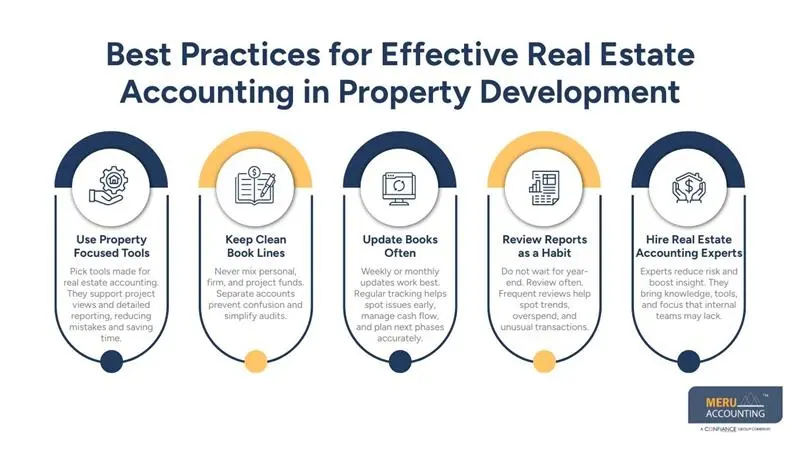
Update Books Often
Weekly or monthly updates work best. Regular tracking helps spot issues early, manage cash flow, and plan next phases accurately.
Review Reports as a Habit
Do not wait for year-end. Review often. Frequent reviews help spot trends, overspend, and unusual transactions.
Hire Real Estate Accounting Experts
Experts reduce risk and boost insight. They bring knowledge, tools, and focus that internal teams may lack.
How Meru Accounting Helps Property Developers
At Meru Accounting, we know real estate accounting inside out. We work with developers who want clear books and strong growth.
Our team knows how to handle project budgets, track cash flow, manage loans, and create investor-ready reports. We turn numbers into insights that help you make smart decisions at every stage of your projects.
Our Services Include
- Project-Based Bookkeeping – Keep each project’s finances separate and clear.
- Build Cost Tracking – Track all costs, from land and labor to tools and permits.
- Cash Flow Planning – Make sure money is ready when bills come due.
- Lender and Partner Reports – Give clear reports that build trust with investors and banks.
- Tax Support and Planning – Stay compliant and use smart tax strategies.
- Remote Accounting Teams – Work with skilled accountants without adding office overhead.
With Meru Accounting, real estate accounting is not just a task—it becomes a tool to grow your business, reduce risk, and save time. You can focus on design, construction, and sales, knowing your books are in expert hands. Contact us now and get our expert real estate accounting services.
Key Takeaways
- Real estate accounting is key to project success
- It helps control cost, cash, and risk
- Accounting for real estate developers needs skill and focus
- Clear books build trust with banks and partners
- Best tools and experts improve results
- Early and accurate accounting prevents costly surprises
FAQs
Real estate accounting tracks costs, cash, and income so developers can make smart choices, avoid loss, and stay on schedule.
It focuses on projects, long timelines, cost split, and loan care, unlike standard business accounting.
Poor cost tracking, late updates, misclassified expenses, and using non-property tools.
Yes. At Meru Accounting, we save time, reduce risk, and ensure accurate, compliant reporting in your real estate business.
Real estate accounting should start as soon as you buy the land. Tracking costs and cash from day one gives full control over the project, helps avoid mistakes, and lets you make better decisions at every stage.


