




Real estate accounting means tracking and managing the money, costs, and financial records of residential and commercial properties. It is not just limited to recording income and expenses, it helps property owners realize their true profit. This can help them plan for expenses and make better financial decisions.
For residential properties, accounting ensures that each unit’s rent, repairs, taxes, and other costs are tracked clearly. For commercial properties, accounting is even more complex, with long-term leases, shared costs, and multiple income streams.
Accounting gives owners a complete idea about which properties earn the most, where costs are high, and how to plan for future investments. It also helps with budgeting, taxes, and compliance with financial rules. With proper accounting, both small property owners and large commercial investors can make decisions based on real numbers rather than estimates.
For example, an owner of several rental units can use accounting to compare income and expenses per unit. A commercial property owner can track long-term lease payments, shared costs, and profitability for each tenant. This level of insight allows owners to act strategically, reduce losses, and grow their business confidently. In this blog, we will understand real estate accounting for both residential and commercial properties in depth.
Why Real Estate Accounting Is Important for Residential and Commercial Properties
Every property makes financial data each day. Rent, repair costs, taxes, loans, and fees affect profit. Real estate accounting keeps all this clear and easy to track.
For residential properties, accounting helps owners:
- Track rent per unit
- Note late payments
- Record repairs and small fixes
- Track taxes and insurance
- See which units earn most
For commercial properties, it is more complex. Leases last many years. They may have extra fees like shared maintenance.
Accounting helps owners:
- Track long leases and rent correctly
- Record shared costs fairly
- Monitor tenant payments
- Check profit per property
Accounting helps owners plan. For example, a unit that costs more to fix than it earns can be renovated or rent can be raised. Commercial owners may see high utility costs for one tenant and adjust fees. Accounting services for real estate make these insights easy without long work on sheets.
Key Differences Between Residential and Commercial Real Estate Accounting
The goal of real estate accounting is the same for all properties: track money right. But the way it works changes by property type.
Residential properties have:
- Short leases and often new tenants
- Small, regular costs like bills and repairs
- Income tracked per unit
- Cash flow mostly monthly
Commercial properties have:
- Long leases lasting years
- Complex rent with base rent and extra fees
- Shared costs for utilities and services
- Bigger assets and large repairs
Due to these differences, owners go for outsourced accounting services for real estate. Outsourcing gives access to real estate bookkeeping experts that have experience. Hence, they keep records accurate, split costs correctly, and give ready-to-use reports.
Core Parts of Real Estate Accounting
Good real estate accounting has a few key aspects. Each part keeps money clear and helps plan the future.
- Income: Track rent, fees, and late payments
- Costs: Record repairs, bills, taxes, and staff fees
- Assets: Track property value and small improvements
- Liabilities: Track loans, mortgages, and dues
- Owner Share: Record money in or out
- Cash Flow: Track money in and out
Many owners use outsourced accounting services for real estate to keep these parts correct. This avoids mistakes and saves time.
For instance, a commercial owner adding a new tenant can track their lease, rent, and shared fees correctly.
Important Financial Reports in Real Estate Accounting
Reports turn numbers into clear facts. Without them, real estate accounting is vague.
Key reports in real estate accounting include:
- Profit and Loss (P&L): Income minus costs shows profit
- Balance Sheet: Shows assets, loans, and owner share
- Cash Flow: Tracks real money in and out
- Rent Roll: Shows rent per unit or tenant
- Expense Report: Shows spending by type
Reports help owners spot trends, plan repairs, adjust rent, and cut waste. Accounting services for real estate keep reports correct and on time.
For example, a landlord may see that a unit costs more to fix than it earns. This helps decide to fix, renovate, or raise rent.
Best Practices for Real Estate Accounting
To get the most from real estate accounting, owners should follow simple steps:
- Keep separate books for each property
- Record income and costs often
- Check books with bank statements monthly
- Store bills and receipts digitally
- Review reports monthly or quarterly
Use outsourced accounting services for expert help
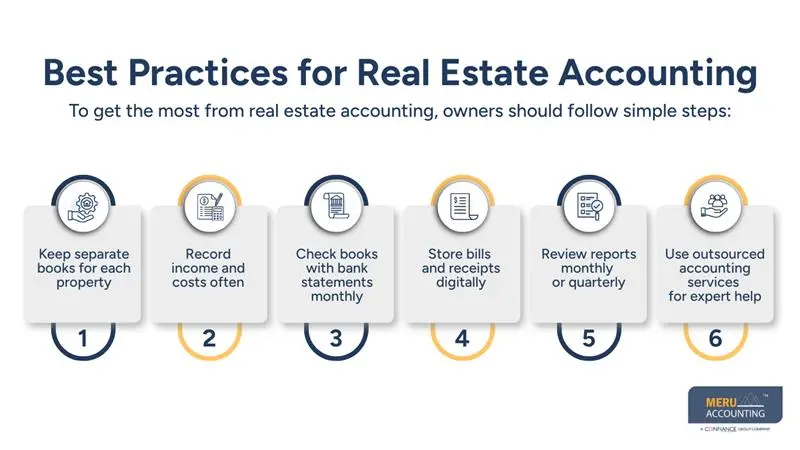
These steps keep records right, save time, and reduce risk. They also help owners make better profit choices.
For instance, monthly rent roll reviews can show tenants who pay late. Early action stops cash flow problems.
Lease and Rent Tracking
A main part of real estate accounting is tracking leases and rent. Each property has tenants, and each lease has rules for rent, due dates, and fees. Clear records make sure owners get all money on time and avoid disputes.
For homes, owners can track:
- Rent paid by each unit each month
- Late fees or fines for overdue rent
- Security deposits and refunds
For commercial buildings, owners can track:
- Base rent and extra fees like utilities or service costs
- Shared costs such as cleaning, repairs, and maintenance
- Lease changes over time, like rent increases or new terms
Good real estate accounting helps owners see which tenants or units earn the most. It also shows patterns, such as tenants who often pay late. With proper tracking, owners can send reminders, plan cash flow, and avoid money problems.
Using outsourced accounting services for real estate can automate rent tracking, create rent roll reports, and alert owners to late payments. This saves time, reduces mistakes, and keeps income organized.
Expense Tracking and Profit Check
Another key part of real estate accounting is tracking costs and checking profit. Knowing where money goes helps owners save and invest smartly.
For homes, owners can track:
- Repairs and small fixes per unit, such as plumbing or painting
- Utilities and service costs for each unit
- Management or staff costs
For commercial buildings, owners can track:
- Shared costs like cleaning, security, and electricity
- Insurance, property taxes, and small repairs
- Big repairs or upgrades, like roof fixes or elevator work
With real estate accounting, owners see profit for each unit or property. This helps them decide if they should fix, raise rent, or sell. For example, if a unit costs more to repair than it earns, the owner can choose to renovate or change rent.
Professional accounting services for real estate also make reports to compare multiple properties. Owners can see which units or buildings earn most. This helps them make smart choices for repairs, upgrades, and future investment.
How Meru Accounting Supports Residential and Commercial Real Estate
Meru Accounting offers complete real estate accounting for homes and commercial properties. Each property is different. We tailor our services to fit each owner with different requirements.
Our accounting services for real estate include:
- Daily bookkeeping and tracking
- Rent and expense management
- Cash flow checks
- Financial reports and statements
- Tax-ready files
- Multi-property portfolio analysis
With Meru Accounting, owners focus on growth, not paperwork. We track every transaction, prepare reports, and keep owners in control. Whether one property or many, our real estate accounting services reduce mistakes, saves time, and helps increase profitability.
Stop managing everything yourself and outsource your real estate accounting to us. Our years of experience and industry experts can help you in the best possible way. Contact us now to get a free consultation with our expert real estate accountant.
Key Takeaways
- Real estate accounting is key to clear money management
- Residential and commercial properties need different approaches
- Accurate records and reports support smart choices
- Following best practices keep costs low, profit high, and risk small
- Expert accounting services for real estate save time and give clear info
FAQs
It tracks income, costs, loans, and property value to give owners a clear view.
Yes. Commercial properties have long leases, shared costs, and complex rent.
Outsourced real estate accounting services keep records correct, save time, and help owners make smart choices.
A monthly cycle is best to track trends, fix issues, and plan ahead.
Yes. We provide full accounting services for real estate of both types.


