




Real estate is complex. Each property deal comes with finance, contracts, and rules. That is where accounting helps. Real estate in accounting means tracking money, costs, and taxes linked to property. It is more than bills or rent; it gives a full view of finances. Accounting in real estate helps track all financial flows. It ensures every payment is recorded. It also helps owners see where their money goes. Proper accounting helps avoid errors and surprises.
For investors, property owners, or managers, knowing how real estate and accounting work together can save money and avoid risk. Accounting shows where money goes, helps plan taxes, and guides smart choices. It also helps in planning long-term goals. With proper accounting, owners can grow their business with less worry. This blog explains how real estate in accounting works and why it is key to any property business. You will also see how professional services can make work easier.
What You Will Learn From This Blog
By reading this blog, you will learn:
- What real estate in accounting is
- How to use financial reports for property
- Tax rules for real estate in accounting
- How accounting helps with property investment
This guide is easy to follow but useful for new and skilled property owners.
What is Real Estate in Accounting?
Real estate in accounting is a type of accounting that deals with property finance matters. It covers buying, selling, renting, and managing homes, offices, or land.
It is different from normal accounting because it tracks property value, rent, loans, and costs over time. It also looks at long-term investments and property growth. Accounting helps owners make wise decisions about repairs, upgrades, and purchases.
Main parts of real estate in accounting:
- Buying and Loans: Record the cost of property, loan interest, and fees. This helps see the real cost of investment. Tracking loan schedules keeps payments on time. It also helps avoid late fees and extra interest.
- Rental Income: Track rent, late payments, and leases. Proper tracking ensures steady cash flow. It also helps spot non-paying tenants early. Real Estate in accounting form allows owners to plan for future rent increases.
- Costs: Track taxes, repairs, insurance, and utilities. Keeping costs organized shows where money goes. It helps reduce waste and control expenses. Good cost tracking helps in budgeting for large repairs.
- Depreciation: Track property loss in value over time for tax purposes. Depreciation also shows true value of assets. Real Estate in accounting form helps plan upgrades or replacements at the right time.
- Rules Compliance: Keep all records by law. Proper records protect from fines and audits. They also build trust with banks and investors. Compliance ensures smooth operations in all deals.
Good accounting gives a clear view of property finances. It helps owners make smart choices. It also builds confidence when buying or selling property.
Financial Reporting in Real Estate Accounting
Reports show how well property is doing. They are key in real estate and accounting. Good reports help owners, investors, and lenders see profit and risk. Reports also help in planning new purchases or sales. They give clear insight for long-term strategy.
Main reports include:
- Balance Sheet: Shows property assets, debts, and equity. Assets can be land, buildings, or rent owed. Debts include loans and taxes. Balance sheets show real wealth and how much is owed. They also help plan borrowing for new projects.
- Income Statement: Shows profit from rent minus costs and depreciation. Income statements reveal which properties earn most. They help identify underperforming assets. They also support decisions about price changes or upgrades.
- Cash Flow Statement: Shows cash in and out. Helps see if rent covers bills and loans. Cash flow statements help spot potential shortfalls. They show when extra funding may be needed. They also help plan large repairs or investments.
- Profit Review: Shows which property earns well and which does not. It helps owners decide what to hold or sell. Profit reviews also support planning for new purchases. They provide a clear view of success across the portfolio.
Good reports prevent mistakes and help make growth choices. Real Estate in accounting give confidence to investors and banks. They also make managing multiple properties easier.
Tax Implications in Real Estate Accounting
Taxes are a big part of property. Real estate in accounting helps owners meet tax rules and save money. Tax planning also avoids fines and legal issues. Good accounting helps owners claim all legal deductions.
Main tax areas:
- Property Tax: Paid each year on property value. Accounting keeps track. Timely payment avoids penalties. It also helps plan annual budgets.
- Income Tax: Rent is taxed. Accounting tracks income and deductions like repair or interest costs. Accurate records reduce the chance of errors. They help plan for tax payments ahead of time.
- Capital Gains Tax: Tax when selling property. Accounting tracks cost, improvements, and sale price. Proper tracking ensures correct tax payment. It also helps find ways to reduce tax legally.
- Depreciation: Property loses value over time. This reduces taxable income. Depreciation also shows the real value of property. Accounting ensures depreciation is claimed correctly each year.
- Tax Benefits: Some properties get tax credits, like energy-efficient upgrades. Accounting tracks these benefits. This helps save money and encourage improvements. It also ensures all eligible credits are claimed.
Real Estate in accounting terms avoids fines and finds ways to save on taxes. It also provides peace of mind for owners.
Real Estate Investment Analysis Through Accounting
Accounting helps investors see if a property is a good deal. Real estate and accounting work together to show profit, risk, and growth chances. Analysis also helps plan upgrades and sales. It provides clear insight for all decisions.
Ways accounting helps:
- ROI (Return on Investment): See how much money a property makes after costs. ROI helps compare multiple properties. It guides decisions on which properties to buy or sell. ROI shows true investment value over time.
- Cash Flow: Know if income covers bills and loans. Cash flow helps plan for future expenses. It highlights properties that may need extra funding. Cash flow shows when extra income or loans may be needed.
- Break-Even: Find when rent pays all costs. Break-even analysis helps avoid losses. It shows how long it takes to cover the investment. Owners can plan future spending with this data.
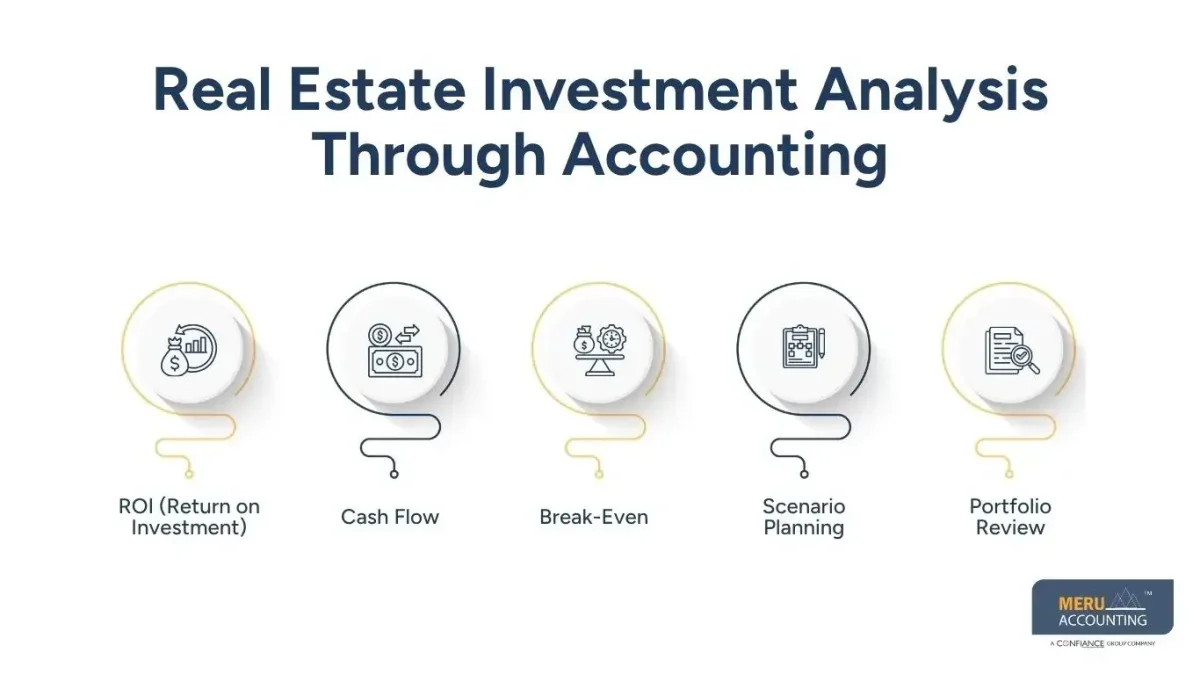
- Scenario Planning: Check how changes like loans or rent affect finance. Scenario planning prepares for market changes. It helps forecast best and worst outcomes. This supports better decision-making for new projects.
- Portfolio Review: Compare all properties to see which to keep or sell. Portfolio review helps identify top performers. It also shows which assets underperform. Owners can reallocate funds to improve returns.
With accounting, investors make data-based choices to reduce risk and earn more. It also builds confidence in long-term planning.
Meru Accounting’s Real Estate Accounting Services
Handling property finance can be hard. Multiple homes, offices, or land add work. Meru Accounting makes it simple. Our team helps owners save time and avoid errors. We provide clear, easy-to-read reports.
We offer:
- Bookkeeping: Track all rent, costs, and payments daily. Bookkeeping keeps finances organized. It helps avoid missed payments and mistakes. It ensures every transaction is recorded.
- Reports: Make balance sheets, income, and cash flow reports for properties. Reports provide insight into financial health. They support better investment decisions. Reports help plan for new purchases and upgrades.
- Taxes: Handle property tax, income tax, depreciation, and savings. Tax planning reduces liability and maximizes deductions. Accounting ensures compliance with all rules. Taxes are done right to avoid penalties.
- Investment Advice: Calculate ROI, cash flow, and risks. Advice helps investors pick the right properties. It guides long-term planning for growth. It also identifies areas to improve returns.
- Compliance: Follow all rules and avoid fines. Compliance protects owners from legal issues. It builds trust with banks and investors. It ensures smooth operation of all property deals.
With Meru Accounting, owners can focus on growth while experts handle the financial side. This leads to better decisions and more profit.
Key Takeaways
- Real estate in accounting tracks all property finances.
- Reports show profit, cash flow, and property value.
- Taxes need careful tracking to save money and follow the law.
- Accounting helps investors plan, reduce risk, and pick the right properties.
- Services like Meru Accounting make property finance easier and more accurate.
Using real estate and accounting together makes property work smarter, safer, and more profitable
FAQs
It is accounting that tracks all financial matters tied to property. It covers rent, costs, loans, taxes, and property value.
It tracks income, costs, and depreciation. This helps pay correct taxes and claim deductions.
Reports show which properties make money, which cost more, and the cash flow situation.
Yes. Accounting shows profit, costs, cash flow, and ROI. This helps pick the best deals.
They save time, ensure accuracy, help with taxes, and guide investments. Owners can focus on growing their business.


