


Managing rental property tax preparation correctly is important for property investors who want to keep accurate financial records and reduce tax liability. Rental properties generate income, but they also involve several tax rules, deductions, and reporting requirements that investors must understand.
Proper rental property tax preparation helps property owners organize their financial data, track expenses, and report income correctly. Without a clear process, investors may miss deductions or face compliance issues.
What You Will Learn From This Blog
- Understanding the basics of rental property tax preparation
- Important tax rules for property investors
- Documents required for accurate filing
- Ways to increase deductions legally
- Mistakes to avoid during tax preparation rental property
Introduction To Rental Property Tax Preparation For Investors
Rental income must be reported properly during rental property tax preparation. Investors should record all rent received, advance payments, and security deposits that become income during the year.
Clear and accurate reporting is important because it ensures that financial records match the figures reported during tax filing, helping investors maintain reliable tax records.
Rental income is treated differently from salary or business income, so proper rental property tax compliance is necessary to categorize the income correctly.
Investors should keep rental income separate from personal finances to avoid confusion when completing tax filings. Maintaining organized financial records, such as statements, invoices, and receipts, also helps make the process easier and more accurate.
Property ownership structures can also affect rental property taxation. Rental properties may be owned individually, jointly, or through companies, and each structure has different tax implications. Understanding these differences helps investors manage property tax reporting correctly.
In addition, tax authorities require rental income to be reported accurately, so proper documentation and record keeping help investors stay compliant and reduce the risk of penalties during tax preparation rental property reviews.
Why Rental Property Tax Preparation Is Important For Property Investors
Accurate Income Reporting
Accurate reporting ensures that income from rent is properly recorded during rental property tax preparation.
Consistent reporting helps maintain clear financial records and reduces the chances of errors.
Maximizing Legal Deductions
Many property-related costs qualify as deductions for rental property owners.
Proper review of expenses helps investors identify allowable deductions and reduce taxable income.
Avoiding Tax Penalties
Incorrect filing or missing information can lead to penalties and compliance issues.
Careful tax preparation of rental property helps ensure accurate reporting and reduces risks.
Improving Financial Planning
Property investors rely on financial reports to evaluate profitability and performance.
Well-maintained financial data supports better budgeting and investment decisions.
Supporting Long-Term Investment Growth
Tax planning plays an important role in overall property investment profitability.
Organized financial records allow investors to focus on managing and expanding their property portfolio.
Key Tax Rules Every Rental Property Owner Should Know
Rental Income Is Taxable
Income received from tenants must be reported when filing property taxes. Proper records make rental property tax compliance easier and help ensure income is reported correctly.
Deductible Expenses Reduce Tax
Expenses such as maintenance, repairs, and property management fees may qualify for deductions. These deductions help reduce taxable rental income and improve overall tax reporting accuracy.
Capital Improvements Are Treated Differently
Major upgrades like renovations or structural improvements cannot be deducted immediately.
Instead, they are usually spread over time through depreciation.
Loss Limitations May Apply
Rental property losses may be limited depending on passive activity rules and income levels. Investors should understand these limits before completing the tax preparation rental property.
Record Keeping Is Required
Property owners should keep financial records such as receipts, invoices, and statements. Good documentation helps support accurate tax filing and prevents reporting issues.
Essential Documents Needed For Rental Property Tax Preparation
Rental Income Statements
Income records show how much rent was collected during the year. These statements are essential for accurate rental property tax compliance.
Mortgage Interest Statements
Mortgage interest is often deductible. Keeping these records supports tax preparation rental property filings. They help investors claim eligible deductions properly.
Repair And Maintenance Receipts
Repair expenses are commonly deductible. Receipts provide proof during rental property tax preparation and help maintain accurate financial reports.
Property Tax Records
Local property tax payments are another key document. These records are used when completing tax preparation rental property calculations.
Insurance Payment Records
Insurance premiums paid for rental property should be recorded. These documents support claims during rental property tax compliance.
Top Rental Property Tax Preparation Tips To Maximize Deductions
Separate Personal And Rental Accounts
Using separate bank accounts simplifies rental property tax preparation and financial tracking. Clear separation between rental income and expenses improves financial clarity.
Track Every Expense
Tracking every expense carefully improves accuracy in financial reporting. Small repair or maintenance costs can gradually increase total deductions.
Maintain Digital Records
Maintaining digital records keeps financial documents organized and accessible. Digital storage also helps locate receipts and invoices quickly.
Review Tax Rules Each Year
Tax regulations for property investors may change over time. Regular review of updated rules helps ensure correct reporting.
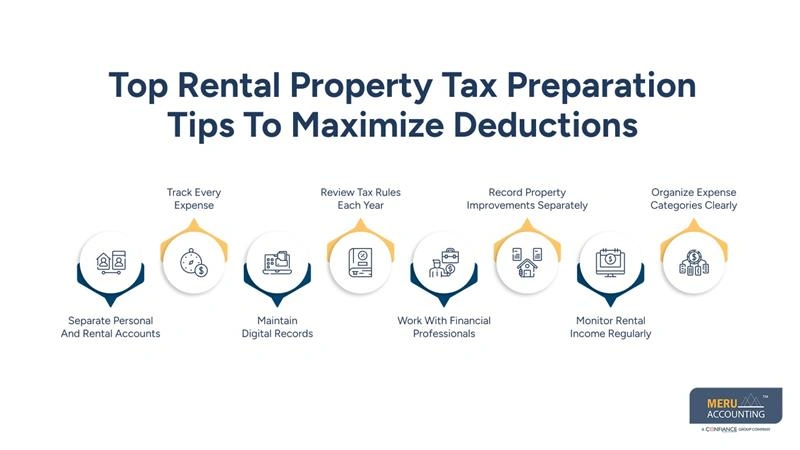
Work With Financial Professionals
Financial professionals can review records and identify possible tax savings. Professional guidance supports better financial decisions for property investors.
Record Property Improvements Separately
Major property improvements should always be recorded separately. Separate tracking helps calculate depreciation and long-term deductions correctly.
Monitor Rental Income Regularly
Regular review of rental income keeps financial records accurate. Monthly monitoring supports better tax preparation and rental property reporting.
Organize Expense Categories Clearly
Clear classification of expenses improves financial reporting and record-keeping. Proper organization makes financial tracking easier for property investors.
Common Deductible Expenses In Rental Property Tax Preparation
Property Management Fees
Fees paid to property managers may be deductible. These costs are included in rental property tax preparation records.
Repair And Maintenance Costs
Repairs such as plumbing or painting are generally deductible. These costs are important during tax preparation for rental property calculations.
Mortgage Interest
Interest paid on rental property loans can often be deducted. This deduction plays a key role in rental property tax compliance.
Insurance Premiums
Rental property insurance costs are usually deductible. These payments should be included in tax preparation rental property documentation.
Advertising And Marketing
Costs related to listing or promoting rental properties may also qualify. These expenses are included during rental property tax preparation.
Depreciation Strategies In Rental Property Tax Preparation
Understanding Property Depreciation
Depreciation spreads the cost of property over several years. It is an important part of rental property tax preparation. This method allows investors to gradually deduct property value over time.
Depreciating Building Value
Only the building value is depreciated, not the land. This rule must be followed during tax preparation for rental property.
Tracking Improvement Costs
Major improvements increase property value. These expenses are handled through depreciation in rental property tax compliance.
Long-Term Tax Savings
Depreciation can significantly reduce taxable rental income. This makes it an important strategy during tax preparation for rental property.
Accurate Depreciation Records
Proper calculations help avoid errors. Accurate tracking supports reliable rental property tax preparation.
Tax Preparation Rental Property: Understanding Passive Income Rules
Definition Of Passive Income
Rental income is usually classified as passive income for many property investors. This means the earnings come from rental activities rather than active employment or business operations.
Passive income typically comes from investments where the owner is not involved in daily operations.
Passive Activity Loss Limits
Tax rules may limit the amount of losses investors can claim from rental activities. These limits often depend on the investor’s total income level and filing status.
Understanding these limits helps investors plan deductions and manage rental property finances effectively.
Active Participation Rules
Investors who take part in property decisions, such as approving tenants or arranging repairs, may qualify as active participants.
Active participation can allow certain deductions that may not be available to passive investors.
Carry Forward Of Losses
In some cases, rental losses that cannot be used in the current year can be carried forward.
These losses may be applied to future income when tax preparation rental property is completed in later years.
Impact On Investment Decisions
Passive income rules can affect how investors structure and manage their rental properties.
Understanding these rules helps investors make better financial decisions and plan tax preparation rental property more effectively.
How Professional Services Simplify Rental Property Tax Preparation
Expert Knowledge Of Tax Laws
Tax professionals understand the rules related to rental property income. Their experience improves the accuracy of rental property tax preparation.
Organized Financial Reporting
Professionals maintain structured and well-organized financial records. Clear records help investors review income and expenses more easily.
Better Deduction Identification
Experts can identify deductions that investors may overlook. Careful review of expenses helps increase possible tax savings.
Time Saving For Investors
Preparing tax reports and financial documents often takes significant time. Professional assistance helps complete tax preparation rental property tasks more efficiently.
Reduced Risk Of Errors
A professional review helps detect mistakes before tax returns are filed. Accurate records reduce the chances of reporting errors and compliance issues.
Common Mistakes To Avoid In Tax Preparation Rental Property
Mixing Personal And Rental Expenses
Combining personal and rental expenses can create confusion in financial records. Clear separation helps maintain accurate property-related financial information.
Missing Eligible Deductions
Many investors overlook deductions related to property repairs or maintenance. Missing these deductions can increase the overall tax burden.
Incorrect Depreciation Calculations
Depreciation errors can lead to incorrect tax filings and reporting issues. Accurate calculations are important during tax preparation for rental property.
Poor Documentation
Missing receipts or invoices can create problems during a financial review. Proper documentation supports accurate records and reporting.
Late Tax Filing
Delays in filing property taxes can lead to penalties or interest charges. Timely tax preparation rental property helps avoid unnecessary issues.
Rental Property Tax Preparation Checklist For Investors
Record Rental Income
Track rent received throughout the year from all rental properties. Proper records are an important part of rental property tax preparation.
Collect Expense Receipts
Gather receipts for repairs, insurance payments, and maintenance costs. These documents help support accurate expense reporting and verification.
Review Deduction Categories
Confirm that expenses are categorized correctly in financial records. Clear categorization helps identify deductions during tax preparation for rental property.
Verify Depreciation Calculations
Ensure depreciation schedules are calculated correctly for property assets. Accurate depreciation records help avoid errors in financial reporting.
Prepare Tax Reports
Compile financial reports before filing tax returns for the year. Well-prepared reports support organized rental property financial management.
How Meru Accounting Supports Property Investors
- Meru Accounting provides professional support for investors who need reliable rental property tax preparation services. Our team helps organize financial records and maintain accurate financial data for rental properties.
- Our experts assist investors in tracking rental income and property-related expenses throughout the year. Proper tracking helps maintain clear financial records and improves financial management.
- We support clients with tax preparation rental property reporting and proper financial documentation. Organized records help ensure compliance with tax regulations and reporting requirements.
- Our structured accounting processes help investors maintain organized financial information. Clear records make it easier to review income, expenses, and overall property performance.
- With experienced professionals and efficient accounting support, property investors can manage rental finances with confidence and focus on expanding their property investments.
Key Takeaways
- Rental property tax preparation helps investors report income accurately.
- Organized financial records simplify tax filing.
- Many expenses related to rental properties can be deducted.
- Depreciation is an important tax benefit for property owners.
- Professional services can improve the accuracy of tax filings.
FAQs
Record all rent received and keep documents for expenses like repairs, insurance, and property taxes. Proper rental property tax preparation helps report income correctly and maintain compliance.
Expenses such as repairs, maintenance, insurance, and property management fees may be deductible. Including them during rental property tax compliance can help reduce taxable income.
Use accounting software or spreadsheets to record rent received and property expenses regularly. This organized tracking helps simplify tax preparation for rental property during tax filing.
Yes, depreciation allows property owners to spread the building cost across several years. It helps reduce taxable income when completing tax preparation for rental property.
Many investors work with tax professionals to maintain records and avoid filing errors. Experts can support accurate rental property tax preparation and help identify deductions.


