




Introduction to Small Business Bookkeeper Services
Small business bookkeeper services play a critical role in the day-to-day financial management of a company. These services encompass a wide range of tasks designed to ensure accurate financial record-keeping, regulatory compliance, and overall business health. For small businesses, managing finances effectively often requires specialized knowledge and dedicated resources, which is why outsourcing bookkeeping or hiring professional bookkeepers can be an essential strategy. This article explores the various facets of small business bookkeeper services, what they include, their importance, and how they can elevate your business operations.
Understanding Small Business Bookkeeping
Bookkeeping is the process of recording and organizing all financial transactions within a business. For small businesses, bookkeeping is often the backbone of financial management, providing a clear snapshot of cash flow, expenses, income, and liabilities. Unlike accounting, which involves analyzing, interpreting, and summarizing financial data, bookkeeping focuses primarily on the accurate recording of transactions.
Small business bookkeeper services typically involve maintaining detailed and up-to-date financial records, which are vital for preparing financial statements, filing taxes, and making informed business decisions.
Key Differences Between Bookkeeping and Accounting
- Bookkeeping: Recording day-to-day financial transactions, managing ledgers, bank reconciliations, invoice tracking.
- Accounting: Interpreting financial data, preparing financial reports, tax planning, auditing, and financial forecasting.
While bookkeeping and accounting are closely related, many small businesses opt to outsource bookkeeping services to specialized professionals, leaving accounting tasks to CPAs or financial advisors.
Core Services Included in Small Business Bookkeeper Services
Small business bookkeepers offer a comprehensive suite of services to keep your finances in order. These include transactional record-keeping, bank reconciliations, accounts payable and receivable management, payroll assistance, and financial reporting support.
1. Transaction Recording
Bookkeepers systematically log all financial transactions, including sales, purchases, payments, and receipts. Accurate transaction recording ensures that all monetary activities are captured, preventing errors or omissions that could affect business decisions.
2. Bank Reconciliation
Reconciling bank statements with internal financial records is a critical task that prevents discrepancies. Bookkeepers regularly match company books against bank statements to identify errors or fraudulent activity promptly.
3. Accounts Payable and Receivable
Effective management of both incoming payments (accounts receivable) and outgoing payments (accounts payable) is essential for maintaining healthy cash flow. Bookkeepers track due invoices, ensure timely payments to vendors, and follow up on outstanding balances.
4. Payroll Processing
Many small business bookkeepers assist with payroll calculations, tax withholdings, and timely payment to employees. This service often includes managing payroll taxes, benefits deductions, and issuing payslips.
5. Financial Reporting
Bookkeepers prepare financial reports such as income statements, balance sheets, and cash flow statements. These reports serve as valuable tools for business owners and accountants to analyze financial performance and plan strategies.
6. Tax Preparation Assistance
While the preparation and filing of taxes are typically handled by accountants or tax professionals, bookkeepers ensure that all necessary financial records are organized and accurate. This preparation simplifies tax filing and helps avoid penalties.
Additional Services Provided by Bookkeepers
Beyond core bookkeeping tasks, many small business bookkeepers offer specialized services customized to unique business needs.
Inventory Management
For businesses dealing with physical products, inventory tracking and management are crucial. Bookkeepers may integrate inventory data with financial records to reflect current stock values and cost of goods sold accurately.
Budgeting and Forecasting Support
Bookkeepers assist business owners by collecting and organizing historical financial data, which can be the foundation for budgeting and cash flow forecasting exercises conducted by accountants or financial planners.
Accounts Reconciliation for Credit Cards and Loans
Bookkeepers also reconcile company credit card accounts and loan statements to ensure that all charges, payments, and interest are accurately recorded and accounted for.
Software Setup and Support
Many bookkeepers are proficient in popular accounting software like QuickBooks, Xero, FreshBooks, and others. They help small businesses implement and optimize financial software that suits their operational needs.
Benefits of Hiring Small Business Bookkeeper Services
Engaging professional bookkeeping services offers numerous advantages to small businesses, improving financial clarity, optimizing resources, and supporting growth.
Improved Accuracy and Compliance
Professional bookkeepers have the training and experience to handle financial data meticulously, reducing the risk of errors and ensuring compliance with tax laws and financial regulations.
Time and Cost Savings
Outsourcing bookkeeping frees up valuable time for business owners to focus on operations and growth rather than financial record-keeping. It also minimizes expenses related to hiring full-time in-house staff.
Better Financial Insights
Up-to-date financial records prepared by bookkeepers enable business owners and accountants to generate timely reports. These insights improve decision-making related to budgeting, investments, and expansions.
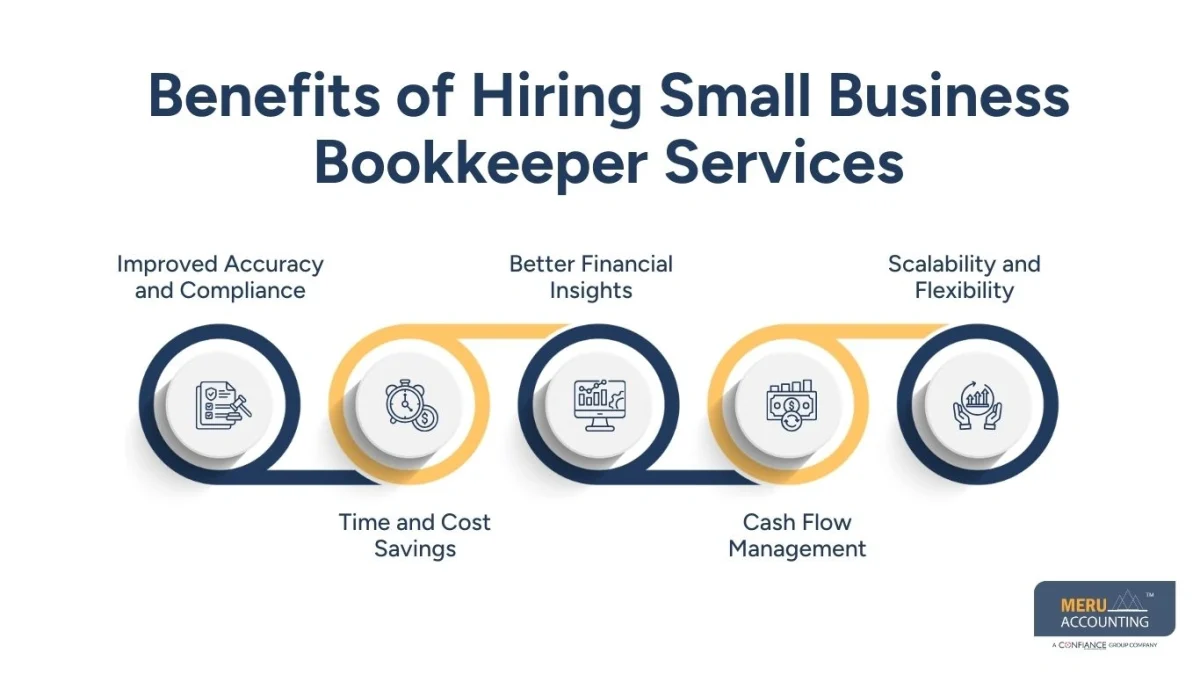
Cash Flow Management
Accurate tracking of receivables and payables allows businesses to maintain healthy cash flow, avoid late payments, and improve creditworthiness with suppliers and lenders.
Scalability and Flexibility
Professional bookkeepers can scale their services as business needs evolve, providing flexibility for seasonal variations or rapid growth phases.
Choosing the Right Small Business Bookkeeper Services
Selecting a bookkeeper that aligns with your business goals and needs is crucial for maximizing benefits.
Qualifications and Experience
Look for bookkeepers with relevant certifications, such as Certified Bookkeeper (CB) or equivalent qualifications. Experience in your specific industry can be a significant advantage.
Technology Proficiency
A skilled bookkeeper should be proficient in modern accounting software and tools, enabling seamless integration and data management.
Communication and Accessibility
Ensure your bookkeeper maintains clear communication lines and provides timely responses. Being easily accessible during critical periods like month-end or tax season is essential.
Service Scope and Pricing
Clarify the range of services offered and request transparent pricing structures. Some bookkeepers charge hourly rates, while others offer fixed monthly packages.
References and Reviews
Seek testimonials or reviews from current or past clients to assess the reliability and quality of the bookkeeping service provider.
Meru Accounting: Trusted Partner for Small Business Bookkeeping
Meru Accounting is a leading provider of small business bookkeeper services, dedicated to helping entrepreneurs streamline their financial operations. With extensive experience and a client-focused approach, Meru Accounting offers comprehensive bookkeeping solutions tailored to meet diverse industry requirements. Their team utilizes the latest technology and best practices to deliver accurate record-keeping, timely financial reporting, and payroll management services. Trusted by numerous small businesses, Meru Accounting emphasizes value, transparency, and proactive financial support to help businesses succeed.
Common Small Business Bookkeeping Software
Choosing the right bookkeeping software is integral to efficient small business bookkeeper services. Below is a table summarizing popular software solutions and key features.
| Software | Key Features | Ideal For | Pricing Model |
|---|---|---|---|
| QuickBooks Online | Invoicing, bank reconciliation, payroll, real-time reporting | Small to medium businesses | Subscription-based |
| Xero | Cloud-based, multi-currency, inventory management, payroll | Small businesses, startups | Subscription-based |
| FreshBooks | Time tracking, invoicing, expense management, project collaboration | Service-based businesses and freelancers | Subscription-based |
| Wave | Free accounting, invoicing, receipt scanning, payroll add-on | Very small businesses and sole proprietors | Free + optional payroll services |
| Zoho Books | Automation, multi-user support, tax compliance, integration with Zoho apps | Small to medium businesses | Subscription-based |
Common Challenges Small Businesses Face in Bookkeeping
While bookkeeping is essential, many small businesses encounter challenges in managing financial records effectively.
- Lack of Expertise: Inadequate accounting knowledge can cause mistakes or misclassification of transactions.
- Time Constraints: Business owners may prioritize sales and operations over bookkeeping responsibilities.
- Data Entry Errors: Manual entry often leads to inconsistencies or missing data.
- Integration Issues: Disparate financial systems may not sync properly, causing fragmented records.
- Regulatory Compliance: Keeping up with changing tax laws and financial regulations can be difficult without expert guidance.
How to Maximize the Value of Small Business Bookkeeper Services
To fully benefit from small business bookkeeper services, it’s important to engage proactively and implement best practices.
Maintain Clear Communication
Establish regular check-ins with your bookkeeper to discuss financial status, address questions, and update business goals.
Provide Complete Documentation
Ensure your bookkeeper receives all invoices, receipts, bank statements, and financial documents promptly to maintain accuracy.
Leverage Technology
Encourage use of integrated accounting software that links with your banking and sales platforms for automation and real-time data.
Review Financial Reports Regularly
Examine monthly or quarterly financial reports with your bookkeeper to monitor business health and develop strategic plans.
Plan for Tax Deadlines
Coordinate with your bookkeeper well ahead of tax season to ensure financial data is prepared and organized for efficient filing.
Conclusion
Small business bookkeeper services are foundational to effective financial management and business success. These services encompass essential tasks such as transaction recording, bank reconciliations, accounts management, payroll assistance, and detailed financial reporting. By leveraging professional bookkeeping expertise, small businesses can achieve greater accuracy, regulatory compliance, operational efficiency, and financial insight. Whether through in-house professionals or trusted service providers like Meru Accounting, investing in quality bookkeeping services allows entrepreneurs to focus on scaling their ventures with confidence and assurance. Selecting the right bookkeeper, utilizing technology effectively, and maintaining open communication are keys to unlocking the full potential of these critical services.
FAQs
What are small business bookkeeper services?
Small business bookkeeper services involve managing and recording financial transactions, maintaining accurate financial records, and ensuring compliance with tax laws for small businesses.
Why do small businesses need bookkeeper services?
Small businesses need bookkeeper services to keep their financial data organized, monitor cash flow, prepare for taxes, and make informed business decisions.
What tasks are typically included in small business bookkeeper services?
Typical tasks include recording daily transactions, reconciling bank statements, managing payroll, invoicing clients, tracking expenses, and generating financial reports.
How often should small business bookkeeping be done?
Bookkeeping should be done regularly, often weekly or monthly, to ensure financial records are accurate and up to date.
Can small business bookkeepers help with tax preparation?
Yes, small business bookkeepers can organize financial records and provide reports that assist accountants with preparing and filing business taxes.


