




Introduction to Small Business Bookkeepers
Small business bookkeepers play a pivotal role in maintaining the financial health of companies by managing day-to-day accounting tasks. They help business owners keep accurate records, track expenses, and ensure compliance with tax laws, thereby enabling entrepreneurs to focus on growing their businesses instead of getting bogged down by paperwork. Leveraging the expertise of small business bookkeepers ensures financial clarity, reduces errors, and improves decision-making, ultimately saving time and resources for small business owners.
The Importance of Accurate Bookkeeping for Small Businesses
Accurate bookkeeping is essential to any business’s success, with small businesses especially benefiting from precise financial records. Without accurate bookkeeping, business owners risk making uninformed decisions, encountering tax penalties, and struggling with cash flow management. Small business bookkeepers ensure that all financial transactions are recorded methodically and accurately, providing a reliable snapshot of the company’s financial health.
How Bookkeeping Impacts Business Growth
Reliable bookkeeping allows businesses to analyze profit margins, manage expenses, and track revenue trends. This information is critical for forecasting future growth and making strategic investments. Furthermore, it provides clarity when seeking loans or attracting investors, positioning the business for expansion.
Reducing Financial Errors and Risk
Bookkeeping can be complex, with risks of mistakes that may lead to costly tax errors or legal issues. Small business bookkeepers bring expertise and experience that minimize these risks by implementing internal controls and regularly auditing financial data.
Time-Consuming Nature of Bookkeeping Tasks
Managing bookkeeping internally without dedicated staff can consume a significant portion of a small business owner’s time. Tasks such as invoicing, tracking expenses, reconciling bank statements, and preparing financial statements are repetitive and detail-oriented, drawing focus away from core business activities.
Daily, Weekly, and Monthly Bookkeeping Activities
- Daily: Recording sales, entering receipts, and updating cash flow records.
- Weekly: Reconciling bank and credit card statements, managing payroll entries.
- Monthly: Preparing profit and loss statements, reviewing accounts payable and receivable, and ensuring tax payments are on track.
Without specialized knowledge, these duties can quickly overwhelm small business owners, reducing efficiency and increasing burnout.
Impact of Poor Time Management on Small Businesses
When bookkeeping is managed inefficiently, it not only wastes time but also hampers business operations. Delays in financial reporting slow down critical decision-making processes, while missing deadlines for tax filings can lead to fines and penalties.
Key Benefits of Hiring Small Business Bookkeepers
Engaging professional small business bookkeepers offers numerous advantages that collectively save time and enhance business performance. These benefits extend beyond simple record-keeping to strategic financial management and compliance assurance.
Expertise and Accuracy
Bookkeepers bring specialized accounting knowledge that ensures accurate data entry, proper categorization of expenses, and timely reconciliation, reducing the risk of errors.
Time Savings
By delegating bookkeeping tasks, business owners can reallocate their time to strategic initiatives, customer service, marketing, and product development, all of which directly contribute to revenue growth.
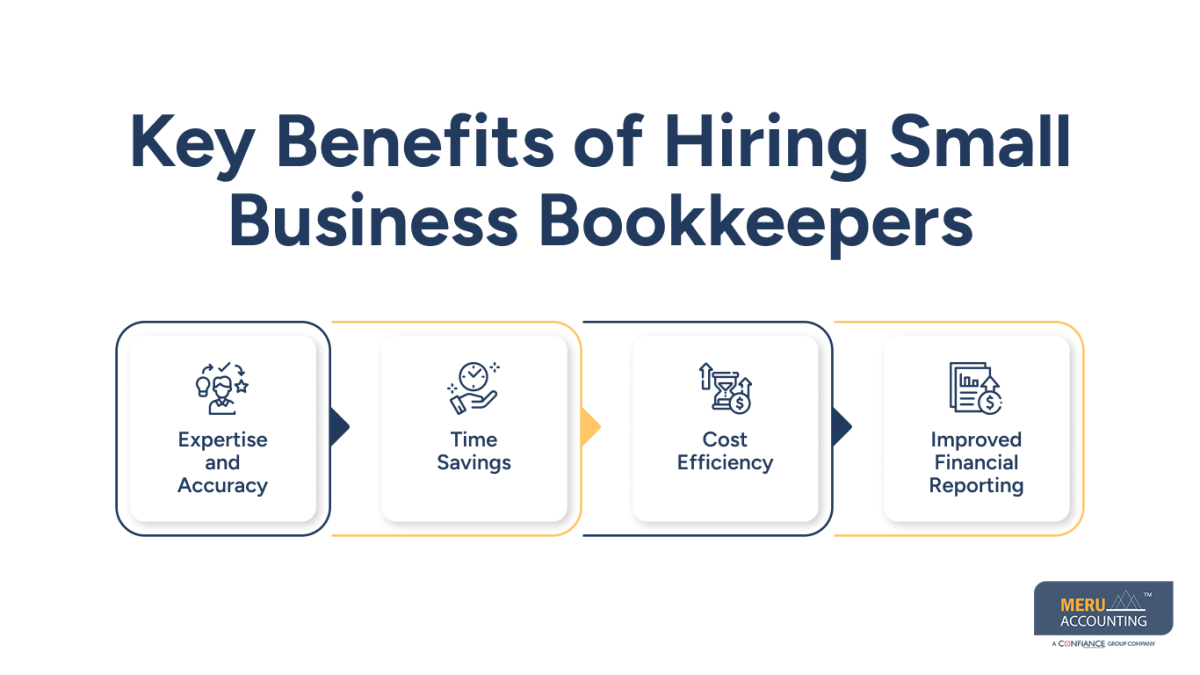
Cost Efficiency
Although hiring a bookkeeper is an investment, it can be more cost-effective than managing errors, late payments, and tax penalties. Additionally, bookkeepers can help identify cost-saving opportunities by monitoring cash flow and expenses.
Improved Financial Reporting
Professional bookkeeping provides businesses with up-to-date and comprehensive financial reports, enabling better forecasting, budgeting, and financial planning.
How Small Business Bookkeepers Can Enhance Tax Preparation and Compliance
Managing tax obligations can be complex, especially given changing regulations and filing requirements. Small business bookkeepers serve as critical allies in preparing documents, organizing receipts, and ensuring compliance—all of which save immense time during tax season.
Organized Record Keeping for Tax Time
Bookkeepers maintain detailed records of deductible expenses and income sources, which simplifies tax filing and reduces the risk of audits.
Timely Compliance with Tax Deadlines
Professional bookkeepers monitor deadlines for tax payments and submissions, helping to avoid costly penalties for late filings.
Maximizing Tax Deductions and Credits
Thanks to their knowledge of tax codes, bookkeepers can identify eligible deductions and credits, thereby minimizing tax liability for the business.
How to Choose the Right Small Business Bookkeeper
Selecting the right bookkeeper is a critical decision that can significantly impact business operations and finances. Careful consideration of experience, credentials, and service offerings is necessary to ensure a successful partnership.
Experience and Industry Knowledge
Look for bookkeepers who have experience working with businesses in your industry, as they will be more familiar with relevant financial nuances and common expense categories.
Certifications and Software Proficiency
Professional certifications, such as Certified Bookkeeper (CB) or QuickBooks ProAdvisor status, indicate a level of proficiency. Additionally, bookkeepers should be adept at using modern accounting software compatible with your business systems.
Service Offerings and Flexibility
Ensure the bookkeeper’s services align with your business needs—whether it be full bookkeeping, payroll, tax preparation, or financial reporting. Flexibility in scheduling and communication is also important for smooth collaboration.
Cost Structure
Understand the pricing model—whether hourly, fixed monthly rates, or per task—and ensure it fits within your budget without sacrificing quality.
Case Study: Time Saved Through Hiring a Small Business Bookkeeper
Consider a small retail business with limited administrative staff. Before hiring a bookkeeper, the business owner spent approximately 15 hours per week managing financial records, detracting from time available to expand sales channels.
After engaging a professional bookkeeper, the owner regained those 15 hours weekly and gained access to accurate reports that facilitated better inventory management and budgeting. Tax season was also less stressful due to well-organized financial documentation.
| Aspect | Before Hiring Bookkeeper | After Hiring Bookkeeper |
|---|---|---|
| Hours Spent on Bookkeeping | 15 hours/week | 2 hours/week (supervision and review) |
| Tax Penalties | Occasional (due to late filings) | None |
| Financial Reporting Accuracy | Inconsistent | Consistent and reliable |
| Time for Strategic Planning | Limited | Significantly increased |
Additional Advantages of Outsourcing Bookkeeping
Many small businesses benefit from outsourcing bookkeeping services rather than hiring in-house staff, gaining access to specialized expertise without the overhead costs.
- Scalability: Services can be scaled up or down based on the business’s current needs.
- Access to Latest Technology: Outsourcing firms typically use state-of-the-art accounting software and technology.
- Reduced Operational Costs: No need for employee benefits, training, or office space dedicated to bookkeeping staff.
- Focus on Core Business: Business owners can concentrate entirely on operations, marketing, product development, and customer service.
About Meru Accounting
Meru Accounting is a trusted provider of comprehensive bookkeeping services tailored specifically for small businesses. With a commitment to accuracy, transparency, and personalized service, Meru Accounting helps business owners save valuable time and reduce administrative burdens. Their team of experienced bookkeepers leverages modern accounting software and industry best practices to ensure clients’ financial records are impeccably maintained, enabling entrepreneurs to focus on growing their businesses with confidence.
Conclusion: Why Hiring a Small Business Bookkeeper Is a Smart Investment
Hiring a small business bookkeeper is more than just delegating administrative tasks—it’s an investment in the efficiency, accuracy, and financial health of your company. By outsourcing or employing a professional bookkeeper, small business owners save valuable time, reduce financial risks, maintain compliance, and gain insightful financial data for strategic decision-making. The long-term benefits far outweigh the costs, making it an essential component of successful business management.
FAQs
Why should I hire a small business bookkeeper?
Hiring a small business bookkeeper helps save time by managing financial records efficiently, allowing you to focus on growing your business.
How can small business bookkeepers save me time?
Small business bookkeepers handle bookkeeping tasks such as tracking expenses, invoicing, and payroll, reducing the time you spend on financial management.
Can hiring a bookkeeper improve my business’s financial accuracy?
Yes, small business bookkeepers ensure accurate and organized financial records, minimizing errors and ensuring compliance with regulations.
Are small business bookkeepers affordable for startups?
Many small business bookkeepers offer flexible pricing options tailored to small business budgets, making their services affordable and cost-effective.
How do I choose the right small business bookkeeper for my company?
Look for bookkeepers with relevant experience, good reviews, and clear communication skills to ensure they meet your business’s specific bookkeeping needs.


