




Introduction to Small Business Bookkeeping Companies
Small business bookkeeping companies play a crucial role in ensuring that a company’s financial records are meticulously maintained and compliant with regulations. For small businesses, effective bookkeeping is foundational to achieving financial clarity, making informed decisions, and sustaining growth. This article delves deeply into what small businesses should look for when selecting a bookkeeping partner, highlighting key attributes, services offered, and the benefits of professional bookkeeping.
Understanding the Role of Small Business Bookkeeping Companies
Bookkeeping involves the systematic recording, organizing, and managing of financial transactions. Small business bookkeeping companies provide specialized services tailored to the needs of smaller enterprises. Their services typically include tracking income and expenses, managing accounts payable and receivable, payroll assistance, bank reconciliation, and preparation of financial statements.
These companies bring expertise and resources that might be otherwise unavailable to small business owners who often juggle multiple roles. Effective bookkeeping services provide accurate financial data helping businesses maintain regulatory compliance, optimize cash flow, and reduce the risk of costly errors.
Key Attributes to Look For in Small Business Bookkeeping Companies
When selecting a bookkeeping company, small businesses should consider various factors to ensure the partnership will support their financial health. Below are the critical attributes that define a competent and reliable small business bookkeeping company:
- Experience and Expertise: Look for companies with proven experience in handling accounting for small businesses within your industry for better understanding of sector-specific financial nuances.
- Certifications and Qualifications: Ensure the bookkeepers possess relevant certifications such as Certified Bookkeeper (CB), QuickBooks ProAdvisor, or CPA affiliations.
- Technology and Software Proficiency: The company should be adept at using popular accounting and bookkeeping software such as QuickBooks, Xero, or Sage, and should keep pace with technological advancements.
- Customization and Scalability: Your bookkeeping partner should offer services that can be customized to your specific business needs and scale as your business grows.
- Transparent Pricing: Clear, upfront pricing with no hidden fees is essential for budgeting and long-term financial planning.
- Strong Communication Skills: Effective and timely communication helps avoid misunderstandings and facilitates better financial decision-making.
- Security and Confidentiality: The company must follow stringent data protection protocols to safeguard your sensitive financial information.
Services Offered by Small Business Bookkeeping Companies
Small business bookkeeping companies typically offer a variety of services, each designed to relieve the administrative burden on the company owner and provide accurate financial oversight. Understanding these services will help business owners pinpoint which offerings align with their specific needs.
Core Bookkeeping Services
- Recording daily financial transactions
- Bank and credit card reconciliation
- Accounts payable and receivable management
- Payroll processing and tax filing support
- Preparation of basic financial reports such as balance sheets, income statements, and cash flow statements
Additional Value-Added Services
- Tax preparation assistance and filing coordination
- Budget creation and financial forecasting
- Consultations for financial strategy and growth planning
- Audit support and correction of bookkeeping errors
- Integration with other financial tools and software
How to Evaluate Small Business Bookkeeping Companies
Selecting the right bookkeeping company requires a systematic approach based on assessment criteria. We outline a step-by-step process for evaluating potential bookkeeping providers.
Step 1: Define Your Business Needs and Budget
Start by listing the precise bookkeeping services you require and determine your budget. Clarity about your needs will help focus your search on companies that offer relevant services at a price point you can manage.
Step 2: Research and Shortlist Companies
Use online reviews, industry recommendations, referrals, and directories to compile a list of reputable small business bookkeeping companies.
Step 3: Verify Qualifications and Experience
Check the credentials, certifications, client testimonials, and case studies of the companies. Ensure they have relevant experience in handling bookkeeping for businesses similar in size and industry.
Step 4: Assess Technology and Security Measures
Evaluate whether the accounting software they use integrates well with your existing systems and inquire about their security protocols for handling sensitive financial data.
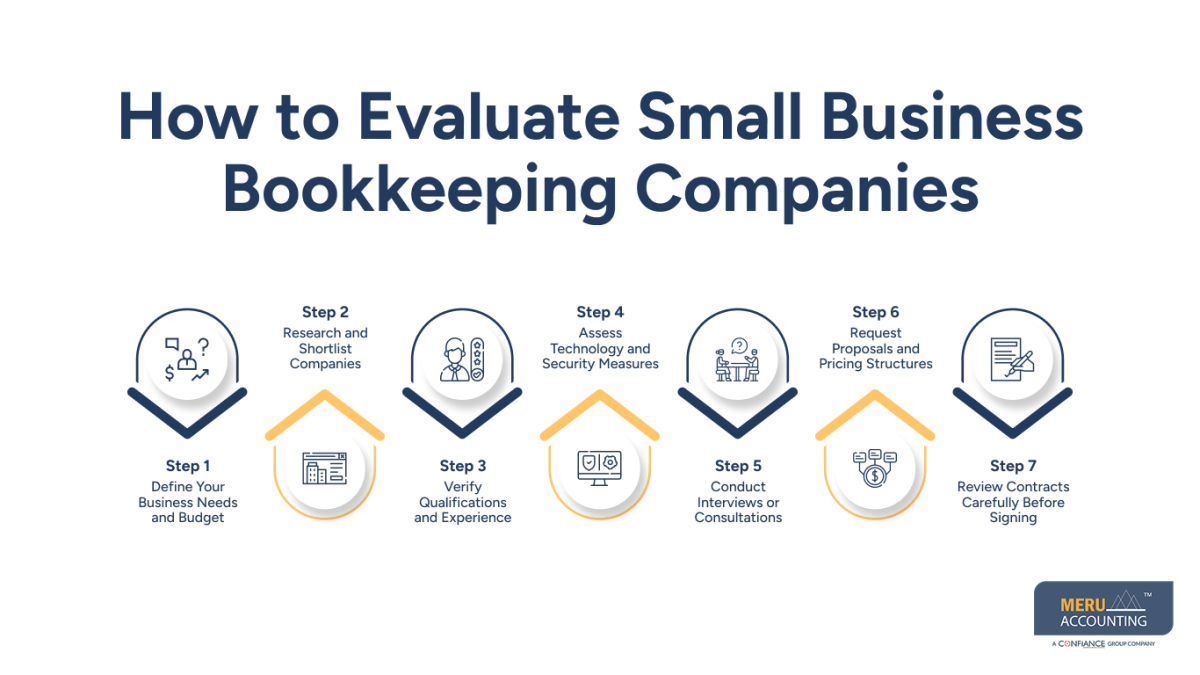
Step 5: Conduct Interviews or Consultations
Schedule meetings to gauge communication skills, responsiveness, and willingness to understand your business challenges.
Step 6: Request Proposals and Pricing Structures
Request detailed proposals outlining the scope of services, timelines, and fee structures for comparison.
Step 7: Review Contracts Carefully Before Signing
Examine contractual terms, cancellation policies, responsibilities, and deliverable expectations to avoid future disputes.
Benefits of Partnering with Small Business Bookkeeping Companies
Engaging skilled small business bookkeeping companies can transform financial management for small enterprises. Some of the principal advantages include:
- Improved Accuracy: Professional bookkeepers reduce errors in financial records, which can impact tax compliance and business decisions.
- Time Savings: Outsourcing bookkeeping frees up valuable time for business owners to focus on core operations.
- Cost Efficiency: Hiring a full-time bookkeeper can be expensive; outsourcing offers a cost-effective alternative.
- Compliance Assurance: Specialists stay updated with tax laws and compliance requirements, minimizing risk of penalties.
- Insightful Financial Reporting: Clear and timely reports provide insights to guide growth strategies and optimize cash flow.
Comparing Popular Bookkeeping Services For Small Businesses
When evaluating bookkeeping services, understanding differences in pricing, features, and service delivery models helps in making a well-informed decision. Below is a comparison table highlighting popular small business bookkeeping services.
| Service Provider | Price Range | Key Features | Ideal For |
|---|---|---|---|
| Meru Accounting | Affordable monthly packages starting at $200 | Full-service bookkeeping, payroll, tax prep, cloud accounting | Small to mid-sized businesses seeking personalized support |
| Bookkeeper360 | $150 – $350 per month | Automated software integration, payroll, tax filing support | Startups and tech-savvy businesses |
| BKD CPAs & Advisors | Custom pricing | Comprehensive accounting, audit services, consulting | Established small to medium enterprises needing extensive services |
| Bench Accounting | $249 – $549 monthly | Online bookkeeping platform, dedicated bookkeeping team | Businesses preferring digital-first bookkeeping solutions |
About Meru Accounting
Meru Accounting is a trusted provider specializing in bookkeeping solutions tailored specifically for small businesses. With a focus on personalized service, Meru Accounting offers comprehensive bookkeeping alongside payroll management, tax preparation assistance, and advanced cloud accounting services. Their team consists of certified professionals committed to ensuring financial accuracy and compliance, providing small business owners with peace of mind and actionable financial insights. Meru Accounting’s scalable package options make their services accessible and adaptable as a business grows, positioning them as a valuable partner for entrepreneurs seeking reliable and efficient bookkeeping support.
Conclusion: Making the Right Choice for Your Small Business
Choosing the right small business bookkeeping company requires careful consideration of expertise, technology, service offerings, pricing, and communication capabilities. As financial stewardship is integral to sustained business success, partnering with a bookkeeping company that aligns with your business needs provides strategic advantage and peace of mind. By leveraging the strengths of professional bookkeeping services, small businesses can enhance financial clarity, ensure compliance, optimize their operations, and ultimately focus on growth and innovation.
FAQs
What services do small business bookkeeping companies typically offer?
Small business bookkeeping companies usually offer services such as bank reconciliation, accounts payable and receivable management, payroll processing, financial reporting, and tax preparation support.
How can I evaluate the credibility of a small business bookkeeping company?
You can evaluate credibility by checking client reviews, verifying certifications of the bookkeepers, asking for references, and confirming their experience with businesses in your industry.
What should I consider regarding pricing when choosing a bookkeeping company?
Consider pricing models (hourly, flat fee, or packages), any additional fees for specific services, and whether the company offers scalable solutions as your business grows.
Is it important for a bookkeeping company to use the latest accounting software?
Yes, using updated accounting software ensures accuracy, efficiency, and easier integration with tax filing systems and other financial tools you may use.
How do small business bookkeeping companies support tax compliance?
They help organize financial records, prepare necessary documentation, track deductible expenses, and often coordinate with tax professionals to ensure timely and accurate tax filing.


