



Introduction to Small Business Bookkeeping Companies
Effective bookkeeping is the cornerstone of successful financial management for any small business. Whether you are just starting out or have an established operation, maintaining accurate and timely financial records is critical to monitoring business health, ensuring tax compliance, and making strategic decisions. However, bookkeeping can be complex and time-consuming, which leads many small business owners to seek the expertise of professional small business bookkeeping companies.
Choosing the right small business bookkeeping company is an important decision that can directly impact your business’s financial stability and growth potential. This detailed guide will help you navigate the process by discussing key factors to consider, types of services available, cost considerations, and red flags that you should avoid.
Understanding What a Small Business Bookkeeping Company Does
A small business bookkeeping company specializes in maintaining accurate financial records tailored specifically to the needs of small businesses. Their primary role is to record all financial transactions systematically, making sure that all income, expenses, payroll, and other financial activities are documented properly.
Core Bookkeeping Services Offered
Bookkeeping companies provide a range of services designed to keep your finances organized and compliant.
- Transaction Recording: Debits and credits for all financial activities are entered into accounting software.
- Bank Reconciliation: Comparing your business’s financial records to bank statements to ensure accuracy.
- Accounts Payable and Receivable: Tracking money owed by you and money owed to you, ensuring timely payments.
- Payroll Management: Calculating wages, taxes, and processing employee payments.
- Financial Reporting: Generating reports like profit and loss statements, balance sheets, and cash flow statements.
- Tax Preparation Support: Organizing financial data to simplify filing taxes and identifying eligible deductions.
Why Outsource Bookkeeping?
Small business owners are typically overwhelmed with wearing multiple hats. Outsourcing bookkeeping to a specialized company provides several advantages:
- Access to expertise without hiring full-time staff
- Accuracy and compliance assured by trained professionals
- More time to focus on growing the business
- Cost-effective financial management solutions
- Scalable services that grow with your business needs
Key Factors to Consider When Choosing a Small Business Bookkeeping Company
Selecting the right bookkeeping company requires thorough evaluation of various important aspects. Below are critical factors to guide your decision-making process.
Experience and Industry Knowledge
Look for a company with extensive experience serving businesses in your industry or with similar operational models. Industry-specific financial nuances can greatly affect bookkeeping processes.
Credentials and Certifications
Consider companies that employ certified bookkeepers with credentials such as Certified Public Bookkeeper (CPB) or membership in professional bookkeeping associations. This ensures adherence to high standards and ethics.
Technology and Software Proficiency
The best bookkeeping companies leverage modern accounting software like QuickBooks, Xero, or FreshBooks to provide efficient, accurate records. Confirm that they use tools that integrate well with your existing systems.
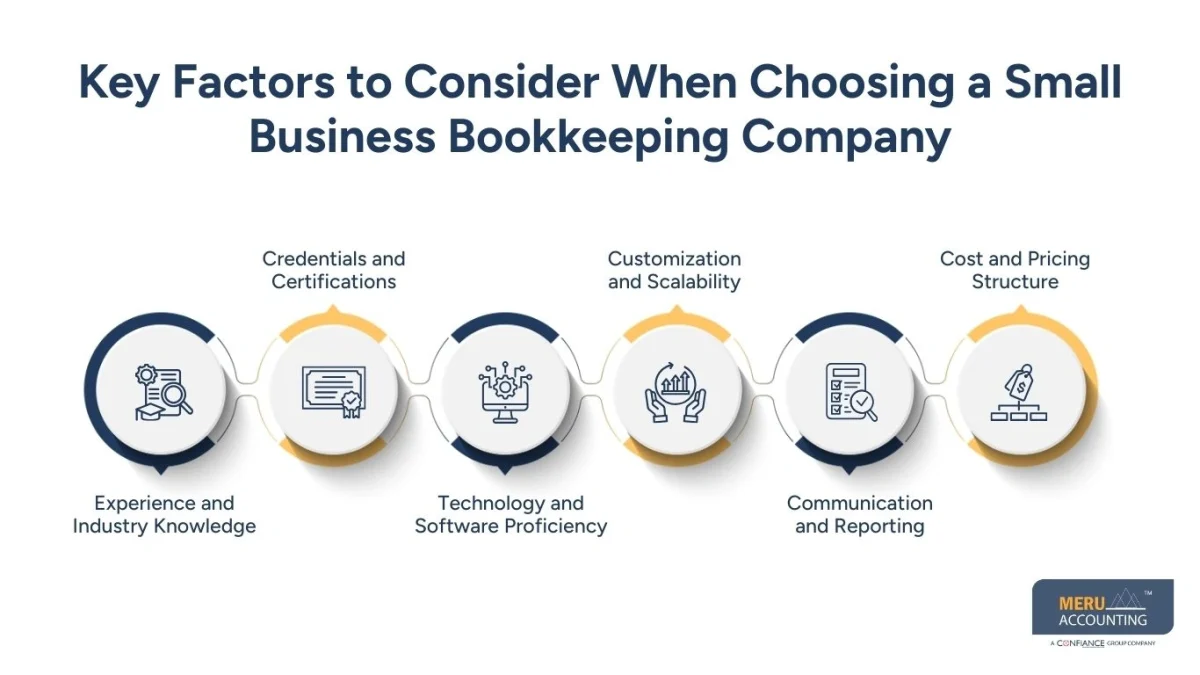
Customization and Scalability
Every small business has unique requirements. Choose a service provider willing to tailor their offerings to your specific bookkeeping needs and capable of scaling as your business grows.
Communication and Reporting
Reliable communication practices and timely, clear financial reporting are essential. The company should provide regular updates and be accessible for consultations.
Cost and Pricing Structure
Evaluate pricing models carefully. Some bookkeeping companies charge hourly rates, others monthly fixed fees or per-transaction fees. Ensure there are no hidden charges and the solution fits your budget.
Types of Small Business Bookkeeping Services Available
Bookkeeping services can vary widely, allowing businesses to select options best suited to their needs and budgets. Common service categories include:
In-House vs. Outsourced Bookkeeping
- In-House Bookkeeping: Hiring a dedicated bookkeeper within your organization. Offers direct control but can be costly and resource-intensive.
- Outsourced Bookkeeping Company: Contracting an external professional firm to handle all your bookkeeping needs. Cost-effective and offers expert support without full-time staff.
Full-Service vs. Partial Bookkeeping
- Full-Service: Complete handling of all accounting functions including payroll, bank reconciliation, tax preparations, and financial reporting.
- Partial Services: Limited to specific tasks such as invoicing or monthly reconciliations, often supplemented by in-house management.
Virtual Bookkeeping
Many small business bookkeeping companies now offer virtual bookkeeping services, which provide flexibility and convenience by managing your finances remotely using cloud-based accounting software.
Comparing Costs and Pricing Structures
Pricing is a key consideration when choosing a bookkeeping service, but it should be balanced carefully with the quality and scope of services provided.
Below is a comparative table outlining typical pricing models in the industry:
| Pricing Model | Description | Typical Cost Range | Best For |
|---|---|---|---|
| Hourly Rate | Charges based on hours worked | $30 – $100+ per hour | Small projects or variable workloads |
| Monthly Fixed Fee | Flat fee covering agreed services | $200 – $1500+ per month | Businesses requiring steady, ongoing bookkeeping |
| Per Transaction | Fees based on number of transactions processed | $1 – $5 per transaction | High-volume, transactional businesses |
| Package Pricing | Bundled services at a set price | $300 – $2000 per month | All-inclusive bookkeeping needs |
When reviewing cost, be sure to inquire about any additional fees such as software subscriptions, tax filing assistance, or consultation charges to fully understand your investment.
Important Questions to Ask Potential Bookkeeping Companies
To ensure you choose the best partner, prepare a list of questions to ask during consultations or interviews. These questions will help you gauge expertise, reliability, and compatibility:
- What bookkeeping software do you use? Are you proficient with multiple platforms?
- Can you provide references from similar small businesses you work with?
- How do you ensure data security and confidentiality?
- What is your process for handling errors or discrepancies?
- Do you offer tax preparation or collaborate with accountants?
- How often will I receive financial reports?
- What is your typical turnaround time for transaction recording and reporting?
- What support do you provide for year-end closing and audits?
- How flexible are your service plans if my business grows?
Red Flags to Avoid When Selecting a Bookkeeping Company
While many bookkeeping firms are reputable, it is essential to be alert to warning signs that indicate a poor fit or potential risks:
- Lack of verified credentials or unwillingness to provide references.
- Minimal or absent communication and unwillingness to provide regular reports.
- Over-promising results or pressuring for long-term contracts without trial periods.
- Poor data security measures or use of outdated technology.
- Opaque pricing structures or unexpected additional fees.
- Inability to clearly explain their processes and services.
Trust your instincts and request clarification whenever information seems insufficient or unclear. The right bookkeeping company will be transparent and focused on building trust.
Introducing Meru Accounting: A Trusted Small Business Bookkeeping Company
Meru Accounting is a leading small business bookkeeping company known for its commitment to accuracy, personalized service, and timely financial insights. Specializing in customized bookkeeping solutions for small enterprises, Meru Accounting leverages the latest accounting technology to streamline financial processes while ensuring compliance. Their team of certified bookkeepers works closely with clients to manage daily transactions, reconcile accounts, and prepare detailed financial reports, empowering business owners to make data-driven decisions. Meru Accounting’s flexible service packages and transparent pricing make it an ideal choice for small businesses looking to optimize their bookkeeping without heavy overhead.
Conclusion: Making the Right Choice for Your Small Business Bookkeeping Needs
Choosing the right small business bookkeeping company is a strategic decision that can streamline your financial management and contribute directly to your business’s success. By considering factors such as experience, technology expertise, customization options, cost, and communication practices, you can select a partner that not only meets your current needs but grows with your business over time.
Whether you opt for in-house bookkeeping or outsource to a professional company like Meru Accounting, prioritizing clarity, accuracy, and reliable reporting will help you maintain financial health and meet your business goals. Take the time to perform due diligence, ask the necessary questions, and avoid common pitfalls to ensure your bookkeeping foundation is solid and supportive of your business’s long-term growth.
FAQs
What should I look for in a small business bookkeeping company?
Look for experience with small businesses, industry knowledge, transparency in pricing, reputable reviews, and strong communication skills.
How can a small business bookkeeping company help my business?
They can manage financial records, track expenses and income, ensure compliance with tax regulations, and provide financial insights to help your business grow.
What questions should I ask potential bookkeeping companies?
Ask about their experience with businesses like yours, pricing structure, software they use, turnaround times, and how they handle confidential information.
Is it better to hire a local bookkeeping company or use an online service?
It depends on your preference for face-to-face interaction versus convenience. Local companies may offer personalized service, while online services might provide more flexible and cost-effective options.
How much does it typically cost to hire a small business bookkeeping company?
Costs vary based on services needed, company size, and location, but typically range from a few hundred to several thousand dollars monthly. It’s important to get detailed quotes.


