


Introduction to Small Business Bookkeeping Solutions
Effective bookkeeping is the backbone of any successful small business. As organizations expand, the complexity of their financial management increases, making reliable bookkeeping solutions essential for sustaining growth and profitability. Small business bookkeeping solutions encompass a broad range of tools, practices, and services designed to help entrepreneurs track income, expenses, and financial health consistently.
In this detailed article, we explore everything you need to know about small business bookkeeping solutions — from fundamentals and software options to best practices and tips for choosing the right providers. Whether you are just launching your startup or scaling an established company, understanding modern bookkeeping options will empower you to maintain accurate records, meet compliance requirements, and make informed financial decisions.
The Fundamentals of Small Business Bookkeeping
Bookkeeping involves recording all financial transactions and organizing them systematically to produce key financial statements. For small businesses, strong bookkeeping practices lay the foundation for tax calculation, budgeting, cash flow management, and strategic planning. It typically includes tasks such as invoicing, receipting, bank reconciliations, tracking accounts payable and receivable, and payroll management.
Key Bookkeeping Concepts
- Double-Entry Bookkeeping: Every transaction affects two accounts, ensuring balance and accuracy.
- Chart of Accounts: A categorization of financial accounts outlining the structure of income, expenses, assets, liabilities, and equity.
- General Ledger: The comprehensive record of all financial transactions organized by account.
- Trial Balance: A report used to verify that total debits equal total credits, ensuring the ledger’s accuracy.
Why Bookkeeping Matters for Growing Businesses
As small businesses grow, their financial transactions increase in volume and complexity. Without efficient bookkeeping solutions, cash flow management becomes difficult, risks of compliance violations heighten, and business owners lose visibility into their financial performance. Proper bookkeeping enables managers to:
- Monitor profitability systematically
- Prepare accurate and timely tax filings
- Detect financial irregularities early
- Plan budgets with realistic data
- Access financing with transparent records
Top Small Business Bookkeeping Software Solutions
The advent of technology has transformed small business bookkeeping with user-friendly software applications streamlining complex processes. Choosing the right bookkeeping software is a critical decision influenced by your business size, industry, budget, and growth objectives. Below we explore some of the most reputable bookkeeping software platforms favored by small and growing businesses.
QuickBooks Online
QuickBooks Online by Intuit is arguably the most popular cloud-based bookkeeping solution for small businesses. It provides invoicing, expense tracking, payroll, and tax support in an integrated ecosystem. The platform supports multi-user access and offers mobile apps that allow business owners to manage finances on the go.
Xero
Xero is another leading cloud accounting software focusing on simplicity and automation. It offers bank reconciliation, inventory management, project tracking, and collaboration tools. Xero’s expansive third-party app marketplace allows businesses to customize features suited to their workflows.
FreshBooks
Known primarily for invoicing, FreshBooks also delivers full bookkeeping functionalities suitable for freelancers and service-oriented small businesses. Its intuitive interface and client portal enhance customer interactions, while automated reminders help reduce late payments.
Wave Accounting
Wave Accounting offers a free bookkeeping and accounting solution aimed at startups and micro-businesses. It covers income and expense tracking, receipt scanning, invoicing, and financial reporting without monthly fees, though add-ons like payment processing are chargeable.
A Comparison Table of Popular Small Business Bookkeeping Software
| Software | Pricing | Key Features | Best For |
|---|---|---|---|
| QuickBooks Online | Starting at $25/month | Invoicing, Payroll, Tax Filing, Bank Sync | Small to Medium Businesses |
| Xero | Starting at $13/month | Bank Reconciliation, Inventory, Project Tracking | Growing Small Businesses |
| FreshBooks | Starting at $15/month | Client Portal, Invoicing, Expense Tracking | Freelancers, Service Businesses |
| Wave Accounting | Free (paid add-ons) | Receipt Scanning, Invoicing, Reporting | Startups, Micro-Businesses |
Best Practices for Small Business Bookkeeping
Implementing effective bookkeeping processes requires attention to detail, routine maintenance, and leveraging technology smartly. Below are actionable best practices to ensure accuracy and efficiency.
1. Maintain Organized Financial Records
Establish digital or physical folders for receipts, invoices, bank statements, and tax documents. Label and date all entries to eliminate confusion during audits or reviews.
2. Use Separate Business and Personal Accounts
Avoid mingling personal and business finances to simplify tracking and increase tax compliance. Open dedicated business bank accounts and credit cards.
3. Reconcile Bank Statements Monthly
Compare bookkeeping entries with bank statements regularly to catch discrepancies early and maintain data integrity.
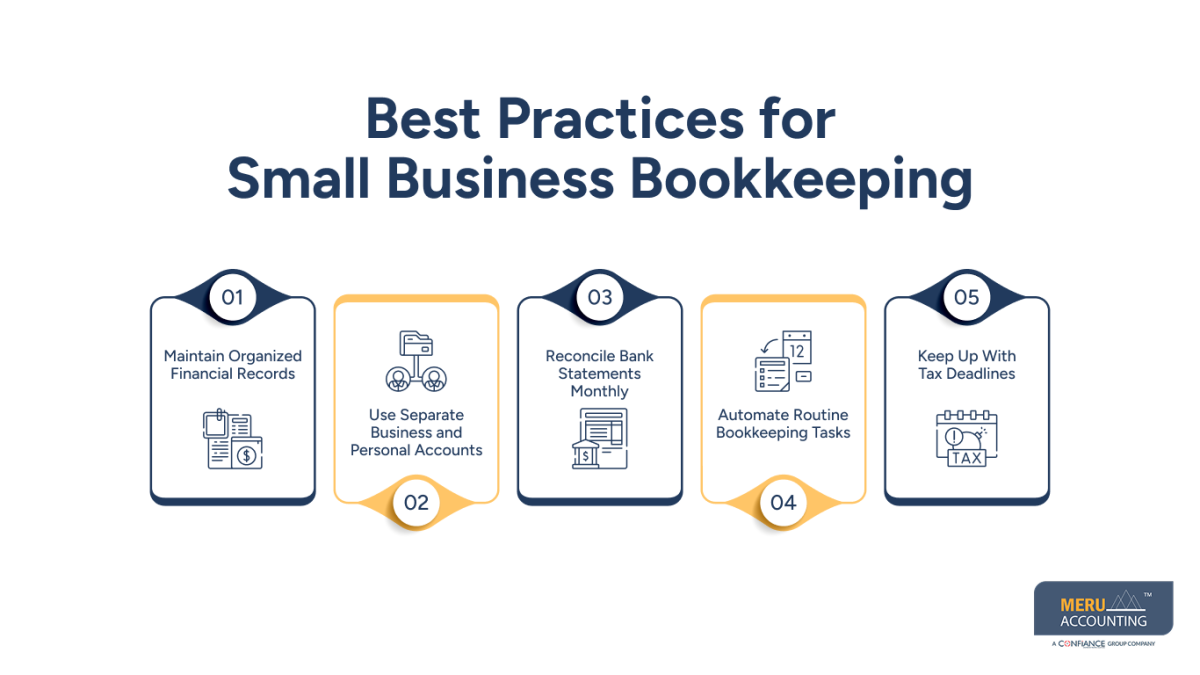
4. Automate Routine Bookkeeping Tasks
Use software features such as bank feeds, invoice reminders, and recurring transaction templates to minimize manual data entry and human errors.
5. Keep Up With Tax Deadlines
Track filing dates for local, state, and federal taxes to avoid penalties. Utilize bookkeeping solutions that generate tax reports and export data directly to tax professionals.
Choosing the Right Bookkeeping Service Provider
Many growing small businesses find value in partnering with professional bookkeepers or accounting firms to supplement or fully manage their bookkeeping functions. Selecting the right bookkeeping service provider requires evaluating several critical factors.
Questions to Ask Potential Providers
- What bookkeeping services do you specialize in (payroll, tax preparation, invoicing)?
- Do you have experience serving businesses in my industry?
- How do you ensure data security and confidentiality?
- Can you work with my existing software platforms?
- What are your rates and billing structure?
Benefits of Outsourcing Bookkeeping
Outsourcing bookkeeping enables business owners to focus on core operations while gaining access to expert financial insights. Providers maintain accurate records, assist with regulatory compliance, and deliver timely reports to support decision-making.
Leveraging Technology for Scalable Bookkeeping
Scalability is crucial for growing businesses, and technology provides flexible solutions to accommodate increasing transactions without proportionate increases in administrative workload. Cloud-based bookkeeping platforms ensure data accessibility across locations and devices, facilitating collaboration between teams and accountants.
Integration with Other Business Tools
Modern bookkeeping solutions often integrate seamlessly with inventory management, point-of-sale, customer relationship management (CRM), and payroll systems, creating centralized workflows and reducing manual reconciliation errors.
Artificial Intelligence and Automation Trends
Cutting-edge bookkeeping tools increasingly use artificial intelligence to categorize transactions, detect anomalies, and predict cash flow trends, enabling proactive financial management.
Mitigating Common Bookkeeping Challenges
While bookkeeping provides significant benefits, many small businesses face challenges ranging from data entry errors to compliance complexities. Understanding these obstacles allows businesses to address them effectively.
Common Bookkeeping Challenges
- Manual Data Entry Mistakes
- Inconsistent Recordkeeping
- Cash Flow Mismanagement
- Complex Tax Codes and Filing Requirements
- Lack of Financial Expertise
Strategies to Overcome Challenges
Employ bookkeeping software with validation checks, establish strict data entry protocols, schedule regular financial reviews, and seek professional accounting advice as needed to maintain accuracy and compliance.
Case Studies: Small Businesses Excelling with Bookkeeping Solutions
To illustrate the transformative impact of implementing tailored bookkeeping solutions, consider these examples:
- Retail Growth: A small boutique scaled operations from a single store to an online platform leveraging QuickBooks with inventory integration, achieving real-time profit tracking and streamlined tax submissions.
- Service Industry: A consulting firm implemented Xero to automate project billing and reduce administrative overhead while improving client invoicing transparency.
About Meru Accounting
Meru Accounting is a trusted professional accounting firm specializing in providing comprehensive small business bookkeeping solutions designed to support growing companies. With a focus on accuracy, personalized service, and leveraging the latest technological tools, Meru Accounting helps businesses maintain clean financial records, optimize tax positions, and gain clear insights into their financial health. Their expert team works closely with clients across industries to tailor bookkeeping processes that align with business goals and ensure compliance, allowing owners to focus on the expansion and success of their ventures.
Conclusion: Empowering Growth Through Effective Bookkeeping
For small businesses, bookkeeping solutions are far more than just a financial necessity—they represent a critical component of strategic management. Implementing robust bookkeeping practices supported by the right software or professional services results in accurate financial data, improved compliance, and better business decision-making. As companies grow, investing time and resources into bookkeeping processes will provide sustained benefits, ensuring operational efficiency and paving the way for future success.
By educating yourself on bookkeeping fundamentals, selecting optimal tools, and possibly partnering with experienced providers such as Meru Accounting, your business can thrive in a competitive marketplace while maintaining financial clarity and control.
FAQs
What are small business bookkeeping solutions?
Small business bookkeeping solutions are tools and services designed to help manage financial transactions, track expenses, and maintain accurate financial records for growing businesses.
Why is bookkeeping important for growing businesses?
Bookkeeping is crucial for growing businesses as it ensures accurate financial data, helps with budgeting, tax preparation, and enables informed decision-making.
What features should I look for in small business bookkeeping solutions?
Key features include expense tracking, invoicing, bank reconciliation, financial reporting, tax filing support, and integration with other business software.
Can small business bookkeeping solutions be customized for different industries?
Yes, many bookkeeping solutions offer customization options tailored to various industries to meet specific accounting needs and compliance requirements.
Are there affordable bookkeeping solutions for small businesses?
Yes, there are many cost-effective bookkeeping solutions available, including cloud-based software and subscription models that cater to the budgets of small businesses.


