


Introduction to Small Business Online Bookkeeping
Bookkeeping is a fundamental aspect of financial management for any business, and for small businesses, efficient bookkeeping practices are crucial to maintaining financial health. Small business online bookkeeping offers an innovative approach to managing financial records using digital platforms and cloud-based technologies. This method transforms traditional bookkeeping by enhancing accessibility, accuracy, and efficiency. This article explores how small business online bookkeeping works, why it is important, and practical strategies for implementing it in your business.
What Is Small Business Online Bookkeeping?
Small business online bookkeeping refers to the use of internet-connected digital tools and software to track and manage financial transactions, expenses, income, and financial reporting for small enterprises. Unlike conventional bookkeeping, which often relies on paper files and desktop software, online bookkeeping employs cloud technology, enabling business owners and accountants to access financial data anytime and anywhere.
Online bookkeeping platforms generally include features such as real-time transaction tracking, automated bank feeds, invoicing, expense categorization, tax calculation, and financial reporting. Leading software providers like QuickBooks Online, Xero, and FreshBooks cater specifically to small businesses by streamlining bookkeeping tasks, thus allowing owners to focus on business growth.
How Small Business Online Bookkeeping Works
Setting Up an Online Bookkeeping System
The first step in adopting online bookkeeping is selecting a software platform that aligns with your business’s needs. The setup process typically involves linking the bookkeeping software to your business bank accounts and credit cards, enabling automatic transaction imports.
After synchronization, the bookkeeping software categorizes transactions into various accounts such as sales, utilities, payroll, and inventory. Users may manually adjust categories or add notes to transactions to ensure accuracy. Many platforms also offer mobile applications, facilitating updates on the go.
Automated Data Entry and Reconciliation
One of the most significant benefits of online bookkeeping is reduced manual data entry. Automatic bank feeds pull transactional data into the system daily. The software leverages artificial intelligence to categorize expenses and detect discrepancies, streamlining the reconciliation process and reducing errors.
Generating Financial Reports
Online bookkeeping solutions provide comprehensive financial reports including profit and loss statements, balance sheets, cash flow statements, and tax summaries. These reports are customizable and can be generated in real time, offering business owners a clear picture of their financial position at any moment.
Why Small Business Online Bookkeeping Matters
Improved Accuracy and Reduced Errors
Manual bookkeeping is prone to human error, which can lead to inaccurate records and unexpected financial challenges. Online bookkeeping automates many calculations and categorization tasks, minimizing mistakes and ensuring that financial data is reliable.
Real-Time Financial Insights for Better Decision Making
Access to up-to-date financial information enables small business owners to make informed decisions. Whether it’s planning budgets, managing cash flow, or preparing for tax deadlines, online bookkeeping equips users with the tools to act proactively.
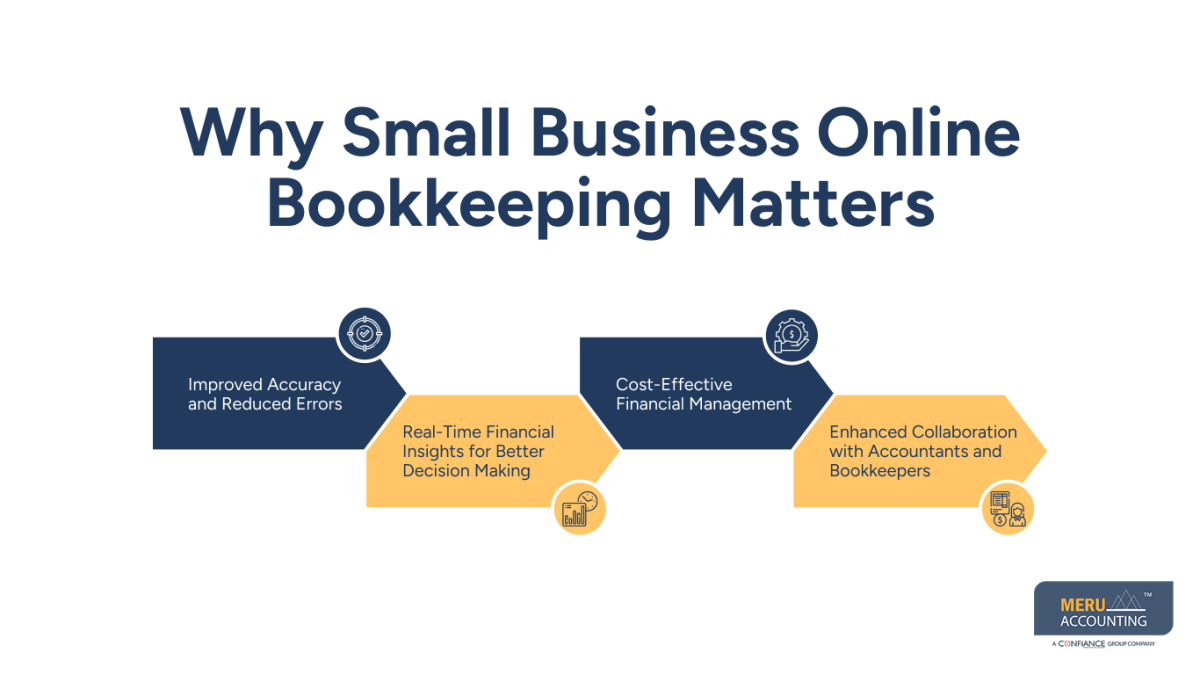
Cost-Effective Financial Management
Online bookkeeping reduces the need for extensive in-house accounting resources, lowering operational costs. Subscription fees for software platforms are generally affordable, and the automation of routine tasks saves time, which translates to cost savings.
Enhanced Collaboration with Accountants and Bookkeepers
Online platforms offer multi-user access, allowing business owners and financial professionals to collaborate in real time without physical meetings. This seamless communication improves the efficiency of maintaining accurate books and preparing for audits or tax filings.
Essential Features of Small Business Online Bookkeeping Software
- Bank Integration: Direct connection with bank accounts for automatic transaction importing.
- Expense Tracking: Tools to record, categorize, and manage business expenses.
- Invoicing and Payments: Creation and sending of invoices, plus integration with payment gateways.
- Tax Preparation: Automated tax calculations and preparation of reports needed for tax filing.
- Financial Reporting: Generation of customizable reports such as P&L, balance sheet, and cash flow.
- Mobile Access: Capability to manage accounts using smartphones or tablets.
- Security and Backup: Data encryption and cloud backup to ensure safety of financial data.
Benefits of Transitioning to Online Bookkeeping for Small Businesses
- Accessibility: Access records anytime from any device connected to the internet.
- Time Savings: Automation reduces the time spent on data entry and reconciliations.
- Improved Organization: Digital records are easier to track, search, and organize than physical documents.
- Scalability: Systems can grow with your business, accommodating increasing transaction volumes.
- Compliance and Audit Ready: Simplifies the process of preparing for tax audits and ensuring regulatory compliance.
Common Challenges and Solutions in Small Business Online Bookkeeping
Challenge 1: Data Security Concerns
Many business owners worry about the security of their financial data in cloud-based systems. To mitigate these risks, choose bookkeeping platforms with robust encryption, multi-factor authentication, and regular security audits.
Challenge 2: Software Learning Curve
Adopting new technology can be intimidating. Most providers offer tutorials, webinars, and customer support to ease the transition. Investing time in staff training is essential for maximizing the benefits of online bookkeeping.
Challenge 3: Integration with Existing Systems
Ensuring your bookkeeping software works with your other business systems (like payroll, CRM, and inventory management) can be complex. Before selecting software, check for compatibility or available integration options through APIs or third-party connectors.
Challenge 4: Maintaining Data Accuracy
Despite automation, periodic checks are necessary to verify transaction categorization and correct anomalies. Encouraging frequent reviews and reconciliation prevents accumulation of errors.
Comparison of Popular Small Business Online Bookkeeping Platforms
| Feature | QuickBooks Online | Xero | FreshBooks |
|---|---|---|---|
| Bank Integration | Yes, with automatic feeds | Yes, real-time transaction imports | Yes, supports multiple banks |
| Invoice Management | Customizable invoicing | Professional invoicing & reminders | Automatic invoice tracking |
| Tax Management | Automated sales tax calculations | Supports tax returns & VAT | Basic tax reports available |
| Mobile App | iOS and Android | iOS and Android | iOS and Android |
| Pricing | Plans start at $25/month | Plans start at $12/month | Plans start at $15/month |
How to Choose the Right Online Bookkeeping Solution for Your Small Business
Choosing the right bookkeeping platform depends on several factors tailored to your business’s unique requirements. Consider the following steps when making your selection:
- Assess Your Needs: Determine essential features you require (e.g., invoicing, payroll integration, tax management).
- Budget Considerations: Factor in subscription costs and additional fees to find a sustainable financial model.
- User Friendliness: Opt for software with an intuitive interface to reduce training time.
- Customer Support: Reliable support ensures quick resolution of any issues.
- Trial Periods: Take advantage of free trials to test software capabilities before committing.
- Scalability: Choose solutions that can adapt to your growing business needs.
Future Trends in Small Business Online Bookkeeping
The domain of small business online bookkeeping is rapidly evolving. Emerging technologies such as artificial intelligence (AI), machine learning, and blockchain are poised to revolutionize how businesses manage their finances.
AI-Powered Automation: More sophisticated AI tools will facilitate predictive analytics, automated auditing, and advanced fraud detection. This will enable small business owners to forecast cash flow needs and optimize financial operations with greater precision.
Blockchain for Secure Transactions: The use of blockchain provides immutable transaction records, enhancing transparency and reducing the risk of tampering.
Integration with Comprehensive Business Management Suites: As software ecosystems mature, bookkeeping tools will increasingly integrate with inventory, customer relationship management (CRM), and payroll systems to offer an end-to-end business management experience.
The Role of Meru Accounting in Small Business Online Bookkeeping
Meru Accounting is a reputable service provider specializing in online bookkeeping solutions tailored for small businesses. With a focus on leveraging cutting-edge cloud technologies, Meru Accounting helps business owners streamline financial management, improve accuracy, and ensure compliance. Their team of certified accountants offers personalized support, ensuring that clients make the most of their bookkeeping software, optimize tax strategies, and gain actionable insights from their financial data. Small businesses partnering with Meru Accounting benefit from reliable expertise and customized solutions that enhance growth and sustainability.
Conclusion
Small business online bookkeeping is more than a convenience—it is a necessity for modern enterprises aiming to optimize financial management. By automating tedious tasks, improving data accuracy, and providing real-time insights, online bookkeeping empowers small business owners to make informed decisions and scale their operations efficiently. Selecting the right tools and understanding best practices are essential steps in leveraging the full potential of online bookkeeping. As technology continues to advance, staying aligned with emerging trends will further enhance the benefits for small businesses worldwide.
FAQs
What is small business online bookkeeping?
Small business online bookkeeping is the process of managing and recording financial transactions using internet-based software and tools designed specifically for small businesses.
How does online bookkeeping benefit small businesses?
Online bookkeeping helps small businesses save time, improve accuracy, access real-time financial data, simplify tax preparation, and reduce costs compared to traditional bookkeeping methods.
What features should I look for in small business online bookkeeping software?
Key features include cloud accessibility, automated transaction imports, invoicing, expense tracking, financial reporting, integration with bank accounts, and user-friendly interfaces.
Is online bookkeeping secure for small businesses?
Yes, reputable online bookkeeping platforms use encryption, secure servers, and multi-factor authentication to protect financial data and ensure privacy.
Can I do online bookkeeping myself or should I hire a professional?
Small business owners can manage online bookkeeping themselves using user-friendly tools, but consulting with a professional accountant can help ensure accuracy and compliance.


