


A small business tax preparation checklist is one of the most useful tools for any business owner preparing for tax season. Taxes can become confusing when income, expenses, payroll, and deductions all need to be recorded properly.
Without a clear plan, many businesses miss important documents or make mistakes that may lead to penalties or incorrect tax filings.
Using a structured small business tax preparation checklist helps organize financial records, track deductions, and confirm that every required step is completed before filing taxes. It reduces stress and makes tax preparation more manageable for business owners.
For new entrepreneurs, tax preparation for startups can feel even more challenging because they must understand tax rules while also building their business. With the right checklist and preparation strategy, businesses can avoid errors and file their taxes with confidence.
What You Will Learn From This Blog
- Learn how a small business tax preparation checklist helps businesses stay organized during tax season and manage financial records properly.
- Understand the important documents and financial records required before filing taxes to follow the small business tax filing checklist correctly.
- Explore common tax filing mistakes that businesses often make and how a small business tax filing checklist can help prevent them.
- Gain useful guidance for new entrepreneurs and understand the key rules involved in tax preparation for startups.
- Explore practical methods to improve your small business tax preparation checklist process and maintain better financial organization throughout the year.
Introduction To The Small Business Tax Preparation Checklist
A small business tax preparation checklist is a structured list of tasks and documents that businesses need before filing their taxes. It helps organize financial information such as income records, expense details, payroll reports, and tax forms.
By following a checklist, business owners can ensure that important financial data is properly recorded and ready for tax filing. The main purpose of a small business tax filing checklist is to help businesses prepare accurate tax returns and avoid mistakes.
It allows business owners to confirm that all transactions are documented, deductions are recorded correctly, and financial records are complete.
This organized approach helps reduce confusion and makes the tax filing process more manageable. For small businesses and new entrepreneurs, maintaining compliance with tax rules is very important.
A well-prepared small business tax filing checklist helps ensure that tax filings meet government requirements and reduces the risk of penalties. It is also helpful for tax filing for startups, as new businesses can track their financial records and tax responsibilities more effectively.
Why Every Business Needs A Small Business Tax Preparation Checklist
Organized Financial Records
A small business tax preparation checklist helps maintain organized financial records throughout the year. This makes tax filing faster and more accurate.
Better Expense Tracking
Tracking expenses properly ensures businesses claim all valid deductions. This is a key step in a complete small business tax filing checklist.
Reduced Filing Errors
Errors in tax returns often happen when records are incomplete. The checklist helps confirm that all necessary details are included. This reduces the chances of incorrect filings or future corrections.
Improved Tax Planning
A well-prepared small business tax filing checklist also supports better financial planning for future tax years. It helps businesses review past financial data and prepare for upcoming tax responsibilities.
Helpful For Tax Preparation For Startups
New companies benefit greatly from a structured checklist. Tax filing for startups becomes easier when financial tasks are organized from the beginning.
Essential Documents To Gather For Your Small Business Tax Preparation Checklist
Income Records
Businesses must collect all income records, such as sales reports and invoices. These documents are necessary for the small business tax preparation checklist.
Expense Receipts
Expense receipts help verify business costs and deductions. Keeping these records ready simplifies tax filing. Proper documentation also helps businesses support their expense claims if needed.
Payroll Records
If your business has employees, payroll records must be included in the small business tax filing checklist. These records help confirm wages, tax withholdings, and other employee-related expenses.
Bank Statements
Bank and credit card statements confirm financial transactions and help verify income and expenses. They also help ensure that accounting records match actual financial activity.
Startup Expense Records
For new businesses, startup expenses are important deductions. These records are essential during tax preparation for startups. Maintaining them helps new businesses claim eligible deductions and reduce taxable income.
Tax Forms From Previous Years
Gathering prior year tax returns and supporting documents is important. These help identify carryovers, prior deductions, and income patterns for accurate reporting.
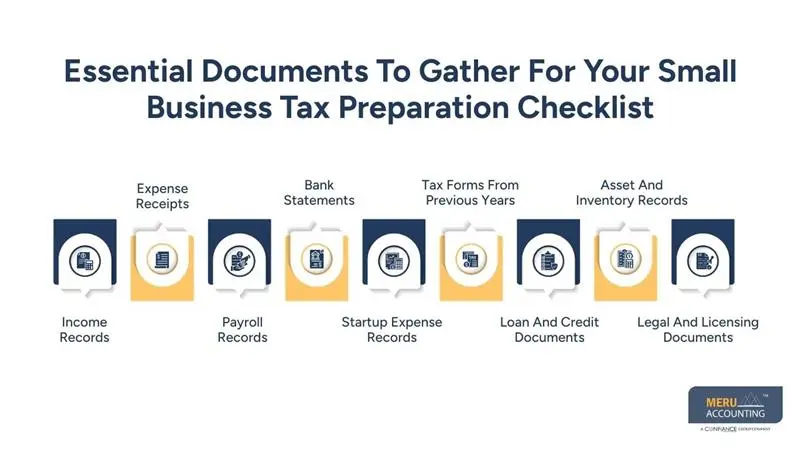
Loan And Credit Documents
Records of business loans, lines of credit, and interest payments are necessary. They ensure that all deductible interest and loan-related expenses are included in the small business tax preparation checklist.
Asset And Inventory Records
Keep a record of business assets, including purchases, sales, and depreciation schedules. Inventory records also help verify the cost of goods sold and other deductions.
Legal And Licensing Documents
Business licenses, permits, and legal agreements may be required for certain tax deductions or compliance verification. These documents support proper reporting and audit readiness.
Step-By-Step Small Business Tax Preparation Checklist For Accurate Filing
Review Business Income
The first step in a small business tax preparation checklist is reviewing all income sources to confirm accurate reporting. This includes sales revenue, service income, and any other earnings to ensure nothing is missed.
Verify Expense Categories
Expenses should be categorized correctly to avoid confusion during tax filing. Proper categorization also helps maximize eligible deductions and keeps financial records organized.
Reconcile Financial Accounts
Account reconciliation confirms that accounting records match bank statements. It also helps identify discrepancies or missing transactions before tax filing.
Prepare Tax Forms
Once financial records are verified, businesses can prepare the required tax forms as part of the small business tax filing checklist. Accurate forms reduce the risk of errors and make filing smoother.
Check Startup Tax Requirements
New businesses must review startup tax rules. This step ensures proper tax preparation for startups and prevents compliance issues.
Common Mistakes Businesses Make Without A Small Business Tax Preparation Checklist
Without a small business tax preparation checklist, businesses often forget important financial documents needed for accurate tax filing, which can lead to errors or missing deductions.
Improperly categorized expenses can result in incorrect claims, potentially causing tax issues or audits.
Missing tax filing deadlines is a common problem when businesses do not follow a structured checklist, which may lead to penalties or interest charges.
Incomplete or poorly managed records make tax preparation more difficult and increase the likelihood of mistakes in reporting income and expenses.
New businesses often face confusion with tax rules, and proper tax filing for startups requires organized documentation to ensure compliance and accurate filings.
How The Small Business Tax Preparation Checklist Simplifies Tax Preparation For Startups
Clear Tax Preparation Process
A small business tax filing checklist provides a clear process that startups can follow each year. It outlines each step so nothing is overlooked during tax season.
Better Financial Organization
Startups often handle many financial tasks. The checklist helps organize these responsibilities, making it easier to manage income, expenses, and payroll.
Improved Tax Accuracy
Using a small business tax preparation checklist helps confirm that financial data is correct before filing. This reduces errors and ensures that deductions and credits are applied properly.
Reduced Tax Stress
Following a checklist helps simplify tax preparation for startups and reduces confusion during tax season. It allows business owners to feel confident that all tasks are completed.
Easier Document Tracking
The checklist ensures that important records are collected and stored properly. This makes it faster and simpler to locate documents if needed for audits or financial reviews.
Best Practices To Improve Your Small Business Tax Preparation Checklist Process
Maintain Regular Bookkeeping
Accurate bookkeeping supports the small business tax filing checklist and improves financial reporting. It also makes it easier to prepare taxes without last-minute scrambling.
Track Expenses Throughout The Year
Regular expense tracking prevents missing deductions during tax season. This practice ensures all business costs are properly documented and categorized.
Review Financial Reports Monthly
Monthly financial reviews help detect errors early. They also give a clear view of your business’s financial health and cash flow.
Store Digital Copies Of Documents
Keeping digital records helps businesses access documents quickly. It also provides a backup in case physical documents are lost or damaged.
Apply Startup Tax Planning
Consistent financial tracking improves tax filing for startups and supports long-term financial management. Early planning helps new businesses take advantage of all available deductions and credits.
When To Seek Professional Help For Small Business Tax Preparation Checklist Compliance
Complex Tax Situations
Businesses with complex finances may need professional tax guidance. Experts can identify potential issues and suggest strategies to reduce tax liabilities.
Business Growth
As businesses grow, tax responsibilities increase. Professionals can help maintain the small business tax preparation checklist and manage more complicated financial transactions.
Audit Preparation
Professional support helps businesses respond properly if tax authorities request documentation. It also ensures that all records are accurate and easily accessible during an audit.
Startup Tax Guidance
Experts provide useful advice for tax preparation for startups and help new businesses understand tax rules. This guidance ensures startups comply with regulations from the beginning.
Accurate Tax Filing
Working with professionals helps ensure the small business tax filing checklist is followed correctly. This reduces errors and gives business owners confidence that taxes are filed accurately and on time.
How Meru Accounting Supports Your Small Business Tax Preparation Checklist
- Meru Accounting offers tax preparation services designed for small businesses and helps implement a reliable small business tax preparation checklist.
- Our team ensures financial records are properly maintained, making tax filing easier and more accurate.
- We provide guidance for tax preparation for startups, helping new businesses understand tax requirements and deductions.
- Meru Accounting uses modern accounting tools to efficiently track income, expenses, and tax records.
- Our professionals review financial data carefully to ensure the small business tax preparation checklist is followed for compliance.
Key Takeaways
- A small business tax preparation checklist helps businesses organize financial records before tax filing.
- Following a checklist reduces mistakes and improves tax accuracy.
- Gathering documents early makes tax preparation faster and easier.
- New companies must understand their tax responsibilities during tax preparation for startups.
- Professional accounting support can help businesses manage tax compliance efficiently.
FAQs
A small business tax preparation checklist includes all financial documents you need before filing, like income statements, expense receipts, bank statements, payroll records, and startup expenses.
Using a checklist ensures you gather all documents, categorize expenses correctly, and track deductions, reducing errors and missed filings.
For tax preparation for startups, keep income records, startup costs, payroll reports, bank statements, and any receipts for business expenses.
It’s best to update your small business tax filing checklist regularly, ideally monthly or quarterly, to avoid last-minute stress during tax season.
If your taxes are complex or you’re a new business, professional help ensures compliance, accurate filing, and proper guidance for tax filing for startups.


