
A small business bookkeeping company helps agencies manage financial operations across multiple clients at the same time. Marketing firms, creative agencies, consulting businesses, and service providers often work with several projects simultaneously, each involving different invoices, vendors, and payment terms.
As client volume increases, financial tracking becomes more complex and difficult to manage manually. Managing funds for several clients is not only about recording income and expenses.
Agencies need to track project costs, maintain financial records, manage payroll, monitor cash flow, and prepare reports. Without proper systems, mistakes can happen and affect business growth.
Many agencies now use accountancy services for small businesses to create better financial systems and improve reporting accuracy. Professional bookkeeping support helps agencies stay organized and focus more on serving clients.
This blog explains how a small business bookkeeping company helps agencies manage multi-client finances and maintain better control over business operations.
What You Will Learn From This Blog
- Why do agencies face financial challenges when managing many clients
- The importance of a small business bookkeeping company in agency operations
- How bookkeeping firms handle multi-client financial records
- Features agencies should look for before choosing financial support
- How do accountancy services for small businesses improve reporting quality
- Ways outsourced bookkeeping supports growth
- Benefits of working with financial experts
- How Meru Accounting supports agencies with bookkeeping solutions
Understanding the Importance of a Small Business Bookkeeping Company for Agencies
Agencies often work with several clients at one time. Each client can have unique billing structures, payment schedules, and project costs. A small business bookkeeping company helps organize these activities. It creates structured financial processes that help agencies maintain order as client workloads increase.
Managing Multiple Revenue Sources
Agencies receive payments from many clients under different terms. Bookkeeping support helps maintain proper records for every transaction. This process helps agencies avoid missed entries and provides a clear view of income from different projects.
Organizing Financial Records
Well-maintained records reduce confusion and help agencies review financial performance when needed. Organized financial data also makes it easier to locate reports, invoices, and expense details during audits or business reviews.
Supporting Better Reporting
Financial reports become more useful when records remain updated and accurate. Clear reporting helps agency owners understand trends and review performance across different client accounts.
Reducing Administrative Burden
Agencies can focus on serving clients instead of spending large amounts of time on bookkeeping work. This support allows teams to dedicate more time to operations, project delivery, and client communication.
Improving Financial Visibility
A small business bookkeeping company helps business owners understand income, expenses, and cash flow. Better financial visibility supports planning and helps agencies identify areas that may need attention or improvement.
Understanding Financial Challenges in Multi-Client Agency Operations
Agencies often face several financial issues while managing multiple accounts. As client numbers and projects increase, financial activities become more difficult to manage.
Tracking Project Expenses
Different projects have different budgets, timelines, and cost structures. Tracking project expenses across many client accounts can become difficult and increase reporting confusion.
Managing Payment Timelines
Clients often follow different payment cycles, billing terms, and invoice schedules. Delayed payments can create cash flow issues and affect daily business operations.
Handling Payroll Activities
Growing agencies that rely on accountancy services for small businesses usually hire employees, freelancers, and independent contractors. Payroll management requires attention because payment structures can vary across teams.
Maintaining Separate Client Records
Combining financial information from different clients can create reporting errors. Agencies need organized systems to keep records accurate and properly separated.
Monitoring Cash Flow
Agencies need clear visibility into incoming and outgoing business funds. Weak cash flow monitoring can affect spending plans and financial decision-making.
How a Small Business Bookkeeping Company Manages Multi-Client Finances for Agencies
A small business bookkeeping company follows structured processes to manage finances effectively. These processes help agencies maintain organized records while handling many client accounts.
Creating Separate Financial Categories
Bookkeepers create organized systems that separate clients, projects, and expenses. This structure reduces confusion and helps agencies maintain cleaner financial records.
Recording Transactions Daily
Regular transaction entry helps agencies avoid missing important financial information. Daily updates also improve reporting accuracy and reduce record delays.
Managing Accounts Receivable
Invoice tracking helps agencies monitor unpaid bills and payment schedules. It also supports timely collections and improves cash flow management.
Preparing Financial Reports
Reports help owners review business performance and identify financial trends. Clear reports also support planning and future decision-making activities.
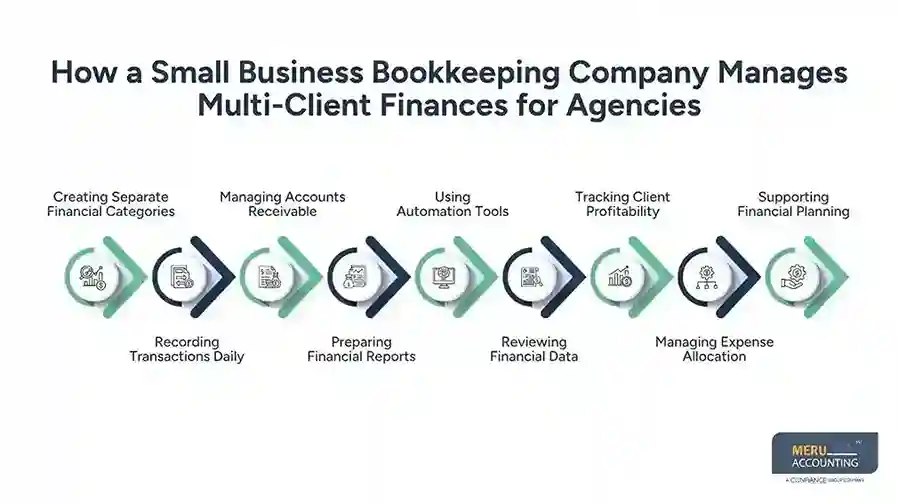
Using Automation Tools
Modern systems reduce manual work and improve overall operational efficiency. Automation also helps reduce repetitive tasks and entry mistakes.
Reviewing Financial Data
Regular reviews help identify unusual spending or reporting concerns. This process helps agencies detect issues before they become larger problems.
Tracking Client Profitability
Agencies often manage projects with different profit margins and cost levels. Profitability tracking helps identify which clients contribute more to business growth.
Managing Expense Allocation
Shared costs sometimes need to be divided across multiple client projects. Proper expense allocation helps maintain accurate records and better reporting.
Supporting Financial Planning
Financial planning helps agencies prepare for future operational needs and expenses. Better planning also supports budgeting and business growth activities.
A small business bookkeeping company creates systems that help agencies maintain financial order while handling growth. Strong bookkeeping practices help agencies improve visibility and reduce financial confusion.
Key Features Agencies Should Look for in a Small Business Bookkeeping Company
Selecting the right partner matters because bookkeeping affects many business decisions and long-term financial control.
Industry Knowledge
Experience with agencies and service firms helps create better financial structures. It also helps in understanding client billing models and project-based accounting needs.
Cloud-Based Systems
Cloud platforms provide easier access to records and reports. They also allow agencies to view updated financial data from any location at any time.
Reporting Capabilities
Reports should help owners understand financial performance. Strong reporting also helps in tracking cash flow, expenses, and client profitability.
Scalability Support
The bookkeeping system should support future growth. It should also handle increasing client volume without reducing accuracy or speed.
Data Security Practices
Financial information should remain protected through secure systems. Strong security practices help reduce the risk of data loss or unauthorized access.
Communication Support
Clear communication helps solve issues quickly. It also ensures that financial updates and corrections are handled without delay.
A trusted small business bookkeeping company often provides these important features along with consistent support and structured processes.
How Accountancy Services For Small Businesses Improve Financial Accuracy
Financial accuracy helps agencies avoid reporting problems and maintain reliable financial records across all client accounts.
Reducing Manual Errors
Manual entry increases the chance of mistakes. Structured systems reduce repeated data entry and improve record accuracy across transactions.
Standardizing Processes
Standard processes followed under professional accountancy services for small businesses create consistency across financial activities. This consistency helps agencies maintain uniform records across different clients and projects.
Reviewing Records Regularly
Routine reviews conducted by a small business bookkeeping company improve record quality. Regular checks also help identify missing entries and correct inconsistencies early.
Improving Documentation
Good documentation supported through accountancy services for small businesses improves reporting quality. Proper records make it easier to verify transactions and support audit requirements.
Supporting Compliance Needs
Regulatory requirements become easier to manage. Accurate records help agencies stay aligned with tax and reporting rules without delays.
Many agencies depend on accountancy services for small businesses because reporting quality directly affects planning and decision-making outcomes.
How Outsourced Bookkeeping Supports Agency Scalability
Outsourced support helps agencies expand without building large internal teams. It reduces pressure on in-house resources during growth phases.
Lower Administrative Work
Teams spend less time on financial tasks daily. More time becomes available for client delivery and execution work.
Flexible Service Models
Businesses can increase services based on changing needs. Seasonal demand and growth phases become easier to manage smoothly.
Access To Skilled Professionals
Bookkeeping firms often have trained financial specialists available. Their experience improves accuracy and reduces reporting gaps significantly.
Better Resource Allocation
Agency teams can focus more on client work. Internal resources shift away from routine financial handling tasks.
Improved Operational Structure
Outsourcing through accountancy services for small businesses creates more organized and structured financial systems. Processes become predictable and easier to manage across clients.
A small business bookkeeping company can provide support during different growth stages.
Benefits Of Working With A Professional Small Business Bookkeeping Company
Professional bookkeeping support offers several business advantages for agencies managing multiple clients.
Better Time Management
Owners spend less time managing records daily. More time becomes available for core business activities.
Improved Financial Control
Agencies gain clear visibility into income and expenses. Better control supports stronger financial planning and monitoring.
Reduced Reporting Errors
Professional systems reduce mistakes in financial records. Accurate data improves overall reporting quality across clients.
Better Decision Support
Updated reports help with planning activities regularly. Decisions become more informed with accurate financial insights.
Support During Growth
Financial systems become easier to manage as operations expand. Scaling becomes smoother with structured bookkeeping processes.
Working with a small business bookkeeping company can improve business efficiency and reporting quality across all agency operations.
Why Agencies Choose Meru Accounting
Agencies managing multiple clients often require more than basic bookkeeping support. They need financial systems that provide structure, reporting clarity, and ongoing support.
At Meru Accounting, we help agencies manage complex financial activities through customized bookkeeping and accounting services. Our team supports businesses by organizing financial records, monitoring transactions, managing reporting requirements, and helping clients maintain accurate books.
We understand that agency businesses have different operational structures and client management needs. Our services are designed to support growing agencies that require better financial control and reporting systems.
Meru Accounting works with modern accounting tools and supports businesses across industries. We focus on helping agencies improve financial organization so they can dedicate more time to serving their clients.
Our Expert Perspective
Financial challenges in agencies usually increase when client numbers grow. Problems often appear because systems fail to keep pace with business expansion. Strong bookkeeping structures create better visibility and help agencies avoid reporting gaps.
Businesses that maintain organized financial records generally gain better insight into operations and planning activities. Financial accuracy supports growth and reduces confusion during periods of expansion.
Key Takeaways
- Agencies often face financial challenges while handling many clients
- A small business bookkeeping company helps organize records and reporting
- Multi-client financial management requires structured systems
- Accountancy services for small businesses support reporting accuracy
- Outsourced bookkeeping can support business growth
- Professional financial support reduces administrative work
- Better reporting helps agencies make informed decisions
- Meru Accounting provides bookkeeping support for agencies with growing needs
FAQs
Agencies often manage many clients at one time. A small business bookkeeping company helps organize records, track payments, and maintain reporting accuracy.
Bookkeeping creates organized systems that improve financial visibility and help agencies manage operations more effectively.
Accountancy services for small businesses include financial reporting, bookkeeping support, tax preparation assistance, and record management.
Yes. Outsourced support helps agencies manage financial work without increasing internal administrative responsibilities.
Agencies can improve accuracy by maintaining organized records, using proper systems, and working with financial professionals.