


Running a company involves many financial duties, and one of the most important is managing taxes correctly. A small business tax preparation checklist helps owners stay organized and avoid costly filing errors. When business owners prepare taxes without a clear plan, they often miss deductions, file incorrect numbers, or forget important records.
A well-planned small business tax preparation checklist allows businesses to review financial records, track expenses, and prepare accurate tax returns. When this checklist is combined with proper tax planning and preparation, companies can reduce stress during tax season and make better financial decisions throughout the year.
What You Will Learn From This Blog
- Understand the purpose and benefits of a small business tax preparation checklist.
- Learn why every business should follow a structured tax preparation checklist.
- Identify common tax filing mistakes small businesses make during tax season.
- Understand the importance of proper tax planning and preparation for businesses.
- Follow step-by-step guidance to create an effective small business tax preparation checklist.
- Explore best practices for maintaining records and improving tax preparation accuracy.
- Learn how professional accounting services help simplify business tax preparation.
What Is The Small Business Tax Preparation Checklist
A small business tax preparation checklist is a structured list of tasks that helps businesses gather financial information, review tax documents, and prepare accurate tax returns. It serves as a practical guide that outlines every step involved in tax preparation, making the process easier and more organized for business owners.
One of the key benefits of a small business tax preparation checklist is that it helps organize financial records properly. Businesses can arrange important documents such as receipts, invoices, payroll records, and expense reports in one place.
When financial records are well organized, the tax filing process becomes simpler and the chances of confusion or missing information are reduced. Another advantage of using a small business tax preparation checklist is that it encourages businesses to prepare before tax season begins.
Companies that collect their documents early usually face fewer problems during filing. A well-structured checklist ensures that every required document is available and reviewed before the tax deadline arrives.
Accuracy is also improved when businesses follow a small business tax compliance checklist. Tax filing mistakes can result in penalties, delays, or additional reviews from tax authorities. By following a clear checklist, businesses can verify financial data and confirm that the information reported on tax returns is correct.
In addition, the checklist supports better financial management throughout the year. While its main purpose is tax preparation, it also helps businesses understand their income, expenses, and deductions more clearly. This improved financial visibility allows business owners to make better decisions and maintain stronger financial control.
Why Every Business Needs A Small Business Tax Preparation Checklist
Keeping Financial Data Organized
A small business tax preparation checklist helps ensure that all documents are arranged properly. When information is easy to find, preparing taxes becomes faster and more accurate.
Avoiding Missed Deadlines
Tax deadlines are strict, and missing them may result in penalties. A checklist helps businesses track important dates and complete tasks on time.
Tracking Deductible Expenses
Many businesses miss deductions because they fail to track expenses properly. A checklist reminds owners to review operating costs, office expenses, and other deductible items.
Supporting Better Record Maintenance
Maintaining organized records helps businesses respond quickly to audits or financial reviews. It also improves financial transparency and helps business owners monitor overall financial performance.
Reducing Stress During Tax Season
When businesses follow a checklist, they know exactly what needs to be completed. This reduces pressure and confusion during tax filing.
Common Tax Filing Mistakes Small Businesses Make
Incomplete Financial Records
Many businesses forget to record small expenses or income transactions. Incomplete records lead to inaccurate tax filings. This can create discrepancies in financial reports and increase the risk of tax calculation errors.
Mixing Personal And Business Expenses
Combining personal and business costs creates confusion and may lead to incorrect deductions. It also makes financial tracking difficult and can complicate audits or financial reviews.
Ignoring Quarterly Tax Payments
Some businesses forget estimated payments during the year. This mistake can create unexpected tax bills later. Late or missed payments may also result in penalties and additional interest charges.
Missing Available Deductions
Without a proper small business tax preparation checklist, companies may overlook deductions related to equipment, office space, or travel expenses. Missing these deductions can lead to paying more taxes than necessary.
Incorrect Employee Classification
Classifying workers incorrectly as employees or contractors can cause reporting problems and penalties. It may also create compliance issues with labor and tax regulations.
Poor Documentation Of Expenses
Tax authorities often require proof of expenses. Without clear records, deductions may be rejected. Keeping organized receipts and invoices helps support claims during audits or reviews.
Understanding The Importance Of Tax Planning And Preparation
Planning Taxes Throughout The Year
Tax planning and preparation should not be done only during tax season. Businesses benefit when they review financial data regularly and plan ahead.
Identifying Possible Deductions
Through effective tax planning and compliance, businesses can identify deductions such as equipment purchases, operational expenses, and business travel. Recognizing these deductions early helps reduce the overall tax burden.
Managing Cash Flow For Taxes
Companies must set aside funds for taxes during the year. Proper tax planning and preparation help businesses manage cash flow and avoid last-minute financial pressure.
Reducing Filing Errors
Regular review of financial data helps detect errors before tax returns are submitted. This improves accuracy and lowers the chances of penalties or corrections.
Supporting Financial Stability
Consistent tax planning and preparation allows businesses to forecast tax obligations and make informed financial decisions. It also helps maintain long-term financial stability and business growth.
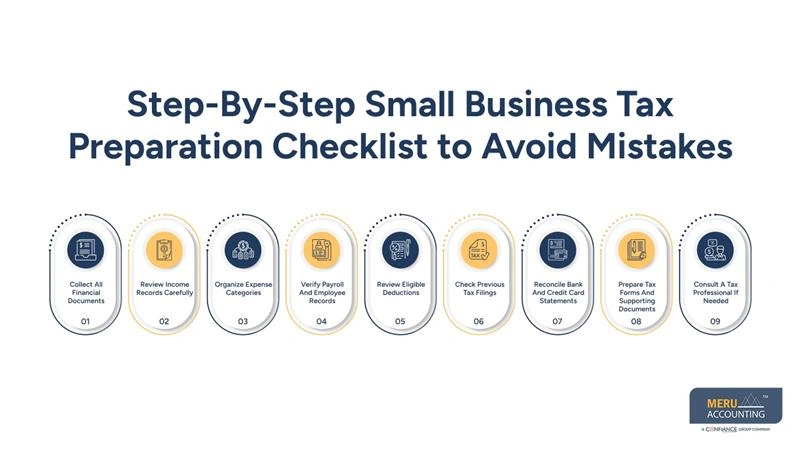
Step-By-Step Small Business Tax Preparation Checklist to Avoid Mistakes
Collect All Financial Documents
The first step in a small business tax preparation checklist is gathering essential records such as income statements, expense reports, bank statements, and invoices. Having all documents in one place makes the tax preparation process more efficient and organized.
Review Income Records Carefully
Businesses must confirm that all sources of revenue are included. A reliable small business tax preparation checklist helps verify that no income is missed.
Organize Expense Categories
Expenses should be sorted into categories like office supplies, utilities, payroll, and marketing costs. This step makes deductions easier to calculate. Proper categorization also helps create clear financial reports for tax filing.
Verify Payroll And Employee Records
Payroll taxes and employee information must be reviewed carefully. The small business tax compliance checklist ensures that wage reports and tax forms are accurate.
Review Eligible Deductions
Businesses should analyze expenses to identify deductible costs. Using a small business tax preparation checklist helps confirm that deductions are recorded properly.
Check Previous Tax Filings
Comparing current data with previous returns helps identify unusual changes or errors before submitting a new return. It also ensures consistency in financial reporting from one tax year to the next.
Reconcile Bank And Credit Card Statements
Businesses should match bank and credit card statements with recorded transactions. This step in the small business tax compliance checklist helps detect missing entries or duplicate records before filing taxes.
Prepare Tax Forms And Supporting Documents
All required tax forms should be reviewed and prepared in advance. A structured small business tax preparation checklist ensures that supporting documents are attached correctly and filings are complete.
Consult A Tax Professional If Needed
If tax regulations or calculations become complex, seeking professional guidance can be helpful. A tax expert can review the small business tax compliance checklist and ensure that filings follow current tax rules.
How Tax Planning And Preparation Reduce Tax Liability
Identifying Deduction Opportunities
Proper tax planning and preparation help businesses find deductions that reduce taxable income. This includes reviewing expenses, operational costs, and eligible tax credits that may lower overall tax liability.
Managing Timing Of Expenses
Businesses may choose to record certain expenses in the current tax year to reduce overall tax obligations. Strategic timing of expenses helps manage taxable income more effectively.
Planning Equipment Purchases
Purchasing equipment at the right time can help businesses claim depreciation deductions. This strategy allows businesses to spread the cost of assets while lowering taxable income.
Tracking Business Expenses Regularly
Regular expense tracking ensures deductions are properly recorded and supported with documentation. It also prevents missing deductible costs during the tax filing process.
Reviewing Financial Statements Frequently
Consistent review of financial data is a key part of tax planning and compliance and helps businesses manage their tax obligations. Frequent reviews allow business owners to identify financial trends and make timely adjustments.
Best Practices To Follow While Using A Small Business Tax Preparation Checklist
Maintain Organized Records Year-Round
Businesses should store receipts, invoices, and bank statements properly throughout the year. This habit supports an effective small business tax preparation checklist. Organized documentation also simplifies the process of preparing tax returns and financial reports.
Use Accounting Software
Accounting systems help track income, expenses, and financial reports. This makes the checklist process easier and faster. Automated systems also reduce manual errors and improve financial accuracy.
Separate Business And Personal Accounts
Using dedicated business bank accounts helps maintain clear financial records. This separation also simplifies expense tracking and prevents confusion during tax preparation.
Conduct Regular Financial Reviews
Monthly financial reviews help identify errors early and ensure all transactions are recorded. Regular checks also help businesses stay prepared for tax filing deadlines.
Keep Backup Copies Of Important Documents
Digital and physical backups protect records from loss and help maintain accurate tax data. Backup storage also ensures documents are available if needed for audits or compliance checks.
How Professional Accounting Services Improve The Small Business Tax Preparation Checklist Process
Ensuring Accurate Financial Records
Professional accountants review financial data to confirm accuracy. Their support helps businesses maintain a reliable small business tax preparation checklist. Accurate records reduce the chances of filing errors and improve overall financial clarity.
Supporting Compliance With Tax Rules
Tax professionals understand regulations and ensure that businesses follow proper filing procedures. Their expertise helps businesses avoid penalties and maintain regulatory compliance.
Improving Tax Planning And Preparation
Experts provide guidance for better tax planning and preparation, helping businesses identify deductions and manage tax obligations. Strategic planning also helps businesses reduce unnecessary tax payments.
Providing Financial Insights
Accountants analyze financial data and help businesses understand their financial performance. These insights support better budgeting, forecasting, and financial decision-making.
Reducing Filing Errors
Professional review helps detect mistakes before tax returns are submitted. This additional layer of verification ensures that tax filings are accurate and complete.
Why Choose Meru Accounting For Small Business Tax Support
Experienced Accounting Professionals
Meru Accounting provides skilled accountants who understand small business financial needs and tax regulations. Our team stays updated with changing tax laws to provide accurate and reliable support.
Organized Financial Management
Our team helps businesses maintain accurate records, making the small business tax preparation checklist process easier. Well-structured records also improve financial transparency and reporting.
Strong Support For Tax Planning
We assist companies with effective tax planning and preparation so they can manage tax obligations with confidence. This proactive approach helps businesses reduce tax risks and identify savings opportunities.
Technology Based Accounting Systems
Meru Accounting uses reliable accounting tools to track income, expenses, and financial reports efficiently. These systems streamline financial processes and improve data accuracy.
Dedicated Client Assistance
Our professionals guide businesses through each stage of tax preparation and ensure timely filing. We also provide ongoing support to help businesses handle future tax requirements smoothly.
Key Takeaways
- A small business tax preparation checklist helps businesses organize financial records and avoid filing errors.
- Proper documentation and record management are essential for accurate tax reporting.
- Regular tax planning and preparation help businesses manage tax obligations throughout the year.
- Reviewing income, expenses, payroll, and deductions is an important part of tax preparation.
- Professional accounting support can improve accuracy and reduce tax filing stress.
FAQs
A small business tax preparation checklist is a list of steps that helps businesses gather financial records and prepare tax returns accurately.
It helps businesses organize documents, track expenses, and reduce mistakes when filing tax returns.
Businesses should review finances regularly. Consistent tax planning and preparation helps manage taxes and avoid surprises.
Yes, but many businesses prefer professional support to ensure accurate reporting and proper deductions.
They may miss deductions, make filing errors, or face penalties due to incorrect tax reporting.


