




Introduction to Tax Deductions for Real Estate Investors and Property Managers
Real estate investment and property management are lucrative avenues for building wealth, but navigating the financial aspects—especially tax obligations—can be complex. One of the most critical aspects of maintaining profitability in real estate ventures is understanding available tax deductions. These deductions help reduce taxable income, thereby minimizing the overall tax burden and improving cash flow.
Whether you are an experienced real estate investor or a property manager overseeing multiple units, knowing which expenses you can deduct is essential. This article provides an exhaustive guide to tax deductions tailored specifically for real estate investors and property managers. It also underscores the importance of having a skilled bookkeeper for real estate investments to maximize these deductions efficiently.
Overview of Tax Deductions for Real Estate Investors
Tax deductions for real estate investors are designed to encourage investment and cover ordinary and necessary expenses related to managing and maintaining properties. These deductions can relate to mortgage interest, repairs, property management fees, depreciation, and more.
Here is a breakdown of the most common deductible expenses for real estate investors:
- Mortgage Interest: Interest paid on loans taken out to purchase or improve rental properties.
- Property Taxes: State and local property taxes paid annually.
- Depreciation: A non-cash deduction representing the gradual wear and tear of the property over time.
- Repairs and Maintenance: Costs to fix or maintain the property without significantly improving its value.
- Insurance Premiums: Premiums for insurance policies covering the property.
- Property Management Fees: Expenses paid to manage the property, including hiring a property manager or using management services.
- Utilities: Expenses related to utilities provided as part of rental agreements.
- Advertising: Costs for advertising vacancies or services related to the property.
- Legal and Professional Fees: Fees paid for legal advice, accounting services, or consulting related to property management.
Essential Tax Deductions Specific to Property Managers
Property managers often have additional deductible expenses due to the nature of their work, which involves oversight and administrative tasks for multiple properties. Understanding these can help property managers optimize their tax strategies:
- Office Expenses: Costs related to maintaining an office space, including office supplies, phones, and internet services.
- Travel and Transportation: Mileage and travel costs incurred while visiting properties under management.
- Employee Salaries and Contractor Fees: Wages paid to employees or subcontractors working in property management roles.
- Professional Development: Costs for training, certifications, and industry memberships that enhance managerial skills.
- Software and Technology: Expenses for property management software, accounting tools, or automation services.
Detailed Analysis: Depreciation and Its Impact on Taxes
Depreciation is a cornerstone deduction for real estate investors. It allows you to recover the cost of income-producing property over a set period, reflecting the asset’s gradual loss in value. While depreciation does not involve a cash outlay, it significantly reduces taxable income.
How Depreciation Works
Residential rental properties typically depreciate over 27.5 years, while commercial properties depreciate over 39 years according to IRS rules. Each year, investors can deduct a portion of the cost basis, excluding the land value, as depreciation expense.
Calculating Depreciation
The most common method is the Modified Accelerated Cost Recovery System (MACRS). Below is an example calculation:
| Property Type | Depreciable Life (Years) | Annual Depreciation Rate |
|---|---|---|
| Residential Rental Property | 27.5 | 3.636% |
| Commercial Property | 39 | 2.564% |
For example, if a residential rental property costs $275,000 (excluding land value), the annual depreciation deduction would be $275,000 / 27.5 = $10,000.
Recapture of Depreciation
It is important to understand that when the property is sold, the IRS may require recapture of depreciation, meaning a portion of the gain attributable to depreciation deductions is taxed at a higher rate.
How a Bookkeeper for Real Estate Can Maximize Tax Deductions
Accurate bookkeeping is fundamental to claiming the maximum tax deductions real estate investors and property managers are entitled to. A specialized bookkeeper for real estate understands the unique financial landscape of property ownership and management and can efficiently categorize expenses, track deductible items, and provide comprehensive reports for tax purposes.
By maintaining organized and detailed records, a bookkeeper helps ensure that no deductible expense is overlooked and facilitates compliance with IRS requirements. This reduces audit risks and optimizes tax benefits.
Typical Services Offered by a Bookkeeper for Real Estate
- Recording rental income and expense transactions
- Reconciling bank accounts and credit cards used for property expenses
- Tracking expenses by property for multi-property owners
- Preparing monthly financial statements
- Identifying potential deductions such as repairs, maintenance, and depreciation
- Coordinating with accountants or tax preparers during tax season
Common Mistakes to Avoid When Claiming Real Estate Tax Deductions
Even seasoned real estate professionals can fall prey to common pitfalls that jeopardize their ability to claim important deductions. Avoid these mistakes to ensure full compliance and maximize tax advantages.
Mixing Personal and Business Expenses
Maintaining separate bank accounts and records for personal and business expenses is critical to prevent IRS scrutiny. Personal expenses mistakenly claimed as business deductions can trigger audits and penalties.
Improper Classification of Expenses: Repairs vs. Improvements
The IRS distinguishes between repairs (deductible immediately) and improvements (capitalized and depreciated over time). Misclassification can lead to deferred or denied deductions.
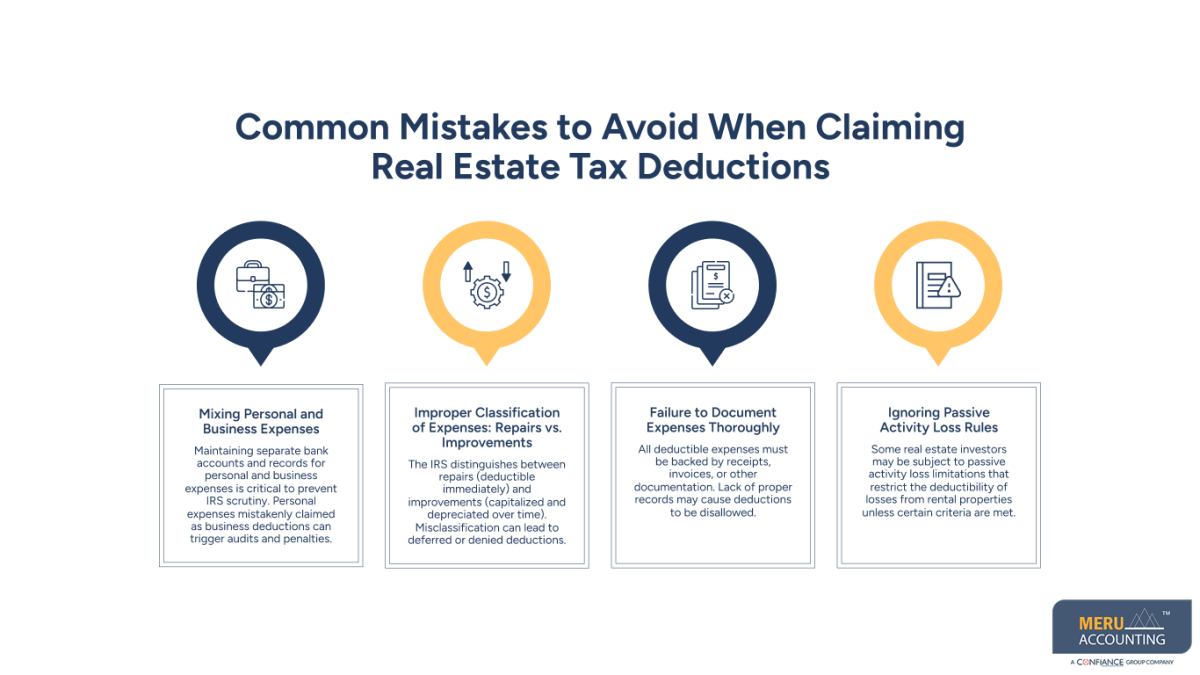
Failure to Document Expenses Thoroughly
All deductible expenses must be backed by receipts, invoices, or other documentation. Lack of proper records may cause deductions to be disallowed.
Ignoring Passive Activity Loss Rules
Some real estate investors may be subject to passive activity loss limitations that restrict the deductibility of losses from rental properties unless certain criteria are met.
Strategies to Maximize Tax Savings for Real Estate Investors and Property Managers
Besides understanding available deductions, real estate investors and property managers can implement proactive strategies to optimize their tax positions.
Timing Expenses
Accelerating deductible expenses into the current tax year can increase immediate tax benefits, while deferring income may reduce taxable income.
Utilizing Professional Advice
Collaborating with a certified tax professional who specializes in real estate and a dedicated bookkeeper for real estate can provide tailored advice for unique circumstances.
Entity Structure Optimization
Choosing the right business entity (e.g., LLC, S-Corp) affects taxation and eligibility for deductions and credits.
Taking Advantage of 1031 Exchanges
A 1031 exchange allows investors to defer capital gains taxes by reinvesting proceeds from the sale of one investment property into another similar property.
Implementing Cost Segregation Studies
Cost segregation accelerates depreciation by classifying and depreciating certain property components over shorter periods.
Introduction to Meru Accounting – Your Partner in Real Estate Accounting
Meru Accounting specializes in providing comprehensive bookkeeping, accounting, and tax advisory services tailored to real estate investors and property managers. With deep expertise in the real estate sector, Meru Accounting understands the unique challenges and opportunities faced by industry professionals. Their dedicated team offers accurate financial record maintenance, tax planning strategies, and timely reporting designed to maximize deductions and compliance. Partnering with Meru Accounting can help real estate investors and property managers optimize their financial operations and achieve long-term success.
Conclusion: The Importance of Expert Bookkeeping for Real Estate
Maximizing tax deductions is a vital part of the financial success for real estate investors and property managers. Identifying and correctly claiming allowable deductions, understanding complex tax rules such as depreciation and passive loss limitations, and avoiding costly mistakes require meticulous recordkeeping and specialized knowledge.
Hiring a qualified bookkeeper for real estate ensures that your financial data is accurate and organized, which simplifies tax preparation and increases the potential for savings. Leveraging professional support—from bookkeeping services to accounting and tax planning—can significantly improve your bottom line and create a more efficient and profitable business model.
By mastering tax deductions and partnering with trusted experts like Meru Accounting, real estate investors and property managers can confidently grow their portfolios while maintaining compliance with tax regulations.
FAQs
What are common tax deductions available for real estate investors?
Common tax deductions for real estate investors include mortgage interest, property taxes, operating expenses, depreciation, and repairs.
Can property managers claim tax deductions related to their job?
Yes, property managers can deduct expenses such as office supplies, mileage, advertising costs, and professional fees related to managing properties.
How can a bookkeeper for real estate help with tax deductions?
A bookkeeper for real estate ensures accurate record-keeping, categorizes expenses properly, and helps identify all eligible deductions to maximize tax benefits.
Is depreciation a deductible expense for real estate investment properties?
Yes, depreciation on investment properties is a non-cash deduction that allows investors to recover the cost of the property over time.
Are travel expenses deductible for real estate investors and property managers?
Travel expenses related to property maintenance, management, or meeting with clients can be deductible if properly documented.


