



Effective tax planning and preparation is one of the most important financial practices for businesses. Taxes can take a significant portion of business income, but with proper planning companies can reduce unnecessary payments and improve overall financial stability.
Businesses that focus on structured financial management can identify deductions, track expenses accurately, and prepare for tax obligations in advance. This process helps companies stay compliant while managing their resources wisely.
A well-organized approach to business tax planning and preparation also helps companies understand how financial decisions affect their tax liabilities. By reviewing financial records regularly and planning ahead, businesses can create opportunities for meaningful savings.
What You Will Learn From This Blog
- You will learn how tax compliance and strategy help businesses organize finances and reduce tax burdens legally.
- The blog explains how business tax planning and preparation strategies help companies manage tax obligations more efficiently.
- Maintaining accurate financial records plays a major role in successful tax compliance and strategy.
- You will understand mistakes that often occur during business tax planning and preparation and how to avoid them.
- The blog also explains how expert support can improve the results of tax compliance and strategy.
Introduction To Tax Planning And Preparation For Businesses
Tax planning and preparation refer to organizing financial activities so that businesses can meet tax requirements while minimizing unnecessary tax expenses. It helps companies manage their finances in a structured way and ensures that tax responsibilities are handled accurately.
Every company must follow tax rules related to income, payroll, and operational taxes. Proper tax compliance and strategy help ensure these responsibilities are managed correctly and support better financial control.
Well-maintained financial records play an important role in this process. Organized data helps businesses calculate taxes accurately and supports effective business tax planning and preparation.
Businesses must also meet several tax deadlines during the year. Timely reporting and organized documentation help ensure that filings are completed on time through proper tax compliance and strategy.
Another important part of this process is identifying tax deductions. Companies can reduce taxable income by recognizing eligible expenses through tax planning services.
Following tax regulations becomes easier when businesses maintain structured financial systems. Consistent tax compliance and strategy help companies remain compliant with tax rules and avoid unnecessary penalties.
Why Tax Planning And Preparation Is Important For Business Savings
Lowering Overall Tax Burden
Careful tax planning and preparation help businesses take advantage of deductions and credits. This allows companies to reduce their total tax payments while staying compliant with regulations.
Improving Financial Organization
A systematic approach to business tax planning and preparation keeps financial records clear and easy to manage. Organized records also make it easier to review financial performance and prepare reports.
Avoiding Tax Penalties
Late filings or inaccurate reports can lead to penalties. Proper tax compliance and strategy reduce such risks by ensuring that tax documents are prepared and submitted correctly.
Supporting Budget Planning
Businesses can manage expenses better when they understand tax obligations through tax planning services. This helps companies allocate funds properly and plan future financial activities.
Encouraging Financial Awareness
Regular review of financial data during tax compliance and strategy helps businesses understand their financial position. It also allows them to identify areas where they can improve financial efficiency.
Improving Cash Flow Management
Proper tax compliance and strategy help businesses plan for tax payments in advance. This ensures better cash flow management and avoids sudden financial pressure.
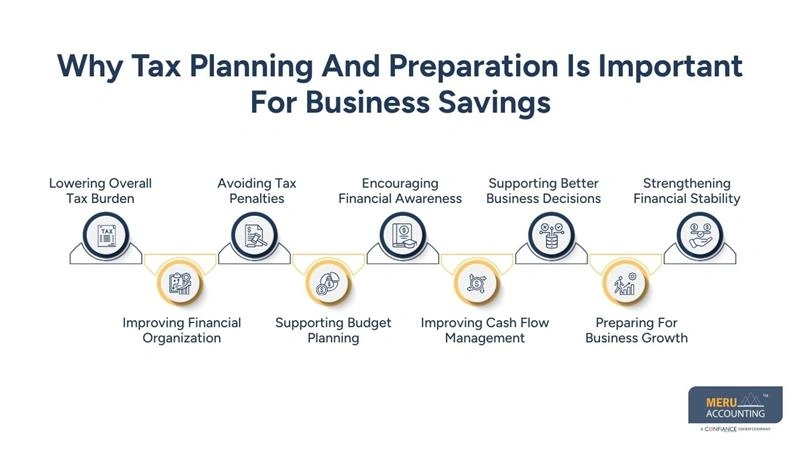
Supporting Better Business Decisions
Accurate financial insights help business owners make informed decisions and support long-term financial planning. These insights also highlight opportunities for growth and cost optimization.
Preparing For Business Growth
Consistent tax planning services help businesses plan resources effectively. It also prepares companies to manage tax responsibilities as they expand.
Strengthening Financial Stability
A structured business tax planning and preparation process helps businesses maintain stable finances. This stability allows companies to operate more confidently throughout the year.
Key Components Of Effective Business Tax Planning And Preparation
Accurate Bookkeeping
Reliable bookkeeping ensures that income and expenses are recorded correctly, which supports business tax planning and preparation. It also helps maintain accurate financial records for tax reporting.
Reviewing Financial Statements
Regular financial reviews help businesses make adjustments during tax compliance and strategy. This allows companies to identify financial trends and plan accordingly.
Monitoring Cash Flow
Cash flow planning ensures businesses are ready for upcoming tax payments. It also helps maintain financial stability throughout the year.
Identifying Deductible Expenses
Businesses should carefully review operational expenses to identify deductions. Recognizing eligible expenses can help reduce taxable income.
Planning For Future Tax Obligations
Forward-looking financial strategies help businesses stay prepared for tax responsibilities. This approach ensures companies are ready for upcoming financial obligations.
Common Tax Planning And Preparation Strategies For Businesses
Using Available Tax Credits
Many governments offer tax credits for certain activities, which can reduce tax liability. Taking advantage of these credits can directly lower the amount of taxes owed.
Depreciating Business Assets
Asset depreciation allows businesses to deduct the cost of equipment gradually. This strategy helps spread out expenses and manage taxable income more effectively.
Managing Income Timing
Businesses sometimes adjust the timing of income or expenses to improve tax outcomes. Planning income and expenses carefully can optimize tax benefits for the year.
Tracking Operational Expenses
Accurate expense tracking strengthens tax compliance and strategy. It also ensures that all deductible expenses are captured and properly documented.
Reviewing Tax Laws Regularly
Changes in tax laws can influence business tax planning and preparation, so businesses should stay informed. Staying updated helps companies adjust strategies and remain compliant with regulations.
How Business Tax Planning And Preparation Helps Reduce Tax Liability
Identifying Deduction Opportunities
Businesses can reduce taxable income through deductions identified during business tax planning and preparation. Carefully reviewing expenses ensures all eligible deductions are claimed.
Structuring Business Operations
Business structure may affect tax liability, making tax compliance and strategy an important decision factor. Choosing the right structure can help minimize taxes and improve financial efficiency.
Managing Employee Benefits
Certain employee benefits may offer tax advantages when included in planning strategies. Proper management of benefits can reduce overall tax liability for both the business and employees.
Utilizing Government Incentives
Government programs may provide tax incentives that support business tax filing and planning. Taking advantage of these programs can result in significant savings for eligible businesses.
Preparing For Tax Changes
Updating strategies regularly helps businesses adapt to new tax regulations. Staying proactive ensures that companies remain compliant while optimizing their tax position.
Essential Records Needed for Efficient Tax Management
Income Records
Invoices, payment records, and sales data are necessary for accurate reporting. Maintaining organized income records ensures the correct calculation of taxable income.
Expense Documentation
Receipts and expense reports help businesses claim deductions. Proper documentation also supports audits and helps verify eligible expenses.
Payroll Records
Employee payment records support payroll tax reporting. Keeping detailed payroll records ensures compliance with tax laws and accurate reporting.
Asset Purchase Records
Details of equipment purchases help with depreciation calculations. These records are essential for deducting the correct amounts over time.
Previous Tax Filings
Past tax returns provide valuable information for current tax compliance and strategy. Reviewing previous filings helps identify patterns, deductions, and areas for improvement.
Mistakes Businesses Should Avoid In Tax Planning And Preparation
Poor Record Management
Disorganized records can cause errors during tax compliance and strategy. Maintaining organized records ensures accuracy and simplifies reporting.
Missing Filing Deadlines
Late submissions can result in penalties and additional charges. Timely filing helps businesses avoid unnecessary fees and legal issues.
Ignoring Deduction Opportunities
Failing to review eligible deductions can increase tax liability. Regularly checking for deductions ensures businesses maximize potential savings.
Mixing Personal And Business Finances
Separate accounts make tax planning services easier and more accurate. Combining finances can lead to errors and compliance issues.
Lack Of Professional Advice
Without expert support, businesses may miss valuable tax-saving opportunities. Consulting professionals can improve planning efficiency and accuracy.
Benefits Of Professional Business Tax Planning And Preparation Services
Accurate Tax Calculations
Professionals ensure financial data is reviewed carefully for proper tax calculations. This reduces errors and ensures compliance with regulations.
Compliance With Tax Regulations
Experts help businesses follow regulations through structured planning. Staying compliant prevents penalties and legal complications.
Saving Time For Business Owners
Outsourcing tax tasks allows owners to focus on operations. This saves time and reduces stress during tax periods.
Better Financial Insights
Professionals analyze financial records and suggest improvements. These insights help businesses make informed decisions and optimize savings.
Reduced Risk Of Errors
Expert review strengthens the effectiveness of tax planning services. It ensures calculations are accurate and documentation is complete.
How Tax Planning And Preparation Supports Long-Term Financial Growth
Improving Financial Stability
Consistent planning helps businesses manage long-term finances. Stable finances provide a foundation for growth and operational confidence.
Supporting Investment Decisions
Understanding tax obligations helps businesses make smarter investment choices. Proper planning ensures investments are aligned with financial goals.
Strengthening Cash Flow Management
Planning for tax payments improves financial stability. It ensures that businesses have enough liquidity for operations and obligations.
Encouraging Financial Discipline
Regular financial reviews encourage better spending control. This helps businesses allocate resources efficiently and avoid unnecessary costs.
Preparing For Business Expansion
Effective planning helps companies prepare for future growth. Businesses can scale operations confidently while managing tax responsibilities.
How Meru Accounting Helps Businesses With Tax Planning And Preparation
- At Meru Accounting, we provide experienced professionals who understand financial regulations and support effective tax planning services.
- Our team delivers tailored solutions to meet the unique needs of each business, ensuring financial strategies are practical and actionable.
- Accurate bookkeeping ensures that financial records remain organized and reliable, strengthening overall tax planning and preparation.
- Our services help businesses maintain compliance with tax regulations through proper documentation and reporting.
- We provide continuous guidance and support to help businesses sustain efficient tax planning practices and make informed financial decisions.
- Opportunities for tax savings are identified to optimize financial strategies, reduce liabilities, and improve cash flow.
- Assistance is provided in preparing for future growth by aligning tax planning with long-term business objectives.
Key Takeaways
- Tax compliance and strategy help businesses manage taxes efficiently.
- Organized financial records are important for proper tax management.
- Business tax planning and preparation supports financial stability and better budgeting.
- Professional tax services reduce errors and compliance risks.
- Long-term planning improves business financial growth.
FAQs
Tax planning and preparation is the process of organizing financial information and calculating taxes to reduce unnecessary payments while following tax rules.
Business tax planning and preparation helps companies manage tax obligations, claim deductions, and avoid penalties.
Businesses should keep income records, expense receipts, payroll data, and previous tax returns.
Yes, professional accountants provide guidance and help businesses complete tax strategy and planning accurately.
Businesses should review their financial records regularly, especially before tax filing periods and major financial decisions.


