




Managing tax obligations is a crucial part of any business. One of the most effective ways to ensure accuracy, efficiency, and compliance is by adopting tax planning services. Many companies today are turning to tax outsourcing to manage their tax return preparation, and this shift brings several changes to their internal workflow.
By outsourcing tax return preparation, businesses can reduce manual workload, improve accuracy, and free up internal teams to focus on strategic priorities.
This approach not only streamlines processes but also ensures timely filings and better compliance, making tax management more predictable and efficient.
What You Will Learn From This Blog
- How tax planning services can streamline your tax return preparation process.
- Key benefits and workflow changes after outsourcing taxes.
- Ways to improve cost efficiency and resource management with tax outsourcing.
- Adjustments needed in timelines and workflow when taxes are outsourced.
- How data security and confidentiality are handled by professional providers.
- How to measure the return on investment (ROI) of outsourcing tax return preparation.
- How Meru Accounting’s tax planning services enhance workflow efficiency.
Understanding Tax Planning Services And Tax Outsourcing
Understanding tax planning services and tax outsourcing is essential for businesses looking to improve their tax management process. Tax planning services help companies organize their finances in a way that minimizes tax liabilities while staying fully compliant with legal requirements.
This involves careful planning, timely filing, and regular compliance checks, ensuring that businesses avoid penalties and maintain financial accuracy. By proactively managing taxes, businesses can also identify opportunities for savings and strategic financial decisions.
On the other hand, tax outsourcing involves delegating the preparation and filing of tax returns to an external team of professionals. This allows businesses to focus on their core operations while experts handle complex tax calculations, documentation, and compliance matters.
Unlike in-house tax preparation, which can be time-consuming and prone to errors, outsourcing provides access to specialized knowledge and experience. This not only reduces the internal workload but also ensures higher accuracy in tax filings.
Technology plays a significant role in tax outsourcing. Professional providers use advanced accounting and tax software to track financial data, generate reports, and manage deadlines efficiently.
With automated workflows and secure data management, businesses can ensure timely filing and maintain confidentiality. Additionally, outsourcing helps companies stay up-to-date with changing tax laws and regulatory requirements, reducing the risk of non-compliance and potential penalties.
Why Businesses Consider Tax Outsourcing
Managing Seasonal Workload
During peak tax seasons, internal teams often become overwhelmed with tasks. Tax preparation outsourcing helps manage large volumes without stressing existing staff.
Access To Experienced Professionals
Outsourcing connects businesses with experts knowledgeable in tax regulations. They ensure proper filing and offer strategic advice through tax planning services.
Reducing Operational Costs
Maintaining a full-time tax team can be expensive for businesses. Tax outsourcing converts fixed costs into variable ones efficiently.
Minimizing Errors And Risks
Mistakes in tax returns can result in audits and fines. Expert tax planning services ensure accuracy and reduce potential risks.
Focusing On Core Business Activities
With external tax handling, businesses can concentrate on core priorities. Internal teams gain more time for revenue-generating and strategic tasks.
Keeping Up With Regulatory Changes
Tax laws frequently change, creating compliance challenges for businesses. Outsourced teams stay updated to help avoid penalties and issues.
Key Changes Occur in the Workflow After Outsourcing Tax Return Preparation
Shift From Manual To Automated Processes
Outsourcing introduces structured, technology-driven workflows that reduce manual effort. Repetitive tasks are handled automatically, saving time and reducing errors.
Improved Task Allocation
Internal teams focus on financial planning and important business strategies, supported by expert tax planning services. Outsourced professionals efficiently manage tax returns and related processes.
Reduced Administrative Burden
Businesses no longer need to track filing schedules or follow-ups. Document collection and processing are handled by external experts seamlessly.
Faster Turnaround Time
Professional teams complete tax returns faster due to their expertise. Streamlined processes ensure deadlines are consistently met without delays.
Greater Accuracy And Reliability
Outsourced providers minimize mistakes, ensuring accurate tax reporting every time. Compliance is maintained consistently, reducing the risk of penalties.
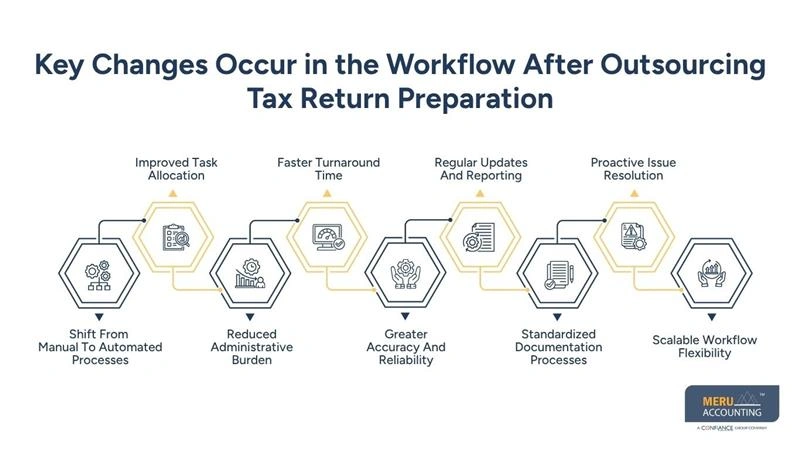
Regular Updates And Reporting
Businesses receive updates on filing status, payments, and deadlines regularly. All stakeholders stay informed about important tax-related developments.
Standardized Documentation Processes
Outsourcing ensures all financial documents are organized and standardized properly to support effective tax planning services. This improves clarity and makes reviews or audits much easier.
Proactive Issue Resolution
Outsourced teams identify and resolve potential tax issues early. Businesses avoid last-minute problems and reduce stress during tax season.
Scalable Workflow Flexibility
Workflows can be adjusted based on tax season volume or complexity. Businesses can scale resources without hiring additional in-house staff.
How Can Tax Outsourcing Improve Cost Efficiency And Resource Management
Lower Staffing Costs
Outsourcing eliminates the need for a large in-house tax team. Businesses save significantly on salaries, benefits, and related expenses.
Optimized Use Of Internal Resources
Employees focus on revenue-generating and strategic business tasks while leveraging external tax planning services. Outsourced experts handle tax filings efficiently without burdening staff.
Predictable Budgeting
Tax preparation outsourcing allows accurate planning of expenses and costs. Unexpected overheads are minimized, making financial management more stable.
Avoidance Of Penalties And Fines
Accurate tax filing prevents costly errors and unnecessary fines. Businesses maintain better financial control and compliance with regulations.
Economies Of Scale
Outsourced providers manage multiple clients using efficient processes. This reduces costs and improves overall service quality for businesses.
Flexible Engagement Models
Services can be scaled up or down based on business needs. Businesses pay only for what they use, avoiding full-time staff costs.
What Workflow And Timeline Adjustments Are Needed When Outsourcing Taxes
Setting Clear Deadlines
Define submission dates for financial data to ensure the outsourced team can complete returns on time. This also allows your firm to plan reviews and approvals without last-minute stress.
Structured Data Sharing
Organize and provide necessary financial documents in a consistent format for smooth processing. Standardized templates and file naming conventions further reduce errors and speed up processing.
Internal Role Realignment
Internal teams may need to shift responsibilities, focusing on review and oversight rather than preparation. This ensures employees are utilizing their expertise while the outsourced team handles routine filings.
Establishing Communication Channels
Maintain regular updates and check-ins to ensure alignment between in-house staff and outsourced providers. Clear communication protocols also help quickly address questions or unexpected issues.
Defining Escalation Procedures
Set up procedures for handling discrepancies, missing documents, or urgent queries. Having a clear chain of responsibility prevents delays and miscommunication.
Planning For Peak Season
Coordinate with the outsourced team to manage workloads during high-demand periods efficiently. Advance scheduling and workload forecasting help avoid bottlenecks during tax season.
How Is Data Security And Confidentiality Maintained In Tax Outsourcing
Secure Data Transfer
Outsourced providers use encrypted methods to receive sensitive financial data. This ensures that information remains protected during transmission and cannot be intercepted by unauthorized parties.
Confidentiality Agreements
Professional teams sign NDAs to ensure client data is protected. These agreements create legal accountability, reinforcing trust between the client and the provider.
Controlled Access
Only authorized personnel have access to tax-related information, minimizing risk of breaches. Role-based permissions and strict authentication protocols further strengthen data protection.
Regular Security Audits
Providers perform routine checks on systems to prevent data leaks and maintain compliance. Audit reports also identify potential vulnerabilities, allowing proactive mitigation before issues arise.
Data Backup And Recovery
Backup solutions ensure that financial records are safe and recoverable in case of unforeseen events. Regular testing of recovery procedures guarantees data can be restored quickly and accurately when needed.
Compliance With Regulations
Providers follow relevant local and international data protection laws to maintain security across tax filing and tax planning services. Ongoing updates to policies ensure adherence to evolving regulations like GDPR or other jurisdictional requirements.
Measuring ROI From Tax Preparation Outsourcing
Cost Savings Analysis
Compare the expenses of in-house tax processing with outsourcing to determine direct cost benefits. Include hidden costs such as training, software updates, and employee turnover for a complete picture.
Time Efficiency Gains
Evaluate the reduction in internal hours spent on tax preparation tasks. Faster processing allows teams to focus on strategic initiatives that drive business growth.
Error Reduction Impact
Assess savings from avoiding penalties, audits, and mistakes in filing. Lower error rates also enhance the firm’s reputation and reduce stress during tax season.
Productivity Improvements
Measure how reallocating internal staff to other tasks improves business output. Employees can contribute more value in areas such as analysis, advisory, and client service.
Strategic Benefits
Evaluate improvements in financial planning and compliance from professional tax planning services. Access to expert insights helps guide long-term decisions and reduces financial risk.
Long-Term Financial Gains
Track trends over time to see how outsourcing supports better cash flow management and resource allocation. Consistent outsourcing performance can lead to stronger budgeting, forecasting, and growth planning.
Why Outsourcing Tax Return Preparation Enhances Workflow Through Tax Planning Services
Expert Guidance On Complex Tax Issues
Professional tax planning services provide advice on deductions, credits, and compliance that in-house teams may miss. This guidance ensures businesses maximize savings while staying fully compliant with regulations.
Streamlined Processes
Outsourcing organizes tasks, deadlines, and submissions efficiently, improving workflow. Clearly defined processes reduce confusion and prevent delays during peak filing periods.
Enhanced Accuracy And Compliance
Minimizing errors ensures business operations are not disrupted by audits or penalties. Regular checks and professional oversight also safeguard against costly mistakes.
Better Resource Management
Internal staff can focus on strategic tasks, reducing operational bottlenecks. Optimizing staff allocation increases overall efficiency and productivity within the organization.
Proactive Tax Planning
Professionals help anticipate obligations and plan tax strategies in advance. Early planning allows businesses to implement cost-saving measures before deadlines approach.
Focused Business Growth
With taxation handled externally, businesses can concentrate on expansion and profitability. Delegating tax responsibilities also provides leadership with more time to explore new opportunities.
Why Choose Meru Accounting For Tax Planning Services
- At Meru Accounting, we provide experienced professionals delivering reliable tax outsourcing solutions.
- Our customized workflows are designed to align with your business needs.
- At Meru Accounting, we have a proven track record in reducing tax errors and improving compliance.
- We ensure secure data management and confidentiality at every step.
- Our team offers timely reporting and proactive communication with clients.
- At Meru Accounting, we support businesses of all sizes across various industries.
Key Takeaways
- Outsourcing tax return preparation brings efficiency, accuracy, and compliance.
- Tax planning services guide businesses through complex tax obligations.
- Workflow adjustments, proper timelines, and clear communication are essential.
- Cost savings and better resource allocation are major benefits of tax outsourcing.
- Data security, confidentiality, and ROI measurement are crucial considerations.
FAQs
Tax outsourcing is hiring external professionals to handle your tax return preparation and related services.
They ensure accurate filings, compliance, and help reduce tax liabilities legally.
Yes, it reduces staffing costs, avoids fines, and improves efficiency in resource use.
Yes, professional providers follow strict security protocols and sign confidentiality agreements.
Businesses often notice time savings, reduced errors, and better resource allocation within the first tax cycle.


