



Tax preparation and planning are two essential financial practices that help businesses manage taxes effectively and maintain financial stability. While many business owners focus only on filing taxes at the end of the year, combining tax preparation and planning allows companies to manage obligations better, reduce risks, and improve long-term financial results.
When businesses use both tax compliance and planning, they can organize records, understand tax rules, and make informed financial decisions throughout the year. This approach also supports compliance and helps businesses avoid costly mistakes.
In simple terms, tax compliance and planning work together to ensure businesses pay the correct amount of tax while keeping finances organized.
What You Will Learn From This Blog
- Understanding how taxes affect business operations and why proper financial organization is important. This helps explain the role of tax compliance and planning in managing business finances effectively.
- Learning the difference between tax planning and tax filing. Many businesses confuse these two activities, but understanding tax planning and preparation helps improve financial management.
- The benefits of combining planning and filing for better business growth. Businesses that focus on tax compliance and planning are better prepared to make informed financial decisions.
- Identifying common tax mistakes that often occur due to poor record-keeping or lack of financial planning. Proper tax preparation and strategy can help businesses avoid these issues.
- Practical steps that improve financial organization and tax management. These steps help businesses strengthen their tax preparation and planning process.
Introduction To Tax Preparation and Planning For Businesses
Tax preparation and planning are essential practices that help businesses manage their tax responsibilities and maintain organized financial records. Tax preparation involves collecting financial documents, reviewing income and expenses, and filing accurate tax returns according to applicable regulations.
This process ensures that businesses report their financial information correctly, including deductions and credits, making tax compliance and planning an important part of financial management.
Tax planning focuses on reviewing financial activities throughout the year to make better financial decisions related to taxes. It allows businesses to analyze income, expenses, and transactions in advance so they can reduce unnecessary tax burdens where possible.
When businesses combine planning with filing, Tax compliance and planning become more effective and help improve overall financial organization.
Businesses handle many transactions daily, such as sales, expenses, and payroll. A structured approach to tax compliance and planning helps keep these financial records organized and ensures compliance with tax regulations.
Proper financial records also provide clear insights into income, expenses, and future tax obligations, allowing business owners to make informed decisions and maintain better control over their finances.
Understanding The Difference Between Tax Planning And Preparation
Purpose Of Tax Preparation
Tax preparation focuses mainly on preparing and filing tax returns. It ensures financial information is properly reported during the filing season.
Purpose Of Tax Planning
Tax planning looks ahead and studies financial transactions before the tax year ends. Through tax planning and preparation, businesses can identify deductions and credits early.
Timing Of Activities
Tax preparation usually happens at the end of the financial year. Tax planning, however, happens throughout the year as part of tax preparation and planning.
Financial Strategy Approach
Tax preparation focuses on compliance and reporting. Tax planning helps businesses manage income and expenses wisely through tax preparation and strategy
Business Impact
Both processes influence financial outcomes. Using tax compliance and planning together ensures accuracy and better financial control.
Why Tax Preparation and Planning Are Important For Business Success
Maintaining Accurate Financial Records
Accurate records help businesses understand their financial position clearly. Regular tax preparation and planning ensure that all transactions are properly documented.
Avoiding Penalties And Compliance Issues
Incorrect tax filings may result in penalties. A strong tax compliance and planning system helps businesses stay compliant.
Improving Financial Visibility
Clear financial reports allow business owners to evaluate performance. Through proper tax planning and preparation, businesses gain better insight into finances.
Supporting Better Budgeting
Tax obligations affect budgeting decisions. Using tax compliance and planning helps businesses estimate tax expenses in advance.
Strengthening Financial Discipline
Regular review of finances improves financial management. Consistent tax preparation and strategy help maintain organized financial systems.
Better Cash Flow Management
Taxes affect how businesses manage their cash throughout the year. Proper tax preparation and planning help businesses set aside funds for tax payments and maintain steady cash flow.
Supporting Long-Term Business Planning
Businesses need clear financial insights for future growth. Consistent tax preparation and strategy help business owners plan investments and expansion with better financial clarity.
Reducing Last-Minute Tax Stress
Many businesses face pressure during tax season due to poor preparation. Regular tax compliance and planning reduce last-minute confusion and make the filing process easier.
Key Benefits Of Combining Tax Preparation and Planning
Reduced Tax Burden
Businesses that combine planning with preparation often pay only what is required. This makes tax compliance and planning beneficial for financial efficiency.
Better Cash Flow Management
Planning helps businesses understand upcoming tax obligations. Through tax compliance and planning, companies can prepare funds in advance.
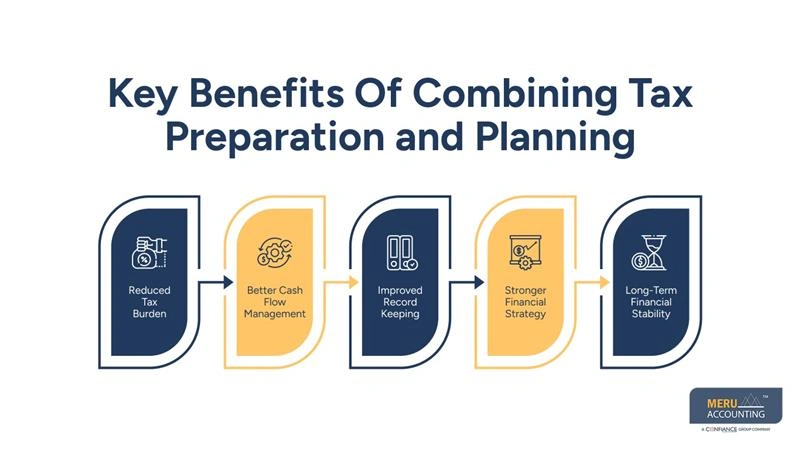
Improved Record Keeping
Consistent documentation simplifies financial reporting. Businesses practicing tax planning and preparation maintain organized records.
Stronger Financial Strategy
Businesses can align financial decisions with tax regulations. Using tax preparation and planning supports more effective financial strategies.
Long-Term Financial Stability
Regular tax review helps businesses avoid sudden financial stress. Combining tax preparation and strategy improves long-term financial planning.
How Tax Planning and Preparation Help Reduce Tax Liabilities
Identifying Eligible Deductions
Businesses can reduce taxable income by identifying valid deductions. This process becomes easier when tax planning and preparation are practiced consistently.
Timing Of Income And Expenses
Businesses may manage when income is recognized or expenses are recorded. Such adjustments can help reduce tax obligations through tax preparation and strategy.
Using Tax Credits
Tax credits can lower the final tax payable amount. Effective tax preparation and planning help businesses identify eligible credits.
Retirement And Investment Planning
Certain investments provide tax advantages. These strategies are often discovered through proper tax preparation and strategy.
Reviewing Financial Activities
Regular review of financial transactions can reveal opportunities to reduce taxes. This makes tax preparation and planning valuable for business finances.
Essential Steps Involved In Tax Preparation and Planning
Organizing Financial Documents
Businesses should collect invoices, receipts, payroll data, and expense records. These documents support accurate and organized tax compliance and planning.
Tracking Income And Expenses
Proper accounting systems help record every business transaction regularly. This improves the overall tax compliance and planning process significantly.
Reviewing Tax Regulations
Tax laws and regulations may change frequently over time. Businesses practicing tax planning and preparation review rules regularly.
Preparing Financial Statements
Income statements and balance sheets summarize overall financial performance clearly. These reports are essential for effective tax compliance and planning.
Filing Accurate Tax Returns
The final step involves submitting tax returns with the correct information. This completes the tax preparation and planning process for businesses.
Common Mistakes Businesses Make Without Proper Tax Planning and Preparation
Poor Record Keeping
Missing receipts or incomplete records can create problems during tax filing. Without tax planning and preparation, businesses may struggle to report accurate figures.
Ignoring Tax Deadlines
Late filing can result in penalties and additional charges. Businesses that lack tax preparation and planning often miss deadlines.
Overlooking Deductions
Many businesses fail to claim deductions they are eligible for. This happens when tax preparation and strategy are not reviewed carefully.
Mixing Personal And Business Finances
Combining personal and business expenses complicates financial reporting. Proper tax preparation and strategy help maintain a clear separation.
Lack Of Professional Guidance
Some businesses try to manage complex tax issues alone. Professional support improves tax compliance and planning accuracy.
Best Practices To Improve Your Tax C and Planning Process
Maintain Organized Financial Records
Keep invoices, receipts, and statements well organized. This practice supports efficient tax preparation and planning.
Review Finances Regularly
Monthly financial reviews help identify tax implications early. Regular reviews strengthen tax planning and preparation.
Use Accounting Software
Accounting tools help track transactions automatically. They also simplify the tax preparation and planning workflow.
Monitor Tax Law Changes
Tax regulations may change from time to time. Businesses should update their tax preparation and strategy methods accordingly.
Seek Professional Advice
Working with experienced accountants improves tax accuracy. Professional help enhances the tax compliance and planning process.
How Small Businesses Can Implement Effective Tax Compliance and Planning
Start With A Simple Accounting System
Small businesses should begin with a basic accounting structure. This creates a foundation for effective tax preparation and planning.
Track Every Financial Transaction
Recording income and expenses regularly helps avoid missing data. This habit strengthens tax planning and preparation.
Set Aside Funds For Taxes
Businesses should allocate funds regularly for tax payments. This helps manage obligations within the tax compliance and planning process.
Schedule Regular Financial Reviews
Quarterly reviews help identify financial changes early. These reviews improve tax preparation and strategy outcomes.
Work With Experienced Professionals
Small businesses benefit from expert financial guidance. Professional support simplifies tax preparation and planning tasks.
Why Businesses Choose Meru Accounting For Tax Preparation and Planning
Experienced Accounting Professionals
Meru Accounting has a team of experienced professionals who understand complex tax regulations. We assist businesses in managing tax compliance and planning with accuracy and efficiency.
Organized Financial Processes
The firm helps businesses maintain well-structured financial records. This makes the tax planning and preparation process simpler and more reliable.
Support For Multiple Accounting Software
Meru Accounting works with various accounting tools used by businesses. This ensures smooth tax preparation and planning across different financial systems.
Reliable Compliance Support
The team ensures that businesses follow tax rules and deadlines. This reduces compliance risks in tax preparation and strategy.
Assistance For Global Businesses
Meru Accounting supports businesses operating in different regions. Our services help companies maintain consistent tax compliance and planning practices.
Key Takeaways
- Combining tax planning with tax filing helps businesses manage taxes more effectively. This approach supports accurate reporting and better financial decision-making.
- Maintaining organized financial records makes tax calculations easier and more reliable. Proper record management also improves overall financial control.
- Regular financial reviews help businesses understand their tax responsibilities early. This reduces last-minute pressure during the tax filing period.
- Professional support from experienced accountants helps businesses handle complex tax rules. Their guidance improves accuracy and reduces the chances of errors.
- Careful tax management supports long-term financial stability. Businesses that follow proper tax practices maintain stronger financial operations.
FAQs
Tax preparation means collecting financial records and filing tax returns correctly. Tax planning focuses on managing income and expenses during the year to reduce tax liability.
Tax preparation and planning help businesses stay compliant with tax rules and avoid penalties. They also help businesses organize finances and reduce unnecessary tax costs.
Businesses should begin tax preparation and planning at the start of the financial year. Regular reviews during the year make tax filing easier and more accurate.
Tax planning and preparation help businesses identify deductions, credits, and allowable expenses. This helps lower the total taxable income and reduce overall tax payments.
Yes, small businesses benefit from tax preparation and planning to manage finances properly. It helps them avoid mistakes and prepare accurate tax returns every year.


