



Tax preparation for startups is one of the most important responsibilities for founders in the early stages of a business. Many startup owners focus on product development, funding, and growth, but tax compliance is equally important for long-term stability.
Proper tax preparation for startups helps founders stay compliant with tax laws, maintain accurate financial records, and avoid costly penalties. With the right approach, startups can also identify deductions and improve financial planning.
What You Will Learn From This Blog
- Learn practical tips to manage tax preparation for startups in a more organized and effective way.
- Understand the common tax obligations that startup founders need to follow.
- Explore simple methods to organize financial records and maintain accurate documentation.
- Learn how business tax planning and preparation supports better financial decisions for growing startups.
- Understand when founders should consider professional help to make startup tax management easier and more reliable.
Introduction To Tax Preparation For Startups
Starting a new business comes with many financial responsibilities, and understanding tax requirements is one of the most important tasks for founders. Tax preparation for startups should begin from the first day of operations because every financial transaction must be recorded and reported correctly.
Following tax rules early helps businesses stay compliant with government regulations and reduces the risk of future tax issues. When founders understand their tax responsibilities, they can manage their business finances more confidently.
One important part of tax filing for startups is maintaining organized financial records. Accurate documentation of income, expenses, payroll, and other financial transactions makes tax filing much easier.
Startups may also need to manage different types of taxes such as income tax, payroll tax, and sales tax. Understanding these obligations helps founders create a strong system for managing taxes and maintaining financial clarity.
Accounting systems also play a significant role in startup tax management. These systems help track financial data, prepare reports, and support financial planning.
During tax preparation for startups, reviewing records carefully helps prevent common mistakes such as missing documents or incorrect data. Careful preparation ensures accurate tax filings and helps startups avoid penalties or compliance issues.
Why Tax Preparation For Startups Is Crucial
Maintaining Legal Compliance
Every business must follow tax regulations set by the government. Proper tax preparation for startups ensures that founders meet deadlines and file correct tax returns.
Supporting Financial Transparency
Investors and partners often review financial records before making decisions. Well-managed tax preparation for startups helps maintain transparent and reliable reports.
Avoiding Penalties And Interest
Late filings and inaccurate returns can lead to additional costs. Careful tax filing for startups reduces the chances of paying unnecessary penalties.
Improving Financial Planning
Taxes affect business cash flow and budgeting. When founders plan taxes properly, they can manage resources more efficiently.
Preparing For Future Business Growth
As startups grow, tax obligations become more complex. Early focus on tax preparation for startups makes it easier to manage larger financial operations later.
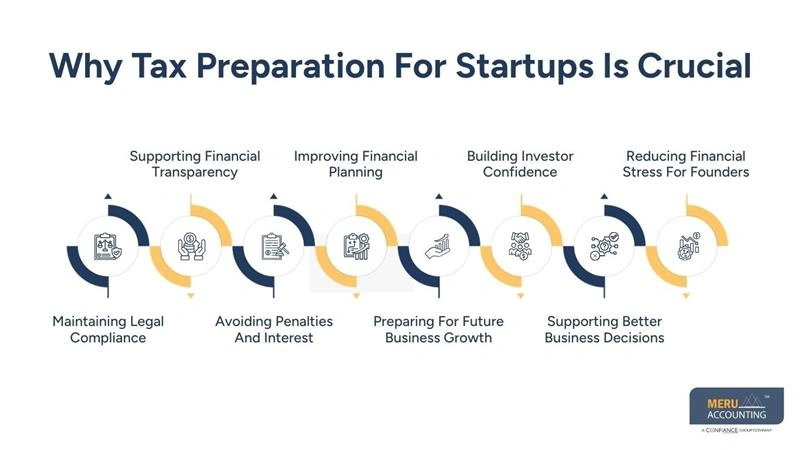
Building Investor Confidence
Clear and accurate tax records show that a startup manages its finances responsibly. Proper tax preparation for startups helps build trust with investors and potential stakeholders.
Supporting Better Business Decisions
When tax records are well organized, founders can better understand their financial position. This helps them make informed decisions about spending, investments, and growth strategies.
Reducing Financial Stress For Founders
Managing taxes without proper planning can be stressful for startup owners. A structured approach to tax filing for startups helps founders stay organized and confident during tax season.
Understanding Startup Tax Obligations And Compliance
Federal And State Tax Requirements
Startups must follow both national and regional tax rules. Understanding these requirements helps founders handle tax preparation for startups with greater accuracy.
Income Reporting Responsibilities
All business income must be reported correctly during tax filing. Accurate income reporting is essential for successful tax preparation for startups.
Employee Payroll Taxes
If a startup hires employees, payroll taxes must be calculated and paid. Payroll records are an important part of tax compliance.
Business Expense Documentation
Startups often claim deductions for business expenses. Proper documentation helps support these deductions during tax filing.
Filing Deadlines And Reporting Schedules
Missing deadlines can lead to penalties. Understanding tax schedules helps founders complete tax preparation for startups on time.
Setting Up An Efficient Accounting System For Tax Preparation For Startups
Choosing The Right Accounting Software
Accounting tools help track financial data and simplify reporting. A good software system improves accuracy in tax preparation for startups.
Tracking Income And Expenses
Recording every transaction helps maintain financial clarity. Organized records make startup tax filing much easier.
Maintaining Digital Financial Records
Digital records are easier to store and retrieve when needed. This improves efficiency during tax filing for startups.
Monitoring Cash Flow Regularly
Regular financial monitoring helps founders understand how money moves in the business. This information is also useful during tax reporting.
Preparing Financial Statements
Income statements and balance sheets provide a clear view of business finances. These reports support better tax preparation for startups and financial planning.
How Business Tax Planning And Preparation Help Startups Reduce Tax Liability
Identifying Tax Deductions
Startups may qualify for several deductions, such as office expenses, software costs, and operational spending. Proper business tax planning and preparation help identify these savings.
Managing Tax Credits
Some startups qualify for research or development tax credits. These benefits can reduce the total tax burden when managed through effective business tax planning and preparation.
Planning Expenses Strategically
When expenses are recorded and categorized properly, founders can use them to lower taxable income. This approach supports better tax outcomes.
Estimating Future Tax Payments
Regular tax estimates help businesses avoid sudden tax bills. Accurate forecasts are part of effective Tax planning and filing for businesses.
Supporting Long-Term Financial Stability
When tax strategies are planned early, startups can improve profitability. Consistent business tax planning and preparation contribute to stronger financial management.
When Startups Should Consider Professional Business Tax Planning And Preparation
Rapid Business Growth
When startups expand quickly, tax requirements also increase. Professional support can simplify tax planning and filing for businesses during this stage.
Complex Financial Transactions
Investments, partnerships, or international operations create complex tax situations. Expert guidance helps manage these challenges.
Limited Internal Accounting Knowledge
Many founders do not have strong tax expertise. Professional accountants help ensure accurate reporting and proper compliance.
Preparing For Tax Audits
External reviews may require detailed financial records. Professional support helps maintain accurate documentation.
Saving Time For Business Operations
Founders often have limited time for financial tasks. Professional business tax planning and preparation allow them to focus on growing the business.
Tax Preparation Checklist For Startup Founders
Organizing Financial Documents
Collect invoices, receipts, payroll records, and bank statements. These documents are essential for tax preparation for startups.
Reviewing Income And Expense Records
Founders should verify that all transactions are recorded correctly. This step improves accuracy during tax filing.
Checking Tax Filing Deadlines
Different taxes have different deadlines. Staying aware of these dates prevents delays in tax preparation for startups.
Calculating Estimated Tax Payments
Some startups must pay taxes throughout the year. Estimating payments helps maintain steady financial planning.
Reviewing Previous Tax Returns
Past filings provide useful information for current reporting. They also help identify any adjustments needed in tax filing for startups.
How Professional Services Support Business Tax Planning And Preparation
Providing Accurate Financial Analysis
Professional accountants analyze financial records carefully. This ensures better results in business tax planning and preparation.
Helping With Regulatory Compliance
Tax professionals stay updated with changing regulations. Their knowledge supports accurate tax filings.
Offering Strategic Tax Advice
Experts help startups find legal ways to reduce tax liability. Strategic advice improves financial efficiency.
Managing Complex Tax Filings
Businesses with multiple income sources or employees may have complicated filings. Professional assistance helps handle these situations.
Improving Financial Record Management
Experts often recommend better accounting practices. These improvements strengthen overall tax planning and filing for businesses.
How Meru Accounting Supports Tax Preparation For Startups
Experienced Startup Accounting Support
At Meru Accounting, our team understands the financial challenges faced by new businesses. We provide complete support for tax preparation for startups so founders can focus on growth.
Organized Financial Record Management
Our professionals maintain accurate financial records and reporting systems. This makes tax filing for startups easier and more reliable.
Strategic Tax Guidance
We help startups improve financial planning through expert tax planning and filing. This includes identifying deductions and managing tax liabilities.
Support With Tax Compliance
Our team ensures that startups meet all filing requirements and deadlines. This reduces stress and improves compliance.
Long-Term Financial Support
Meru Accounting also helps startups build stable financial systems. With strong business tax planning and preparation, founders gain better control over their finances.
Key Takeaways
- Tax preparation for startups is essential for maintaining compliance and financial stability.
- Organized financial records simplify reporting and tax filing.
- Accounting systems help founders manage financial data efficiently.
- Business tax planning and preparation help startups reduce tax liabilities legally.
- Professional accountants can support complex tax situations and improve financial planning.
- Early attention to tax preparation for startups helps businesses grow with fewer financial risks.
FAQs
Tax preparation for startups means organizing financial records, calculating taxes, and filing tax returns for a new business. It helps founders follow tax rules, avoid penalties, and maintain accurate financial reports.
Startups should begin tax filing from the first day of business operations. Tracking income and expenses early makes tax filing easier and more accurate later.
Important documents include bank statements, invoices, receipts, payroll records, and expense reports. These records help ensure smooth tax filing for startups and accurate reporting.
Tax planning and filing for businesses help startups identify deductions and manage tax payments properly. It supports better financial decisions and helps reduce overall tax liability.
Many founders seek expert help because tax rules can become complex as the business grows. Professional support improves business tax planning and preparation and ensures correct filings.


