



Tax preparation outsourcing has become an important support system for accounting firms that want to manage risk, reduce pressure during tax season, and keep client work accurate. Firms today face staff shortages, tight deadlines, and higher client expectations. These challenges can create serious risks if not handled carefully.
By using tax preparation outsourcing, accounting firms can protect their teams, control workloads, and maintain service quality even during peak periods. This blog explains how outsourcing tax work helps firms manage operational, staffing, and compliance risks while supporting long-term growth.
Tax preparation outsourcing helps accounting firms manage risk during busy tax seasons by reducing pressure on internal teams. When workloads increase, outsourcing supports accuracy, meets deadlines, and protects client trust without the need for permanent hires.
What You Will Learn From This Blog
- Learn why tax season puts pressure on accounting firms and where the main risks come from, helping firms prepare before issues arise.
- Understand how tax preparation outsourcing reduces common risks while allowing firms to stay in control of their workload.
- See how a remote tax preparer supports firms during peak months through better capacity planning and deadline management.
- Gain insight into data protection and accuracy measures used in outsourced tax work to keep client information secure.
- Know what to look for when choosing an outsourcing partner to avoid quality and compliance problems.
Understanding Tax Preparation Outsourcing For Accounting Firms
What Tax Preparation Outsourcing Means
Tax preparation outsourcing involves assigning tax return work to an external team. These professionals work under firm guidance and follow set processes.
Types Of Tax Tasks Outsourced
Firms outsource individual returns, business filings, and review support. Some also outsource amended returns and extensions.
Who Uses Outsourced Tax Services
Small, mid-size, and growing firms all use tax preparation outsourcing. It supports firms with seasonal workload changes.
How Workflows Are Managed
Firms assign work, track progress, and review completed tax returns. The outsourcing team focuses only on preparation, not final approvals.
Benefits Beyond Cost
Outsourcing reduces pressure on internal staff during demanding tax seasons. It helps firms prevent burnout, errors, and missed filing deadlines.
Why Tax Preparation Outsourcing Is Becoming A Strategic Necessity
Rising Tax Season Pressure
Tax seasons are becoming longer and more demanding each year. Firms now handle higher filing volumes with fewer available internal staff.
Talent Shortages In Accounting
Hiring skilled tax professionals has become difficult for many firms. Tax preparation outsourcing helps fill staffing gaps quickly during peak seasons.
Client Expectations Are Higher
Clients expect accurate returns and timely tax filings without delays. Outsourcing helps firms meet deadlines while maintaining consistent service quality.
Risk Of Errors And Penalties
Overworked teams are more likely to overlook details and make errors. Outsourcing balances workloads and reduces filing mistakes and penalty risks.
Flexible Support Model
Firms can increase or reduce outsourced support as workload changes. This avoids permanent hiring and long-term staffing commitments.
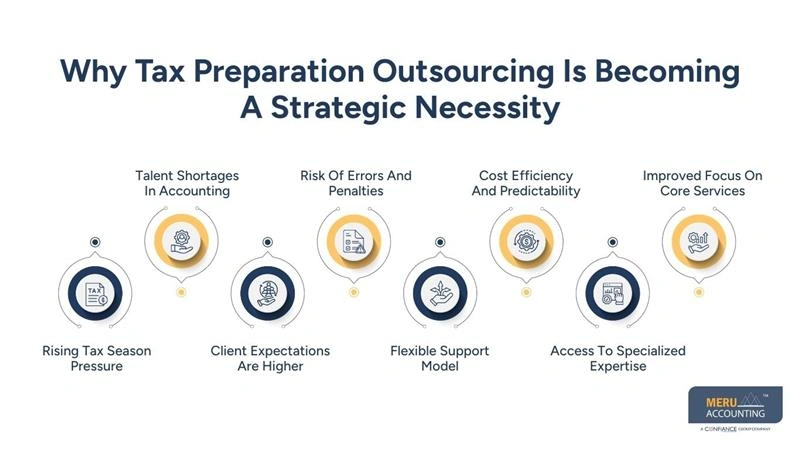
Cost Efficiency And Predictability
Outsourcing allows firms to manage costs effectively without overstaffing. This makes budgeting for tax season more predictable.
Access To Specialized Expertise
Firms gain access to tax professionals with diverse experience and knowledge. This ensures complex returns are handled accurately and efficiently.
Improved Focus On Core Services
With tax preparation outsourced, internal teams can focus on client advisory work. This enhances client satisfaction and strengthens firm reputation.
Key Risks Accounting Firms Face During Tax Season
Staffing Shortages
Many firms do not have enough tax staff during peak months. This shortage creates stress and delays in completing client filings.
Missed Deadlines
High workloads increase the chance of submitting returns late. Late filings can result in fines, penalties, and client dissatisfaction.
Data Handling Errors
Rushed work often leads to mistakes in data entry or calculations. Such errors can damage client trust and firm credibility.
Quality Control Issues
Fatigued teams are more likely to overlook important details. This often causes rework, corrections, and slower delivery times.
Employee Burnout
Long hours and high pressure reduce staff morale and efficiency. Burnout can affect productivity and the long-term health of the firm.
How Tax Preparation Outsourcing Supports Risk Management
Balanced Workload Distribution
Tax preparation outsourcing helps distribute the workload evenly across all staff members. This approach significantly reduces stress and pressure on internal accounting teams.
Consistent Output Quality
Dedicated outsourced teams concentrate only on tax preparation tasks daily. This focus ensures greater consistency and accuracy in every completed return.
Reduced Deadline Pressure
Tax preparation outsourcing provides additional skilled professionals during peak filing periods. With extra support, firms can meet deadlines without risking client dissatisfaction.
Better Resource Planning
Firms can plan staffing requirements more accurately each tax season. This strategy allows them to avoid sudden hiring or last-minute emergencies.
Improved Client Confidence
Accurate, timely, and high-quality work helps strengthen client trust. Clients gain confidence knowing their taxes are handled professionally every time.
Managing Staffing And Capacity Challenges With Remote Tax Preparers
Seasonal Staffing Support
Virtual tax preparers provide support to firms during peak tax months. This extra help prevents overload and keeps workloads manageable for everyone.
No Long-Term Hiring Risk
Firms avoid hiring permanent staff for temporary seasonal needs. This strategy lowers costs while maintaining flexibility during busy periods.
Flexible Work Allocation
Work can be assigned daily based on the firm’s current volume. This approach ensures smooth operations without delays or backlogs.
Faster Turnaround Time
Remote tax preparers help reduce backlogs and speed up returns. Using tax preparation outsourcing, this ensures that client filings are completed quickly and efficiently every time.
Staff Satisfaction
Internal teams feel supported and not overburdened by extra tasks. This approach improves morale and increases employee retention over time.
Data Security And Confidentiality In Tax Preparation Outsourcing
Secure File Transfer Systems
Outsourcing providers use secure channels to transfer sensitive client data. This approach limits unauthorized access and protects confidential information.
Access Control Measures
Remote teams are given only limited access to the necessary data. This ensures sensitive information is shared securely and appropriately.
Compliance With Regulations
Providers follow strict local and international data protection rules. This approach ensures all client information remains safe and protected.
Confidentiality Agreements
Remote tax preparers sign legal agreements to maintain strict confidentiality. This step ensures accountability and proper handling of sensitive data.
Regular Security Reviews
Firms periodically review provider security practices and protocols. This helps identify risks early and prevent potential data breaches.
Quality Control Best Practices When Working With A Remote Tax Preparer
Clear Work Instructions
Detailed guidelines are provided to reduce confusion and errors. This ensures higher accuracy in every tax return prepared remotely.
Review And Approval Process
Firms review all prepared returns before final submission to clients. Final responsibility for correctness and compliance always stays internal.
Standardized Checklists
Checklists are used to maintain consistency across all outsourced returns. Errors are detected early, ensuring quality work for every client.
Ongoing Communication
Regular updates between firms and remote preparers keep everyone aligned. Questions or issues are resolved quickly to avoid workflow delays.
Performance Monitoring
Firms track accuracy, efficiency, and turnaround time for outsourced work. This approach helps maintain quality standards and ensures timely completion.
How Meru Accounting Supports Safe And Reliable Tax Preparation Outsourcing
Experienced Tax Professionals
Meru Accounting provides highly skilled and trained tax specialists. We handle complex tax work carefully, ensuring accuracy and compliance.
Strong Data Protection Practices
Client information is managed under strict security and privacy controls. Data protection and confidentiality are always treated as a top priority.
Flexible Engagement Models
Firms can choose service levels according to their current workload. With tax preparation outsourcing, this flexibility supports growth while keeping control over tax processes.
Dedicated Remote Tax Preparers
Each virtual tax preparer works closely as part of your team. We follow your firm’s processes and maintain consistent workflow standards.
Focus On Accuracy And Timelines
Meru Accounting ensures work is accurate and completed on schedule. Every task undergoes quality checks to reduce risk and errors.
Key Takeaways
- Tax preparation outsourcing helps reduce workload stress and lowers risk of errors.
- A remote tax preparer provides support during busy seasons, improving capacity planning.
- Strong security measures keep client data safe while maintaining firm control.
- Clear processes ensure accurate tax filings, with firms retaining final responsibility.
- Outsourcing supports long-term firm growth and keeps operations steady each year.
FAQs
Tax preparation outsourcing is when an accounting firm hires an external team to prepare tax returns. It helps firms manage heavy workloads during tax season without hiring full-time staff.
A remote tax preparer works off-site to assist with preparing tax returns. They reduce pressure on internal staff and help meet deadlines accurately.
Yes. Trusted outsourcing partners use secure systems, access controls, and confidentiality agreements to protect sensitive client information.
Yes. Outsourcing spreads work among experienced professionals, ensuring accurate tax returns and reducing the chance of mistakes.
Firms should look for experience, data security measures, skilled virtual tax preparers, and a proven record of meeting deadlines and quality standards.


