



Managing tax preparation rental property responsibilities is an important part of being a real estate investor. Taxes directly affect your profits, and even small mistakes can lead to higher payments or penalties. A clear understanding of how rental taxes work helps you stay organized and confident during filing season.
Many investors struggle with rental property tax preparation because of changing rules and multiple deductions. This guide explains everything in a simple way so you can handle your rental taxes more effectively and avoid common problems.
What You Will Learn From This Blog
- Understand how rental income is taxed and reported for investors.
- Learn the foundation of tax preparation rental property and its importance.
- Know the key rules that apply to rental properties and compliance needs.
- See how rental property tax preparation differs from regular tax filing.
- Identify which documents are required for accurate tax preparation.
- Learn how proper recordkeeping simplifies the tax filing process.
- Explore the most common deductions available for rental properties.
- Understand how planning helps reduce overall tax burden.
- Recognize common mistakes investors make during tax filing.
What Is Tax Preparation Rental Property And Why It Matters
Tax preparation rental property involves organizing all rental income, expenses, and financial reports in an accurate and systematic way. This process ensures that every financial detail related to your rental property is properly recorded, helping you stay organized and avoid errors when filing taxes.
Proper preparation allows investors to understand their income, expenses, and overall property performance clearly.
Accurate tax preparation is important for investors because it helps prevent overpaying taxes and supports better financial planning.
Following all legal requirements is essential, and proper rental property tax preparation ensures compliance with tax laws. Maintaining clear records also allows investors to make informed long-term decisions about their properties and investments.
Additionally, a structured approach to tax preparation reduces risks associated with filing errors, late submissions, or missed deductions.
Errors in tax reporting can result in penalties or audits, which can be costly and time-consuming. By implementing a careful tax preparation rental property process, investors can safeguard their financial interests and maintain peace of mind throughout the tax season.
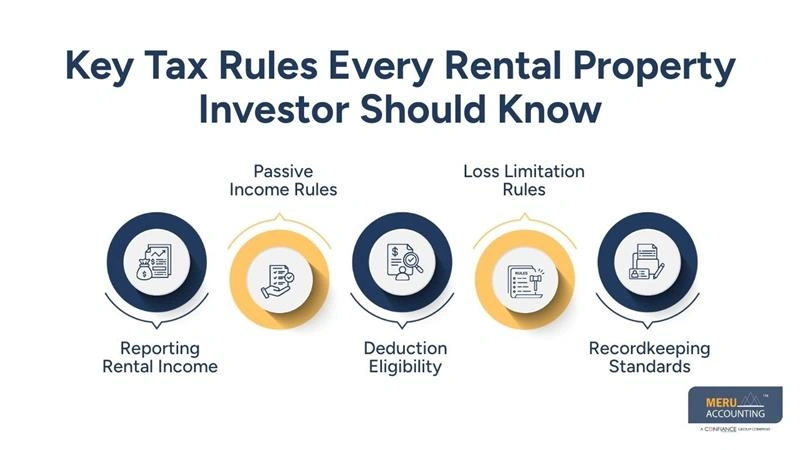
Key Tax Rules Every Rental Property Investor Should Know
Reporting Rental Income
All rental income must always be reported accurately to tax authorities. This includes monthly rent payments and any advance or security deposits.
Passive Income Rules
Rental income is generally considered passive income for tax purposes. These rules directly affect how losses from rental properties are treated.
Deduction Eligibility
Only ordinary and necessary business expenses are allowed as deductions. Understanding which expenses qualify helps improve accuracy during tax preparation.
Loss Limitation Rules
Rental losses may be limited based on your total taxable income. Knowing these rules is crucial during rental property tax preparation.
Recordkeeping Standards
Maintaining detailed records is required for accurate tax reporting compliance. Clear records also make tax preparation rental property much easier overall.
Understanding Rental Income And Taxable Earnings
Rental Income Sources
Rental income includes rent payments, deposits, and advance fees. All sources of earnings must be properly recorded for taxes.
Additional Earnings
Extra services like parking or maintenance generate additional taxable income. These earnings should always be included when filing rental taxes.
Expense Adjustments
Deductible expenses reduce the total amount of taxable rental income. Proper adjustments help in calculating accurate net rental profits.
Net Income Calculation
Net income is determined after subtracting all allowable rental expenses. This calculation is a key step in tax preparation processes.
Impact On Overall Tax
Rental income directly affects your total taxable income each year. Proper planning ensures your taxes are calculated accurately and efficiently.
Essential Documents For Rental Property Tax Preparation
Income Records
Maintain detailed records of all rent received from tenants. These records are necessary for accurate tax preparation rental property reporting.
Expense Receipts
Keep receipts for repairs, maintenance, and other property-related expenses. They provide proof to support your deduction claims during filing.
Loan And Interest Statements
Mortgage interest payments are often deductible for rental property owners. These documents help reduce your overall taxable rental income accurately.
Property Tax Documents
Property taxes paid must be properly recorded for tax purposes. They are an important deductible expense in rental property tax preparation.
Depreciation Records
Track property depreciation over its useful life carefully and consistently. Depreciation records are a key part of accurate tax filing for investors.
Common Deductions In Tax Preparation Rental Property
Maintenance And Repairs
Costs for property repairs and maintenance are fully deductible each year. This includes plumbing, painting, and other minor repair expenses during tax preparation rental property.
Mortgage Interest
Interest paid on rental property loans is fully deductible for investors. Deducting mortgage interest significantly reduces your overall taxable rental income.
Property Management Fees
Fees paid to property managers are allowed as deductible expenses. These are considered part of normal operating costs for rental property tax preparation.
Insurance Premiums
Insurance premiums for rental property protection are fully deductible for taxes. They help lower your overall tax liability effectively and legally.
Utility Expenses
Utilities paid by the owner for the rental property are deductible. This includes electricity, water, gas, and other necessary services.
Depreciation Benefits In Rental Property Tax Preparation
Concept Of Depreciation
Depreciation spreads the property’s cost over multiple years systematically. It helps reduce taxable income annually for rental property owners.
Residential Property Depreciation
Residential properties are depreciated over a fixed number of years. This method provides long-term tax benefits to investors.
Calculating Depreciation
Depreciation is calculated based on property value and its useful lifespan. Accurate calculation is crucial for tax preparation rental property savings.
Benefits For Investors
Depreciation lowers taxable income without any actual cash expense. It improves overall profitability of rental property investments.
Reporting Depreciation
Depreciation must be reported properly on tax returns each year. This is essential in accurate rental property tax preparation.
How To Calculate Rental Property Taxes Accurately
Determine Total Income
Start by calculating total rental income received from all sources. Include all rent payments, deposits, and additional earnings received.
Subtract Allowable Expenses
Deduct all eligible property-related expenses from your total income. This gives your net taxable income for accurate tax filing.
Apply Depreciation
Include depreciation in your calculations to reduce taxable profits. It helps lower your total tax liability significantly.
Check Tax Rates
Apply the correct tax rate based on your total earnings. Rates vary depending on overall income and filing status.
Final Tax Calculation
The remaining amount after deductions and depreciation is your liability. Accurate calculation ensures proper filing and avoids penalties.
Tax Preparation Rental Property For First-Time Investors
Understanding Basics
First-time investors should learn the fundamentals of rental property taxes. This knowledge helps avoid confusion and filing errors.
Keeping Organized Records
Maintain all financial records from the very beginning of ownership. Good organization makes tax preparation rental property easier and faster.
Learning Deduction Rules
Understand which expenses are deductible for rental property owners. Proper knowledge helps reduce your total tax burden.
Avoiding Common Errors
Errors are common for beginners during tax filing processes. Careful review of records prevents costly mistakes.
Seeking Guidance
Professional advice can be helpful for first-time property investors. It improves accuracy and confidence during tax filing.
Mistakes To Avoid In Rental Property Tax Preparation
Missing Income Reporting
Not reporting all rental income can result in costly penalties. Always include complete details from every income source for tax preparation rental property.
Claiming Incorrect Deductions
Claiming deductions incorrectly may trigger audits by tax authorities. Ensure all deduction claims are valid and properly documented.
Poor Recordkeeping
Disorganized records create confusion and increase the chance of mistakes. Maintaining clear records is essential for smooth tax preparation.
Ignoring Depreciation
Many investors forget to apply depreciation to their rental properties. This oversight can unnecessarily increase taxes owed to authorities.
Filing Late Returns
Late filing of taxes results in penalties and interest charges. Timely submission is very important for proper tax preparation.
Tax Strategies To Reduce Rental Property Tax Liability
Maximize Deductions
Use all available deductions carefully to lower your taxable income. Proper planning ensures maximum tax savings during tax preparation rental property.
Plan Expenses Properly
Schedule property-related expenses strategically to manage taxes more efficiently. The timing of expenses can directly affect your total tax liability.
Use Depreciation Benefits
Apply depreciation consistently every year to reduce taxable rental profits. This strategy provides long-term tax relief for property investors.
Track All Expenses
Maintain detailed records of all expenses related to your properties. Accurate tracking is essential for smooth tax preparation rental property.
Review Tax Position Regularly
Check your tax situation frequently throughout the fiscal year. Regular reviews help optimize planning and reduce potential tax liabilities.
When To Hire Professionals For Tax Preparation Rental Property
Complex Tax Situations
Owning multiple rental properties increases tax filing complexity significantly. Professional help ensures accurate tax preparation rental property and legal compliance.
Lack Of Time
Busy investors often struggle to manage taxes correctly themselves. Hiring experts saves time while ensuring precise calculations and filing.
Changing Tax Rules
Tax laws frequently change and can be difficult to track. Professionals stay updated on all rules to ensure correct reporting.
Error Reduction
Tax experts minimize mistakes and reduce the chance of audits. This ensures smooth and accurate tax preparation rental property every year.
Better Tax Planning
Professionals provide guidance to optimize tax outcomes for your properties. They help improve overall financial results and reduce unnecessary liabilities.
Why Choose Meru Accounting For Rental Property Tax Preparation
Experienced Team
Meru Accounting has a team of highly skilled tax professionals. We understand the unique tax needs of rental property investors.
Accurate And Timely Service
We provide accurate tax preparation rental property services for clients. Timely filing ensures investors avoid penalties and compliance issues.
Customized Solutions
Our services are tailored to meet each investor’s specific requirements. Every client receives personalized support for efficient tax management.
Advanced Tools And Technology
We use modern tools and software for precise tax calculations. This approach improves efficiency and overall accuracy of filing.
Complete Support
From recordkeeping to filing, we assist investors at every step. We make the entire tax preparation rental property process simple and smooth.
Key Takeaways
- Accurate tax preparation improves profitability and reduces financial risks.
- Maintaining organized records is very important for smooth tax filing.
- Proper recordkeeping simplifies reporting and supports accurate financial tracking.
- Using deductions lowers taxable income and increases potential savings.
- Depreciation provides long-term tax benefits for rental property investors.
- Avoiding common mistakes helps prevent penalties and costly filing errors.
- Professional support improves accuracy and helps manage complex tax situations effectively.
FAQs
Gather all income and expense records, mortgage statements, and property tax documents. Calculate net rental income, apply deductions, and report depreciation accurately.
Common deductions include mortgage interest, property taxes, repairs, and insurance. Management fees and maintenance costs can also lower taxable income.
Rental income is usually taxed as ordinary income by tax authorities. Expenses and depreciation help reduce the total taxable earnings.
Yes, if records are organized and deductions are understood properly. Professional help is recommended to avoid errors and missed savings.
Hire a professional for multiple properties or complex rental income. They ensure accurate filing, reduce mistakes, and maximize deductions.


