



Tax return preparation outsourcing has become an increasingly popular solution for firms looking to manage tax-related tasks efficiently while focusing on their core operations. Many accounting firms, small businesses, and enterprises are now exploring the benefits of outsourcing tax return services to professional teams who specialize in accuracy, compliance, and timely filing.
In this blog, we will break down what tax return preparation outsourcing involves, its benefits, and how you can decide if it is the right move for your firm.
What You Will Learn From This Blog
- What tax return preparation outsourcing is and how it works
- Key benefits firms can gain by outsourcing tax returns
- Situations when outsourcing tax return services makes sense
- How to select the right outsourcing partner
- Common challenges and how to manage them
- Best practices to get maximum value from outsourcing
- How to measure the return on investment (ROI)
- Cost considerations and whether it is worth the investment
What Is Tax Return Preparation Outsourcing?
Definition and Scope
Tax return preparation outsourcing involves hiring experts to manage your returns. It includes preparation, review, and filing of various tax types. This service covers individual, corporate, partnership, and trust tax returns.
Types of Services Offered
Outsourced teams handle federal and state tax returns efficiently. They also provide compliance reporting, planning, and amendments for clients. Tax planning support ensures proper deductions and avoids future penalties.
Who Can Benefit
Small accounting firms benefit from outsourcing during busy tax seasons. Mid-sized companies can manage fluctuating workloads using outsourced professionals. Large enterprises gain efficiency when handling complex tax return requirements.
How It Works
Firms securely share client financial data with the provider. The provider prepares and reviews returns according to regulations carefully. This ensures compliance with all federal, state, and local laws.
Flexibility and Customization
Outsourcing allows firms to scale resources based on actual workload. Services can be customized to fit each firm’s unique needs. This flexibility ensures optimal efficiency without overloading internal staff members.
Focus on Accuracy
Professional teams work to reduce errors and ensure accurate returns. They also maximize deductions, saving money and reducing audit risk. Accuracy helps firms maintain credibility and strengthen client trust consistently.
Key Benefits Of Tax Return Preparation Outsourcing For Firms
- Outsourcing tax return preparation frees internal resources for critical tasks.
- When firms outsource tax return tasks, staff gain more time to focus on client relationships and operations.
- Firms using tax return preparation outsourcing reduce costs by paying for services only when required.
- Full-time hiring is avoided even during peak tax seasons.
- Outsourced teams consist of experienced professionals updated with current tax regulations.
- Accuracy and compliance are maintained across all prepared tax returns.
- Workload peaks are managed efficiently without straining internal staff.
- Scalable outsourcing adapts to seasonal surges or complex tax requirements.
- Strict quality control minimizes errors, penalties, and missed deadlines.
- Timely and personalized attention improves overall client service.
When Should You Consider Outsourcing Tax Return Services?
High Volume Of Returns
Firms handling a large number of tax returns during peak season benefit from tax return preparation outsourcing. Meeting tight deadlines becomes easier with additional expert support.
Limited Internal Resources
Small teams may choose to outsource tax return work when a lack of specialized tax knowledge limits efficiency. Outsourcing provides access to skilled professionals without expanding internal staff.
Seasonal Staffing Needs
Hiring temporary staff every year can be time-consuming and inconsistent. Outsource tax return services offer a stable and reliable solution for seasonal workload increases.
Complex Tax Situations
Multi-state or international tax requirements increase the complexity of returns. Firms that outsource tax return tasks can rely on experts to handle complex cases with better accuracy and compliance.
Cost Constraints
Recruitment, training, and payroll costs can impact overall business expenses. Outsourcing helps control costs while maintaining quality and efficiency.
Focus On Core Services
Internal teams can better balance compliance and growth activities when they outsource tax return responsibilities. Outsourcing allows greater focus on advisory and revenue-generating services.
How To Choose The Right Partner To Outsource Tax Return Tasks
Experience And Expertise
When selecting a tax return preparation outsourcing partner, evaluate the provider’s background in handling various tax types and industries. Proven experience helps ensure accurate handling of complex tax requirements.
Security And Confidentiality
Ensure the provider follows strict protocols to protect sensitive client data. Strong data security practices reduce risks related to privacy and compliance.
Technology And Tools
Reliable partners use advanced software for efficient data transfer and processing. Modern tools improve accuracy, speed, and overall workflow management.
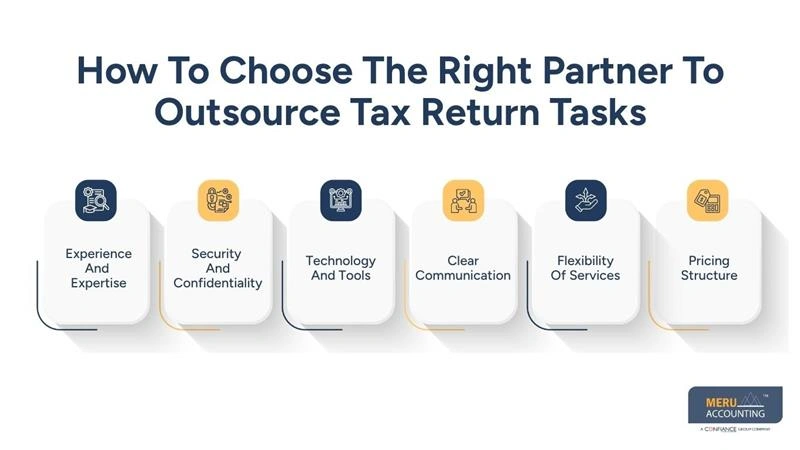
Clear Communication
When you outsource tax return work, choose teams that provide regular updates and maintain transparent communication channels. Effective communication helps avoid misunderstandings and ensures smooth coordination.
Flexibility Of Services
Select a provider who can adapt to your firm’s workload and timelines. Flexible services support both routine tasks and peak season demands.
Pricing Structure
Compare pricing models and understand what services are included in the cost. Clear pricing helps maintain budget control and ensures better value for money.
Common Challenges Of Tax Return Preparation Outsourcing
Data Security Concerns
In tax return preparation outsourcing, sharing sensitive client information can raise privacy and confidentiality concerns. Secure data transfer methods help protect information from unauthorized access.
Loss Of Control
Some firms may feel reduced control when they outsource tax return processes. Regular updates and review systems help maintain visibility and oversight.
Integration With Internal Processes
Outsourced teams may need time to understand internal workflows and systems. Clear guidelines and collaboration improve alignment with existing processes.
Communication Delays
Miscommunication or delays can result in missed details or errors. Consistent communication ensures better coordination and timely task completion.
Quality Variability
Service quality may vary depending on the outsourcing provider selected. Choosing experienced professionals helps maintain accuracy and consistency.
Dependency Risk
Over-reliance on outsourcing partners can create operational dependency risks. Maintaining internal knowledge supports better control and backup capabilities.
How Outsourced Tax Return Teams Handle Deadlines And Workload Peaks
Advanced Planning
Teams forecast workload using historical data for better resource allocation. Proper planning helps manage deadlines without last-minute pressure.
Round-The-Clock Support
Many providers operate across multiple time zones for continuous workflow. Ongoing support ensures faster turnaround and uninterrupted progress.
Structured Workflows
Defined processes guide preparation, review, and filing of tax returns. Clear workflows reduce errors and ensure timely task completion.
Peak Season Staffing
Outsourced teams scale staffing to handle increased seasonal workload demands. Adequate staffing maintains quality even during high-volume periods.
Regular Monitoring
Managers continuously track progress and identify potential bottlenecks early. Ongoing monitoring supports consistent adherence to deadlines.
Contingency Planning
Backup resources are available to handle unexpected delays or disruptions. Prepared plans ensure continuity despite staff shortages or technical issues.
Best Practices To Maximize Benefits When You Outsource Tax Returns
Define Clear Objectives
For successful tax return preparation outsourcing, set clear expectations for turnaround time, quality standards, and scope. Defined goals help align outsourced teams with business requirements.
Maintain Open Communication
Regular updates and feedback ensure smooth coordination between teams. Strong communication reduces misunderstandings and improves accuracy.
Use Secure Technology
Secure platforms support safe data transfer and document management processes. Reliable technology reduces risks related to data breaches or loss.
Train Internal Staff
When firms outsource tax return functions, internal teams should understand outsourced workflows and responsibilities clearly. Proper training supports better collaboration and operational consistency.
Monitor Performance Metrics
When you outsource tax return tasks, track accuracy, deadlines, and client satisfaction to measure performance. Performance data helps identify improvement areas and maintain standards.
Review And Refine
Evaluate processes regularly to improve efficiency and service quality. Continuous improvement strengthens long-term outsourcing outcomes.
Measuring ROI Of Tax Return Preparation Outsourcing
Time Saved
Calculate the time saved through tax return preparation outsourcing by reducing internal workload on tax preparation tasks. Freed time allows staff to focus on higher-value business activities.
Cost Reduction
Compare outsourcing costs with in-house hiring, training, and operational expenses. Cost analysis helps determine financial efficiency and savings potential.
Error Reduction
Fewer errors reduce the risks of penalties, rework, and compliance issues. Improved accuracy supports better financial reporting and trust.
Client Retention
Timely and accurate services improve client satisfaction and loyalty. Satisfied clients are more likely to return and provide referrals.
Operational Flexibility
Outsourcing supports better handling of seasonal and complex workloads. Flexible operations improve overall efficiency and resource utilization.
Overall Profitability
Combine savings, efficiency, and service quality to evaluate overall gains. Higher profitability reflects a successful tax return preparation outsourcing strategy and execution.
Cost Analysis: Is Tax Return Preparation Outsourcing Worth the Investment?
Direct Cost Comparison
Compare in-house salaries, benefits, software, and training with outsourcing fees. Clear comparison helps identify the most cost-effective operational approach.
Hidden Costs Consideration
Consider savings from fewer errors, reduced penalties, and less overtime work. Indirect cost reduction improves overall financial efficiency over time.
Scalability Savings
Tax return preparation outsourcing removes the need to hire staff for seasonal workload spikes. Flexible scaling reduces long-term staffing and infrastructure expenses.
Quality Vs Price
Focus on providers delivering accurate and timely results at competitive pricing. Higher quality service often justifies slightly increased outsourcing costs.
Flexibility Benefits
Paying only for required services helps optimize financial resource allocation. Flexible engagement supports better cost control during varying workloads.
Long-Term Gains
Consistent quality, time savings, and better service improve overall outcomes. Long-term benefits often outweigh initial outsourcing investment costs.
Technology Cost Savings
Outsourcing reduces the need to invest in advanced tax software. Providers often include updated tools within their service offerings.
Training And Recruitment Savings
Hiring and training internal staff requires significant time and financial resources. Outsourcing eliminates repeated recruitment and onboarding expenses.
Productivity Improvement
External support increases overall productivity by reducing internal workload pressure. Improved efficiency contributes to faster turnaround and better output quality.
Risk Management Savings
Reduced errors and compliance issues help avoid penalties and financial losses. Strong risk control improves stability and protects firm reputation.
Meru Accounting’s Tax Return Preparation Outsourcing
Experienced Team
Meru Accounting offers trained professionals who specialize in managing complex tax returns accurately. Skilled experts ensure consistency and reliability across all tax engagements.
Global Compliance Knowledge
We stay updated with tax regulations across regions to ensure your returns are compliant. Strong regulatory knowledge supports accurate and error-free tax filings.
Customized Services
Our tax return preparation outsourcing services are tailored to your firm’s workflow, volume, and client requirements. Flexible solutions adapt easily to changing business and workload needs.
Secure Data Management
We use secure platforms to handle sensitive financial information safely. Robust security measures protect client data from unauthorized access.
Deadline Management
Our team handles peak season efficiently, ensuring all returns are filed on time. Structured processes help maintain timely delivery even during high workloads.
Cost-Effective Solutions
We provide flexible pricing options so firms can scale outsourcing without overspending. Optimized cost structures support better financial planning and control.
Key Takeaways
- Tax return preparation outsourcing allows firms to save time, reduce costs, and access specialized expertise.
- Outsourcing is particularly beneficial during peak tax seasons, for firms with limited internal resources, or when handling complex tax situations.
- Choosing the right outsourcing partner is critical for quality, security, and timely delivery.
- Clear communication, defined workflows, and performance tracking are essential to maximize outsourcing benefits.
- Measuring ROI helps determine if outsourcing aligns with your firm’s financial and operational goals.
- Meru Accounting offers comprehensive tax return outsourcing services tailored to your firm’s needs, providing accuracy, efficiency, and peace of mind.
FAQs
Tax return preparation outsourcing means hiring external experts to prepare, review, and file tax returns. It works by securely sharing financial data with professionals who handle the process.
Firms choose tax return preparation outsourcing to save time, reduce costs, and improve accuracy. It also helps teams focus more on core business activities.
Choose a provider with strong experience, data security practices, and clear communication. A proven track record ensures reliable and accurate tax return services.
Yes, outsourced tax return preparation helps manage high volumes during peak seasons. Outsourced teams offer scalable resources to meet deadlines efficiently.
Outsourced tax return preparation can be cost-effective compared to in-house hiring. It reduces staffing costs, minimizes errors, and improves overall efficiency.


