




Introduction to Total Tax Liabilities
Understanding total tax liability is fundamental for individuals and businesses to ensure accurate reporting and compliance with tax laws. Total tax liability represents the total amount of tax that an individual or business owes to the government for a particular tax year. This liability includes various forms of taxes such as income tax, self-employment tax, payroll tax, capital gains tax, and other applicable taxes depending on jurisdiction and taxpayer status.
Ensuring accurate calculation and reporting of total tax liabilities not only helps in avoiding penalties and interest but also builds a transparent financial record that simplifies future tax planning and audits. This comprehensive article aims to provide an in-depth explanation of how to calculate total tax liabilities, the importance of tax compliance, factors affecting total tax liabilities, common pitfalls, and best practices for maintaining accuracy in tax reporting.
Understanding Total Tax Liability
Total tax liability is the sum of all the taxes an individual or business is legally obligated to pay based on their income, profits, assets, and specific taxable activities. It encompasses federal, state, and local taxes where applicable.
Components of Total Tax Liability
- Income Tax: Taxes imposed on personal or business income, including wages, salaries, dividends, and interest.
- Self-Employment Tax: Social Security and Medicare taxes primarily for self-employed individuals.
- Payroll Tax: Taxes withheld from employees’ wages and paid to the government by employers.
- Capital Gains Tax: Taxes on profits from the sale of assets such as property or stocks.
- Property Tax: Levied on real estate and personal property in various states and municipalities.
- Other Taxes: Includes excise taxes, estate taxes, gift taxes, and any jurisdiction-specific taxes.
Why Accurate Calculation Matters
Accurate calculation of total tax liabilities are essential for several reasons:
- Legal Compliance: Ensures taxpayers meet their legal responsibilities and avoid audits or penalties.
- Financial Planning: Helps individuals and businesses budget effectively and plan tax payments or refunds.
- Audit Readiness: Maintains comprehensive records and calculations to defend against IRS or tax authority audits.
- Optimized Tax Benefits: Correct calculations help taxpayers claim eligible deductions, credits, and exemptions.
How to Calculate Total Tax Liability
Calculating total tax liabilities involves a systematic process that integrates income determination, applicable deductions, tax rates, and other factors specific to the taxpayer’s situation and jurisdiction. Below is a step-by-step guide to calculating your total tax liability for an individual taxpayer.
Step 1: Determine Gross Income
Gross income includes all income received in cash, goods, services, and other sources before any deductions are made. It includes wages, dividend income, interest, rental income, business revenues, and other income.
Step 2: Calculate Adjusted Gross Income (AGI)
Adjusted Gross Income is the gross income minus allowable adjustments such as contributions to retirement accounts, student loan interest, and other qualified expenses.
Step 3: Apply Standard or Itemized Deductions
Taxpayers can choose between a standard deduction or calculating itemized deductions based on eligible expenses like mortgage interest, charitable donations, and medical expenses.
Step 4: Determine Taxable Income
Taxable income is the AGI minus deductions. This figure is used to compute the tax according to applicable tax brackets and rates.
Step 5: Calculate Base Income Tax
Using the taxable income and tax brackets provided by federal and state governments, the base income tax is calculated.
Step 6: Add Other Taxes
In addition to income tax, other taxes such as self-employment tax, capital gains tax, and payroll tax should be calculated and added.
Step 7: Subtract Tax Credits
Tax credits directly reduce total total tax liabilities and include credits for education, energy conservation, child and dependent care, and earned income.
Step 8: Calculate Final Total Tax Liability
The final total tax liabilities are derived by adding all applicable taxes and subtracting applicable credits. This results in the total amount payable to the tax authorities.
| Step | Action | Description |
|---|---|---|
| 1 | Determine Gross Income | Sum all income sources before deductions |
| 2 | Calculate AGI | Subtract allowable adjustments from gross income |
| 3 | Apply Deductions | Choose standard or itemized deductions |
| 4 | Determine Taxable Income | AGI minus deductions |
| 5 | Calculate Base Tax | Apply tax brackets to taxable income |
| 6 | Add Other Taxes | Include self-employment, capital gains, etc. |
| 7 | Subtract Tax Credits | Reduce total tax liabilities by applicable credits |
| 8 | Final Tax Liability | Total taxes owed after credits |
Common Tax Compliance Challenges and How to Overcome Them
Tax compliance is often challenging due to the complexity of tax laws, frequent regulatory updates, and the inherent complexity in individual financial situations.
Frequent Changes in Tax Laws
Tax laws are subject to periodic changes enacted by federal, state, and local governments. Staying updated on legislative changes is critical to maintain compliance.
Complex Income Structures
Individuals with multiple income streams such as self-employment, investments, or rental properties may find it difficult to keep track of all taxable income accurately.
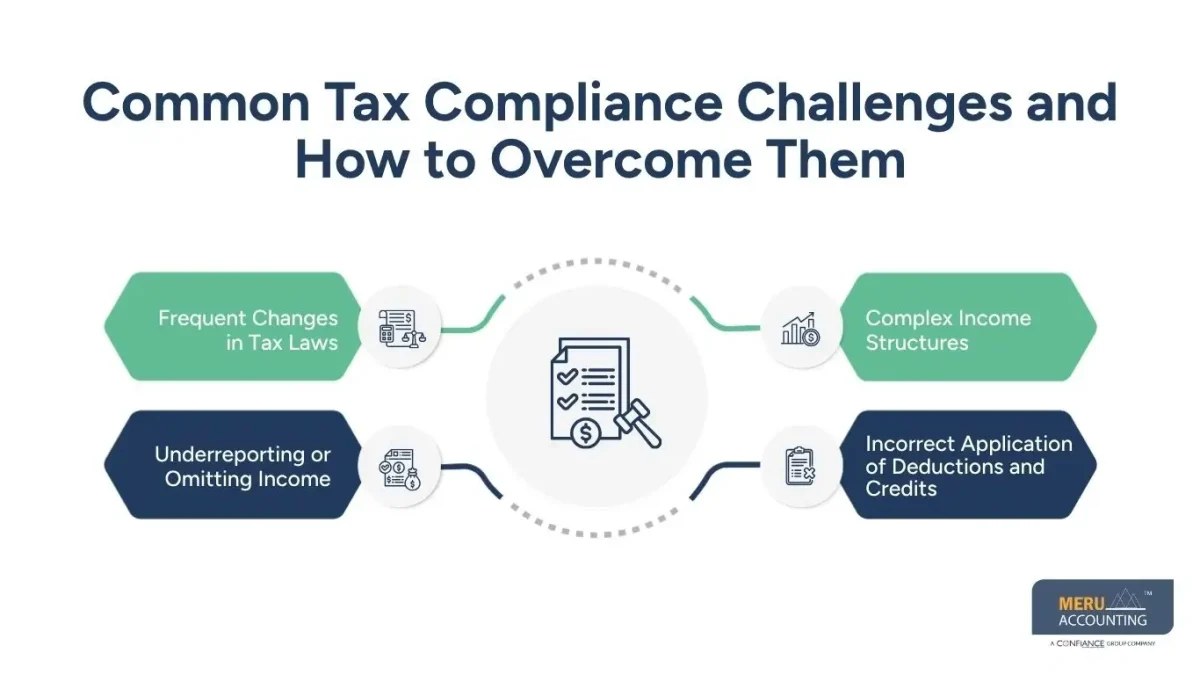
Underreporting or Omitting Income
Unintentional or intentional underreporting of income is a common compliance risk that can lead to audits and penalties.
Incorrect Application of Deductions and Credits
Miscalculations or misuse of deductions and credits can result in underpayment or overpayment of taxes, both of which create problems.
How to Address These Challenges
- Professional Assistance: Engage with certified accountants or tax advisors who stay current on tax laws and help optimize total tax liability.
- Tax Software Solutions: Utilize reliable tax software that automates many calculations and helps avoid errors.
- Documentation and Record Keeping: Maintain thorough records of income, expenses, and supporting documents for deductions and credits.
- Continuous Education: Participate in tax education programs or workshops to understand latest tax regulations.
Best Practices for Accurate Tax Reporting
Accurate tax reporting is critical for minimizing legal risks and ensuring financial health. Below are best practices that aid in precise tax calculations and compliance.
Organize Financial Records Regularly
Maintain organized and up-to-date records of income, expenses, and financial transactions throughout the tax year.
Use Detailed Expense Tracking
Implement detailed tracking for deductible expenses including receipts, invoices, and relevant proof.
Leverage Professional Accounting Services
Consider employing an accounting firm or a professional tax preparer to verify calculation accuracy and identify tax planning opportunities.
Reconcile Tax Payments
Regularly reconcile withholdings and estimated tax payments to avoid underpayment or overpayment.
Run Multiple Calculations
Perform mock calculations or use different tax software to cross-check total tax liabilities figures.
- Verify income reported on W-2s matches personal records.
- Double-check all forms and schedules before filing.
- Prepare for potential audits by maintaining an organized file system.
- Use online IRS tools to confirm tax payments and balance due.
- Stay informed about changes in deduction limits and credit qualifications.
Technology and Tools to Calculate Total Tax Liability
In the digital age, technology plays a pivotal role in simplifying tax calculations and compliance.
Tax Preparation Software
Popular tax software such as TurboTax, TaxAct, and H&R Block offer guided processes that calculate total tax liabilities based on user inputs and recent tax regulations.
Accounting Software Integration
For businesses, integrating accounting software like QuickBooks, Xero, or FreshBooks with tax calculation tools ensures smooth data synchronization and reduces human error.
Mobile Applications
Mobile apps allow individuals and small businesses to track expenses in real-time, capture receipts, and calculate total tax liabilities on-the-go.
Online Calculators and IRS Tools
The IRS and various tax authorities provide online calculators and resources for taxpayers to estimate taxes accurately.
Meru Accounting: Your Trusted Partner in Tax Compliance
Meru Accounting is a dedicated accounting firm specializing in helping individuals and businesses navigate the complexities of total tax liability calculation and compliance. With years of industry experience, their expert team delivers personalized services including tax planning, reporting, audit assistance, and financial consulting. Meru Accounting is committed to leveraging the latest accounting technologies and adherence to ever-changing tax regulations to provide accurate, timely, and compliant financial solutions. Their client-focused approach ensures that each taxpayer understands their total tax liability and benefits from strategic advice tailored to optimize tax outcomes.
Conclusion
Calculating total tax liabilities accurately and maintaining consistent compliance with tax regulations is integral to financial stability and legal responsibility. By understanding the components of total tax liability, following a structured calculation process, leveraging technology, and seeking professional guidance when necessary, taxpayers can effectively manage their tax obligations. Businesses and individuals alike benefit from meticulous record-keeping, continuous education, and strategic tax planning initiatives. Firms like Meru Accounting serve as invaluable resources to reduce complexities, avoid penalties, and enhance overall tax compliance.
Careful focus on accuracy and transparency in tax reporting ultimately empowers taxpayers to meet their responsibilities confidently while optimizing their financial health.
FAQs
What is total tax liabilities?
Total tax liabilities are the total amount of tax that an individual or business owes to tax authorities for a specific period, including income, payroll, sales, and other applicable taxes.
How do I calculate my total tax liability?
To calculate total tax liabilities, add up all applicable taxes such as income tax, self-employment tax, payroll tax, and any other relevant taxes owed for the reporting period.
What records are important for accurate tax reporting?
Maintaining accurate financial records such as income statements, receipts, expense logs, and payroll records is crucial to ensure precise total tax liability calculation and compliance.
How can I ensure compliance with tax laws?
Stay informed about current tax regulations, accurately report all income and deductions, file tax returns on time, and consult with tax professionals when necessary to ensure compliance.
What tools can help with calculating total tax liabilities?
Tax software, financial accounting systems, and tax advisory services can help accurately calculate total tax liabilities and assist in filing compliant tax returns.


