

Meru Accounting

Trust Accounting: Key Rules Every Law Firm Needs to Get Right

Contents
Want to learn more?
Subscribe for business tips, tax updates, financial fundamental and more


    Trust Accounting: Key Rules Every Law Firm Needs to Get Right

    Trust Accounting is a critical aspect of any law firm’s financial operations. It ensures that client funds are handled with care, accuracy, and in compliance with legal regulations. Mistakes in trust accounting can lead to severe penalties, legal complications, and damage to a firm’s reputation.

    In this blog, we will discuss everything law firms need to know about Trust Accounting, including proper systems, internal controls, and best practices. We will also explore how Trust Account Management supports transparency and compliance in legal practice.

    What You Will Learn From This Blog

    • The fundamental principles of Trust Accounting that every law firm must follow


    • Key regulatory and ethical requirements for Trust Account Management


    • Systems and internal controls to ensure accurate handling of client funds


    • Techniques to prevent common errors and maintain transparency


    • Best practices for deposits, withdrawals, and reconciliation


    By the end of this blog, your firm will be equipped with essential knowledge to manage client funds responsibly and avoid costly mistakes.

    Overview Of Trust Account Management In Legal Practice

    Understanding Trust Accounts

    Trust accounts are separate bank accounts used exclusively to hold client funds. They cannot be used for operational expenses. Proper Trust Account Management ensures that funds are never mixed with a law firm’s personal or business accounts.

    Purpose Of Trust Fund Management

    The primary purpose of proper account oversight is to protect clients’ money and maintain ethical compliance. It helps law firms accurately track deposits, withdrawals, and disbursements.

    Role Of Lawyers And Accountants

    Both lawyers and accountants play vital roles in Trust Accounting. Lawyers ensure ethical handling of client funds, while accountants maintain accurate records and reconciliations.

    Common Types Of Trust Accounts

    Law firms often use IOLTA (Interest on Lawyers’ Trust Accounts) accounts, client-specific accounts, or joint trust accounts, depending on jurisdictional regulations.

    Legal Implications

    Improper handling of trust accounts can result in fines, license suspension, or civil liability. Law firms must follow state and federal guidelines to avoid legal issues.

    Fundamental Principles Every Law Firm Must Follow To Maintain Compliance

    Segregation Of Funds

    Client funds must be kept separate from a law firm’s operating accounts. Mixing funds can lead to severe penalties and breach of ethical obligations. This separation protects client money and helps avoid compliance violations.

    Accurate Record-Keeping

    Maintaining detailed records of all transactions is essential. Effective Trust Accounting practices help in audits, prevent misappropriation, and allow easy tracking of each client’s balance.

    Timely Deposits And Withdrawals

    Funds should be deposited promptly into the trust account and withdrawals should follow strict approval processes. Delays or rushed payments can increase the risk of errors and disputes.

    Clear Documentation

    Every transaction should have supporting documentation, such as invoices or client authorizations, ensuring transparency and accountability. Proper documents provide proof and support during reviews or audits.

    Regular Reconciliation

    Reconcile trust accounts at least monthly using Trust Accounting procedures to identify discrepancies, prevent errors, and ensure compliance with Trust Fund Management rules. Frequent reconciliation helps catch problems early before they grow larger.

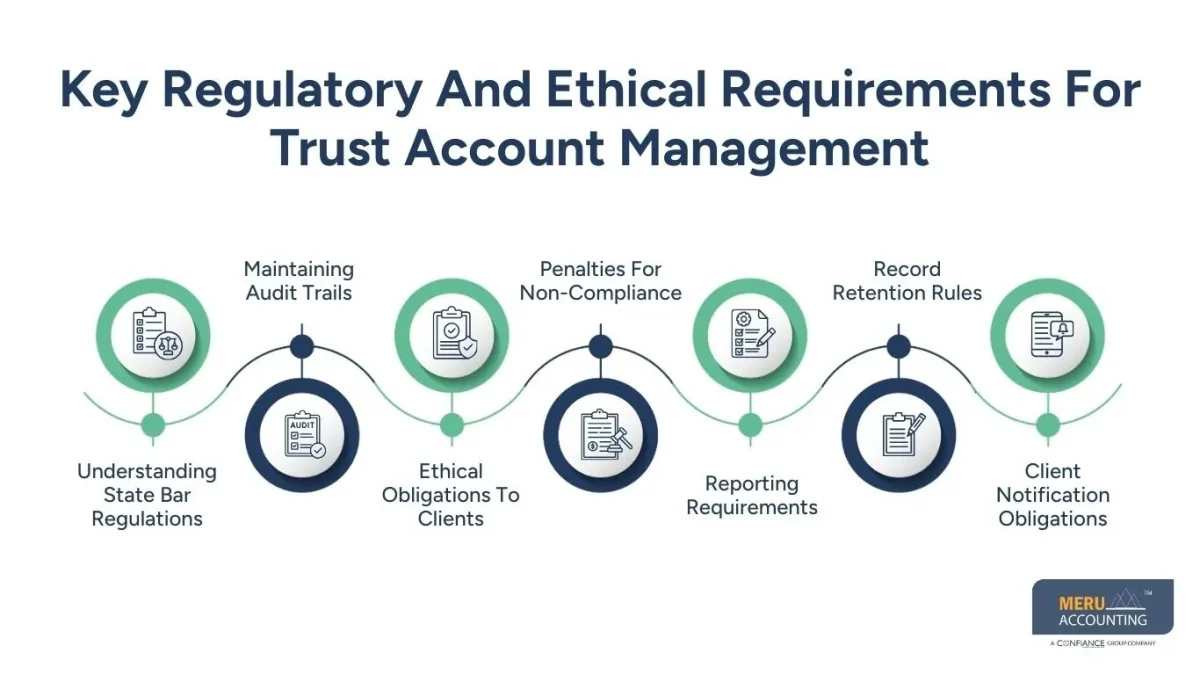
    Key Regulatory And Ethical Requirements For Trust Account Management

    Understanding State Bar Regulations

    Law firms must familiarize themselves with state bar regulations governing trust accounts. Compliance ensures protection against legal violations. Rules may differ by jurisdiction, so regular review is necessary.

    Maintaining Audit Trails

    An audit trail documents all transactions and provides evidence of ethical management of client funds. It helps confirm where money came from and how it was used.

    Ethical Obligations To Clients

    Trust Accounting reflects a law firm’s integrity. Mismanagement can damage client relationships and the firm’s reputation. Clients expect their funds to be handled with care and honesty.

    Penalties For Non-Compliance

    Violations may result in fines, sanctions, or suspension of the law license, emphasizing the importance of accurate Trust Account Management. Even small mistakes can lead to serious consequences.
    Trust Accounting

    Reporting Requirements

    Some jurisdictions require periodic reporting to regulatory authorities. Staying updated with reporting standards avoids legal complications. Missing reports can trigger audits or disciplinary action.

    Record Retention Rules

    Law firms are required to retain trust account records for a specific number of years. Proper storage ensures records are available when requested.

    Client Notification Obligations

    Clients may need to be informed about trust account activity related to their funds. Clear communication supports transparency and trust.

    Strategies For Setting Up Reliable Systems, Internal Controls, And Standard Procedures

    Choosing The Right Accounting System

    Use accounting software designed for legal practices to manage trust accounts efficiently. It helps track deposits, withdrawals, and balances automatically. The right system also reduces manual errors and saves time.

    Establishing Internal Controls

    Internal controls, such as dual approval for withdrawals, reduce the risk of fraud and errors in Trust Accounting. They create checks that support accountability and accuracy.

    Standard Operating Procedures

    Create documented procedures for deposits, disbursements, and reconciliation to ensure consistency across the firm. Written procedures help staff follow the same steps every time.

    Staff Training

    Educate staff on account handling rules to minimize mistakes and improve compliance. Training helps everyone clearly understand their roles and responsibilities.

    Periodic Reviews

    Regularly review systems and procedures to identify gaps and implement improvements for better Trust Accounting practices. Reviews help keep processes current and effective.

    Best Practices For Handling Deposits, Withdrawals, And Proper Reconciliation

    Depositing Client Funds Promptly

    Funds should be deposited into the trust account as soon as they are received. This prevents misallocation and ensures accurate records. Prompt deposits also reduce the risk of misplaced or unrecorded funds.

    Withdrawal Authorization

    Ensure withdrawals are authorized by designated personnel and supported by proper documentation. This step helps confirm that funds are released for valid purposes only.

    Monthly Reconciliation

    Compare bank statements with the accounting records monthly to detect discrepancies early. Regular reconciliation helps correct errors before they affect clients.

    Handling Miscellaneous Expenses

    Never use trust accounts for operating expenses. Maintain clear separation between client funds and firm funds. Firm costs should always be paid from business accounts, not trust accounts.

    Record Retention

    Keep detailed records of all deposits, withdrawals, and reconciliations for the duration required by law. Proper record storage supports audits and compliance reviews.

    Techniques To Prevent Common Errors In Trust Accounting

    • Review every transaction carefully to confirm amounts, dates, and client details are correct. This helps prevent small mistakes from becoming larger issues.

    • Maintain separate ledgers for each client to avoid confusion and reduce errors in Trust Account Management. Clear separation improves accuracy and tracking.

    • Use accounting software to automate reconciliations and set alerts for unusual transactions. Automation helps reduce manual entry errors.

    • Conduct internal audits on a regular basis to identify mistakes or potential misuse early. Audits support ongoing compliance.

    • Provide regular training to staff on trust account procedures and regulatory updates. Ongoing education helps reduce errors and keeps practices consistent.

    How To Maintain Transparency In Handling Client Trust Accounts

    • Provide clients with regular statements showing the balance and activity in their trust accounts. This keeps them informed and confident in how their funds are handled.

    • Keep clients updated about their funds and any pending transactions. Open communication builds trust and avoids misunderstandings.

    • Document all deposits, withdrawals, and transfers with proper authorizations. Clear records support accountability and transparency.

    • Engage an independent auditor periodically to review trust accounts and verify compliance. Independent checks reinforce accuracy and trustworthiness.

    • Promote a firm-wide culture of ethical compliance and transparency. Encouraging everyone to follow best practices strengthens overall account handling processes.

    Meru Accounting’s Expertise in Trust Accounting and Trust Account Management

    Professional Trust Account Administration Services

    Meru Accounting specializes in Trust Accounting and Trust Account Management for law firms, ensuring compliance with all legal and ethical requirements. This expertise helps firms avoid errors and maintain full regulatory compliance.

    Tailored Solutions

    We provide customized accounting systems and procedures to suit your law firm’s size and structure. Solutions are designed to fit your firm’s unique workflow and requirements.

    Internal Controls Implementation

    Our team helps establish strong internal controls to prevent errors and fraud in trust accounts. Proper controls strengthen accountability and reduce risk in financial management.

    Regular Audits And Reviews

    Meru Accounting conducts periodic audits to verify the accuracy and compliance of trust accounts. Audits help detect discrepancies early and maintain trust with clients.

    Transparent Reporting

    We provide clear and detailed reports on all trust account activity for law firms and their clients. Transparent reporting improves client confidence and simplifies regulatory checks.

    Key Takeaways

    • Trust Accounting is essential for law firms to maintain client trust and comply with regulations.

    • Segregation of funds, accurate record-keeping, and timely reconciliation are critical principles.

    • Law firms must follow regulatory and ethical guidelines for Trust Account Management to avoid penalties.

    • Reliable systems, internal controls, and standard procedures reduce the risk of errors.

    • Transparency and regular reporting strengthen client confidence and minimize disputes.

    FAQs

    Trust Accounting is handling client funds in separate accounts. It protects client money and ensures legal compliance.

    Professional Trust Account Administration Services tracks all deposits, withdrawals, and reconciliations. This keeps the firm ethical and legally compliant.

    Mixing client and business funds, late deposits, missing documentation, and irregular reconciliations are common errors.

    Use proper accounting systems, separate ledgers, monthly reconciliations, and staff training to reduce mistakes.

    Review trust account practices at least annually or after regulatory changes. Regular reviews prevent errors and ensure compliance.