



Trust tax preparation is an important part of managing trusts and ensuring that all tax obligations are met correctly. Trusts are often used to manage assets, protect wealth, and transfer property to beneficiaries.
However, once a trust is created, it must follow certain tax rules and filing requirements. Proper trust tax compliance helps trustees avoid penalties, maintain compliance, and ensure accurate reporting of income and distributions.
Many trustees and beneficiaries also deal with estate and trust tax filing at the same time, especially when a trust is connected to an estate. Understanding the tax rules for trusts can help prevent mistakes and make financial management easier.
In this blog, we will explain how trust tax filing works, the filing requirements involved, and the best practices that help trustees handle taxes correctly.
What You Will Learn From This Blog
- Understand the basics of trust taxation and learn how trust income is taxed and why proper trust tax filing is important for trustees and beneficiaries.
- Learn about the different types of trusts and how each trust structure follows different tax rules that can affect trust tax filing.
- Gain knowledge about the filing requirements that trustees must follow when preparing and submitting tax returns as part of proper estate and trust tax preparation.
- Identify common tax challenges that may arise during trust tax filing, including complex reporting and income allocation issues.
- Explore practical practices for tax compliance, including accurate documentation and professional assistance that can improve estate and trust tax filing.
Introduction To Trust Tax Preparation
Trust taxation refers to the way income generated by a trust is reported and taxed according to tax regulations. Trusts may earn income from different sources such as investments, rental properties, dividends, or interest.
Because of these income activities, proper trust tax preparation is necessary to ensure that all income, deductions, and distributions are reported correctly. Accurate trust tax filing helps maintain clear financial records and supports correct tax filing.
Trustees play an important role in managing the trust and ensuring that tax responsibilities are handled properly. They are responsible for filing trust tax returns and managing the financial activities of the trust.
In many cases, beneficiaries may also need to report the income they receive from a trust, which is why estate and trust tax filing often involves both trustees and beneficiaries working together.
Trusts must follow tax rules established by tax authorities, and failing to comply with these rules may lead to penalties or reporting issues. Regular and organized trust tax return preparation helps ensure compliance with tax regulations and makes it easier for trustees to manage their responsibilities.
Proper documentation and reporting also support smooth estate and trust tax filing for both the trust and its beneficiaries.
Types Of Trusts And Their Tax Implications
Revocable trusts
Revocable trusts allow the grantor to change or cancel the trust. In most cases, the income is taxed to the grantor, which affects trust tax return preparation.
Irrevocable trusts
Irrevocable trusts cannot be easily modified. These trusts often have separate tax responsibilities, making estate and trust tax return preparation more detailed.
Grantor trusts
In grantor trusts, the grantor remains responsible for paying taxes on trust income. Understanding this structure simplifies tax filing.
Non-grantor trusts
Non-grantor trusts are treated as separate tax entities. Trustees must file tax returns for these trusts as part of estate and trust tax preparation.
Charitable trusts
Charitable trusts provide benefits to charities while offering tax advantages. These structures require careful planning during trust tax filing.
Core Filing Responsibilities in Estate and Trust Tax Preparation
Determining filing obligations
Trustees must determine whether a trust needs to file a tax return. This is one of the first steps in trust tax filing.
Reporting trust income
All income generated by the trust must be reported. Accurate reporting is essential for both tax preparation and compliance.
Identifying deductions
Trusts may qualify for deductions related to administrative expenses. Identifying these deductions improves estate and trust tax preparation accuracy.
Filing annual tax returns
Many trusts must file annual tax returns depending on income levels. Proper trust tax filing ensures these filings are completed on time.
Issuing beneficiary tax documents
Beneficiaries may receive tax documents that show the amount of income distributed to them from the trust. These documents help beneficiaries report their income correctly when filing their personal tax returns.
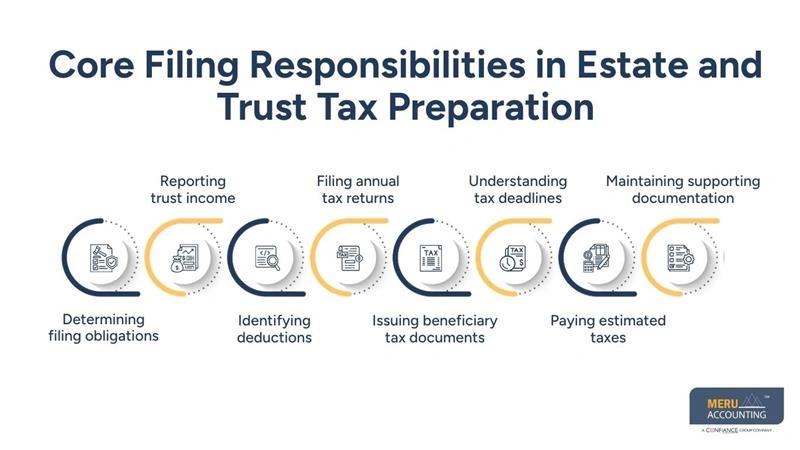
Understanding tax deadlines
Trustees must follow specific tax filing deadlines for trust returns. Meeting these deadlines is essential for smooth tax preparation and avoiding penalties.
Paying estimated taxes
Some trusts may need to make estimated tax payments during the year based on their income. This helps manage tax obligations and avoid unexpected tax liabilities at the time of filing.
Maintaining supporting documentation
Trustees should maintain records of income, expenses, and distributions. Proper documentation helps ensure accurate tax preparation and easier tax verification.
Common Challenges In Trust Tax Preparation
Complex tax regulations
Trust taxation involves rules that differ from standard individual tax filings. Understanding these regulations is essential for accurate and compliant tax preparation.
Managing multiple income sources
Trusts often receive income from investments, dividends, rentals, and interest. Tracking these sources carefully supports accurate estate and trust tax preparation.
Allocation of income to beneficiaries
Trust income must be properly allocated between trust accounts and beneficiaries. Incorrect allocation can create errors during trust tax filing and reporting.
Maintaining accurate documentation
Missing or incomplete records can cause problems when preparing trust tax returns. Keeping clear and organized documentation helps ensure accurate reporting and smoother tax filing.
Meeting filing deadlines
Missing important filing deadlines may lead to penalties and compliance issues. Organized trust tax return preparation helps ensure timely and accurate tax return filing.
Best Practices For Trust Tax Preparation
Keep financial records organized
Maintaining accurate financial records helps simplify the overall tax filing process. Organized documentation improves accuracy and reduces errors during tax filing.
Monitor income and distributions
Trustees should track trust income and beneficiary distributions regularly. Regular monitoring helps manage estate and trust tax return preparation more efficiently.
Review trust documents carefully
Trust documents clearly explain how income should be distributed. Careful review supports proper decisions during trust tax filing.
Consult qualified tax professionals
Professional tax experts understand the complexities involved in trust taxation. Their guidance improves accuracy in estate and trust tax filing.
Plan for tax efficiency
Effective tax planning helps reduce unnecessary tax liabilities for trusts. Planning ahead improves the overall process of trust tax compliance.
Key Tax Forms Used In Trust Tax Filing
Form 1041 – U.S. Income Tax Return for Estates and Trusts
Form 1041 is commonly used to report trust income, deductions, and distributions. It is a central part of trust tax return preparation.
Schedule K-1
Schedule K-1 shows each beneficiary’s share of income. It supports accurate estate and trust tax preparation.
Estimated tax payment forms
Trusts may need to make estimated tax payments during the year. This step is included in proper trust tax compliance.
State tax forms
Some states may require trusts to file additional tax returns based on local tax rules. These filings must be completed along with the main trust tax return to ensure full compliance.
Supporting documentation forms
Various supporting forms may be required depending on the trust’s activities. These documents help complete the trust tax return preparation correctly.
Record-Keeping Tips For Estate And Trust Tax Preparation
Maintain transaction records
Keeping detailed records of all trust transactions helps simplify estate and trust tax preparation and prevents reporting errors. These records also help trustees review financial activities during trust tax filing.
Store tax documents safely
Important documents such as tax returns and beneficiary statements should be stored securely for future use. Proper storage helps trustees easily access these records when preparing trust tax returns.
Track distributions to beneficiaries
Documenting distributions ensures that income is properly reported in trust tax compliance. Clear records also help confirm each beneficiary’s share during estate and trust tax compliance.
Maintain investment records
Investment statements help confirm income details during estate and trust tax preparation. These records also support accurate reporting of interest, dividends, and capital gains.
Keep historical tax filings
Previous tax filings help confirm financial information and make future trust tax return preparation easier. They also serve as helpful records when reviewing past tax filings.
How Meru Accounting Supports Trust Tax Preparation
- Managing trust taxes requires accuracy, proper documentation, and knowledge of tax regulations.
- Meru Accounting provides professional support for trust tax filing, helping trustees handle tax responsibilities confidently.
- Our team assists with tax filing, financial reporting, and compliance for trusts and estates. We also support accurate estate and trust tax preparation for correct income and deduction reporting.
- We help clients maintain organized financial records and proper documentation. This improves accuracy and efficiency during tax preparation.
- Our experts help trustees meet tax filing deadlines and reduce the risk of errors. This helps ensure smoother tax return preparation and better compliance with tax requirements.
- Our services support trustees, beneficiaries, and financial managers managing trust taxation. We provide reliable guidance for effective and accurate trust tax filing.
Key Takeaways
- Trust tax preparation helps trustees meet tax obligations and maintain compliance.
- Different types of trusts have different tax responsibilities.
- Filing requirements include reporting income, deductions, and beneficiary distributions.
- Accurate records simplify both tax preparation and estate and trust tax preparation.
- Professional guidance can help trustees manage complex tax situations effectively.
FAQs
Trust tax preparation is the process of reporting income, deductions, and distributions for a trust. It is important because it helps trustees follow tax rules and avoid penalties.
Trust tax filing requires trustees to report trust income and file the appropriate tax return when the trust meets certain income limits.
The most common form used for trust tax filing is Form 1041, which reports income, deductions, and beneficiary distributions.
During estate and trust tax preparation, beneficiaries may receive tax documents showing the income they must report on their personal tax returns.
Trustees should keep records of income, expenses, investment statements, and beneficiary distributions to support accurate trust tax return preparation.


