


A virtual accountant is becoming an essential part of modern businesses that want to manage finances in a simple and organized way. Instead of handling accounts manually or relying only on in-house teams, businesses now prefer a virtual accountant to streamline tasks, reduce errors, and stay compliant.
With the help of virtual accounting solutions, companies can manage their financial processes efficiently without adding extra workload. Managing finances can often feel overwhelming, especially for growing businesses.
A remote accountant helps reduce this burden by handling bookkeeping, reporting, and compliance remotely. These professionals use remote accounting solutions to provide accurate and timely financial data, allowing business owners to focus on growth.
What You Will Learn From This Blog
- How a virtual accountant works and supports businesses
- Reasons companies are moving toward virtual accounting solutions
- Key features that make these services effective
- Ways a remote accountant simplifies financial tasks
- Differences between virtual and traditional accountants
- Benefits across different industries
- Tips to choose the right remote accountant
- Common challenges and how to solve them
Introduction To Virtual Accountant Services
A virtual accountant provides businesses with a simple and efficient way to manage finances without the need for a physical office presence. By working remotely, a remote accountant uses cloud-based tools to handle tasks such as bookkeeping, reporting, and financial tracking.
This approach ensures continuous support while reducing the need for in-house resources, making it a practical option for businesses of all sizes. With the help of virtual accounting services, financial data is stored securely online and can be accessed anytime, from anywhere.
This gives business owners the flexibility to review reports, monitor performance, and make informed decisions without delays. A remote accountant also provides real-time reporting, allowing companies to stay updated on their financial position and plan ahead with confidence.
Another key advantage is cost efficiency and flexibility. Hiring a virtual accountant is often more affordable than maintaining a full-time accounting team, as it eliminates expenses like office space and employee benefits.
Additionally, businesses can scale services up or down based on their needs, making virtual accounting solutions a highly adaptable choice for growing organizations.
Why Businesses Are Switching To A Virtual Accountant
Reduced Operational Costs
A virtual accountant eliminates expenses related to office space, training, and employee benefits. This helps businesses allocate their budget to core activities and growth initiatives.
Better Flexibility
Businesses can choose services as needed without long-term commitments using virtual accounting services. This allows companies to adjust support based on workload and seasonal demands.
Access To Expertise
A remote accountant brings experience from different industries, improving financial management quality. This ensures businesses get professional insights without hiring multiple specialists.
Improved Accuracy
Automation in remote accounting solutions reduces manual errors and improves data accuracy. Regular checks by a virtual accountant further ensure reliable and error-free records.
Time Savings
Business owners save time by outsourcing accounting tasks to a remote accountant. This allows them to focus more on business strategy and daily operations.
Key Features Of Virtual Accounting Solutions
Automated Bookkeeping
Virtual accounting solutions automate daily bookkeeping tasks, reducing manual effort. This ensures transactions are recorded accurately and consistently without delays.
Secure Data Storage
A virtual accountant ensures that financial data is stored securely using cloud technology. Advanced security measures protect sensitive information from unauthorized access.
Real-Time Insights
Businesses receive instant updates on financial performance through dashboards and reports. This helps in making quick and informed business decisions at the right time.
Integration With Tools
Virtual accounting services can integrate with other software like CRM and payroll systems. This creates a smooth workflow by connecting all financial and operational data in one place.
Compliance Management
A remote accountant helps maintain compliance with tax laws and financial regulations. Timely updates and filings reduce the risk of penalties and legal issues.
How A Virtual Accountant Simplifies Financial Processes
Streamlined Bookkeeping
A virtual accountant keeps records updated regularly, ensuring no backlog in financial entries.
This helps businesses maintain organized and accurate financial data at all times.
Easy Tax Preparation
With organized data from remote accounting solutions, tax filing becomes simple and timely.
This reduces last-minute stress and ensures compliance with tax deadlines.
Cash Flow Monitoring
A remote accountant tracks income and expenses, helping maintain a healthy cash flow.
Regular monitoring helps businesses avoid shortages and plan expenses better.
Financial Reporting
Detailed reports provided by remote accounting solutions help in analyzing business performance.
These insights support better planning and informed decision-making.
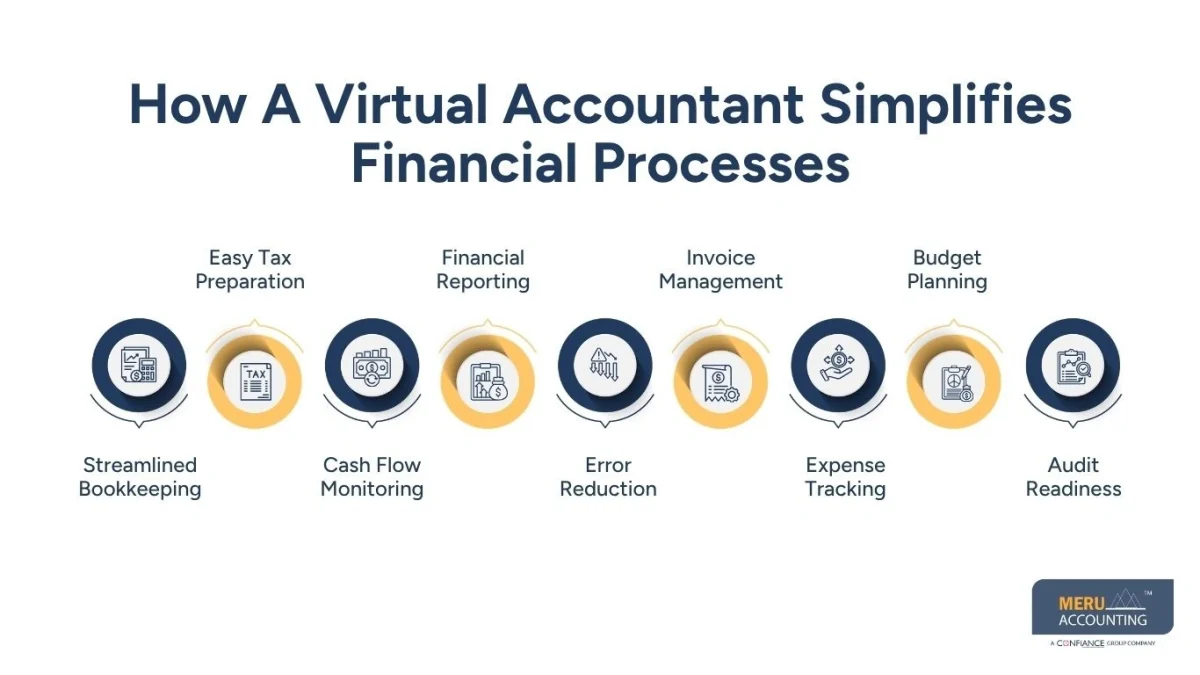
Error Reduction
Automation and expert review by a virtual accountant minimize mistakes in financial records.
This improves accuracy and reduces the risk of costly financial errors.
Invoice Management
A remote accountant handles invoicing, ensuring timely billing and follow-ups. This improves payment cycles and reduces outstanding receivables.
Expense Tracking
Virtual accounting solutions track and categorize expenses efficiently. This helps businesses control spending and identify cost-saving opportunities.
Budget Planning
A remote accountant assists in creating and managing budgets effectively. This ensures better financial control and supports long-term business goals.
Audit Readiness
With well-maintained records, a remote accountant keeps businesses prepared for audits. This reduces stress and ensures smooth audit processes when required.
Virtual Accountant Vs Traditional Accountant: A Detailed Comparison
|
Aspect |
Virtual Accountant |
Traditional Accountant |
|
Work Approach |
A remote accountant works remotely using cloud-based tools. |
Traditional accountants usually work on-site in an office setting. |
|
Cost Difference |
Virtual accounting solutions are more affordable and reduce overhead costs. |
In-house accounting involves higher costs like salaries, space, and benefits. |
|
Accessibility |
Data can be accessed anytime from anywhere with a remote accountant. |
Access is often limited to office hours or physical records. |
|
Technology Usage |
Virtual accounting services rely on modern software and automation. |
Traditional methods may still involve manual processes and paperwork. |
|
Scalability |
A virtual accountant offers flexible services that can scale easily. |
Scaling requires hiring more staff and increasing resources. |
Top Benefits Of Using Virtual Accounting Solutions For Businesses
- Virtual accounting solutions automate repetitive tasks, saving time and improving overall efficiency in financial operations.
- A virtual accountant provides clear financial insights that help business owners make better and more informed decisions.
- Automation in virtual accounting services reduces human errors and improves the accuracy of financial data.
- Hiring a remote accountant helps reduce overhead costs such as salaries, office space, and employee benefits.
- With accurate and real-time data from virtual accounting services, businesses can plan and support long-term growth effectively.
Industries That Benefit Most From A Virtual Accountant
Startups And Small Businesses
A remote accountant helps startups and small businesses manage limited resources effectively. It provides professional financial management without the need for a full-time in-house team.
E-commerce Businesses
Virtual accounting solutions handle high transaction volumes efficiently. This ensures timely bookkeeping, invoicing, and accurate financial reporting for online businesses.
Real Estate
A virtual accountant manages property income, expenses, and ensures tax compliance. This simplifies financial processes for property managers, investors, and real estate agencies.
Healthcare Services
Financial records in healthcare are maintained accurately using virtual accounting services. It helps clinics and medical practices focus on patient care while keeping finances organized.
Professional Services
Consultants and agencies benefit from the flexibility offered by a remote accountant. They gain access to expert financial insights without the overhead of hiring in-house staff.
How To Choose The Right Virtual Accountant For Your Business
Check Experience
Select a remote accountant with relevant industry experience. Experienced accountants understand specific financial challenges and can provide practical solutions.
Evaluate Technology
Ensure they use reliable remote accounting solutions for better results. Modern tools help streamline processes and improve data accuracy.
Understand Pricing
Choose a virtual accountant whose pricing fits your budget. Transparent pricing prevents unexpected costs and ensures long-term affordability.
Review Client Feedback
Look for reviews and testimonials to assess service quality. Positive feedback indicates reliability and consistent performance.
Communication Skills
A good remote accountant should communicate clearly and regularly. Effective communication ensures you stay informed and confident in financial decisions.
Common Challenges And How Virtual Accounting Solutions Solve Them
Data Security Concerns
Virtual accounting solutions use advanced security measures to protect financial data. Encrypted storage and secure access protocols keep sensitive information safe from breaches.
Lack Of Control
A virtual accountant provides regular updates to maintain transparency. Businesses can review financial reports anytime, ensuring full visibility over their finances.
Integration Issues
Modern virtual accounting services easily connect with existing systems. This allows a seamless flow of data between accounting, payroll, and other business software.
Communication Gaps
A remote accountant ensures consistent communication through online tools. Scheduled updates and prompt responses keep all financial matters clear and on track.
Resistance To Change
With proper guidance, businesses can easily adapt to virtual accounting services. Training and support help employees and stakeholders embrace new accounting processes smoothly.
Why Choose Meru Accounting For Virtual Accountant Services
Experienced Team
Meru Accounting offers a skilled remote accountant team with expertise across industries. Our professionals bring years of experience to handle complex financial tasks efficiently.
Customized Services
At Meru Accounting, we provide tailored remote accounting solutions based on your business needs. Each solution is designed to fit your specific industry, size, and financial goals.
Affordable Pricing
Our services are designed to be cost-effective without compromising quality. Flexible plans ensure you get professional accounting support within your budget.
Advanced Tools
We use modern virtual accounting solutions to deliver accurate and timely results. Cloud-based software and automation enhance efficiency and reporting accuracy.
Reliable Support
Our virtual accountant team ensures consistent communication and support. At Meru Accounting, we are always available to address queries, provide updates, and guide your financial decisions.
Key Takeaways
- A virtual accountant helps simplify financial management
- Virtual accounting solutions improve accuracy and efficiency
- Businesses save time and reduce costs with remote accounting
- Real-time data supports better financial decisions
- Many industries benefit from using a remote accountant
- Choosing the right service provider is important for success
FAQs
A virtual accountant manages bookkeeping, reporting, and taxes remotely using online tools.
Yes, virtual accounting solutions use secure systems to protect your financial data.
The cost depends on services, but it is usually lower than hiring a full-time accountant.
Yes, small businesses benefit greatly from the cost savings and flexibility.
You can begin by choosing a trusted provider and sharing your financial data securely.


