

Managing finances is one of the most important aspects of running a successful business. However, for many small business owners, handling bookkeeping, taxes, and financial reporting can be overwhelming and time-consuming. This is where a virtual accountant for small business becomes a valuable asset.
A virtual accountant provides remote financial services, allowing businesses to manage their accounts efficiently without hiring an in-house team. With the rise of digital tools and cloud-based accounting systems, virtual accounting has become a preferred solution for startups and growing businesses.
In this blog, we’ll explore how a virtual accountant for small business can help improve financial accuracy, ensure compliance, and support long-term growth.
What is a Virtual Accountant?
A virtual accountant is a professional who provides accounting services remotely using digital platforms and cloud-based software. Instead of working on-site, they manage financial tasks from a remote location while maintaining real-time access to financial data.
Services offered by a virtual accountant include:
- Bookkeeping and transaction management
- Financial reporting and analysis
- Tax preparation and compliance
- Payroll processing
- Budgeting and forecasting
A virtual accountant for small business offers flexible and scalable solutions tailored to the needs of growing companies.
Benefits of Hiring a Virtual Accountant for Small Business
Hiring a virtual accountant for small business offers several advantages that can significantly improve financial management and efficiency.
1. Cost-Effective Solution
One of the biggest benefits of hiring a virtual accountant is cost savings. Small businesses can avoid expenses related to salaries, office space, and employee benefits. A virtual accountant provides professional services at a fraction of the cost of an in-house team.
2. Access to Expertise
A virtual accountant brings specialized knowledge and experience in handling various financial tasks. They stay updated with changing tax laws and accounting standards, ensuring accurate and compliant financial management.
3. Improved Accuracy
Errors in financial records can lead to serious consequences. A virtual accountant for small business uses advanced tools and proven processes to maintain accuracy and reduce the risk of mistakes.
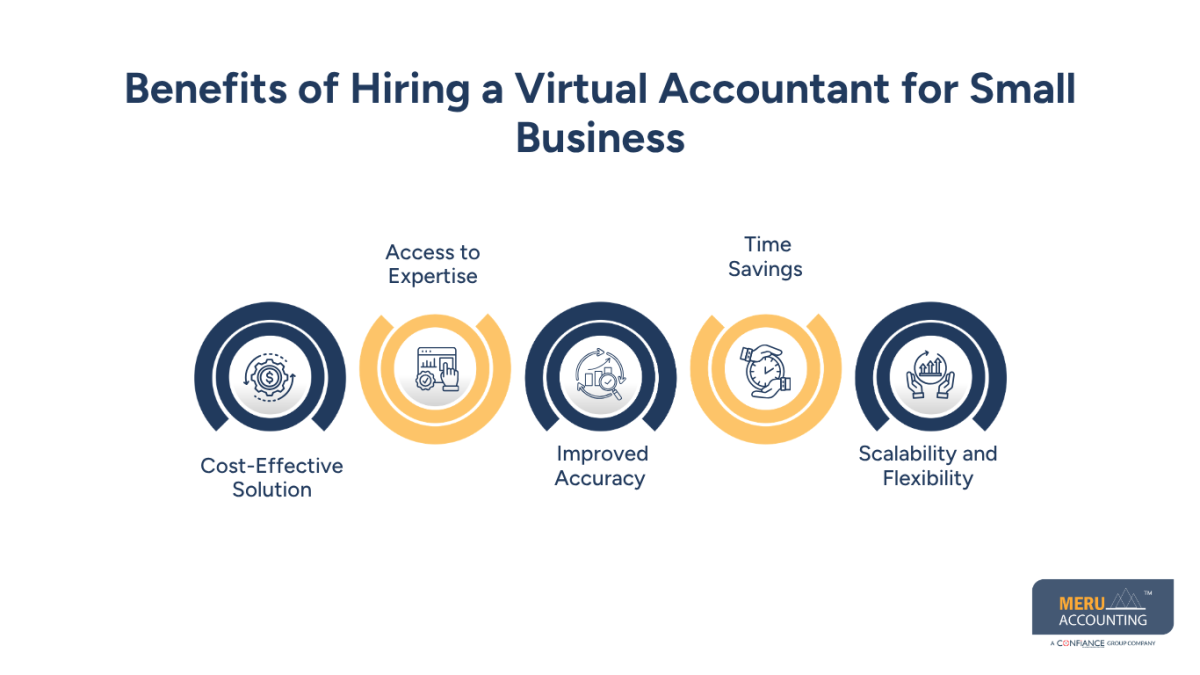
4. Time Savings
By outsourcing accounting tasks, business owners can focus on core operations such as sales, marketing, and customer service. A virtual accountant handles routine financial tasks efficiently, saving valuable time.
5. Scalability and Flexibility
As a business grows, its financial needs evolve. A virtual accountant for small business offers scalable services, allowing businesses to adjust support based on their requirements.
Key Services Offered by a Virtual Accountant
A virtual accountant for small business provides a wide range of services designed to streamline financial operations:
1. Bookkeeping Services
Recording daily transactions, maintaining ledgers, and ensuring accurate financial records.
2. Financial Reporting
Preparing profit and loss statements, balance sheets, and cash flow reports for better decision-making.
3. Tax Preparation and Compliance
Ensuring timely and accurate tax filing while minimizing liabilities.
4. Payroll Management
Handling employee salaries, deductions, and tax compliance efficiently.
5. Budgeting and Forecasting
Helping businesses plan for future growth with accurate financial projections.
How a Virtual Accountant Improves Business Efficiency
Efficiency is crucial for business success. A virtual accountant enhances efficiency by:
- Automating repetitive accounting tasks
- Providing real-time financial insights
- Reducing manual errors
- Streamlining workflows
With the support of a virtual accountant for small business, companies can make informed decisions and operate more effectively.
Why Small Businesses Should Choose Virtual Accounting
Small businesses often face challenges such as limited resources, tight budgets, and lack of financial expertise. A virtual accountant for small business helps overcome these challenges by offering:
- Affordable and flexible services
- Access to professional expertise
- Improved financial control
- Better compliance with regulations
This makes virtual accounting an ideal solution for startups and growing companies.
Choosing the Right Virtual Accountant for Small Business
Selecting the right virtual accountant is essential for achieving the desired results. Here are some factors to consider:
1. Experience and Qualifications
Ensure the accountant has relevant experience and expertise in your industry.
2. Technology and Tools
Look for professionals who use modern accounting software and cloud-based systems.
3. Data Security
Verify that the accountant follows strict data protection measures.
4. Communication
Choose a virtual accountant who provides clear and timely communication.
5. Customization
A good virtual accountant for small business should offer tailored solutions based on your needs.
Challenges of Hiring a Virtual Accountant and How to Overcome Them
While hiring a virtual accountant offers many benefits, there are some challenges:
1. Communication Gaps
Time zone differences can cause delays. Regular meetings and clear communication channels can help.
2. Data Security Concerns
Working with a trusted provider ensures data confidentiality and security.
3. Integration with Existing Systems
Choosing compatible software helps ensure smooth operations.
By addressing these challenges, businesses can maximize the benefits of a virtual accountant.
Why Choose Meru Accounting for Virtual Accounting Services
Meru Accounting is a trusted partner for businesses seeking reliable financial solutions. With extensive experience and a team of skilled professionals, Meru Accounting offers tailored services to meet the unique needs of small businesses.
Key benefits include:
- Experienced virtual accountants
- Cost-effective solutions
- Advanced technology and tools
- Accurate and timely reporting
- Strong data security measures
A virtual accountant for small business from Meru Accounting ensures efficient financial management and supports long-term growth.
Future of Virtual Accounting
The future of accounting is digital. With advancements in cloud computing, automation, and artificial intelligence, virtual accounting is becoming more efficient and accessible.
Businesses are increasingly adopting virtual accounting solutions to stay competitive and improve financial performance. A virtual accountant for small business will continue to play a crucial role in helping companies adapt to changing market conditions.
Conclusion
A virtual accountant for small business is an essential resource for companies looking to improve accuracy, reduce costs, and enhance efficiency. By outsourcing financial tasks to a virtual accountant, businesses can focus on growth while ensuring compliance and financial stability.
For small businesses and startups, virtual accounting is not just a convenience—it’s a strategic advantage. Partnering with experts like Meru Accounting can help businesses achieve better financial control, make informed decisions, and drive long-term success.
FAQs
A virtual accountant for small business provides remote accounting services like bookkeeping, tax filing, and financial reporting.
A virtual accountant helps manage finances, improve accuracy, and ensure tax compliance.
Yes, it reduces costs related to hiring, salaries, and office infrastructure.
Services include bookkeeping, payroll, tax preparation, and financial reporting.
Yes, a virtual accountant ensures accurate tax preparation and timely filing.


