




Introduction to Owner’s Equity on the Balance Sheet
Owner’s equity is a fundamental component of the balance sheet and represents the owner’s residual interest in the assets of a business after liabilities are deducted. Understanding owner’s equity is essential for anyone involved in financial analysis, from investors and creditors to company management. This article delves into why the owner’s equity balance sheet matters, exploring its components, significance, and impact on financial decision-making.
What Is Owner’s Equity?
Owner’s equity, often referred to as shareholders’ equity in corporations or partners’ equity in partnerships, is essentially the net worth of a business from the owner’s perspective. It shows what remains if all the company’s debts and obligations were paid off. This figure helps stakeholders understand the company’s financial health and how much value the owners have in the business.
Key Components of Owner’s Equity
Owner’s equity is not a single figure but a composition of various accounts recorded on the Owner’s equity balance sheet. Some of the primary components of owner’s equity include:
- Common Stock: The par value of all common shares issued by the company.
- Preferred Stock: Shares with priority over common stock for dividends and assets in liquidation.
- Additional Paid-in Capital: Amounts paid by investors above the par value of stock.
- Retained Earnings: Cumulative net income minus dividends paid to shareholders.
- Treasury Stock: Previously issued stock repurchased by the company, which reduces equity.
- Accumulated Other Comprehensive Income: Gains or losses not included in net income.
Importance of Owner’s Equity in Financial Analysis
Owner’s equity is a vital metric for assessing the financial stability and long-term sustainability of a business. It provides insights that are crucial for internal management and external stakeholders alike.
Insight into Financial Position
Owner’s equity depicts the net assets attributable to owners, effectively showing the cushion available to absorb potential losses. A consistently positive and growing owner’s equity indicates a robust financial position.
Indicator of Company Value
While owner’s equity is not the same as market value, it does offer a baseline assessment of a company’s book value. This helps investors determine whether a stock might be undervalued or overvalued relative to its book value.
Implication on Financing and Lending
Creditors analyze owner’s equity to evaluate a company’s creditworthiness. A strong equity base often leads to more favorable loan terms because it signals low risk of insolvency.
How Owner’s Equity Affects Financial Statements
The Owner’s equity balance sheet intertwines with other financial statements primarily via owner’s equity accounts. Changes in equity reflect business activities and transactions impacting overall company performance.
Relationship with the Income Statement
Net income from the income statement directly influences retained earnings within owner’s equity. Profitable operations increase equity, while losses reduce it.
Connection to Cash Flow Statement
Owner-related cash transactions, such as dividend payments or issuance of stock, are recorded in the financing activities section of the cash flow statement and affect owner’s equity accounts.
Detailed Breakdown of Components of Owner’s Equity
Understanding the individual components of owner’s equity is crucial to grasp how a business is financed and how profits or losses impact ownership value.
Common Stock and Paid-in Capital
Common stock represents the shares sold to investors, typically at par value. Additional paid-in capital accounts for any amount investors pay over par value:
- Common Stock: Shows the legal capital invested by shareholders.
- Additional Paid-in Capital: Premium amounts paid above par value indicating investor confidence.
Retained Earnings
Retained earnings reflect cumulative earnings kept in the company rather than distributed as dividends. This component increases when the company earns profits and decreases with losses or dividend payments.
Treasury Stock
Treasury stock represents shares repurchased and held by the company. It reduces total owner’s equity because it is essentially a reduction in capital available to shareholders.
Accumulated Other Comprehensive Income (AOCI)
AOCI includes unrealized gains/losses on certain investments, foreign currency translation adjustments, and pension plan adjustments. These items are excluded from net income but directly affect equity.
Owner’s Equity vs. Owner’s Contribution and Drawings
In sole proprietorships and partnerships, owner’s equity fluctuates with contributions made by owners and withdrawals (drawings) taken out of the business.
| Term | Definition | Effect on Owner’s Equity |
|---|---|---|
| Owner’s Contribution | Capital invested into the business by the owner | Increases equity |
| Owner’s Drawing | Funds withdrawn by the owner for personal use | Decreases equity |
Analyzing Owner’s Equity Balance Sheet for Investment Decisions
Investors heavily rely on owner’s equity metrics to gauge company valuation and growth potential. Below are key methods of using owner’s equity in financial analysis:
Book Value Per Share
Calculated as total owner’s equity divided by the number of outstanding shares, this metric helps investors understand the book value backing each share, offering a baseline for stock valuation.
Return on Equity (ROE)
ROE indicates how effectively the management is utilizing shareholders’ funds to generate profit. A higher ROE signifies more efficient use of equity:
ROE = Net Income / Average Owner’s Equity
Analyzing Changes Over Time
Tracking owner’s equity trends allows analysts to identify growth patterns, dividend policies, or red flags like consistently shrinking equity, which may indicate operational difficulties or excessive distribution of profits.
Common Misconceptions and Challenges in Interpreting Owner’s Equity
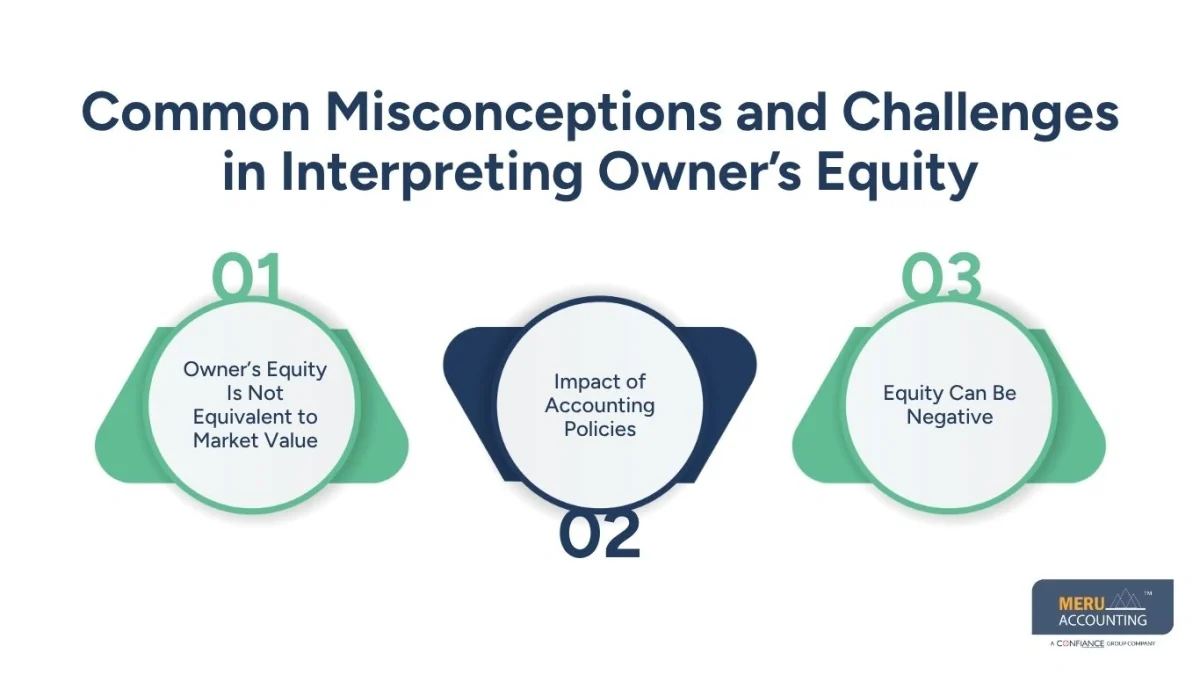
Despite the importance of owner’s equity, some misunderstandings and limitations can complicate analysis.
Owner’s Equity Is Not Equivalent to Market Value
The book value of owner’s equity often differs significantly from market capitalization, especially for companies with large intangible assets or market perception-driven valuations.
Impact of Accounting Policies
Differing accounting policies, such as depreciation methods or inventory valuation, affect asset values and, consequently, owner’s equity, potentially distorting comparisons across companies.
Equity Can Be Negative
Negative owner’s equity signals that liabilities exceed assets, often a sign of financial distress, though in some start-up cases, it may reflect initial losses funding growth.
Role of Owner’s Equity in Business Planning and Strategy
Owner’s equity isn’t just a static figure; businesses actively manage it as part of strategic financial planning.
Capital Structure Decisions
Management decides the proportion of financing through equity or debt, aiming to optimize cost of capital and financial risk. A higher equity ratio can signal stability but may dilute returns.
Dividend Policy Formulation
Equity levels inform dividend policies. Companies with strong retained earnings tend to distribute dividends more liberally, impacting shareholder satisfaction and stock price.
Planning for Growth and Expansion
Owner’s equity provides a resource base for funding new investments without incurring additional debt, preserving creditworthiness and financial flexibility.
How Digital Tools Enhance Owner’s Equity Balance Sheet Analysis
Advancements in financial software and data analytics are revolutionizing how owner’s equity is analyzed and interpreted.
Automated Financial Reporting
Modern accounting software automatically updates owner’s equity accounts based on business transactions, ensuring real-time accuracy and reducing errors.
Integrated Dashboards and Visualizations
Interactive dashboards allow analysts to track equity trends, compare components, and visualize key ratios, facilitating faster and more informed decisions.
Scenario Modeling and Forecasting
Financial modeling tools simulate how different business actions, such as stock issuance or dividend changes, affect owner’s equity under various economic scenarios.
Conclusion: The Strategic Value of Understanding Owner’s Equity
Owner’s equity is more than just a line item on the balance sheet. It provides crucial insights into company value, financial health, and operational success. By thoroughly analyzing the components of owner’s equity and recognizing their implications, stakeholders can make smarter investment decisions, establish robust financing strategies, and ensure long-term business sustainability. Accurate understanding and management of owner’s equity ultimately underpin effective financial analysis and successful business outcomes.
About Meru Accounting
Meru Accounting is a trusted provider of comprehensive accounting and financial advisory services, specializing in small to medium businesses. With a deep understanding of balance sheet management and owner’s equity, Meru Accounting helps companies optimize their financial statements, improve capital structure, and enhance decision-making through tailored analytics and reporting solutions. Their expertise ensures clients achieve transparency, compliance, and strategic advantage in financial management.
FAQs
What is owner’s equity in a balance sheet?
Owner’s equity represents the residual interest in the assets of a business after deducting liabilities, reflecting the owner’s stake in the company.
Why is owner’s equity important for financial analysis?
Owner’s equity helps assess the financial health and stability of a company, indicating how much value is attributable to the owners after all obligations are met.
What are the main components of owner’s equity?
The main components include common stock, retained earnings, additional paid-in capital, treasury stock, and accumulated other comprehensive income.
How does owner’s equity affect investment decisions?
Owner’s equity provides insights into a company’s capital structure and profitability, aiding investors in evaluating risk and potential returns.
Can changes in owner’s equity impact financial ratios?
Yes, changes in owner’s equity affect key financial ratios such as return on equity (ROE) and debt-to-equity ratio, which are crucial for financial analysis.
Introduction to Owner’s Equity on the Balance Sheet
Owner’s equity is a fundamental component of the balance sheet and represents the owner’s residual interest in the assets of a business after liabilities are deducted. Understanding owner’s equity is essential for anyone involved in financial analysis, from investors and creditors to company management. This article delves into why the owner’s equity balance sheet matters, exploring its components, significance, and impact on financial decision-making.
What Is Owner’s Equity?
Owner’s equity, often referred to as shareholders’ equity in corporations or partners’ equity in partnerships, is essentially the net worth of a business from the owner’s perspective. It shows what remains if all the company’s debts and obligations were paid off. This figure helps stakeholders understand the company’s financial health and how much value the owners have in the business.
Key Components of Owner’s Equity
Owner’s equity is not a single figure but a composition of various accounts recorded on the Owner’s equity balance sheet. Some of the primary components of owner’s equity include:
- Common Stock: The par value of all common shares issued by the company.
- Preferred Stock: Shares with priority over common stock for dividends and assets in liquidation.
- Additional Paid-in Capital: Amounts paid by investors above the par value of stock.
- Retained Earnings: Cumulative net income minus dividends paid to shareholders.
- Treasury Stock: Previously issued stock repurchased by the company, which reduces equity.
- Accumulated Other Comprehensive Income: Gains or losses not included in net income.
Importance of Owner’s Equity in Financial Analysis
Owner’s equity is a vital metric for assessing the financial stability and long-term sustainability of a business. It provides insights that are crucial for internal management and external stakeholders alike.
Insight into Financial Position
Owner’s equity depicts the net assets attributable to owners, effectively showing the cushion available to absorb potential losses. A consistently positive and growing owner’s equity indicates a robust financial position.
Indicator of Company Value
While owner’s equity is not the same as market value, it does offer a baseline assessment of a company’s book value. This helps investors determine whether a stock might be undervalued or overvalued relative to its book value.
Implication on Financing and Lending
Creditors analyze owner’s equity to evaluate a company’s creditworthiness. A strong equity base often leads to more favorable loan terms because it signals low risk of insolvency.
How Owner’s Equity Affects Financial Statements
The Owner’s equity balance sheet intertwines with other financial statements primarily via owner’s equity accounts. Changes in equity reflect business activities and transactions impacting overall company performance.
Relationship with the Income Statement
Net income from the income statement directly influences retained earnings within owner’s equity. Profitable operations increase equity, while losses reduce it.
Connection to Cash Flow Statement
Owner-related cash transactions, such as dividend payments or issuance of stock, are recorded in the financing activities section of the cash flow statement and affect owner’s equity accounts.
Detailed Breakdown of Components of Owner’s Equity
Understanding the individual components of owner’s equity is crucial to grasp how a business is financed and how profits or losses impact ownership value.
Common Stock and Paid-in Capital
Common stock represents the shares sold to investors, typically at par value. Additional paid-in capital accounts for any amount investors pay over par value:
- Common Stock: Shows the legal capital invested by shareholders.
- Additional Paid-in Capital: Premium amounts paid above par value indicating investor confidence.
Retained Earnings
Retained earnings reflect cumulative earnings kept in the company rather than distributed as dividends. This component increases when the company earns profits and decreases with losses or dividend payments.
Treasury Stock
Treasury stock represents shares repurchased and held by the company. It reduces total owner’s equity because it is essentially a reduction in capital available to shareholders.
Accumulated Other Comprehensive Income (AOCI)
AOCI includes unrealized gains/losses on certain investments, foreign currency translation adjustments, and pension plan adjustments. These items are excluded from net income but directly affect equity.
Owner’s Equity vs. Owner’s Contribution and Drawings
In sole proprietorships and partnerships, owner’s equity fluctuates with contributions made by owners and withdrawals (drawings) taken out of the business.
| Term | Definition | Effect on Owner’s Equity |
|---|---|---|
| Owner’s Contribution | Capital invested into the business by the owner | Increases equity |
| Owner’s Drawing | Funds withdrawn by the owner for personal use | Decreases equity |
Analyzing Owner’s Equity for Investment Decisions
Investors heavily rely on owner’s equity metrics to gauge company valuation and growth potential. Below are key methods of using owner’s equity in financial analysis:
Book Value Per Share
Calculated as total owner’s equity divided by the number of outstanding shares, this metric helps investors understand the book value backing each share, offering a baseline for stock valuation.
Return on Equity (ROE)
ROE indicates how effectively the management is utilizing shareholders’ funds to generate profit. A higher ROE signifies more efficient use of equity:
ROE = Net Income / Average Owner’s Equity
Analyzing Changes Over Time
Tracking owner’s equity trends allows analysts to identify growth patterns, dividend policies, or red flags like consistently shrinking equity, which may indicate operational difficulties or excessive distribution of profits.
Common Misconceptions and Challenges in Interpreting Owner’s Equity
Despite the importance of owner’s equity, some misunderstandings and limitations can complicate analysis.
Owner’s Equity Is Not Equivalent to Market Value
The book value of owner’s equity often differs significantly from market capitalization, especially for companies with large intangible assets or market perception-driven valuations.
Impact of Accounting Policies
Differing accounting policies, such as depreciation methods or inventory valuation, affect asset values and, consequently, owner’s equity, potentially distorting comparisons across companies.
Equity Can Be Negative
Negative owner’s equity signals that liabilities exceed assets, often a sign of financial distress, though in some start-up cases, it may reflect initial losses funding growth.
Role of Owner’s Equity in Business Planning and Strategy
Owner’s equity isn’t just a static figure; businesses actively manage it as part of strategic financial planning.
Capital Structure Decisions
Management decides the proportion of financing through equity or debt, aiming to optimize cost of capital and financial risk. A higher equity ratio can signal stability but may dilute returns.
Dividend Policy Formulation
Equity levels inform dividend policies. Companies with strong retained earnings tend to distribute dividends more liberally, impacting shareholder satisfaction and stock price.
Planning for Growth and Expansion
Owner’s equity provides a resource base for funding new investments without incurring additional debt, preserving creditworthiness and financial flexibility.
How Digital Tools Enhance Owner’s Equity Analysis
Advancements in financial software and data analytics are revolutionizing how owner’s equity is analyzed and interpreted.
Automated Financial Reporting
Modern accounting software automatically updates owner’s equity accounts based on business transactions, ensuring real-time accuracy and reducing errors.
Integrated Dashboards and Visualizations
Interactive dashboards allow analysts to track equity trends, compare components, and visualize key ratios, facilitating faster and more informed decisions.
Scenario Modeling and Forecasting
Financial modeling tools simulate how different business actions, such as stock issuance or dividend changes, affect owner’s equity under various economic scenarios.
Conclusion: The Strategic Value of Understanding Owner’s Equity
Owner’s equity is more than just a line item on the balance sheet. It provides crucial insights into company value, financial health, and operational success. By thoroughly analyzing the components of owner’s equity and recognizing their implications, stakeholders can make smarter investment decisions, establish robust financing strategies, and ensure long-term business sustainability. Accurate understanding and management of owner’s equity ultimately underpin effective financial analysis and successful business outcomes.
About Meru Accounting
Meru Accounting is a trusted provider of comprehensive accounting and financial advisory services, specializing in small to medium businesses. With a deep understanding of Owner’s equity balance sheet management and owner’s equity, Meru Accounting helps companies optimize their financial statements, improve capital structure, and enhance decision-making through tailored analytics and reporting solutions. Their expertise ensures clients achieve transparency, compliance, and strategic advantage in financial management.
FAQs
What is owner’s equity in a balance sheet?
Owner’s equity represents the residual interest in the assets of a business after deducting liabilities, reflecting the owner’s stake in the company.
Why is owner’s equity important for financial analysis?
Owner’s equity helps assess the financial health and stability of a company, indicating how much value is attributable to the owners after all obligations are met.
What are the main components of owner’s equity?
The main components include common stock, retained earnings, additional paid-in capital, treasury stock, and accumulated other comprehensive income.
How does owner’s equity affect investment decisions?
Owner’s equity provides insights into a company’s capital structure and profitability, aiding investors in evaluating risk and potential returns.
Can changes in owner’s equity impact financial ratios?
Yes, changes in owner’s equity affect key financial ratios such as return on equity (ROE) and debt-to-equity ratio, which are crucial for financial analysis.


