



2026 Tax Brackets vs. 2025: Understand the Key Changes
Every year, tax brackets shift a little. These changes may look small at first glance, yet they quietly shape how much of your hard earned money stays in your pocket. The comparison between 2026 tax brackets and 2025 tax brackets brings fresh details that matter for workers, freelancers, business owners, and even retirees. Inflation adjustments, updated income ranges, and modified deductions together decide real tax impact.
Understanding these shifts is not just for finance experts. It is for anyone who earns, spends, saves, or plans for the future. Knowing how 2026 tax brackets differ from 2025 helps you plan smart steps early instead of rushing at the last moment. This guide breaks down everything in clear terms so you can see what really changes and what it might mean for your tax bill.
Overview of the 2025 Tax Brackets
The 2025 tax brackets were designed with controlled inflation rates and stable economic projections in mind. These brackets defined how income was divided into levels where each level faced a fixed percentage of tax. The goal was fairness, but the actual impact varied based on personal income range and filing status.
Key Features of 2025 Tax Brackets
- Progressive tax structure based on income slabs
- Fixed percentages applied to each income band
- Moderate standard deduction levels
- Limited upward shift in income thresholds
For most taxpayers, the 2025 system provided stable predictability. Low income groups enjoyed reasonable tax rates that helped reduce burden. Middle earners experienced balanced rates, while higher earners continued to move into steeper brackets as income increased.
Yet, even with stability, many taxpayers felt that rising living costs made the 2025 structure slightly tight. This created demand for adjustments in the following year.
Overview of the 2026 Tax Brackets
The 2026 tax brackets reflect updated economic conditions and inflation changes. The government slightly adjusted the income limits where tax rates change. This often aims to avoid forcing people into higher tax bands simply due to rising wages that match inflation.
Highlights of 2026 Tax Brackets
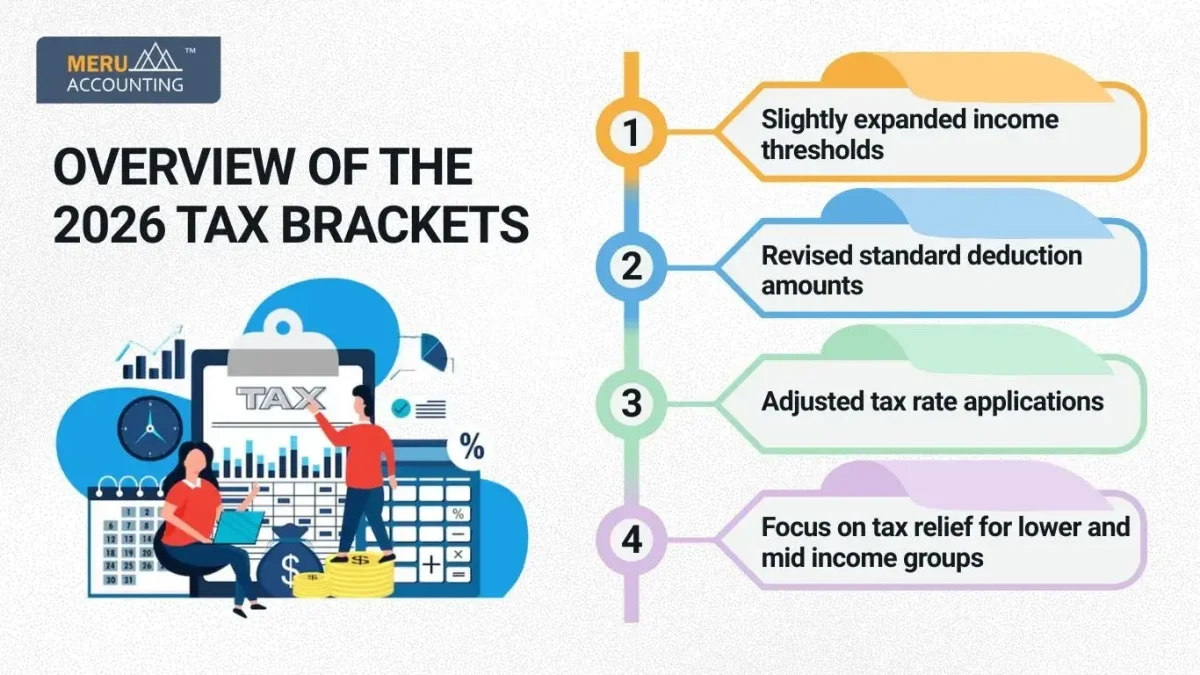
- Slightly expanded income thresholds
- Revised standard deduction amounts
- Adjusted tax rate applications
- Focus on tax relief for lower and mid income groups
While the basic progressive system remains the same, the fine details shift the effective tax paid by different groups. Some taxpayers may notice marginal relief, while others might experience subtle increases depending on total earnings.
The 2026 framework appears to focus on easing pressure for those managing household expenses and rising costs.
2026 Tax Brackets vs. 2025: A Side by Side Comparison
Let’s see the real differences between 2026 tax brackets and 2025 tax brackets. Even tiny changes in thresholds or deductions can create visible shifts in your final tax amount.
1. Changes in Tax Rates
The core tax percentages largely remain stable between 2025 and 2026. However, minor adjustments in certain high income categories may slightly increase effective tax for top earners.
In simple terms:
- Lower brackets remain mostly unchanged
- Middle brackets see slight refinements
- Highest brackets show careful increase in burden
These gradual changes aim to balance revenue needs with taxpayer relief. The logic is to keep taxation progressive without shock impact.
2. Changes in Income Thresholds
Income thresholds define how much you can earn before moving to the next tax level. In 2026 tax brackets, most thresholds are pushed slightly higher.
This means:
- More income stays taxed at lower rates
- Reduced risk of forced bracket jumps
- Better protection against inflation driven wage rise
For salaried individuals and small business owners, this change provides breathing room. It prevents sudden tax burden increases simply due to cost of living adjustments.
3. Changes in Standard Deduction
The standard deduction for 2026 shows a noticeable upward revision. This directly lowers taxable income for many people who do not itemize deductions.
Key effects include:
- Reduced taxable salary
- Better tax savings for average earners
- Higher disposable income in hand
This update especially benefits families and single earners with limited complex deductions.
How the 2026 Tax Brackets Could Affect Your Tax Bill
The real concern always remains the final amount you pay. The 2026 tax brackets revisions can change how different income groups experience taxation.
1. Impact on Low and Middle Income Taxpayers
For low and middle income households, the changes appear mostly positive. Expanded thresholds and increased standard deductions help reduce taxable income naturally.
Likely results include:
- Slight drop in overall tax payable
- Higher monthly take home pay
- Better cash flow balance
This group may feel mild relief rather than dramatic change, yet every small reduction adds comfort.
2. Impact on High Income Earners
High income earners may notice a different trend. While their threshold also increases, their effective tax rate can rise due to subtle adjustments at the top level.
Possible outcomes:
- Slight increase in total tax burden
- Higher effective rate on bonus or additional income
- More need for smart tax planning
This group benefits more from strategic deductions and disciplined tax planning approaches.
3. Impact on Small Business Owners and Self Employed Individuals
For business owners and freelancers, the impact depends on profit levels and deductible expenses. The updated structure may improve flexibility when combined with well planned deductions.
Benefits may include:
- Improved tax efficiency with smart planning
- Scope for better income structuring
- Opportunity to manage cash flow better
Smart planning becomes the key for this group to protect earnings legally and wisely.
Consult a Tax Professional for 2026 Planning
This is where expert insight makes all the difference. Understanding tax brackets alone is not enough. Applying them to your unique income situation is what truly saves money.
Meru Accounting offers professional tax planning support designed to help you make sense of the 2026 tax changes. Our team focuses on tailored strategies that aim to reduce your tax burden, manage compliance smoothly, and maximize deductions with care. Whether you are a salaried individual or a business owner, Meru Accounting guides you step by step so your tax plan aligns with real world goals and future stability.
Do not let shifting tax brackets catch you off guard. Plan smart, act early, and take control of your finances with expert support today. Reach out to Meru Accounting for clear guidance and confident tax planning for 2026.
FAQs
- What are tax brackets in simple terms?
They define income levels taxed at different percentages. - Do tax brackets change every year?
They often adjust based on inflation and policy updates. - Are 2026 tax brackets higher than 2025?
Some thresholds are higher in 2026 tax brackets, easing bracket movement. - Will I pay more tax in 2026?
It depends on your income level and deductions. - How does standard deduction affect tax?
It lowers taxable income directly. - Do small changes really matter?
Yes, even small changes affect long term savings. - Are middle income earners benefiting more?
They often see moderate relief. - Do high earners pay more in 2026?
Some may see slight increases. - Can planning reduce tax impact?
Yes, planning plays a major role. - Is it worth hiring a tax expert?
Expert advice often saves more money. - Does income threshold affect salary tax?
Yes, it defines how much tax you pay. - Are freelancers affected differently?
Yes, their income structure varies. - Do these changes affect bonuses?
Yes, bonus income may shift brackets. - Can deductions offset tax increases?
Smart deductions can reduce impact. - How early should tax planning start?
Ideal planning starts at the beginning of the year. - Will standard deduction continue increasing?
It may change based on policy decisions. - Is tax planning only for rich earners?
No, it benefits all income levels. - Does business income follow the same brackets?
It depends on structure and tax category. - Can wrong planning increase tax?
Yes, poor planning can lead to higher payments. - Why choose Meru Accounting for tax planning?
We offer professional and reliable tax support for businesses of all types.
