


Introduction to Bookkeeping for Roofers
Bookkeeping for roofers is a specialized field within accounting that addresses the unique financial management needs of roofing contractors and businesses. Roofing companies face distinct challenges in maintaining accurate financial records, managing cash flow, and ensuring compliance with industry regulations and tax laws. Effective bookkeeping enables roofers to optimize their operations, grow their businesses sustainably, and avoid costly penalties or audits.
With the roofing industry often operating with seasonal fluctuations, materials procurement complexities, and labor-intensive projects, having a dedicated accountant familiar with these nuances is crucial. These accountants not only keep the books in order but also provide strategic financial advice tailored to roofing companies’ operational realities.
The Role of Accountants in Roofing Business Financial Management
Accountants who specialize in bookkeeping for roofers play an essential role far beyond preparing tax returns. They help roofing companies implement strong internal controls, manage accounts payable and receivable, and plan budgets that account for project timelines and payment schedules. Their expertise helps roofing contractors make data-driven decisions, aligning financial planning with business goals.
Cash Flow Monitoring and Projection
Effective cash flow management is critical in roofing businesses due to project-based revenues and variable expenses. Accountants monitor inflows and outflows continuously and provide cash flow projections to prepare roofers for upcoming financial obligations such as payroll, material purchases, and equipment maintenance.
Compliance and Regulatory Expertise
Roofing companies are subject to numerous federal, state, and local regulations, including payroll tax requirements, licensing fees, and construction-related tax deductions. Accountants ensure compliance by maintaining meticulous records, timely tax filings, and advising on regulatory changes that may affect the roofing business.
How Bookkeeping for Roofers Enhances Cash Flow Management
Bookkeeping serves as the backbone of cash flow management. By tracking every transaction, accountants provide roofing businesses with reliable financial data to analyze revenue streams and expenses, which is crucial for maintaining liquidity and operational efficiency.
Invoice Management and Payment Tracking
One of the significant challenges roofing companies face is managing invoicing and ensuring timely payments. Accountants implement systems that track outstanding invoices, send reminders, and reconcile payments, improving the collection cycle and reducing days sales outstanding (DSO).
Cost Control and Expense Categorization
Roofers incur various expenses, from labor wages and subcontractor fees to materials and equipment maintenance. Accountants categorize expenses meticulously, enabling roofing contractors to identify cost-saving opportunities and prevent budget overruns.
- Implementing strict vendor and subcontractor payment controls
- Regular analysis of cost of goods sold (COGS) to improve profitability
- Utilizing budgeting tools to forecast project-related expenses
- Managing payroll efficiently to avoid cash shortages
Compliance Benefits of Specialized Accounting for Roofing Companies
Compliance is multifaceted for roofers, encompassing tax filings, licensing, insurance, labor laws, and safety regulations. Accountants specializing in the roofing industry help businesses stay compliant by handling complex accounting tasks and keeping up with evolving legislation.
Tax Preparation and Deductions
Roofing businesses are eligible for various tax deductions, including those related to materials, vehicle expenses, home office space, and business insurance. Specialized accountants identify and apply these deductions appropriately, minimizing tax liabilities while maintaining compliance.
Audit Preparedness
Professional bookkeeping ensures that roofing businesses have well-organized, accurate financial records, which are essential during audits. Accountants prepare documentation, respond to inquiries, and represent roofers if needed during tax or regulatory audits.
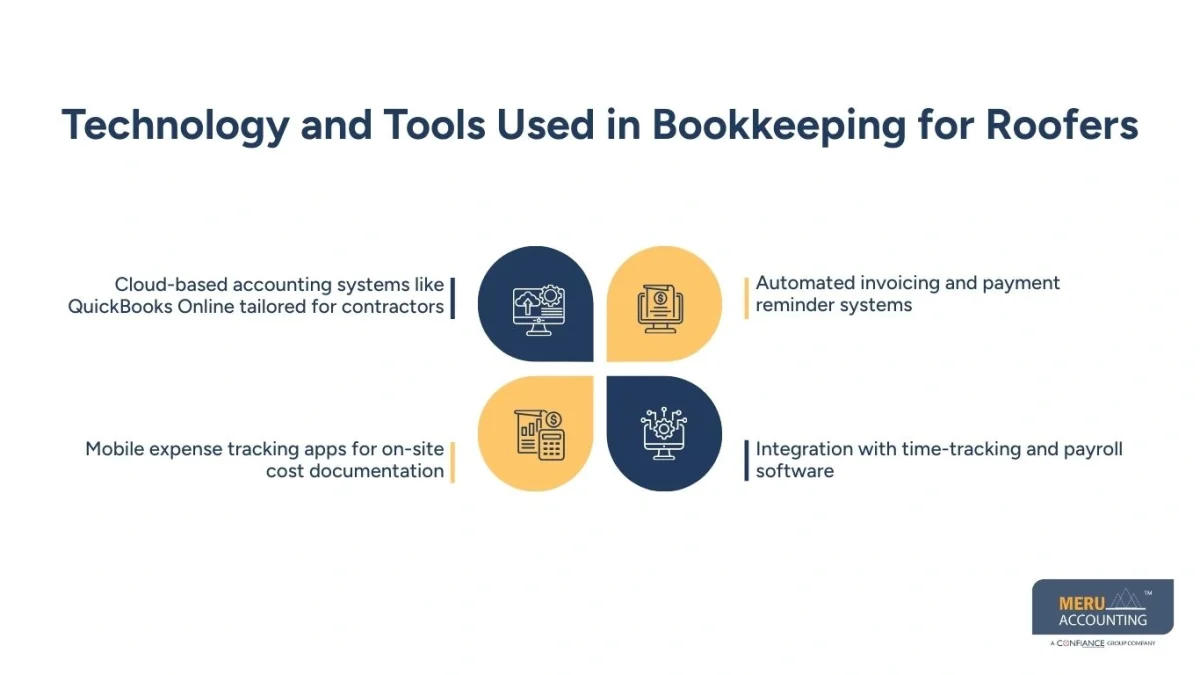
Technology and Tools Used in Bookkeeping for Roofers
Modern bookkeeping for roofers leverages technology to improve accuracy, efficiency, and accessibility of financial information. Accountants use industry-specific accounting software integrated with project management and payroll platforms to streamline processes.
- Cloud-based accounting systems like QuickBooks Online tailored for contractors
- Mobile expense tracking apps for on-site cost documentation
- Automated invoicing and payment reminder systems
- Integration with time-tracking and payroll software
Benefits of Using Roofing-Specific Accounting Software
Software tailored for roofers incorporates features that traditional accounting systems lack, such as depreciation tracking for roofing equipment, job costing modules, and compliance checks for roofing regulations. This customization results in minimal manual entries, better data integrity, and real-time financial insights.
Financial Reporting and Analysis for Roofing Businesses
Regular financial reporting is vital for roofing contractors to make informed business decisions, plan growth, and monitor profitability. Accountants generate customized reports that highlight critical performance indicators for roofing companies.
Key Reports for Roofing Companies
| Report Name | Purpose | Key Metrics |
|---|---|---|
| Profit and Loss Statement | Shows revenue, expenses, and net income over a period | Gross Profit Margin, Net Profit Margin |
| Cash Flow Statement | Tracks cash inflows and outflows to ensure liquidity | Operating Cash Flow, Free Cash Flow |
| Job Costing Report | Analyzes costs per roofing project for profitability | Labor Costs, Material Costs, Overhead Allocation |
| Balance Sheet | Provides snapshot of financial position at a point in time | Assets, Liabilities, Equity |
Using Financial Reports for Strategic Planning
By reviewing these detailed financial reports, roofing business owners can identify trends, adjust pricing strategies, and optimize resource allocation. Accountants provide insights that turn raw financial data into actionable plans for business growth and sustainability.
The Importance of Partnering with Meru Accounting for Roofing Businesses
Meru Accounting is a trusted provider of accounting and bookkeeping services specializing in the roofing industry. With vast experience working with roofers, Meru Accounting understands the unique financial challenges of managing roofing operations and helps businesses improve cash flow and maintain regulatory compliance.
The team at Meru Accounting offers customized bookkeeping solutions, tax planning, payroll management, and real-time financial reporting designed specifically for roofing contractors. Their proactive approach ensures roofing companies can focus on growing their business, while their finances are managed with accuracy and expertise.
Roofing business owners benefit from Meru Accounting’s comprehensive understanding of construction accounting standards and industry-specific needs. This partnership streamlines financial workflows, mitigates compliance risks, and maximizes profitability.
Conclusion: Maximizing Roofing Business Success with Professional Bookkeeping
Bookkeeping for roofers is not just about tracking numbers; it’s about empowering roofing businesses with the financial clarity and control to thrive in a competitive market. Accountants specializing in the roofing industry provide essential services that improve cash flow management, ensure compliance, and offer strategic insights for growth.
Roofing companies that invest in specialized accountants and adopt modern bookkeeping tools can expect enhanced operational efficiency, better financial decision-making, and stronger resilience against market fluctuations and regulatory challenges. With expert guidance from providers like Meru Accounting, roofing businesses can focus on delivering quality workmanship while confidently managing their financial health.
FAQs
How does bookkeeping for roofers help improve cash flow?
Bookkeeping for roofers helps track income and expenses accurately, allowing timely invoicing and better management of accounts receivable, which improves cash flow.
What role do accountants play in ensuring compliance for roofing businesses?
Accountants ensure roofing businesses comply with tax laws, licensing requirements, and industry regulations by maintaining accurate financial records and preparing necessary reports.
Can specialized bookkeeping for roofers reduce financial errors?
Yes, specialized bookkeeping for roofers focuses on industry-specific transactions, reducing errors and ensuring accurate financial data that supports decision-making and compliance.
How often should roofers update their bookkeeping records?
Roofers should update their bookkeeping records regularly, ideally weekly or monthly, to maintain accurate financial information and monitor cash flow effectively.
What are the benefits of hiring accountants experienced in bookkeeping for roofers?
Accountants experienced in bookkeeping for roofers can provide tailored financial strategies, ensure compliance, optimize cash flow, and offer insights specific to the roofing industry.


