

Meru Accounting

Accounting for Lawyers: 7 Core Concepts You Must Understand

Contents
Want to learn more?
Subscribe for business tips, tax updates, financial fundamental and more


    Accounting for Lawyers: 7 Core Concepts You Must Understand

    Running a law firm requires more than just legal expertise. Every lawyer needs to have a solid understanding of accounting for lawyers to manage finances effectively and maintain the trust of clients. 

    Proper accounting practices not only keep your firm compliant with regulations but also support growth, profitability, and strong client relationships. Without a clear financial plan, even a successful legal practice can face cash flow problems, missed opportunities, or client disputes. 

    By implementing strong accounting systems, reviewing accurate financial statements, and tracking key financial metrics, law firms can make informed decisions, reduce risks, and ensure long-term stability.

     In this blog, we will explore the seven core concepts of law firm financial management that every legal professional should know.

    What You Will Learn From This Blog

    • How accounting for lawyers can simplify financial management in a law firm.

    • The seven essential financial concepts are crucial for legal practices.

    • Ways accounting and finance solutions help law firms track revenue, manage expenses, and maintain compliance.

    • Tips to improve client relationships using proper accounting practices.

    • Key Performance Indicators (KPIs) that every law firm should monitor for better decision-making.

    By the end of this blog, you will have a clear roadmap to manage your law firm finances efficiently and confidently.

    Understanding Accounting for Lawyers

    Managing finances in a law firm requires more than tracking money; it demands a solid understanding of accounting for lawyers. Lawyers handle both client funds and firm revenues, making accurate record-keeping, compliance, and expense management essential. 

    Proper accounting ensures revenue is tracked, expenses are controlled, and client funds are protected, resulting in accurate financial statements that clearly reflect the firm’s financial health. 

    Using accounting and finance solutions can simplify these processes by automating reporting, monitoring cash flow, and supporting informed decision-making. Strong accounting practices also ensure tax compliance, audit readiness, and transparency, which builds client trust and enhances the firm’s credibility.

    In addition, effective accounting for lawyers helps law firms identify profitable practice areas and allocate resources wisely. By keeping detailed financial records, lawyers can forecast cash flow, plan for future expenses, and make strategic decisions with confidence. 

    This financial clarity not only supports the firm’s growth but also allows lawyers to respond quickly to challenges, avoid unnecessary risks, and maintain a stable and trustworthy relationship with their clients.

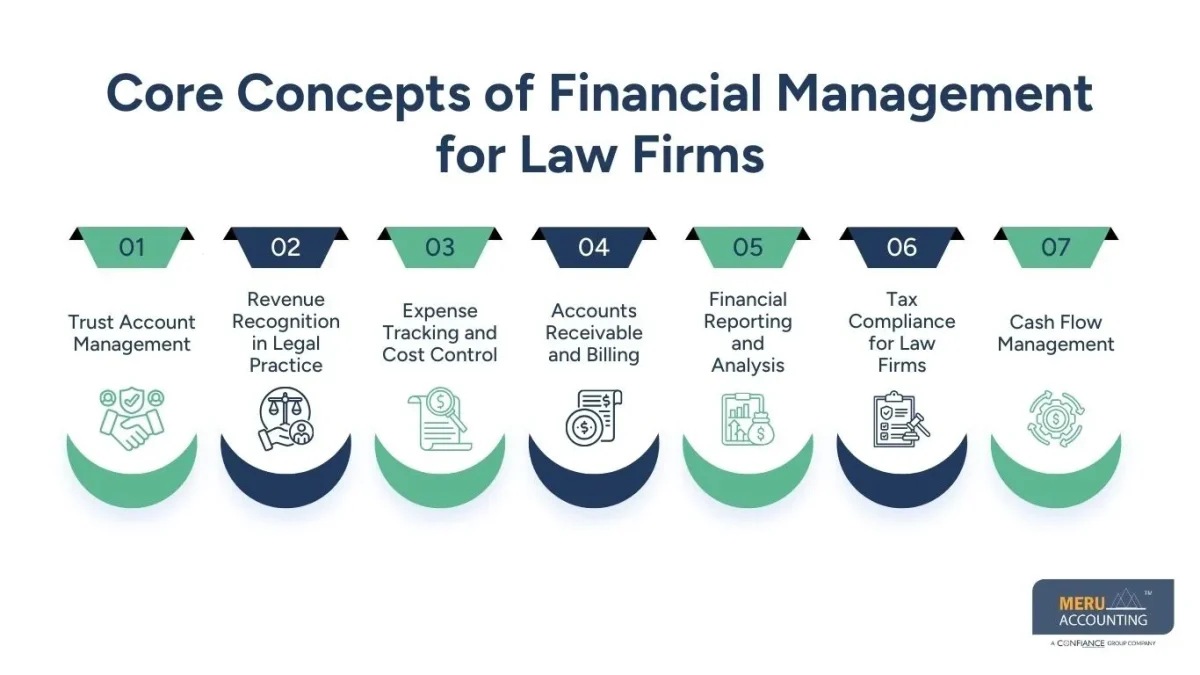
    Core Concepts of Financial Management for Law Firms

    Managing a law firm’s finances requires a focus on several core areas. Each concept ensures that your firm stays compliant, profitable, and efficient. Let’s break down the seven essential concepts.

    Trust Account Management

    What Is a Trust Account?

    A trust account holds client funds separately from firm funds. Proper accounting for lawyers ensures these accounts are accurate. This separation helps maintain ethical standards and protects client interests at all times.

    Client Fund Tracking

    Lawyers must record all deposits and withdrawals to prevent mistakes and protect clients. Regular tracking ensures client balances are always correct and easy to verify when needed.

    Compliance Requirements

    Legal regulations require periodic reconciliation and reporting. Using accounting and finance solutions makes this easier and helps law firms meet regulatory expectations without delays.

    Preventing Misuse

    Tracking client funds precisely prevents accidental use of money for firm expenses. Clear records also reduce the risk of disputes and financial misunderstandings.

    Audit Readiness

    Accurate trust account records prepare law firms for inspections or audits. Well-maintained documentation helps firms respond confidently to regulatory reviews.

    Revenue Recognition in Legal Practice

    Understanding Billable Hours

    Revenue is recognized when legal services are provided. Proper accounting for lawyers ensures income is recorded accurately. This helps law firms match income with the actual work completed.

    Fixed Fees vs Hourly Billing

    Revenue recognition varies by fee structure. Keeping records clear avoids discrepancies. Accurate tracking ensures that income is not overstated or delayed.

    Client Retainers

    Retainer fees should be recorded in trust accounts and allocated properly. This ensures client funds are used only when services are delivered.

    Tracking Project Milestones

    For ongoing cases, recognizing revenue at each stage ensures proper financial reporting. This approach provides a realistic view of case progress and earnings.

    Use of Accounting Tools

    Accounting and financial services help automate revenue tracking and reduce errors. Automation also saves time and improves consistency in financial records.

    Expense Tracking and Cost Control

    Identifying Law Firm Expenses

    Office rent, software subscriptions, and salaries are common expenses. Proper accounting for lawyers captures all costs accurately. This helps law firms understand where money is being spent.

    Budgeting

    Setting budgets for departments or cases helps in controlling expenses. Budgets also guide spending decisions and prevent overspending.

    Categorizing Costs

    Distinguishing between client-related costs and firm expenses ensures clarity. Clear categories make reporting and billing more accurate.

    Monitoring Unusual Expenses

    Unexpected costs can affect profitability. Tracking them avoids surprises. Early detection allows firms to take corrective action quickly.

    Automation for Accuracy

    Accounting and financial services automate expense recording and reporting. Automation reduces manual errors and saves valuable time.

    Accounts Receivable and Billing

    Timely Invoicing

    Prompt billing improves law firm cash flow and stability. Accounting for lawyers ensures no invoice is missed.

    Tracking Outstanding Payments

    Monitoring accounts receivable prevents delayed payments and billing disputes. Regular follow-ups help maintain consistent client payment schedules.

    Flexible Billing Methods

    Hourly, fixed, or contingency billing must be recorded accurately. Clear records ensure billing aligns with agreed client terms.

    Client Communication

    Clear and accurate invoices help build long-term client trust. Transparency reduces confusion and limits billing-related client questions.

    Software Assistance

    Accounting and finance solutions simplify receivable tracking and payment reminders. Automation improves accuracy and saves valuable administrative time.
    accounting for lawyers

    Financial Reporting and Analysis

    Importance of Reports

    Financial statements provide insight into overall law firm performance. Proper accounting for lawyers ensures reports remain accurate and reliable.

    Balance Sheet Monitoring

    Assets, liabilities, and equity must be tracked regularly. Consistent monitoring supports better financial control and planning.

    Profit and Loss Statement

    Understanding income versus expenses helps evaluate firm profitability. Regular review highlights areas needing cost control improvements.

    Comparative Analysis

    Tracking month-to-month performance improves informed financial decision-making. Year-to-year comparisons reveal growth patterns and financial trends.

    Role of Technology

    Accounting and finance solutions make reporting faster and more accurate. Technology reduces manual work and improves reporting consistency.

    Tax Compliance for Law Firms

    Understanding Tax Obligations

    Law firms have unique tax requirements and responsibilities. Proper accounting for lawyers helps avoid penalties and errors.

    Filing Deadlines

    Meeting state and federal tax deadlines is essential. Timely filing prevents fines and unnecessary compliance issues.

    Deductible Expenses

    Properly documented expenses help reduce overall tax liability. Accurate records support claims during tax reviews.

    Payroll Tax Compliance

    Salaries and benefits must follow applicable tax regulations. Correct payroll reporting avoids employee-related tax issues.

    Assistance from Software

    Accounting and finance solutions help track taxes accurately. Software tools generate reports required for tax filings.

    Cash Flow Management

    Importance of Cash Flow

    Even profitable firms can fail without sufficient available cash. Accounting for lawyers ensures cash inflows and outflows remain balanced and accurately reported in financial statements.

    Forecasting Cash Needs

    Predicting future cash requirements helps prevent unexpected shortages. Accurate forecasts support better planning for upcoming obligations.

    Managing Client Payments

    Effective cash management involves monitoring receivables and retainer usage. Regular tracking improves payment timing and financial stability.

    Handling Large Expenses

    Planning for major expenses like office expansion is crucial. Advance preparation helps avoid cash strain during major investments.

    Maintaining Cash Reserves

    Maintaining reserves supports stability during slow payment periods. Reserves help firms handle emergencies without financial pressure.

    Technology Support

    Accounting and financial services simplify cash flow projections and monitoring. Technology tools provide real-time visibility into firm cash positions.

    Legal Practice Key Performance Indicators (KPIs)

    Revenue per Lawyer: Measures individual contribution, productivity, and overall value to the firm.

    Profit Margin: Tracks how efficiently a law firm converts revenue into actual profit.

    Accounts Receivable Turnover: Indicates how efficiently the firm collects payments from clients.

    Utilization Rate: Measures billable hours compared to total working hours available.

    Client Retention Rate: Shows the firm’s ability to maintain long-term client relationships.

    Expense Ratio: Helps identify how effectively the firm controls operating costs.

    How Accounting for Lawyers Improves Client Relationships

    Transparency in Billing

    Clients appreciate detailed invoices showing exactly how funds are used. Clear billing helps clients understand charges and avoid confusion.

    Timely Communication

    Clear accounting records support faster response to client inquiries. Quick responses improve client confidence and satisfaction levels.

    Trust and Credibility

    Proper accounting for lawyers builds confidence in handling client funds and maintaining transparent financial statements. Trust grows when financial records remain accurate and transparent.

    Dispute Reduction

    Accurate records reduce misunderstandings and payment disputes. Clear documentation helps resolve billing questions quickly.

    Better Case Planning

    Financial insights allow lawyers to allocate resources efficiently. Better planning ensures clients receive consistent legal support.

    How Meru Accounting Supports Law Firms

    Specialized Expertise

    Meru Accounting provides expert accounting for lawyers, ensuring legal compliance. Our team understands law firm regulations and financial responsibilities.

    Tailored Accounting and Finance Solutions

    Our team delivers custom accounting and finance solutions for law firms. Services are designed to match each firm’s size and needs.

    Trust Account Management

    We help manage client funds accurately, reducing compliance risks. Proper handling improves audit readiness and financial transparency.

    Comprehensive Financial Reporting

    Our solutions offer insightful reports to track performance and profitability. Clear reports support informed financial and strategic decisions.

    Tax Compliance Support

    Meru Accounting ensures timely and accurate tax filings. This helps law firms avoid penalties and filing errors.

    Key Takeaways

    • Accounting for lawyers is essential for financial clarity and client trust.

    • Trust account management is critical for protecting client funds.

    • Accurate revenue recognition and expense tracking support profitability.

    • Accounts receivable monitoring and billing improve cash flow.

    • Financial reporting, KPIs, and tax compliance guide decision-making.

    • Using accounting and finance solutions simplifies financial management.

    • Proper accounting strengthens client relationships and law firm growth.

    FAQs

    Accounting for lawyers is the process of managing client funds, income, expenses, and taxes in a law firm. It helps lawyers stay compliant and maintain accurate financial records.

    Accounting for lawyers involves trust accounts and strict rules for handling client money. These requirements do not apply to most regular businesses.

    A trust account is used to hold client funds separately from law firm money. Accounting for lawyers ensures these funds are recorded and used correctly.

    Accounting and finance solutions help track billing, expenses, trust accounts, and taxes.
    They reduce errors and save time for lawyers.

    Lawyers should keep records of trust accounts, invoices, expenses, and tax filings. Proper accounting for lawyers ensures all records are accurate and complete.