




Managing finances in a manufacturing firm during periods of inflation requires careful planning and strategic action. Accounting for manufacturing firms plays a crucial role in tracking costs, controlling expenses, and ensuring that profit margins remain healthy despite rising prices.
Inflation impacts everything from raw materials and labor to overheads and supply chain expenses, making it essential for manufacturers to adopt precise accounting strategies.
A skilled cost accountant helps manufacturers track expenses, forecast costs, and make informed financial decisions. Their expertise ensures firms stay profitable and resilient even as inflation drives up production costs.
What You Will Learn From This Blog
- Understand what accounting for manufacturing firms is, including tracking costs, managing production expenses, and maintaining accurate financial records.
- Learn why effective accounting is essential during inflation, as rising material, labor, and overhead costs can impact profit margins.
- Discover the role of a cost accountant in monitoring expenses, allocating resources efficiently, and ensuring profitability.
- Explore practical budgeting strategies to manage rising costs and plan effectively during high-inflation periods.
- Learn inventory management techniques that reduce financial risks, such as just-in-time inventory, bulk purchasing, and safety stock planning.
- Understand how cost accountants optimize production efficiency, minimize waste, and improve resource allocation.
- Find out how accounting software solutions can help track costs, manage inventory, and generate accurate financial reports.
- Learn the importance of continuous cost monitoring to detect increases early, adjust pricing, and maintain financial stability.
What Is Accounting for Manufacturing Firms?
Definition of Accounting for Manufacturing Firms
Accounting for manufacturing firms refers to tracking and analyzing all financial transactions related to production. It ensures accurate reporting of costs, revenues, and profits, giving management a clear picture of the company’s financial health.
Difference From Standard Accounting
Unlike standard business accounting, manufacturing accounting deals with raw materials, labor, and production overheads. It tracks costs across different production stages to help in pricing, budgeting, and cost control.
Core Functions
- Recording material purchases and usage
- Calculating labor costs
- Tracking factory overheads
Cost Allocation Importance
Allocating costs correctly ensures accurate product pricing and prevents financial losses. Proper allocation also helps in analyzing profitability for each product or production line.
Compliance and Reporting
Accounting for manufacturing firms helps maintain legal compliance and generate reliable financial statements for management and stakeholders. It also ensures readiness for audits and regulatory reviews.
Why Accounting for Manufacturing Firms Matters Amid Inflation
Protecting Profit Margins
Inflation increases costs unpredictably. Effective accounting for manufacturing firms helps adjust product pricing and maintain healthy profit margins. This ensures the business remains competitive despite rising expenses.
Decision-Making Support
Proper financial data enables managers to make informed production and purchasing decisions. Accurate accounting provides insights that guide strategic planning and operational efficiency.
Cash Flow Management
Tracking expenses closely ensures sufficient liquidity to cover rising operational costs. It also helps prevent cash shortages that can disrupt production or delay payments.
Financial Forecasting
Accurate accounting allows forecasting of future costs, enabling firms to plan for inflationary impacts. Forecasting helps in setting budgets and anticipating price adjustments for raw materials.
Risk Reduction
With proper accounting, manufacturers can identify cost overruns early and prevent financial strain. Early detection of inefficiencies reduces the risk of losses and ensures smooth operations.
How Inflation Impacts Manufacturing Costs and Profit Margins
Raw Material Price Surges
Inflation increases the cost of raw materials, directly affecting production expenses. This makes accurate accounting for manufacturing firms essential to track costs and adjust budgets.
Labor Cost Fluctuations
Wages may rise with inflation, requiring adjustments in payroll planning. Proper accounting helps monitor labor costs and allocate them accurately to products.
Increased Overhead Expenses
Utilities, maintenance, and other overheads often increase during inflationary periods. Keeping detailed records ensures manufacturers can manage these rising costs effectively.
Pricing Challenges
Firms must balance raising product prices without losing customers. Accurate cost analysis allows pricing decisions that protect profit margins while remaining competitive.
Profit Margin Compression
Without careful cost management, profit margins shrink as expenses rise. Tracking all costs through accounting for manufacturing firms ensures timely actions to maintain financial stability.
Who Is a Cost Accountant and How They Help Manufacturing Firms
Definition of a Cost Accountant
A cost accountant specializes in analyzing and controlling costs within a business. They provide detailed insights that help manufacturing firms manage expenses and improve profitability.
Role in Manufacturing Firms
They track production costs, allocate expenses, and identify cost-saving opportunities. Their work ensures that every product’s cost is accurately recorded for better decision-making.
Supporting Pricing Decisions
Cost accountants help determine product pricing strategies that maintain profitability. They analyze material, labor, and overhead costs, which is crucial in accounting for manufacturing firms to ensure pricing reflects true production expenses.
Budget Analysis
They assist in preparing realistic budgets and monitoring adherence during inflation. This allows manufacturers to adjust spending and stay on track financially.
Efficiency Improvements
By analyzing cost data, financial analysts recommend process improvements to reduce waste and optimize resources. This helps in maintaining production efficiency and controlling rising costs.
Why Accurate Cost Tracking Is Critical in Accounting for Manufacturing Firms
Identifying Cost Drivers
Tracking expenses helps identify which areas contribute most to rising costs, a critical element in accounting for manufacturing firms. This insight allows manufacturers to focus on controlling the most significant cost elements effectively.
Preventing Waste
Accurate cost records reveal inefficiencies in production and resource use. By identifying waste, firms can reduce unnecessary spending and improve overall operational efficiency.
Better Budgeting
Real-time cost tracking supports realistic budget creation and adjustments. It helps management plan effectively and allocate funds to the most critical areas during inflation.
Pricing Accuracy
Accurate tracking helps set product prices that reflect true production costs, safeguarding profits. It ensures that pricing decisions are data-driven rather than based on assumptions.
Audit Readiness
Accurate cost tracking ensures financial records are reliable and compliant for audits. Th
How to Implement Effective Budgeting Strategies During Inflation
Adjusting Cost Assumptions
Update cost estimates regularly to reflect inflationary changes in materials and labor. This ensures budgets remain realistic and aligned with actual expenses.
Flexible Budget Planning
Use rolling budgets that can be revised as economic conditions change. Flexibility helps manufacturing firms respond quickly to rising costs.
Prioritize Essential Expenses
Focus spending on high-impact areas while minimizing non-critical costs. This helps maintain operations without overspending during inflation.
Scenario Analysis
Prepare multiple budget scenarios to anticipate best-case and worst-case outcomes. This allows management to plan for uncertainties and reduce financial risk.
Performance Tracking
Compare actual expenses with the budget to identify deviations early, which is an important task in accounting for manufacturing firms. Timely adjustments help maintain profitability and control cash flow.
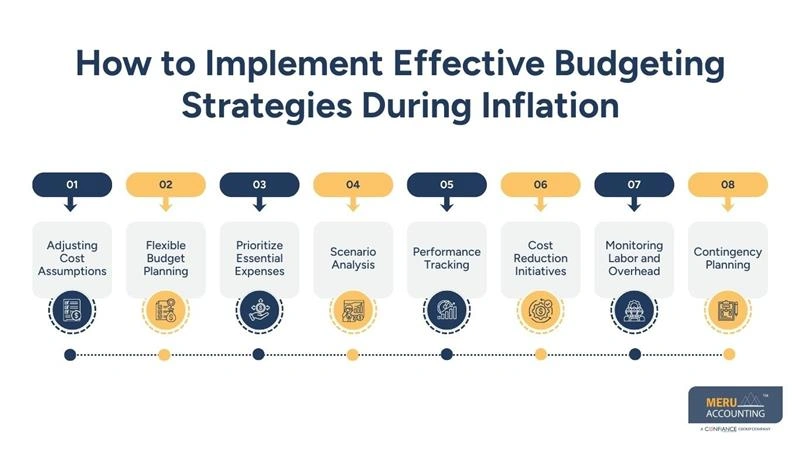
Cost Reduction Initiatives
Identify areas where costs can be reduced without affecting production quality. Effective accounting helps uncover savings opportunities.
Monitoring Labor and Overhead
Keep track of wage increases, overtime, and rising overheads to adjust budgets accordingly. This prevents unexpected financial strain during inflation.
Contingency Planning
Set aside a contingency fund for unexpected inflation-driven expenses. This ensures the firm can handle emergencies without disrupting operations.
Proactive Inventory Techniques for Controlling Inflation Impact
Just-in-Time Inventory
Minimizes holding costs and reduces the impact of rising storage expenses. This approach ensures that materials are available when needed without tying up excessive capital.
Bulk Purchasing Strategically
Buy essential materials in bulk when prices are favorable to avoid future inflation spikes. It also helps secure stable supply and protects against sudden cost increases.
Inventory Turnover Monitoring
Track turnover rates to prevent excess stock that can become costly over time. High turnover ensures products are used efficiently and reduces the risk of obsolete inventory.
Safety Stock Levels
Maintain minimal safety stock to avoid production delays without excessive carrying costs. Proper planning prevents shortages while keeping storage costs under control.
Automated Inventory Systems
Use software to track inventory levels, costs, and reorder points efficiently, a key part of accounting for manufacturing firms. Automation improves accuracy, reduces manual errors, and provides real-time visibility into stock.
How Cost Accountants Optimize Production Efficiency and Resource Allocation
Process Analysis
Cost accountants analyze each production stage to identify inefficiencies. This helps in streamlining operations and improving overall productivity.
Resource Allocation
They recommend reallocating resources to high-return processes. Proper allocation ensures that labor, materials, and machinery are used where they add the most value.
Waste Reduction Strategies
Suggest ways to minimize scrap, rework, and downtime. Reducing waste not only cuts costs but also improves production timelines and product quality.
Labor Efficiency Monitoring
Track labor productivity and adjust staffing levels for optimal output. Efficient labor management reduces unnecessary expenses and maximizes workforce effectiveness.
Equipment Utilization
Ensure machinery is used effectively, reducing unnecessary maintenance and energy costs. Proper monitoring also extends equipment life and prevents production delays.
What Accounting Software Solutions Benefit Manufacturing Firms During Inflation
Features to Look For
- Cost tracking
- Budgeting tools
- Inventory management
- Reporting and analytics
Popular Software Options
Examples include QuickBooks, Xero, and Odoo customized for manufacturers. These platforms help automate accounting processes and improve accuracy.
Real-Time Data
Provides instant insights into production costs and inventory value. This allows managers to respond quickly to cost fluctuations and market changes.
Integration Capabilities
Integrates with ERP and manufacturing systems to reduce manual data entry. Ensures that all financial and production data is synchronized.
Cost Analysis Tools
Helps cost accountants perform variance analysis and identify savings opportunities, an essential function in accounting for manufacturing firms. Supports strategic decisions to control costs during inflation.
Why Continuous Monitoring of Costs Is Essential in High-Inflation Periods
Detecting Cost Increases Early
Regular monitoring allows proactive measures to control expenses. Early detection helps manufacturers prevent minor cost increases from becoming major financial problems.
Adjusting Prices Promptly
Helps firms respond to inflation by updating product pricing accordingly. Timely price adjustments protect profit margins and ensure competitive positioning.
Resource Allocation
Ensures resources are directed efficiently to maintain profitability. Continuous monitoring allows management to shift materials, labor, and budget to the most critical areas.
Reducing Financial Surprises
Continuous monitoring prevents unexpected cost escalations that can hurt cash flow. It enables manufacturers to plan and avoid disruptions in operations.
Supporting Decision-Making
Provides management with reliable data for strategic choices during inflation. Accurate insights from accounting for manufacturing firms improve both short-term and long-term planning.
Why Choose Meru Accounting for Your Manufacturing Firm
Expert Knowledge
Our team has deep experience in accounting for manufacturing firms and understands how inflation impacts costs and profitability. This expertise helps manufacturers make informed financial decisions and stay competitive.
Cost Accountant Support
We provide skilled cost accountants who help optimize financial performance and maintain accurate records. Insights from our certified accountant allow better cost control and resource allocation across all production stages.
Customized Solutions
We offer tailored accounting strategies to meet the specific needs of your manufacturing operations and processes. Each solution is designed to address your firm’s unique challenges and maximize efficiency.
Reliable Reporting
Our services ensure accurate, timely financial reporting to keep your business audit-ready and compliant. Clear reporting helps management monitor performance and make strategic adjustments.
Ongoing Assistance
Continuous support for monitoring costs, budgets, and inventory helps manufacturers stay profitable during inflation. Regular updates and reviews ensure that financial strategies remain effective in changing market conditions.
Key Takeaways
- Inflation impacts raw materials, labor, and overhead, requiring careful accounting.
- Accounting for manufacturing firms ensures accurate cost tracking, budgeting, and reporting.
- Cost accountants are critical in optimizing resources and maintaining profit margins.
- Inventory management and software solutions help reduce financial risks during inflation.
- Continuous monitoring and proactive decision-making safeguard your firm’s financial health.
FAQs
Tracking production costs, labor, and overhead while adjusting for rising expenses.
By analyzing costs, recommending savings, and improving production efficiency.
Using flexible budgets, scenario planning, and comparing actual vs planned costs.
Just-in-time inventory and strategic bulk purchasing help control rising material costs.
Software with cost tracking, inventory management, and reporting streamlines expense management.


