




Running a law firm requires more than legal expertise; it also demands precise financial management. Bookkeeping for attorneys is an essential practice that ensures law firms maintain financial clarity, control costs, and stay compliant with legal regulations.
By keeping detailed and accurate records, attorneys can focus on providing legal services without financial distractions, ultimately contributing to the long-term success of their practice.
Accurate bookkeeping for attorneys helps law firms monitor client accounts, track billable hours, and manage expenses effectively. It provides clear financial insights, enabling better decision-making and supporting long-term growth.
What You Will Learn From This Blog
- The fundamentals of legal practice bookkeeping and its role in law firms.
- How bookkeeping for attorneys influences profitability and decision-making.
- Common challenges attorneys face in maintaining accurate financial records.
- Key strategies to implement effective bookkeeping practices.
- How bookkeeping supports compliance, risk management, and regulatory adherence.
This blog aims to give you a clear understanding of how proper bookkeeping can transform the efficiency and financial health of your law practice.
Understanding Legal Practice Bookkeeping
Legal practice bookkeeping involves carefully tracking all financial transactions unique to law firms, including client funds, operating expenses, payroll, and trust accounts. Maintaining accurate records helps attorneys manage finances efficiently and ensures transparency in every aspect of the firm’s financial operations.
Unlike general bookkeeping, law firm accounting must follow specific regulations, such as managing trust accounts and adhering to client billing rules. This makes bookkeeping for attorneys more specialized, requiring attention to legal compliance and detailed record-keeping.
A key part of this process is monitoring client trust accounts to prevent errors or violations, ensuring that all funds are handled accurately and responsibly.
Additionally, bookkeeping for attorneys includes tracking billable hours, invoices, and related expenses to guarantee proper client billing and reliable revenue reporting.
Regular financial reports generated through Legal bookkeeping services provide valuable insights into cash flow, profitability, and overall financial stability, helping attorneys make informed decisions and plan for the future.
The Importance of Bookkeeping for Attorneys
Maintaining Financial Clarity
Accurate bookkeeping allows law firms to have a clear view of income, expenses, and cash flow, making financial decisions simpler and more reliable.
Improving Decision Making
With proper records, attorneys can evaluate which areas of their practice are profitable and where cost-cutting is necessary, leading to better business decisions.
Enhancing Client Trust
Transparent and precise accounting builds trust with clients, especially when managing sensitive funds in trust accounts.
Supporting Tax Compliance
Accurate bookkeeping ensures timely and correct tax filings, helping law firms avoid penalties and legal complications.
Preventing Financial Disputes
Proper records help prevent disputes over fees or billing errors, protecting both the attorney and clients.
How Accurate Bookkeeping Impacts Law Firm Profitability
Tracking Income and Expenses
Bookkeeping for attorneys ensures all income streams and expenses are accurately recorded, allowing for a realistic view of profits and losses.
Identifying Profit Centers
Analyzing financial records helps identify which practice areas generate the most revenue, guiding future growth strategies.
Managing Cash Flow
Effective bookkeeping maintains sufficient liquidity to pay employees, settle bills, and invest in growth without cash shortages.
Reducing Operational Costs
Tracking expenses accurately highlights unnecessary costs, helping attorneys optimize spending.
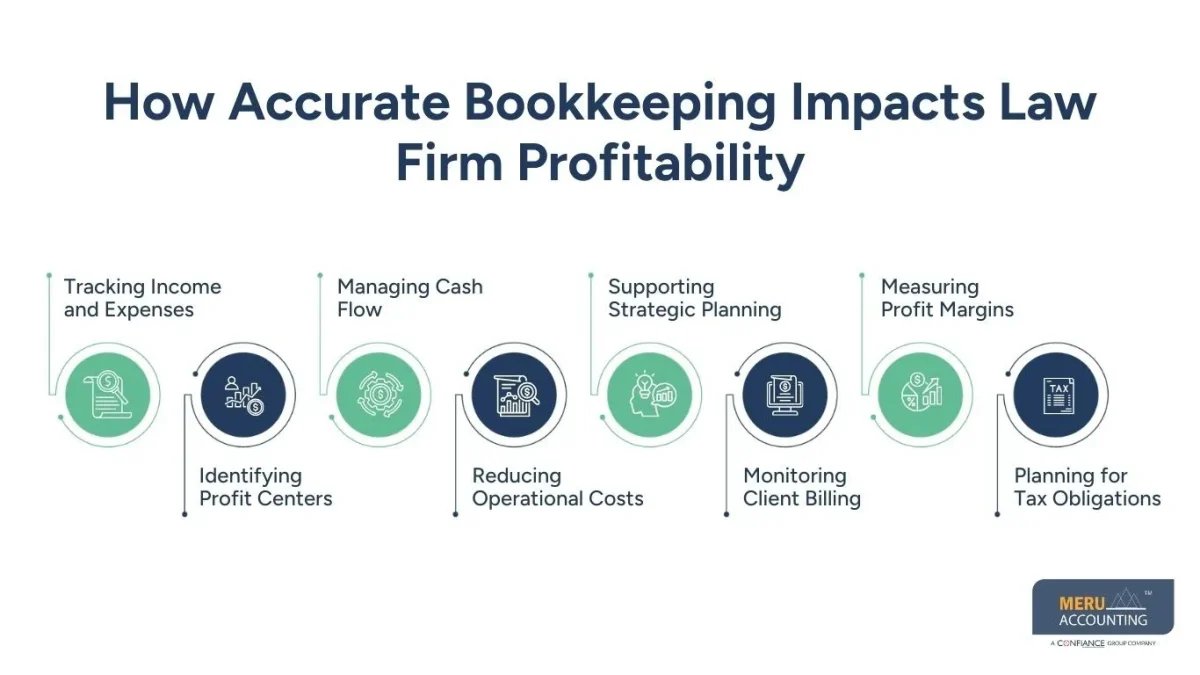
Supporting Strategic Planning
Financial insights from legal practice bookkeeping assist in planning expansions, hiring, or introducing new services.
Monitoring Client Billing
Accurate bookkeeping for attorneys ensures clients are billed correctly and on time, preventing revenue loss and improving overall cash flow.
Measuring Profit Margins
Tracking income and expenses allows law firms to calculate profit margins for each service or practice area, helping prioritize high-performing areas.
Planning for Tax Obligations
Proper legal practice bookkeeping helps estimate tax liabilities in advance, ensuring timely payments and avoiding penalties or interest charges.
Common Bookkeeping Challenges Faced by Attorneys
Complex Billing Systems
Law firms often have intricate billing structures, including hourly, fixed, and contingency fees, which complicate bookkeeping.
Using structured billing records and standardized invoicing helps keep all fee types accurate and easy to track.
Trust Account Management
Managing client funds requires strict adherence to regulations, and mistakes can have serious legal consequences.
Regular trust account reconciliation and clear fund segregation help prevent errors and compliance issues.
Tracking Expenses Accurately
Lawyers may struggle to separate personal and business expenses, leading to inaccurate financial records.
Maintaining separate accounts and recording expenses consistently improves accuracy and financial clarity.
Limited Time for Bookkeeping
Attorneys often prioritize clients over financial tasks, making consistent bookkeeping difficult.
Setting a fixed schedule or assigning bookkeeping responsibilities ensures records stay up to date.
Compliance Requirements
Staying up-to-date with local, state, and federal regulations adds pressure to maintain accurate records.
Following documented bookkeeping procedures and reviewing records regularly helps maintain compliance.
Key Components of Effective Bookkeeping for Attorneys
General Ledger Management
Maintaining a detailed general ledger is essential to track all transactions, including client payments, expenses, and payroll.
Accounts Receivable and Payable
Proper management ensures clients are billed promptly, and suppliers or staff are paid on time.
Payroll Accounting
Tracking salaries, bonuses, and deductions accurately prevents errors and maintains employee satisfaction.
Trust Accounting
Legal practice bookkeeping requires separate accounts for client funds, avoiding commingling with the firm’s operating funds.
Financial Reporting and Analysis
Regular reporting provides insights into profitability, expenses, and cash flow trends, helping attorneys make informed decisions.
Top Legal Practice Bookkeeping Strategies for Law Firms
Automate Where Possible
Using accounting software designed for law firms reduces manual errors and saves time in bookkeeping for attorneys.
Regular Reconciliation
Monthly reconciliation of bank and trust accounts ensures accuracy and detects discrepancies early.
Document Everything
Maintaining clear records of invoices, receipts, and payments supports transparency and compliance.
Track Billable Hours Accurately
Accurate tracking ensures clients are billed correctly and maximizes revenue for the firm.
Consult Professionals
Working with accounting experts ensures specialized legal practice bookkeeping is handled accurately and efficiently.
Review Financial Reports Regularly
Regularly reviewing financial reports helps law firms identify trends, monitor performance, and make informed decisions to improve profitability and efficiency.
How Bookkeeping for Attorneys Supports Compliance and Risk Management
Regulatory Compliance
Accurate bookkeeping helps law firms adhere to trust accounting rules, tax regulations, and other legal obligations.
Minimizing Legal Risks
By maintaining clear financial records, attorneys reduce the risk of penalties, audits, or disputes with clients.
Fraud Prevention
Regular monitoring and proper controls help detect fraudulent activity or financial mismanagement.
Maintaining Client Trust
Clients feel confident when their funds are handled transparently and ethically.
Preparing for Audits
A well-organized bookkeeping system ensures law firms are ready for internal or external audits without stress.
Why Choose Meru Accounting for Legal Practice Bookkeeping?
Choosing the right accounting partner is crucial for maintaining accurate financial records in a law firm. Meru Accounting offers specialized expertise in legal bookkeeping to help attorneys manage finances efficiently and stay compliant.
Expertise in Law Firm Accounting
Meru Accounting specializes in bookkeeping for attorneys, offering services tailored to the unique needs of legal practices.
Customized Solutions
Our team provides personalized accounting strategies that align with the size and type of your law firm.
Experienced Professionals
Certified accountants with years of experience ensure accurate, compliant, and timely bookkeeping services.
Technology-Driven Approach
We utilize reliable software to streamline bookkeeping processes, minimizing errors and saving time.
Peace of Mind
With Meru Accounting handling your legal practice bookkeeping, attorneys can focus on clients while we manage financial clarity.
Key Takeaways
- Bookkeeping for attorneys is crucial for managing finances, profitability, and compliance.
- Accurate records improve decision-making and help law firms plan for growth.
- Proper legal practice bookkeeping prevent disputes and ensure client trust.
- Outsourcing to experts like Meru Accounting provides specialized, efficient, and reliable bookkeeping solutions.
- Consistent financial management reduces risks and supports long-term success.
FAQs
Bookkeeping for attorneys tracks a law firm’s income, expenses, and client funds. It ensures financial health, compliance, and accurate billing.
Legal practice bookkeeping covers trust accounts, billable hours, invoices, payroll, and financial reporting. It helps attorneys manage finances efficiently.
Accurate bookkeeping for attorneys tracks revenue and costs, identifies profitable areas, and improves cash flow. This supports higher profitability.
Attorneys face complex billing, trust account management, and compliance issues. Outsourced Legal bookkeeping services solve these efficiently.
Outsourcing bookkeeping for attorneys saves time, reduces errors, and ensures compliance. Attorneys can focus on clients instead of finances.


