



Introduction to Credit vs Debit Accounting
Accounting is the backbone of financial management for businesses and individuals alike. At the core of accounting lies the fundamental concept of debits and credits. Understanding how bank debit credit transactions influence financial records is crucial for maintaining accurate accounts and ensuring transparent financial reporting. In this article, we will explore the principles of debit and credit accounting, how bank debit and credit transactions impact your financial records, and best practices for managing these transactions effectively.
Understanding the Basics of Debit and Credit Accounting
In the accounting world, debit and credit are two essential entries that are used to record financial transactions in the double-entry bookkeeping system. This system ensures that every financial transaction affects at least two accounts, maintaining the accounting equation:
Assets = Liabilities + Equity
For every debit entry, there must be an equal and corresponding credit entry. This guarantees that the accounting books stay balanced.
What is a Debit?
A debit is an accounting entry that increases asset or expense accounts and decreases liability, equity, or revenue accounts. When you debit an account, you are either adding value to assets or expenses or reducing value from liabilities, equity, or income.
What is a Credit?
A credit is an accounting entry that increases liability, equity, or revenue accounts and decreases asset or expense accounts. Essentially, credits are used to record sources of funding or income, or reductions in assets or expenses.
How Bank Debit and Credit Transactions Work
Bank debit and credit transactions are everyday financial activities that involve the movement of money into and out of a bank account. These transactions are reflected in your bank statement and ultimately impact your accounting records. Understanding how these transactions are recorded is key to maintaining accurate financial information.
Bank Debit Transactions
Bank debit transactions represent money being taken out of your bank account. This can include:
- Payments made to suppliers or vendors
- ATM withdrawals
- Checks written on your account
- Fees charged by the bank
- Automatic bill payments
In accounting, a bank debit post typically means the cash or bank account (an asset) is being decreased.
Bank Credit Transactions
Bank credit transactions refer to money deposited into your bank account. These can include:
- Customer payments
- Direct deposits from payroll
- Transfers into your bank account from other accounts
- Refunds from suppliers or vendors
A bank credit transaction increases the cash or bank account on your financial statements.
Impact of Bank Debit and Credit on Financial Records
Each bank debit or credit transaction has a ripple effect on the accounting records. It is important to understand this impact to maintain accurate books and prepare reliable financial statements.
Effect on Asset Accounts
The bank account is an asset account. A debit entry increases assets, and a credit entry decreases assets according to accounting principles. However, in bank transactions, the terminology can appear reversed. Here’s why:
- Bank Debits (Withdrawals): From the customer’s perspective, this is money leaving the bank account, thus decreasing the asset. So, the bank account is credited (bank reduces your balance) in your books.
- Bank Credits (Deposits): Money coming into the account increases assets; hence, the bank account is debited.
It is essential to differentiate between the bank’s perspective and the accountant’s perspective. The bank statement shows debits and credits based on their accounting, which is the opposite of yours.
Effect on Expense and Income Accounts
Bank debit and credit transactions also indirectly affect income and expense accounts:
- Bank Debits: When money is paid out to cover expenses, the corresponding expense account is debited.
- Bank Credits: When money is received from sales or income, the income account is credited.
These entries ensure comprehensive financial records that reflect both cash flow and profitability.
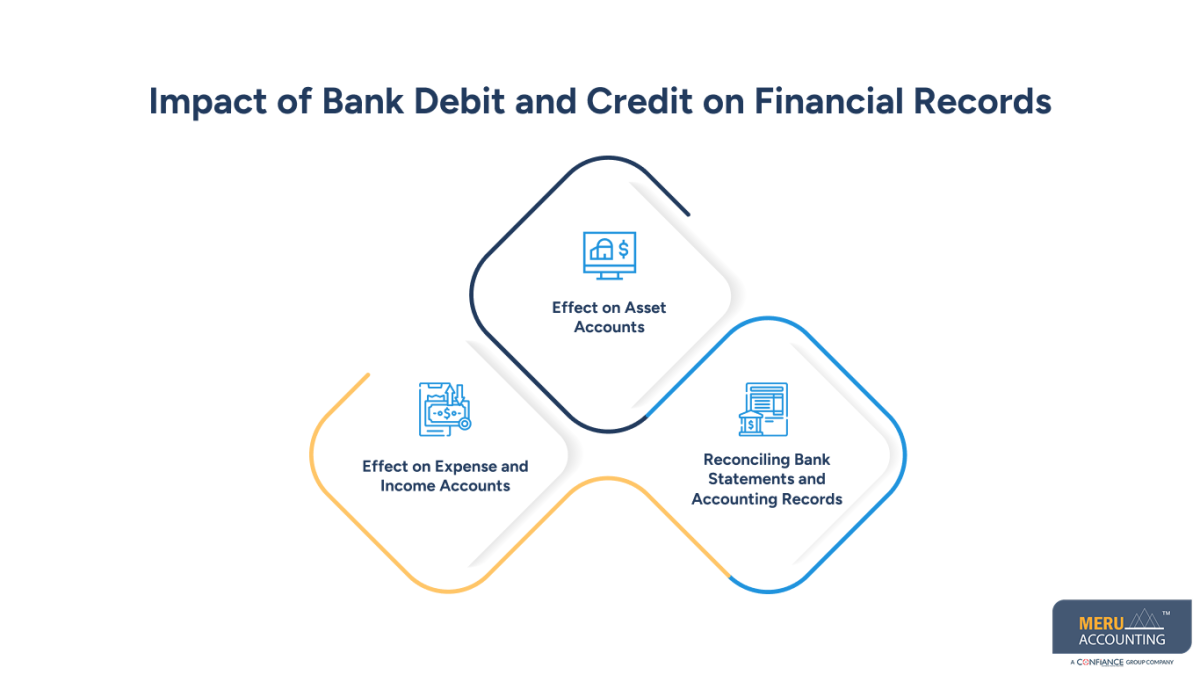
Reconciling Bank Statements and Accounting Records
Reconciling your bank’s debits and credits with your accounting records is vital for accuracy. Discrepancies may arise due to timing differences, bank errors, or recording mistakes, but reconciliation ensures that your financial reports are true and fair.
Double-Entry Bookkeeping and Bank Debit Credit Examples
Double-entry bookkeeping requires every business transaction to record two entries—debit and credit—in different accounts. Let’s look at common scenarios involving bank debit and credit transactions and how they are recorded.
| Transaction | Debit Account | Credit Account | Effect |
|---|---|---|---|
| Customer payment received | Bank Account (Asset) | Accounts Receivable (Asset) or Sales Revenue (Income) | Increase Bank Balance and decrease receivable / increase revenue |
| Payment made to supplier | Accounts Payable (Liability) or Expense Account | Bank Account (Asset) | Reduce bank balance and decrease payable or increase expense |
| Bank charges or fees | Bank Charges Expense | Bank Account (Asset) | Reduce bank balance and increase expense |
| Salary Direct Deposit | Salary Expense | Bank Account (Asset) | Reduce bank balance and increase expense |
| Loan received | Bank Account (Asset) | Loan Payable (Liability) | Increase bank balance and increase liability |
Common Bank Debit and Credit Errors and How to Avoid Them
Errors in recording bank debit and credit transactions can significantly distort your financial statements. Awareness of common mistakes and implementing controls can prevent costly errors.
Frequent Errors
- Recording deposits as credits in your books when they should be debits
- Failing to record bank fees or charges
- Mixing personal and business transactions
- Incorrectly entering transaction amounts
- Double recording transactions
Best Practices to Avoid Errors
- Regularly reconcile bank statements with accounting records
- Implement strict separation of duties for bookkeeping tasks
- Use accounting software with bank feed integration for automatic data synchronization
- Review transactions weekly or monthly to catch mistakes early
- Train staff on accurate bookkeeping techniques
Role of Technology in Managing Bank Debit and Credit Transactions
Modern accounting technology has revolutionized how businesses manage bank debit and credit entries. Automated processes simplify reconciliation, reduce errors, and provide real-time visibility.
Bank Feed Integration
Most accounting software now supports bank feed integration, which means transactions from your bank account automatically sync with your accounting software. This reduces manual entry and minimizes errors in debits and credits.
Automated Reconciliation Tools
These tools match your bank statement transactions with internal records, flagging any discrepancies for review. Automation accelerates reconciliation and improves accuracy.
Cloud Accounting Solutions
Cloud-based software enabling access from any device ensures that bank debit credit transactions can be monitored and recorded promptly, enhancing collaboration between accountants and business owners.
Conclusion: Mastering Bank Debit Credit for Accurate Financial Records
Understanding bank debit and credit transactions and their proper recording in accounting systems is essential for accurate financial management. By mastering these concepts, businesses and individuals can ensure their financial statements reflect true financial positions. Remember that every bank debit must be paired with a corresponding credit and vice versa, in line with double-entry bookkeeping. Leveraging technology and following best practices will further strengthen your accounting processes, helping you maintain clean, dependable financial records.
Stay consistent, stay diligent, and make bank debit credit accounting a cornerstone of your financial management strategy.
FAQs
What is the difference between bank debit and credit in accounting?
In accounting, a debit increases asset or expense accounts and decreases liabilities or equity, while a credit decreases assets or expenses and increases liabilities or equity.
How does a bank debit transaction affect my financial records?
A bank debit transaction reduces the balance in your bank account, which is recorded as a decrease in cash or bank asset in your financial records.
How does a bank credit transaction impact my accounting books?
A bank credit increases the balance of your bank account, recorded as an increase in your cash or bank asset account in financial records.
Why is it important to understand bank debits and credits in accounting?
Understanding bank debits and credits helps ensure accurate recording of transactions, which is essential for maintaining correct financial statements and managing cash flow.
Can a single bank transaction involve both a debit and a credit?
Yes, every bank transaction affects at least two accounts—a debit to one account and a credit to another—ensuring the accounting equation remains balanced.


