

Financial accounting for lawyers is an essential skill that helps legal professionals make sense of financial statements, assess law firm performance, and provide better advisory services to clients. Understanding financial accounting goes beyond knowing numbers; it empowers lawyers to evaluate profitability, cash flows, and key financial risks effectively.
This blog will guide you on analyzing real annual reports professionally, equipping you with practical insights into legal finance and accounting.
In this blog, we will explore why these services are vital, what a law firm bookkeeper does, and how choosing the right bookkeeping partner can save time, reduce errors, and improve your firm’s financial health.
What You Will Learn From This Blog
- Learn how to read and interpret annual reports of law firms and corporate clients, gaining insight into how financial statements reflect operational health.
- Understand which financial metrics are crucial for lawyers to focus on, including liquidity, profitability, and cost management.
- Follow a structured approach to reviewing annual reports, ensuring that no important detail is overlooked.
- Explore practical tools and techniques that help lawyers handle financial statements efficiently in legal finance and accounting.
- Review real-life examples of annual reports analyzed by lawyers to see how financial data drives legal and business decisions.
Introduction To Financial Accounting For Lawyers
Financial accounting for lawyers is the practice of understanding, interpreting, and applying financial information to support legal decision-making. It goes beyond simply reviewing numbers; it enables lawyers to evaluate a client’s financial health, assess risk, and provide well-informed legal advice.
Unlike general accounting, this field emphasizes areas particularly relevant to legal practice, including trust accounts, client fund management, and the overall financial performance of law firms.
In legal practice, mastering financial accounting allows lawyers to make strategic decisions with confidence. It helps assess client solvency, evaluate mergers or acquisitions, and identify potential financial risks that could impact legal outcomes.
By analyzing financial statements accurately, lawyers can support negotiations, structure transactions, and ensure compliance with regulatory standards.
Legal finance and accounting applies standard accounting principles specifically within the legal sector. It focuses on managing costs, monitoring performance, and maintaining transparency in financial reporting.
Lawyers who are proficient in these principles gain the ability to spot discrepancies, evaluate profitability, and enhance their advisory capabilities, ultimately providing clients with more precise and actionable guidance.
The Importance Of Annual Reports In Legal Practice
Insight into Client Financial Health
Annual reports provide lawyers with a clear picture of a client’s financial position, which is critical for negotiations, legal advice, and effective financial accounting for lawyers.
They also help lawyers identify trends in revenue, expenses, and assets over time, giving a fuller understanding of financial stability.
Evaluating Law Firm Performance
For lawyers managing or owning a firm, annual reports show profitability, expenses, and cash flows to guide strategy.
They also highlight areas where efficiency can be improved and costs can be better controlled.
Risk Assessment
Reviewing annual reports helps identify potential financial risks, like outstanding liabilities or declining revenue.
This allows lawyers to prepare proactive strategies to mitigate legal and financial exposure using principles of financial accounting for lawyers.
Compliance Check
Annual reports reveal if a company is complying with accounting standards and regulations, helping lawyers advise on legal compliance.
They also provide transparency that can prevent disputes and regulatory issues in the future.
Supporting Legal Transactions
Analyzed financials assist lawyers in mergers, acquisitions, or contract negotiations by providing clear evidence of financial performance.
Accurate reporting also strengthens negotiation positions and builds trust with other parties.
Step-By-Step Guide To Analyzing Real Annual Reports
Start with the Balance Sheet
Examine assets, liabilities, and equity. Focus on liquidity ratios and debt structure to evaluate financial stability. Reviewing long-term liabilities can also reveal potential future obligations that may affect legal or business decisions.
Review the Income Statement
Analyze revenues, expenses, and net income. Look for consistent growth trends and unusual fluctuations. Understanding expense allocation helps identify cost-management opportunities, an essential focus in financial accounting for lawyers.
Assess Cash Flow Statements
Understand cash inflows and outflows. Evaluate operating, investing, and financing activities to see true cash health. This also shows whether the firm generates enough cash to meet obligations and invest in growth.
Check Notes and Disclosures
Read footnotes for insights on accounting policies, contingent liabilities, and unusual transactions. They often reveal hidden risks and provide context for the main financial statements.
Compare with Industry Benchmarks
Compare metrics with industry peers to identify strengths and weaknesses in financial performance.
Benchmarking helps determine whether performance trends align with industry norms or raise concerns in financial accounting for lawyers.
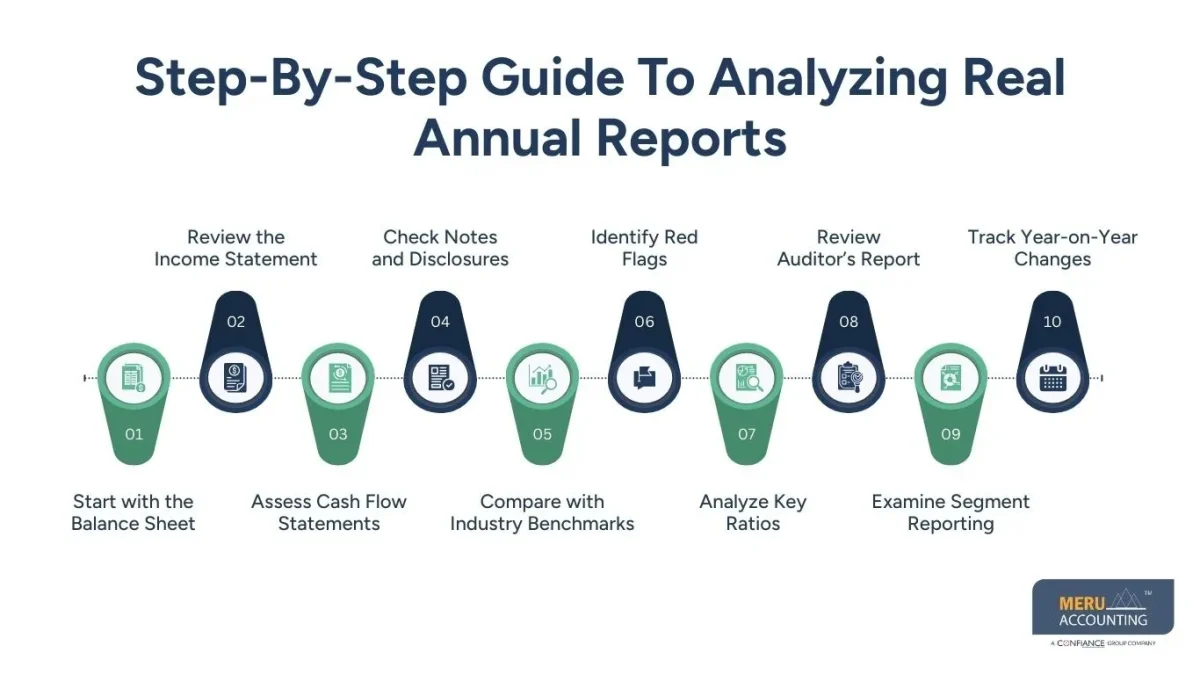
Identify Red Flags
Look for inconsistencies, sudden expense spikes, or unexplained declines in revenue. These could indicate risks, mismanagement, or areas needing legal attention.
Analyze Key Ratios
Use financial ratios like debt-to-equity, current ratio, and profit margins to assess financial health quantitatively, a key skill in financial accounting for lawyers. Ratios provide a quick way to spot trends and evaluate overall stability.
Review Auditor’s Report
Examine the auditor’s opinion to confirm whether financial statements are presented fairly. A qualified or adverse opinion may indicate serious financial or compliance issues.
Examine Segment Reporting
If the company has multiple divisions, review segment performance to understand which areas are profitable or underperforming. This helps lawyers advise clients on potential risks or investment opportunities.
Track Year-on-Year Changes
Compare current year results with previous years to spot trends, improvements, or declines. Sudden changes in revenue, expenses, or liabilities may require further legal or financial review.
Critical Metrics For Lawyers In Financial Accounting
Liquidity Ratios
Evaluate current and quick ratios to see if the firm or client can meet short-term obligations. These ratios indicate the ability to handle unexpected expenses or financial stress.
Profit Margins
Review gross, operating, and net profit margins to understand profitability trends. Consistent margins suggest efficient operations and financial stability.
Debt Levels
Assess debt-to-equity and interest coverage ratios to understand financial leverage and risk. High debt levels may increase vulnerability to market changes or legal liabilities assessed through financial accounting for lawyers.
Revenue Growth
Track year-on-year revenue growth to measure business expansion and sustainability. Sudden drops or spikes can signal operational or compliance issues requiring attention.
Expense Ratios
Check operating expenses relative to revenue to identify inefficiencies or overspending. This helps lawyers pinpoint areas where cost control measures may be needed.
Client Fund Management Metrics
For law firms, reviewing trust account balances and reconciliation reports is a vital aspect of financial accounting for lawyers to ensure proper client fund management. Regular monitoring ensures compliance and protects client interests.
Key Areas Of Concern In Law Firm Annual Reports
Accounts Receivable
High receivables may indicate collection issues that can affect cash flow. Tracking overdue accounts helps lawyers advise on improving collection policies and cash management.
Accounts Payable
Delayed payments could signal liquidity problems or poor vendor relationships. Monitoring payment schedules ensures obligations are met and avoids potential disputes.
Profit Distribution
Understand how profits are allocated among partners to assess fairness and sustainability. Clear distribution practices can prevent conflicts and ensure long-term firm stability.
Operating Expenses
Monitor salaries, rent, and administrative costs to ensure efficient fund use. Identifying areas of overspending can help optimize resources and improve profitability.
Legal Liabilities
Check for pending lawsuits, contingent liabilities, and compliance obligations that could impact financial health. Early detection allows lawyers to manage risk and advise clients proactively.
Capital Expenditure
Large investments in property or technology must be justified by projected returns. Assessing the impact on cash flow ensures that expenditures support strategic growth without overextending the firm.
Practical Tools And Techniques For Legal Finance And Accounting
Accounting Software
Use platforms like QuickBooks, Xero, or specialized legal accounting tools for accurate record-keeping. These tools help automate calculations, track transactions, and generate reliable financial reports.
Spreadsheet Analysis
Create spreadsheets for ratio analysis, trend monitoring, and scenario modeling. Spreadsheets allow lawyers to customize analyses and quickly visualize financial patterns.
Benchmarking
Compare key metrics with industry norms to detect strengths and weaknesses. Benchmarking also helps identify areas for improvement and guides strategic decision-making.
Internal Controls
Implement checks and balances for client funds, expense approvals, and reconciliation. Strong internal controls reduce errors, prevent misuse of funds, and ensure compliance with legal standards.
Training Programs
Lawyers can undergo structured training in financial accounting for lawyers to improve competency and confidence in financial analysis. Training builds confidence in interpreting financial statements and spotting risks.
Professional Advisory
Consult financial experts or accountants to validate findings and provide guidance. Expert advice ensures that analyses are accurate, compliant, and actionable for legal decisions.
Best Practices For Lawyers Handling Financial Accounting
Regular Review
Conduct periodic financial reviews to avoid surprises during audits or transactions, reinforcing best practices in financial accounting for lawyers.
Frequent reviews help identify trends, spot irregularities early, and ensure ongoing compliance.
Maintain Accurate Records
Ensure bookkeeping is up-to-date and reconciliations are completed regularly. Accurate records reduce errors, simplify reporting, and strengthen trust with clients and regulators.
Understand Financial Statements
Lawyers should be comfortable reading balance sheets, income statements, and cash flow reports. Understanding these statements allows for better evaluation of financial health and informed decision-making.
Collaborate With Accountants
Work closely with financial professionals to validate findings and get expert insights. Collaboration ensures analyses are accurate and aligned with accounting standards.
Focus on Key Metrics
Prioritize metrics that matter most for client advisory or law firm performance. Concentrating on key ratios and trends helps lawyers give precise advice and monitor financial stability effectively.
Document Findings
Keep written records of analyses and recommendations for accountability and legal compliance. Proper documentation also serves as evidence during audits or client consultations, reinforcing the importance of financial accounting for lawyers.
How Meru Accounting Helps Lawyers With Financial Accounting
Expertise in Legal Finance and Accounting
Specialized support in financial accounting for lawyers helps them analyze annual reports accurately. This ensures critical financial information is interpreted correctly for legal decision-making.
Customized Reporting
Lawyer-friendly financial reports can highlight key metrics, risks, and trends. Clear reporting makes it easier to focus on what matters most for legal and business decisions.
Trust Account Management
Accurate tracking and reconciliation of law firm client funds ensures compliance with legal and ethical standards. Proper management protects clients and prevents regulatory issues.
Advisory Support
Professional guidance can help lawyers make informed financial decisions, improve profitability, and manage potential risks effectively.
Training for Lawyers
Training programs in financial accounting for lawyers enhance competency and confidence in analyzing financial statements and identifying discrepancies.
Global and Multi-Industry Support
Access to expertise across regions and industries allows lawyers to apply legal finance and accounting principles to a variety of clients and situations efficiently.
Key Takeaways
- Financial accounting for lawyers is essential for analyzing annual reports accurately.
- Lawyers can assess profitability, cash flow, debt, and risks through structured analysis.
- Legal finance and accounting tools streamline processes and improve accuracy.
- Understanding financial statements improves advisory services to clients.
- Partnering with experts like Meru Accounting ensures professional and compliant financial handling.
FAQs
Financial accounting for lawyers helps legal professionals understand financial statements clearly. Better understanding supports stronger legal advice and risk review.
Lawyers should study balance sheets, income statements, and cash flow reports. Careful review helps identify financial risks and stability.
Balance sheets, income statements, and cash flow statements matter the most. Notes and disclosures reveal hidden financial issues.
Legal finance and accounting supports proper handling of client funds and expenses. Strong financial systems help law firms stay compliant.
Many lawyers focus only on profit and ignore cash flow details. Such mistakes can lead to poor legal decisions.


