




Financial Accounting for Lawyers plays a vital role in maintaining accurate records, meeting legal compliance needs, and protecting client funds. Law firms manage complex financial activities daily, and even small bookkeeping errors can lead to penalties or trust violations.
Legal financial accounting helps legal professionals stay organized, reduce risks, and build long-term financial stability through structured accounting practices.
This blog explains how legal financial accounting supports compliance, improves reporting accuracy, and prevents costly mistakes. It also highlights how financial accounting outsourcing can help law firms reduce workload and control costs effectively.
Legal financial accounting is essential for law firms handling client funds, retainers, and operating expenses. Lawyers must follow strict rules when managing trust accounts and financial records. Legal financial accounting ensures transparency, accuracy, and proper documentation at every stage.
What You Will Learn From This Blog
- How accurate recordkeeping keeps financial transactions consistent and reliable
- Why proper accounting helps law firms avoid penalties and compliance issues
- How client funds should be managed using Financial Accounting for Lawyers
- Why keeping trust accounts separate protects clients and law firms
- How financial accounting outsourcing reduces workload and manual errors
- Why financial accounting outsourcing allows lawyers to focus more on legal work while experts manage the books
- Which key financial indicators should law firms track regularly
- How monitoring these metrics improves financial decisions
- Why are regular checks and reconciliations necessary
- How early error detection prevents costly bookkeeping mistakes
Understanding The Importance Of Financial Accounting For Lawyers
Financial Accounting for Lawyers is vital for managing client funds, retainers, and daily operating expenses while meeting strict trust account rules. It ensures accurate records, transparency, and proper documentation, helping law firms avoid compliance issues and maintain client trust.
Compliance With Legal Regulations
Accurate accounting practices help law firms meet required legal and regulatory standards. Well-maintained records make audits and legal reviews easier to manage.
Protection Of Client Funds
Clear accounting processes keep client money separate from firm operating funds. This separation reduces the risk of misuse and compliance violations.
Clear Financial Visibility
Organized financial records provide better insight into income and expenses. Law firms can plan budgets and expenses with greater confidence.
Reduced Risk Of Penalties
Consistent bookkeeping lowers the chances of errors that result in fines. Reliable records also strengthen the firm’s professional credibility.
Improved Financial Control
Tracking expenses regularly helps firms monitor spending patterns. Stronger control supports long-term financial stability and growth.
Trust Account Management and Compliance in Law Firm Accounting
Trust account management is a critical responsibility for law firms handling client funds. Clear processes and accurate records help firms meet legal requirements, protect client money, and avoid serious compliance issues.
Separation Of Client And Firm Funds
Client funds must remain separate from firm operating accounts. This separation follows mandatory legal and professional requirements.
Accurate Recording Of Trust Transactions
Each trust deposit and withdrawal should be recorded accurately. Clear transaction records improve transparency and strengthen accountability.
Regular Trust Reconciliation
In financial accounting for Lawyers, regular trust reconciliation confirms that balances match recorded financial data, minimizing compliance risks. Frequent reviews help identify errors before compliance issues arise.
Avoiding Overdraft Issues
Careful monitoring prevents negative balances within trust accounts. Accurate tracking reduces risks linked to trust overdrafts.
Documentation For Audits
Well-organized trust records support smooth audit preparation processes. Clear documentation helps auditors review trust activities efficiently.
How Financial Accounting Outsourcing Can Reduce Errors And Costs
Outsourcing accounting tasks helps law firms improve accuracy. It also supports better cost control and operational efficiency.
Reduced Internal Workload
Financial accounting outsourcing services reduce pressure on internal staff, allowing law firms to focus on core legal activities. This approach improves efficiency and reduces daily workload stress.
Access To Accounting Specialists
Experienced accounting professionals handle complex legal and financial requirements. Their expertise supports accuracy and regulatory compliance.
Lower Operating Costs
Financial accounting outsourcing helps reduce expenses related to hiring, staff training, and internal accounting management. This approach provides affordable and consistent accounting support.
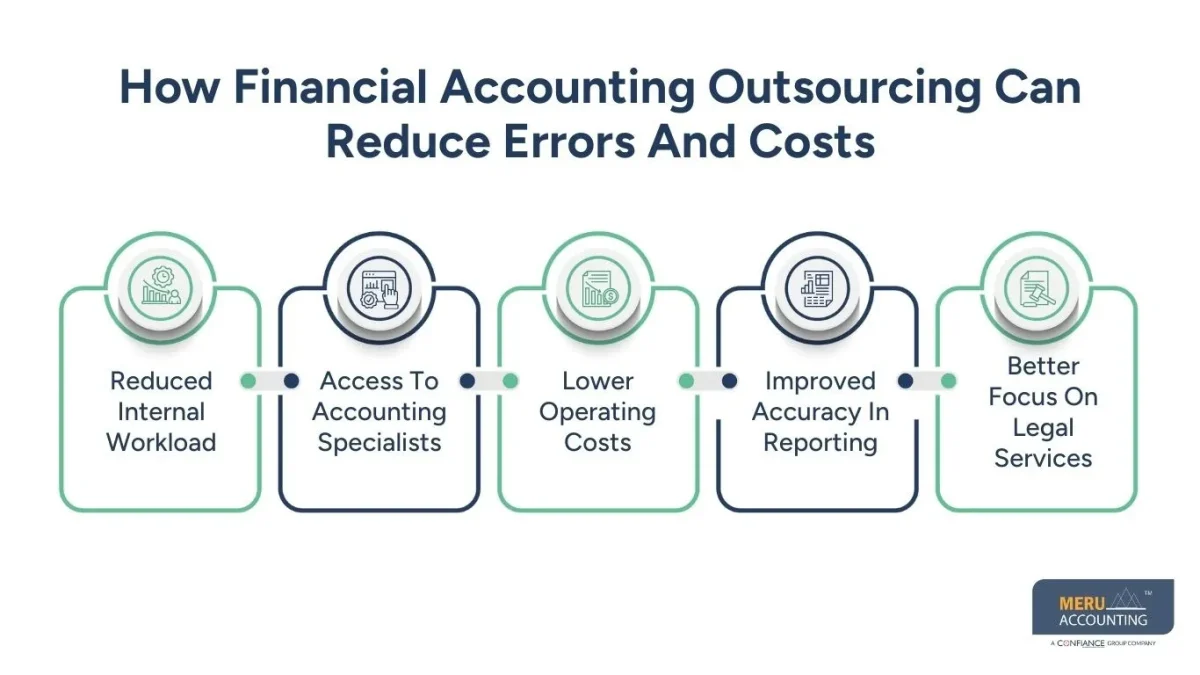
Improved Accuracy In Reporting
Standardized processes ensure financial reports remain consistent. Fewer manual entries significantly reduce reporting errors.
Better Focus On Legal Services
With financial accounting outsourcing, lawyers spend more time serving clients effectively while accounting experts handle the books.
Benefits Of Implementing Robust Accounting Systems In Law Firms
Strong accounting systems help law firms manage finances efficiently. They support accuracy, consistency, and better financial oversight.
Structured Financial Processes
Clear accounting systems create consistent financial workflows firmwide. Standard processes reduce confusion and improve daily accounting accuracy.
Improved Record Organization
Financial Accounting for Lawyers keeps financial documents well-organized. This supports quick access when needed.
Timely Financial Reporting
Efficient financial accounting for Lawyers systems allows faster preparation of financial reports and supports timely decision-making.
Enhanced Compliance Support
Accounting systems align processes with required regulatory standards. This alignment lowers compliance risks and potential penalties.
Better Cash Flow Tracking
Accurate tracking helps monitor cash movement throughout operations. Law firms can plan expenses with greater financial confidence.
Key Financial Metrics Every Lawyer Should Track
Tracking key financial metrics helps law firms maintain control. These metrics support better decision-making and improved financial health.
Operating Expenses
Firm expenses should be monitored carefully every month consistently. Regular tracking helps control unnecessary costs effectively.
Client Retainers
Financial Accounting for Lawyers monitors retainer balances carefully. This ensures proper usage and compliance.
Trust Account Balances
Trust balances should be reconciled and maintained accurately. Regular checks help prevent errors and discrepancies.
Revenue By Practice Area
Income from each practice area must be tracked clearly. This helps evaluate performance and identify profitable services.
Profit Margins
Profitability should be measured for each service and case. Metrics allow law firms to adjust strategies efficiently.
How Regular Reconciliation Prevents Costly Bookkeeping Errors
Regular reconciliation helps law firms avoid expensive bookkeeping mistakes. It ensures records remain accurate and supports compliance requirements.
Bank Reconciliation
Bank statements should be compared with internal accounting records. This process quickly identifies errors and discrepancies.
Trust Account Reconciliation
Trust accounts must be reconciled on a regular basis. Frequent checks maintain compliance and improve accuracy.
Early Error Detection
Financial Accounting for Lawyers catches mistakes before escalation. Early action saves time and money.
Audit Readiness
Records must be maintained in a state ready for audits. Proper documentation reduces stress during inspections or reviews.
Improved Financial Confidence
Accurate financial data builds trust in firm operations. Reliable records allow lawyers to make informed decisions.
Integrating Financial Accounting For Lawyers With Practice Management Systems
Centralized Financial Data
Integrated systems store all financial and client data securely. This allows law firms to access information quickly and easily.
Improved Billing Accuracy
Billing records are automatically linked with accounting data correctly. This process significantly reduces errors in invoices for clients.
Better Time Tracking
Time entries connect directly to client billing automatically each day. This makes revenue tracking clear and efficient for firms.
Simplified Reporting
Financial Accounting for Lawyers generates combined reports easily. This saves time for firm management.
Stronger Internal Controls
Integration strengthens oversight of transactions and accounting processes consistently. It helps law firms reduce risks and maintain compliance properly.
Why Law Firms Choose Meru Accounting
Law firms face unique financial challenges that require expertise. Proper accounting ensures compliance, accuracy, and efficient management of funds. Meru Accounting provides tailored solutions to meet these critical needs.
Legal Accounting Expertise
Meru Accounting specializes in Financial Accounting for Lawyers. Our team understands legal compliance requirements clearly and efficiently.
Accurate Trust Account Handling
We manage trust accounts with strict accuracy every day. This ensures both firms and their clients remain protected.
Reliable Financial Reporting
Our reports provide clear insights into all financial activities. Law firms can make informed decisions and stay compliant.
Cost-Effective Accounting Support
We offer financial accounting outsourcing services for law firms. This reduces internal workload and helps manage operational costs.
Dedicated Client Support
Meru Accounting provides consistent support for all accounting needs. We assist law firms at every stage of financial management.
Key Takeaways
- Financial Accounting for Lawyers supports compliance and accuracy
- Trust account management requires strict financial controls
- Financial accounting outsourcing reduces errors and costs
- Regular reconciliation prevents major bookkeeping issues
- Meru Accounting offers reliable accounting support for law firms
FAQs
Accurate record keeping, regular reconciliation, and proper trust account management prevent mistakes. It ensures compliance and reduces the risk of financial errors.
Mixing client and firm funds, missing reconciliations, and incorrect billing are common errors. Financial Accounting for Lawyers helps detect and correct these issues early.
Yes, outsourcing provides experienced professionals to manage accounts. It reduces human error and improves reporting consistency.
Client funds must be kept separate from firm accounts. Regular tracking and reconciliations ensure compliance with legal standards.
Revenue by practice area, operating expenses, profit margins, and trust balances are key. Monitoring these metrics helps maintain firm stability and financial health.


