

Hiring the right accounting professional is essential for any business. Understanding how to hire a staff accountant ensures your business’s finances are accurate, compliant, and efficiently managed. This guide walks you through every step, from understanding the role to evaluating candidates effectively, making it easier to understand how to hire a staff accountant for your business.
Finding the right staff accountant can seem challenging, especially for small businesses or startups without a dedicated HR team. However, with a clear understanding of the hiring process, the skills to look for, and the tools available to assess candidates, you can make an informed decision.
This beginner’s guide simplifies the process and provides practical tips to help you understand how to hire a staff accountant who fits your business needs.
What You Will Learn From This Blog
- How to identify when your business needs a staff accountant
- The role and responsibilities of a staff accountant
- Step-by-step guidance on hiring the right candidate
- Key skills and qualifications to look for
- Tips for evaluating candidates during interviews
- Common mistakes to avoid when hiring
- Useful tools and resources for employers
Understanding The Role: What Does a Staff Accountant Do?
Financial Record Management
A staff accountant manages daily financial records, ensuring all transactions are recorded accurately—an important factor when deciding how to hire a staff accountant. They maintain general ledgers, reconcile accounts, and prepare reports.
Payroll and Tax Compliance
Staff accountants handle payroll processing and tax filings. This ensures your business meets all regulatory requirements and avoids penalties, which is why knowing how to hire a staff accountant is essential.
Budgeting and Forecasting
They assist in preparing budgets and forecasts, helping businesses plan expenses and manage resources effectively. This allows business owners to make informed financial decisions and allocate resources wisely when applying a proper hiring a staff accountant guide.
Reporting and Analysis
Staff accountants prepare financial statements, analyze trends, and provide insights to support decision-making.
Their analysis helps identify cost-saving opportunities and improve overall business performance, reinforcing the importance of how to hire a staff accountant.
Audit Preparation
A staff accountant helps prepare documents and reports required for audits, making the process easier and more organized. They ensure all records are accurate, complete, and ready for review by auditors.
Support for Senior Management
They provide financial data and reports to management, aiding in strategic planning and operational decisions. This guidance helps management track performance and plan for growth confidently.
Why Knowing How to Hire a Staff Accountant Matters
- Understanding how to hire a staff accountant helps minimize errors in bookkeeping, payroll, and tax filings, safeguarding your business finances.
- A skilled accountant handles repetitive financial tasks efficiently, freeing up your time for other priorities.
- Proper accounting ensures your business complies with tax laws and financial regulations, avoiding fines and legal issues.
- With accurate financial data, management can make informed decisions to grow the business.
- A competent staff accountant can identify cost-saving opportunities and prevent financial losses.
- Reliable accounting practices build confidence with investors, clients, and stakeholders.
Signs Your Business Needs a Staff Accountant
Increasing Transaction Volume
If your business handles numerous transactions daily, understanding how to hire a staff accountant becomes essential to manage the workload without mistakes. They ensure every transaction is recorded accurately and efficiently.
Tax and Compliance Challenges
Difficulty in keeping up with tax filings and regulations signals the need for a professional accountant. A staff accountant helps you stay compliant and avoid penalties, highlighting the importance of a strong Hiring a staff accountant guide.
Inconsistent Financial Reports
Errors or delays in financial reporting indicate the need for dedicated accounting support. Accurate reporting allows you to make timely and informed decisions.
Difficulty Tracking Expenses
If you struggle to monitor business expenses or budgets, a staff accountant can provide accurate tracking. This helps prevent overspending and keeps finances under control.
Preparing for Growth
When expanding operations, hiring a staff accountant ensures financial stability during growth. They can also assist in forecasting and budgeting for new business opportunities.
Overworked Team
If your team spends too much time on accounting tasks, it’s time to bring in a professional. A dedicated accountant frees up your team to focus on core business activities.
Complex Financial Transactions
If your business deals with loans, investments, or multiple revenue streams, a staff accountant can manage these complexities. They help simplify complicated financial processes and maintain accuracy.
Planning for Tax Season
Struggling to prepare for tax deadlines is a clear sign you need accounting support. A staff accountant ensures all tax documents and filings are ready on time.
Need for Financial Insights
If you want actionable insights from your financial data but lack expertise, a staff accountant can provide analysis. This helps identify trends, opportunities, and areas for improvement.
Step-by-Step Process: How to Hire a Staff Accountant
Define Your Needs
Determine the responsibilities and level of expertise required—this is the first step in understanding how to hire a staff accountant effectively.
This will help you write a precise job description. Consider whether you need someone for general accounting tasks or specialized financial work.
Prepare a Job Description
Include duties, qualifications, experience, and expectations. Clear descriptions attract suitable candidates.
A well-written job description also sets clear expectations for performance and responsibilities, which is essential in hiring a staff accountant.
Advertise the Position
Use job boards, social media, and professional networks to reach potential candidates. Consider industry-specific platforms to find accountants with relevant experience when planning how to hire a staff accountant.
Screen Resumes
Filter applicants based on experience, qualifications, and relevant skills to shortlist the best candidates. Look for candidates with stable work history and relevant certifications as part of your Hiring a staff accountant guide.
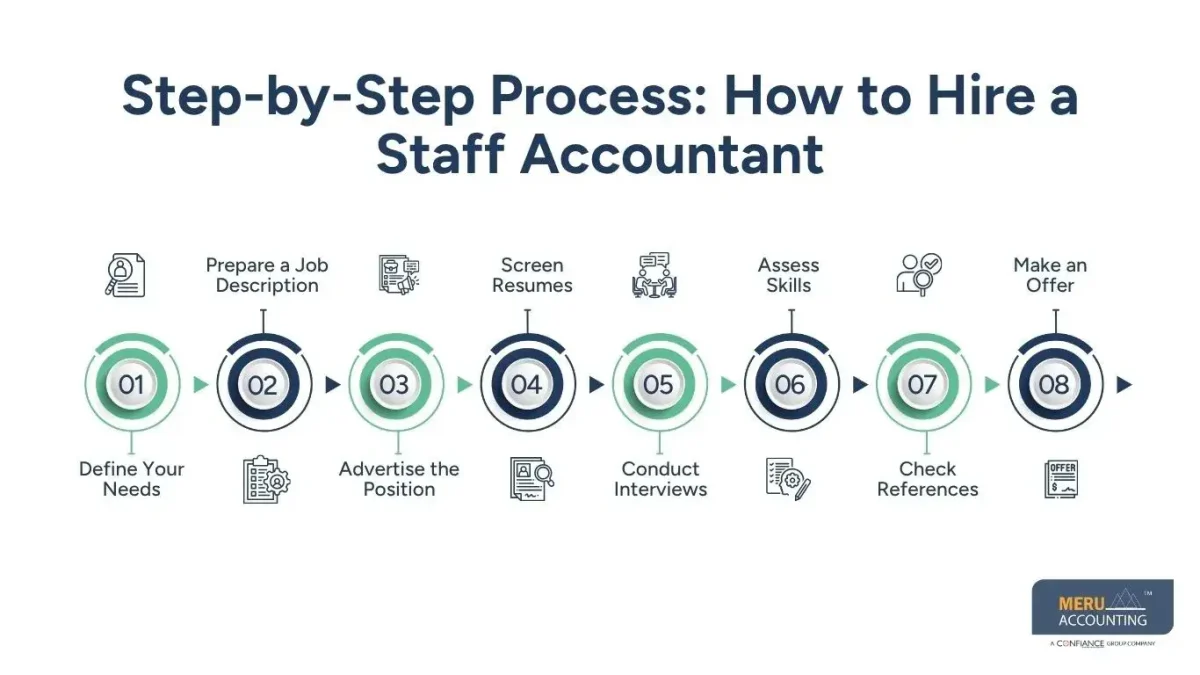
Conduct Interviews
Ask questions that assess technical knowledge, problem-solving, and communication skills when applying how to hire a staff accountant in practice.
Include scenario-based questions to see how they handle real-world accounting challenges.
Assess Skills
Use practical tests or assignments to evaluate accounting and analytical abilities. This ensures the candidate can handle the type of work your business requires.
Check References
Verify previous work experience and reliability through professional references. References can provide insights into work ethic, accuracy, and reliability when applying how to hire a staff accountant.
Make an Offer
Once you identify the right candidate, offer a competitive package to secure their employment. Include benefits and growth opportunities to attract and retain top talent.
Key Skills and Qualifications to Look For
Educational Background
Look for candidates with a degree in accounting, finance, or related fields. Certifications like CPA or CMA add value. Higher education and certifications demonstrate a strong foundation in accounting principles and standards.
Technical Skills
Proficiency in accounting software, spreadsheets, and financial reporting tools is essential. Familiarity with multiple platforms ensures the accountant can adapt quickly, an important factor in how to hire a staff accountant.
Attention to Detail
A staff accountant must identify errors and ensure data accuracy consistently. This skill helps prevent costly mistakes and ensures reliable financial reporting.
Analytical Abilities
They should interpret financial data and provide actionable insights for business decisions. Strong analytical skills allow the accountant to spot trends and suggest improvements.
Communication Skills
Clear communication helps in explaining financial information to non-accounting staff and management. It ensures that complex data is understandable for decision-makers, aligning with best practices in hiring a staff accountant guide.
Adaptability
Candidates should handle new regulations, software updates, and changing business needs effectively. Adaptable accountants can keep your business compliant and efficient during changes.
Evaluating Candidates: Interview Questions and Assessment Tips
Technical Questions
Ask about journal entries, reconciliations, or accounting standards to test knowledge. This verifies that they understand essential accounting practices.
Problem-Solving Scenarios
Provide hypothetical accounting challenges and assess their solutions. Scenario-based questions show their practical thinking and problem-solving abilities.
Practical Tests
Assign tasks like creating a balance sheet or analyzing a cash flow statement. Hands-on assessments reveal real-world skills beyond theoretical knowledge.
Behavioral Questions
Ask about past experiences in handling errors, tight deadlines, or complex reports. These questions help understand their work habits and reliability when evaluating how to hire a staff accountant.
Cultural Fit
Assess whether the candidate aligns with your company’s values and working style. A good cultural fit ensures smooth collaboration within your team.
Reference Checks
Confirm reliability, work ethics, and performance through previous employers. References can provide insights that interviews alone may not reveal.
Common Mistakes to Avoid When Hiring a Staff Accountant
Rushing the Process
Avoid hiring quickly; a thorough assessment ensures the right fit. Taking time helps you select a candidate who meets all your needs when learning how to hire a staff accountant.
Overlooking Soft Skills
Technical expertise alone is not enough; communication and teamwork matter too. Soft skills affect how well the accountant works with others in your business.
Ignoring Red Flags
Pay attention to gaps in employment, inconsistent experience, or vague references. Early identification of red flags prevents future issues.
Focusing Only on Cost
Choosing the cheapest candidate may compromise quality and reliability. Investing in the right person saves money in the long run, a key principle in any hiring a staff accountant guide.
Neglecting Skill Assessment
Practical tests help gauge real-world accounting abilities. Assessments ensure candidates can perform tasks accurately under real work conditions.
Lack of Clear Job Description
A vague description can attract unsuitable applicants and prolong hiring. Clear expectations help attract the right candidates and speed up the process.
Hiring a Staff Accountant Guide: Tools and Resources for Employers
Job Boards and Portals
Platforms like LinkedIn, Indeed, and local accounting networks help find suitable candidates when planning how to hire a staff accountant effectively. Using multiple sources increases your chances of finding qualified applicants.
Accounting Software Familiarity
Use tools like QuickBooks, Xero, or Zoho Books to match candidates with your systems. Ensuring software compatibility reduces training time and increases efficiency, which is an important step in any hiring a staff accountant guide.
Professional Associations
Memberships in accounting bodies can provide access to certified professionals. Associations often have job boards and networking opportunities for skilled accountants, making it easier to understand how to hire a staff accountant.
Recruitment Agencies
Specialized accounting recruiters can shortlist candidates with relevant experience. Recruiters save time by presenting only the most qualified applicants when planning how to hire a staff accountant.
Online Assessments
Platforms offering accounting skill tests help evaluate candidate competence. These assessments provide objective insights into candidate abilities, supporting better decisions when applying how to hire a staff accountant.
Candidate Evaluation Support
Guidance on evaluating resumes, conducting interviews, and testing skills ensures you choose the right staff accountant. Structured evaluation improves your chances of hiring a capable and reliable professional.
Why Choose Meru Accounting for Your Hiring Needs
- Meru Accounting provides comprehensive accounting and bookkeeping services for businesses of all sizes, ensuring your finances are accurate and well-managed.
- At Meru Accounting, we handle financial records, payroll, and tax compliance efficiently, so you can focus on growing your business.
- We assist with financial reporting, budgeting, and forecasting to give you clear insights and support better decision-making.
- Our experts guide you on regulatory compliance and accounting standards, keeping your business secure and worry-free.
- We have a team of certified professionals dedicated to managing your finances reliably, following best practices from a proven hiring a staff accountant guide.
Key Takeaways
- Hiring the right staff accountant improves accuracy, compliance, and efficiency
- Define responsibilities and create a clear job description before hiring
- Evaluate candidates through interviews, skill tests, and reference checks
- Avoid common hiring mistakes like rushing or overlooking soft skills
- Use tools, resources, and expert guidance to make the process easier
FAQs
Start by defining your needs, posting a clear job description, screening candidates, and conducting interviews with skill tests.
A degree in accounting or finance, knowledge of accounting software, and attention to detail are usually required.
You should hire when financial tasks increase, reports become inconsistent, or tax compliance becomes difficult.
Ask about experience, accounting processes, problem-solving ability, and how they handle errors or deadlines.
It usually takes a few weeks, depending on your hiring process, candidate availability, and interview rounds.


