



How to Prepare Business Accounts for 2026 Step-by-Step
Preparing business accounts for 2026 takes time and care. Every firm must keep all money papers right. Updated business accounting books help track cash in and out. Good business accounting records show costs and profits for each month. Following clear steps now saves time in the future.
Keeping records correct also helps during audits or tax checks. Organized business accounting books make it easy to see money flow. Clean business accounting records reduce errors and make work faster. Simple habits now lead to smooth business accounts later. Planning and logging carefully make the whole process simple.
Understanding the Importance of Accurate Business Accounts
Good business accounts help owners make smart choices. They show real money in, money out, and cash flow. Clear business accounting books give a true view of finances. Bad business accounting records may lead to wrong choices and lost profit.
Effective records also build trust with banks. Accurate business accounts help spot trends and plan growth. Updated business accounting books make audits smooth and fast. Strong business accounting records reduce errors and save time.
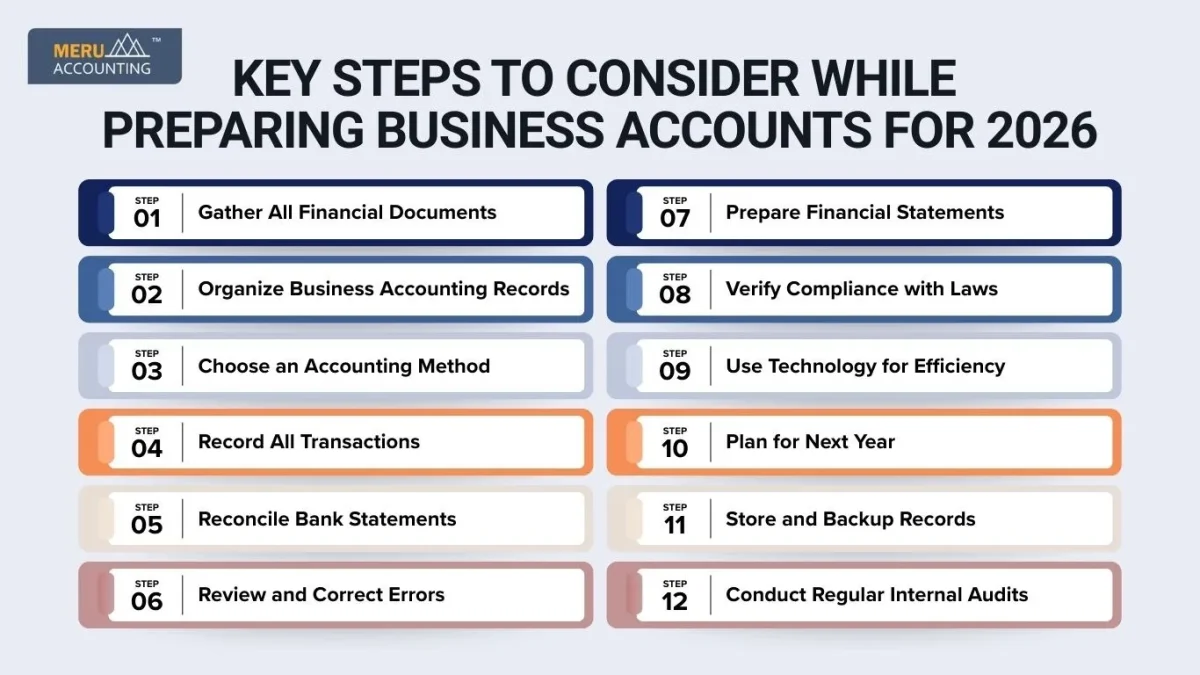
Key Steps To Consider While Preparing Business Accounts For 2026
Gather All Financial Documents
Collect Records
- Get invoices, receipts, and bank papers in one place. Add payroll sheets and tax files for each worker.
- Complete papers make business accounting books correct and ready. Missing papers may cause errors in business accounting records.
Add Supporting Papers
- Include supplier bills, loan papers, and credit notes too. Supporting papers make business accounting records full and easy.
- Keep all documents together to avoid stress later. Organized papers help prepare business accounts quickly and right.
Organize Business Accounting Records
Sort by Type
- Keep all income and expense slips in separate files. Label each folder or digital file to find it quickly.
- Clean business books help cut errors and save time. Sorted papers make checking business records easy and fast.
Sort by Date
- Put transactions in date order to track money flow. This helps with bank checks and report-making fast.
- Chronological order keeps business accounting records neat and clear. Organized papers save time when preparing business accounts fully.
Choose an Accounting Method
Cash or Accrual
- Cash accounting logs money when it is received. Accrual accounting logs money when it is earned or spent.
- Pick one method to keep business accounting books right. A steady method keeps business accounting records easy to use.
Consider Size
- Small firms may choose cash accounting for simple tracking. Big firms often use accrual accounting to see the full money flow.
- The correct method reduces mistakes in business accounts and books. Use one method to keep papers clear and simple.
Record All Transactions
Daily Entries
- Write sales, purchases, and payments in business accounting books. Daily logging prevents backlogs and errors in business accounts.
- Check each paper against receipts to keep it right. Accurate business accounting records make reports fast and clear.
Categorize Transactions
- Classify income, expenses, and assets in separate sections. Good categories help business accounting books stay clear and neat
- Organized records show trends and money flow fast. Categories make business accounting records simple to read and use.
Reconcile Bank Statements
Match Records
- Compare bank statements with business accounting books each month. Find missing or double entries and fix them fast.
- Reconciliation keeps business accounts correct and avoids mistakes. Check often to prevent issues in reports or audits.
Verify Transactions
- Check deposits, withdrawals, and fees with your records. Ensure totals match in business accounting books and statements.
- Verify regularly to keep business accounting records correct. Proper review builds trust in numbers and reports clearly.
Review and Correct Errors
Check Entries
- Check totals for income and expenses daily in books. Ensure business accounting records show the right amounts and dates.
- Fix mistakes fast to avoid future errors in accounts. Review often to keep business accounts accurate and safe.
Compare Documents
- Match receipts and invoices with business accounting books carefully. Avoid duplicate or missing entries in business accounting records.
- Cross-checking ensures correct business accounts and avoids problems. Keep a trail for proof and simple reference.
Prepare Financial Statements
Income Statement
- Record total sales and costs to see net profit. Income statements show results for the firm each period.
- Use business accounting records to make statements correct. Check entries before adding to business accounts for reports.
Balance Sheet
- List assets, debts, and owner funds in the books clearly. Balance sheets show the firm’s money position to owners.
- Check totals to make business accounts accurate and neat. Record adjustments for a full picture of cash.
Cash Flow Statement
- Track money coming in and going out each week. Cash flow shows liquidity and money needs clearly.
- Update business accounting records to reflect cash movement. Well-kept statements help plan for future money needs.
Verify Compliance with Laws
Tax Compliance
- Keep GST, VAT, and taxes updated in books regularly. The right business accounting records make taxes easy and correct.
- Follow rules to keep business accounts safe and clean. Compliance prevents fines and problems during checks or audits.
Accounting Standards
- Follow basic rules to keep records right and neat. Use business accounting books that meet local law requirements.
- Update business accounting records to match standards always. Proper rules build trust with auditors and stakeholders fast.
Use Technology for Efficiency
Software Automation
- Use software to enter numbers and do sums fast. Automated business accounting books cut mistakes and save time.
- Digital business accounting records are easy to access from anywhere. Reports are ready quickly to help manage money properly.
Backup Records
- Store digital copies in the cloud or external drives safely. Keep business accounting records secure with strong passwords always.
- Backups protect business accounts from loss or errors. Limit access to staff to keep records safe and right.
Plan for Next Year
Review Performance
- Check 2026 business accounts to see trends and errors. Look at profits and costs to plan next year well.
- Use business accounting records to forecast budgets and needs. Planning helps individuals use resources well and avoid mistakes.
Update Processes
- Fix old ways and update business accounting book templates. Improve steps to log entries and reduce errors.
- Train staff on last year’s lessons and mistakes. Updated methods keep business accounts simple and correct next year.
Store and Backup Records
Physical Storage
- Keep paper business accounting books safe and tidy. Label files to find papers quickly when needed.
- Safe storage protects business accounting records from loss or damage. Organized files make it easy to check business accounts.
Digital Backup
- Store copies on the cloud or safe drives regularly. Update backups to keep business accounting records current.
- Limit access to avoid wrong changes or deletions. Digital backups secure business accounts for long-term safety.
Conduct Regular Internal Audits
Schedule Audits
- Do audits every three or six months to check the books. Compare business accounting records to receipts carefully each time
- Audits find mistakes and keep business accounts correct. Document results for proof and later reference easily.
Correct Issues
- Fix any errors in business accounting books immediately. Update records after audits to prevent future mistakes.
- Internal checks build trust in reports and numbers. Regular checks keep business accounts right for management.
Common Mistakes to Avoid While Preparing Business Accounts
- Not recording sales or costs can hurt business books.
- Mixing personal and business money gives wrong accounts.
- Skipping bank checks leads to errors in records.
- Ignoring bills and receipts creates gaps in tracking.
- Not updating business records on time slows planning.
Preparing business accounts for 2026 needs careful, stepwise work. The right business accounting books and records make planning easier. Following these steps keeps the money logs correct and simple. Audits, taxes, and planning are easier with good records.
Meru Accounting offers accounting and bookkeeping for businesses. Our certified staff keep records correct and safe. With our accounting and bookkeeping services, firms get clear reports and real-time data for smart planning. Meru Accounting keeps work smooth, data right, and follows rules. Partner with us to run your finances with ease and confidence.
FAQs
- How to start preparing business accounts for 2026 efficiently?
Collect all bills, receipts, bank statements, and payroll records. Check each record for completeness before entering into the books. - Which documents are essential for accurate financial record-keeping?
Include invoices, receipts, bank details, and payroll documents carefully. These records help match numbers and keep accounts clear. - What is the best method for recording business transactions?
Use cash or accrual method based on business needs. Follow the chosen method consistently to keep accounts correct. - How to ensure all transactions are recorded correctly daily?
Record each sale, purchase, or payment on the same day. Check numbers carefully to prevent mistakes in final reports. - What steps help reconcile bank statements with internal records?
Match each bank entry with your books and correct errors. Reconciliation makes sure balances are correct and numbers match. - How to organize income and expense records for clarity?
Separate income and expense items and sort them by date. Label folders clearly for easy review and fast retrieval. - How often should internal audits be performed in a business?
Do audits every three or six months to check accounts. Internal checks find issues early and reduce future errors. - How to prepare financial statements from accounting books?
List income, expenses, assets, and debts in clear form. Check totals match across statements before final submission carefully. - How can businesses identify and correct accounting errors quickly?
Compare entries with invoices and receipts to find mistakes. Use a simple checklist to ensure all errors get fixed. - What role do accounting tools play in record maintenance?
Software calculates totals automatically and keeps data organized. These tools also generate fast reports for business decisions. - How to maintain compliance with taxation regulations efficiently?
Update tax records regularly and follow all government rules. Keep track of due dates to avoid fines or penalties. - What measures help secure both digital and physical financial records?
Store files safely online and in locked physical folders. Limit access only to staff who need records for work. - How to forecast next year’s budget using past accounts?
Check last year’s profits, costs, and cash flow trends. Use past numbers to plan spending and resource allocation. - How to train staff for accurate financial recordkeeping?
Teach proper data entry methods and software use clearly. Encourage regular reviews to maintain accurate business accounting records. - How can cash flow be tracked effectively for a business?
Check money coming in and out and update records daily. Compare planned and actual cash to prevent shortages easily. - How to categorize business transactions for easy reporting?
Sort income, costs, assets, and debts in clear categories. Consistent sorting helps create correct financial statements faster. - How to prevent errors during tax planning and filing?
Use only verified records and review all numbers carefully. Keep backup copies to support deductions during tax submission. - How can recordkeeping practices improve decision-making efficiency?
Accurate logs show trends and allow better resource planning. Well-kept business accounting books help managers act quickly and wisely. - What steps reduce mistakes in preparing year-end accounts?
Sort documents, verify transactions, and reconcile totals fully. Use a checklist to make sure all steps are done. - How to ensure business accounts are ready for audits?
Keep all books complete and reconcile transactions on time. Do internal checks to fix errors before the audit starts.
